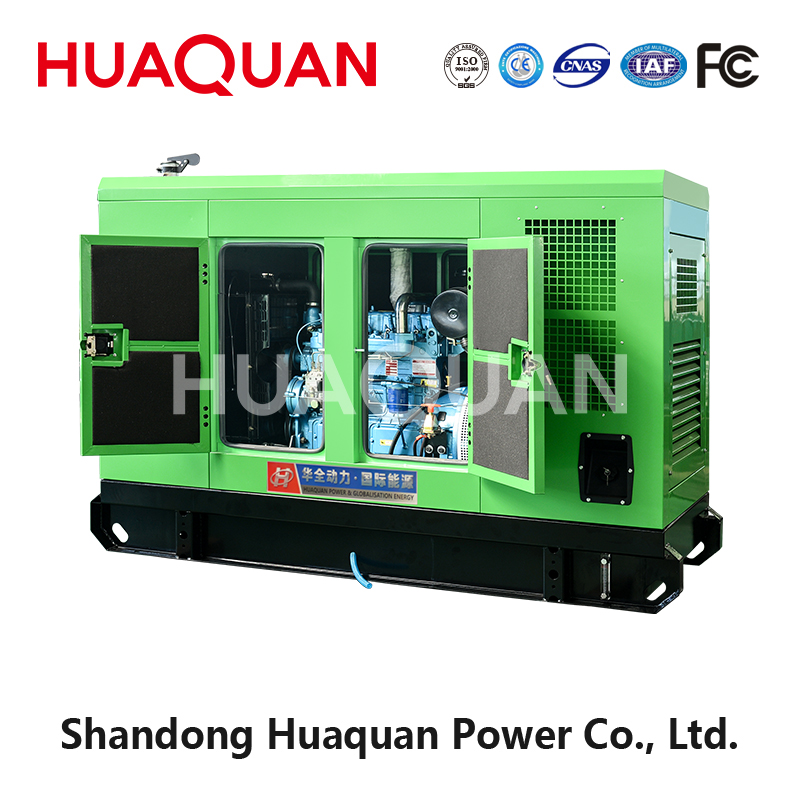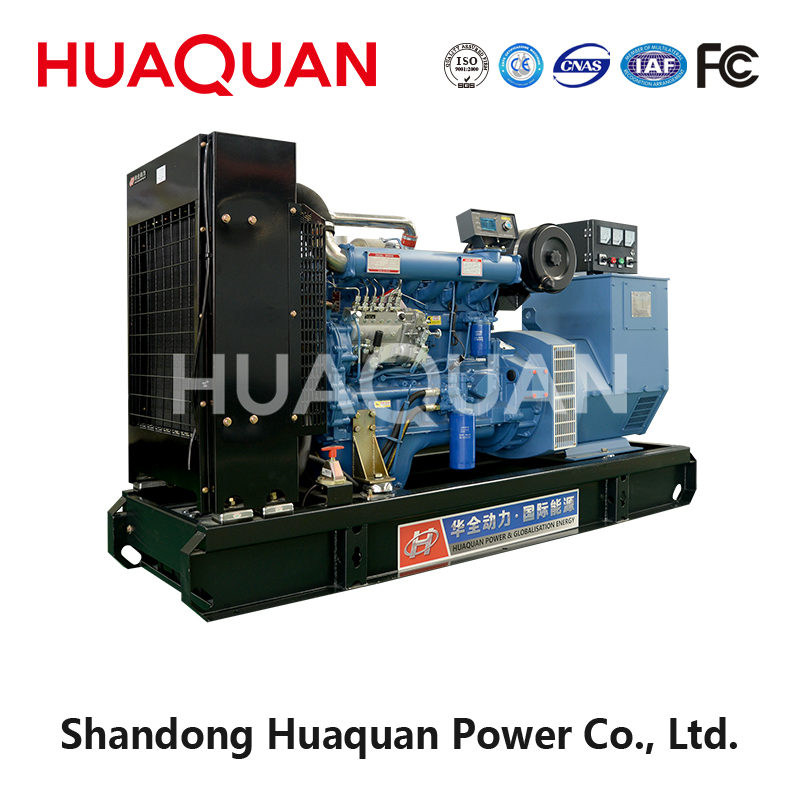
Friends who know about generator sets know that generator sets are small power generation equipment, referring to power machinery that uses diesel or other fuels and diesel engines as prime movers to drive Generators to generate electricity.The entire unit is generally composed of components such as a diesel engine, generator, control box, fuel tank, starting and control battery, protective device, emergency cabinet, etc.Below, the editor will talk about the analysis of common faults in the cylinder block and cylinder head of diesel engines for generator sets:
Generally speaking, the main faults of the cylinder block and cylinder head of a generator set include natural causes such as warping and deformation, cracks, wear, damage to threaded holes, carbon buildup in the cylinder head, corrosion at the edge of the water passage hole, as well as accidental causes such as the intrusion of foreign objects.
1. Damage to cylinder block and cylinder head
1. Deformation of cylinder block and cylinder head
The deformation of cylinder block and cylinder head during use is common and has certain regularity.The deformation of the cylinder block damages the correct geometric shape of the parts and affects the assembly quality of the engine.The joint plane between the cylinder block and the cylinder head often undergoes warping deformation.The protrusions around the threaded holes on the upper and lower surfaces of the cylinder block are mostly caused by excessive tightening force of the cylinder head bolts during assembly, or inadequate cleaning of oil, water, and dirt in the threaded holes during assembly.When tightening the bolt, there may be protrusions near the threaded hole due to excessive hydraulic pressure, or the influence of dirt may result in insufficient depth of bolt insertion.The screw hole needs to withstand high combustion gas pressure and undergo deformation.
In the repair process, due to uneven clearance between the main bearings of the generator set, errors in the centerline of the bearing seat hole, insufficient adhesion between the bearing shell and the seat hole, or deformation of the bearing shell, the cylinder block is subjected to additional pressure, resulting in deformation.In addition, tightening and removing the cylinder head at high temperatures can also cause deformation of the cylinder block and cylinder head.
During the use of the generator set, long-term operation under high speed and high load conditions, insufficient lubrication, burning of bearings, and shaft holding can also cause deformation of the cylinder block and changes in the centerline of the bearing seat hole.
In addition, insufficient aging treatment during manufacturing can result in high and uneven internal stress in the parts, or residual internal stress relaxation during long-term use can also cause deformation of the parts.
According to a large amount of data, deformation of the cylinder block will increase the flatness error of the upper and lower planes of the cylinder block.The coaxiality error of the crankshaft bearing hole also increases, and the maximum deformation often occurs in the third and fourth bearing holes in the middle.
In addition, due to the deformation of the cylinder block of the generator set, the expansion of the error between the cylinder block and the cylinder head plane will cause the cylinder seal to be loose, tight, leak, and even damage the cylinder gasket with gas.The deformation of the cylinder block seriously affects the assembly quality of the engine.
2. Cracks in the cylinder block and cylinder head
The parts of the cylinder block and cylinder head that are prone to cracking are often related to their structure, and the parts of different forms of engines that are prone to cracking have their own regularity.
The reasons for cracks in the cylinder block are:
(1) The cylinder block structure is complex.Due to uneven wall thickness, cracks are prone to occur in some weak areas with low stiffness.After strengthening the weak parts of the structure, the cracks in the cylinder body were significantly reduced.
(2) At high speeds, the crankshaft vibrates, increasing the load on the cylinder block and causing cracks in weak areas.After testing, installing a cow torsion damper and adding a crankshaft balance block can effectively repair cracks in the cylinder block.
(3) The transition between the processing area and the area with different wall thicknesses will result in stress concentration.When stress concentration overlaps with residual internal stress during casting, cracks are prone to occur.
(4) Improper use.If the engine operates under overload conditions for a long time, the stress in the cylinder block will be too high.Long term use of overload in mountainous areas results in a high rate of cylinder block cracks.
(5) Suddenly adding cold water while the generator set is in a high temperature state causes excessive thermal stress on the cylinder block, resulting in deformation or cracking of the cylinder block.
(6) The excessive thickness of scale in the water jacket reduces the passage area of cooling water. At the same time, due to the poor heat transfer of scale, the heat dissipation performance of the engine is reduced. Especially when the water channels between cylinders and valve seats are blocked, it seriously affects its heat dissipation, causing local working temperature to rise, excessive thermal stress, and easy cracking.
(7) In winter, failure to timely waterproof after parking can lead to frost cracking.Some people started it first and then added cooling water, causing excessive local thermal stress.Or in the harsh winter season, sudden addition of hot water can cause explosions.
In addition, the process requirements were not strictly followed during the repair operation, such as the cylinder head bolts not being tightened in the prescribed order with Ningjin Li Ju, uneven tightening force, etc., resulting in deformation of the cylinder head or cracks near the bolt holes.
2、 Inspection of cylinder block and cylinder head
1. Inspection of cylinder block and cylinder head deformation
If the cylinder block and cylinder head plane deform, a ruler can be placed on the plane, and then a feeler gauge can be used to measure the gap between the ruler and the plane. If the gap is too small, it can be estimated;It can also be measured using a flatness tester.
2. Inspection of cylinder block and cylinder head cracks
Cracks in components such as cylinder blocks and cylinder heads are usually inspected through hydraulic testing
The inspection method is to install the cylinder head and gasket on the cylinder block, connect the water outlet pipe joint of the hydraulic press to the front end of the cylinder, and seal all openings. Then, press the water into the cylinder body water jacket, with a required pressure of (3-4) * 10kPa, and maintain it for 5 minutes. If there are water droplets seeping out from the inside to the outside of the cylinder and cylinder head, it indicates that there is a crack at that location.
After replacing the cylinder liner, valve seat, and valve guide, a hydrostatic test should be conducted again.
In the absence of a hydraulic press, tap water and a water pump can be used.Inject water into the cylinder block and cylinder head water jacket, and then flush in compressed air.The location of the crack can be determined by the leakage of liquid.
3、 Atlas analysis of carbon deposits, cracks, foreign objects, and cracked inserts in cylinder heads
1. Causes of carbon deposition: ① Fuel injector malfunction;② The piston ring is damaged or stuck, and lubricating oil enters the combustion chamber;③ The valve guide and valve stem are severely worn;④ Valve stem and guide seal failure;⑤ The turbocharger seal has failed.
2. Reasons for cracks: ① Unreasonable design;② Improper cooling;③ The heat load is too high.
3. The cause of damage to the firepower surface is the intrusion of foreign objects.
The reason for the crack in the cylinder head swirl chamber insert is overheating after strengthening the internal combustion engine.
Alright, the above is the analysis of common faults in the cylinder block and cylinder head of diesel engines for generator sets that the editor has learned about.If you have any further questions, please feel free to consult Huaquan Power.I hope the introduction of Huaquan Power can provide reference for everyone!
Explore Huaquan power solutions
- → Portable Generator
- → Energy Storage System
- → Order Process — How to Order
- → Browse All Generator Products
- → Generator FAQ & Knowledge Base
Need reliable power solutions? Contact our team for customized generator recommendations.