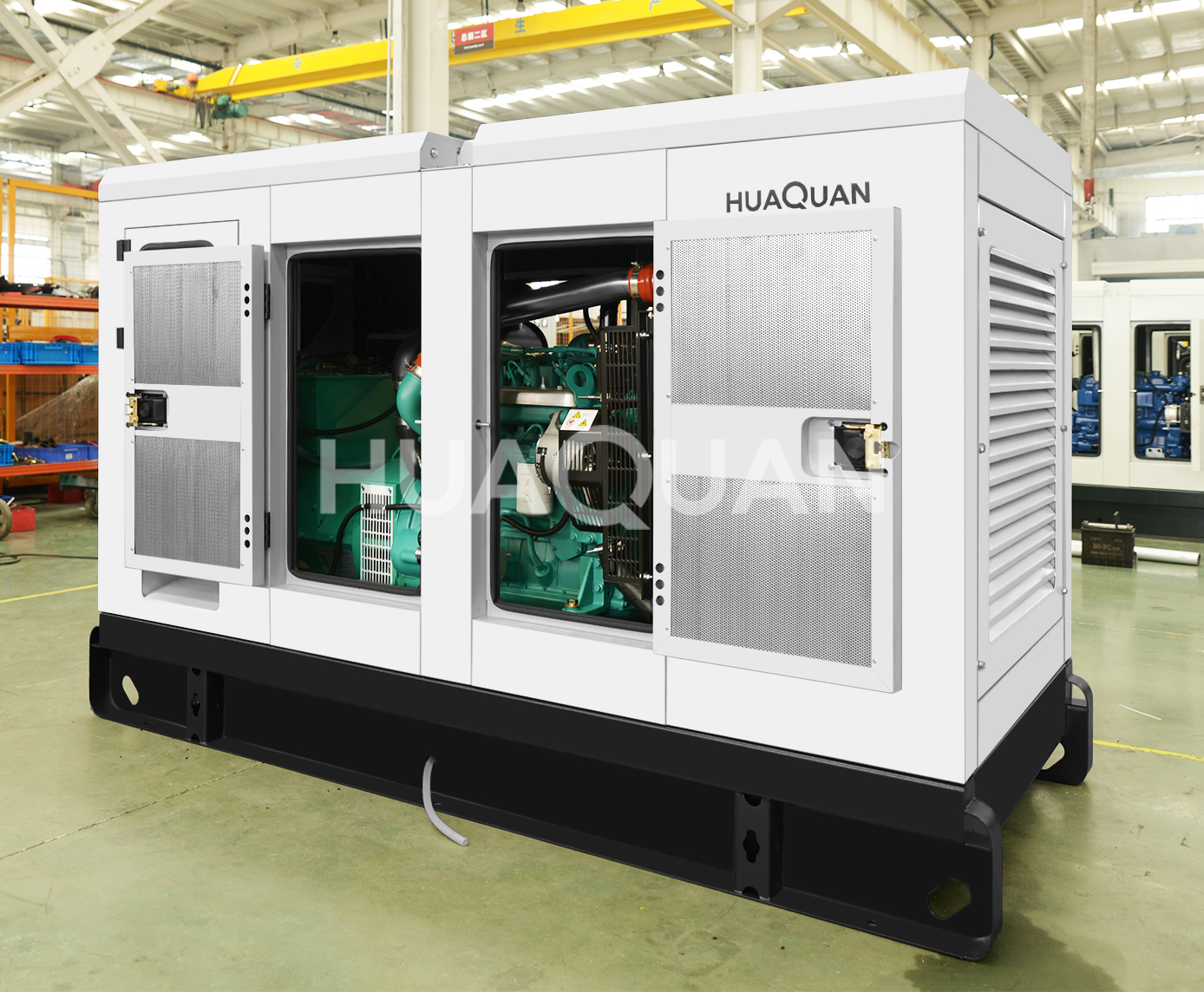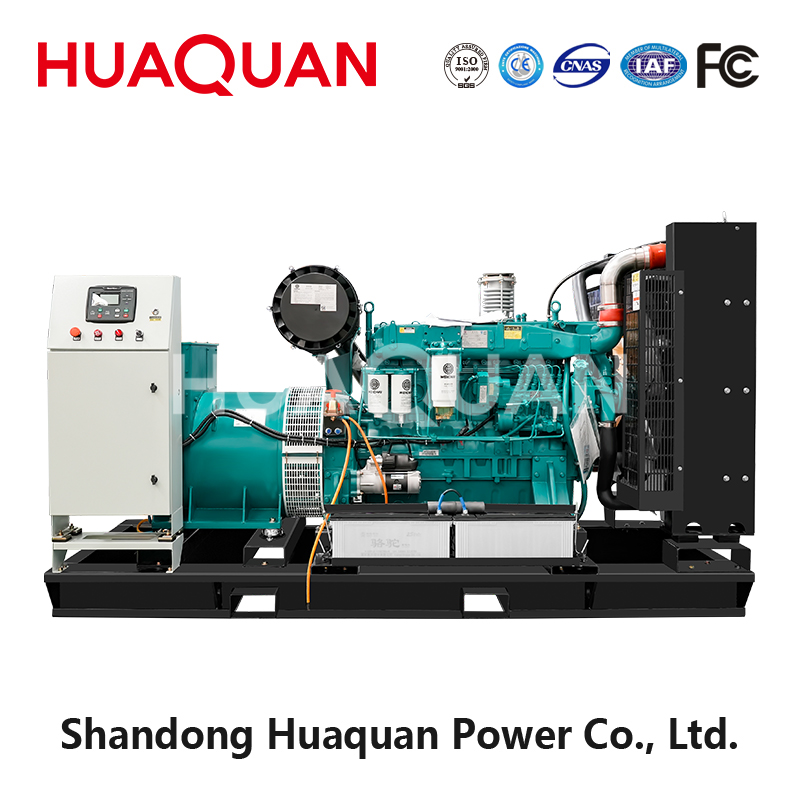
The excitation system of a Diesel Generator provides the direct current needed to energize the rotor field winding, which in turn generates the magnetic field required for voltage production in the stator. Huaquan Power summarizes the following detailed guide on diesel generator excitation systems, covering working principles, classification, technical parameters, and maintenance recommendations.
What Is the Core Function of a Diesel Generator Excitation System?
The excitation system supplies regulated DC current to the generator rotor field winding. Furthermore, this direct current creates a rotating magnetic field that induces alternating voltage in the stator windings. Consequently, without a properly functioning excitation system, the generator cannot produce any usable electrical output. Additionally, the excitation system directly controls the generator terminal voltage by adjusting the field current in real time.
How Does the Excitation System Regulate Generator Voltage?
The Automatic Voltage Regulator (AVR (Automatic Voltage Regulator)) continuously monitors the generator output voltage and compares it against the set reference value. Specifically, when the output voltage drops below the target, the AVR increases the excitation current to strengthen the magnetic field. Therefore, the generator produces higher voltage to restore the desired level. Moreover, this regulation cycle occurs within milliseconds, ensuring stable voltage under varying load conditions. Importantly, Huaquan Power Generators feature advanced AVR systems that maintain voltage regulation accuracy within ±1% of the rated value.
What Are the Key Components of an Excitation System?
| Component | Function | Typical Specification |
|---|---|---|
| AVR (Automatic Voltage Regulator) | Controls field current to regulate voltage | Regulation accuracy ±0.5% to ±1% |
| Exciter Stator | Provides fixed magnetic field for exciter rotor | Permanent magnet or wound type |
| Exciter Rotor (Armature) | Generates AC current rotated by main rotor | 3-phase, 100–400 Hz output |
| Rotating Rectifier Assembly | Converts exciter AC output to DC for main field | Silicon diodes, 2–6 pieces |
| Main Field Winding | Carries DC current to produce main magnetic field | Resistance 0.5–5.0 Ω at 25°C |
How Does the Brushless Excitation System Work in Diesel Generators?
Brushless excitation represents the most widely adopted method in modern diesel generators. Furthermore, this system eliminates the need for slip rings and carbon brushes, which significantly reduces maintenance requirements. Additionally, Huaquan Power exclusively uses brushless excitation systems across its generator product line for superior reliability and performance.
What Is the Working Process of Brushless Excitation?
The brushless excitation process follows a clear sequence. First, the AVR sends a small DC current to the exciter stator winding. Subsequently, this creates a stationary magnetic field around the exciter rotor. Then, as the engine rotates the main rotor shaft, the exciter rotor windings cut through the magnetic field and generate three-phase AC current. Furthermore, the rotating rectifier assembly converts this AC current into DC. Finally, the DC current flows directly into the main rotor field winding, producing the magnetic field that generates the output voltage in the main stator.
| Step | Process Description | Key Parameter |
|---|---|---|
| 1. AVR Signal | AVR outputs controlled DC to exciter stator | 0–200 mA typical |
| 2. Magnetic Field Generation | Exciter stator creates stationary field | Flux density 0.6–0.9 T |
| 3. AC Generation | Exciter rotor produces 3-phase AC | 100–400 Hz frequency |
| 4. Rectification | Rotating diodes convert AC to DC | PIV rating ≥1000V |
| 5. Field Energization | DC current energizes main rotor winding | Field current 1–10 A typical |
What Are the Different Types of Diesel Generator Excitation Systems?
Diesel generators employ several excitation methods, each with distinct advantages and Application scenarios. Consequently, understanding the differences helps operators select the most suitable system for their specific requirements. Moreover, Huaquan Power offers expert guidance to match excitation systems with application demands.
How Do Self-Excited and Separately Excited Systems Compare?
| Feature | Self-Excited (Shunt) | Separately Excited | Brushless |
|---|---|---|---|
| Power Source | Generator output terminal | External DC source or PMG | Integral exciter machine |
| Response Time | 0.3–0.8 seconds | 0.1–0.3 seconds | 0.2–0.5 seconds |
| Voltage Regulation | ±2% to ±3% | ±0.5% to ±1% | ±0.5% to ±1% |
| Maintenance Level | Low (no brushes) | Low (no brushes) | Very Low (no brushes) |
| Short Circuit Support | Limited (3× rated) | Strong (3–5× rated) | Good (3–4× rated) |
| Cost | Low | Medium | Medium-High |
| Typical Application | Standby power, small sets | Industrial, critical loads | All Huaquan generators |
Self-excited systems draw power from the generator output terminals to supply the field current. However, during short circuit conditions, the terminal voltage collapses, causing the excitation to fail. Therefore, separately excited systems using Permanent Magnet Generators (PMG) provide superior short circuit support. Importantly, the PMG maintains excitation power independently from the main output, ensuring sustained fault current for protective relay operation.
What Happens When the Excitation System Fails?
Excitation system failure leads to complete loss of generator output voltage. Furthermore, partial excitation failure causes under-voltage, frequency instability, and potential damage to connected equipment. Consequently, recognizing failure symptoms early prevents costly downtime and equipment damage.
| Failure Symptom | Probable Cause | Severity Level |
|---|---|---|
| No output voltage | AVR failure, loss of excitation power | Critical |
| Low output voltage (70–85% rated) | Partial rectifier diode failure | High |
| Voltage fluctuation ±5% or more | AVR adjustment drift, loose connection | Medium |
| Over-voltage (110%+ rated) | AVR malfunction, field short circuit | Critical |
| High harmonic distortion | Rectifier diode open circuit | Medium |
| Excessive rotor vibration | Rectifier assembly imbalance | High |
⚡ Explore Related Solutions
- 🏭 500kW Diesel Generator
- 🏭 1000kW Diesel Generator
- 🏭 500kW YC Diesel Generator
- 🔧 KMS (Cummins/Doosan) Series
- 📋 Diesel Generator Sets
- 📋 Order Process — How to Buy
- 📋 Contact Us
💡 Need a customized solution? Contact our engineering team for project-specific recommendations.
How to Maintain and Troubleshoot the Excitation System?
Regular excitation system maintenance ensures reliable generator performance and extends service life. Additionally, systematic inspection identifies developing faults before they cause unplanned outages. Therefore, Huaquan Power recommends the following maintenance procedures.
What Are the Recommended Maintenance Procedures?
| Maintenance Task | Interval | Key Action Points |
|---|---|---|
| AVR visual inspection | Every 500 hours | Check connections, clean dust, verify LED status |
| Rectifier diode test | Every 2000 hours | Measure forward/reverse resistance with multimeter |
| Field winding resistance | Every 2000 hours | Compare with nameplate value, tolerance ±5% |
| Exciter air gap check | Every 4000 hours | Verify uniformity, gap typically 1.5–3.0 mm |
| Insulation resistance test | Every 2000 hours | Megger test ≥1 MΩ at 500V DC |
| PMG output voltage | Every 1000 hours | Verify 170–220V AC at rated speed |
How to Diagnose Common Excitation Faults?
When the generator fails to produce voltage, follow a systematic diagnostic approach. First, verify the engine reaches rated speed (1500 or 1800 RPM). Then, check the AVR input power supply. Furthermore, measure the field winding resistance to confirm it matches the nameplate value. Additionally, test each rectifier diode individually for proper forward conduction and reverse blocking. Specifically, a healthy diode should show low forward resistance (0.3–0.7V drop) and infinite reverse resistance. Moreover, if all diodes test normal, inspect the AVR output by measuring the DC voltage to the exciter stator. Consequently, if the AVR produces no output, replace the AVR unit. Importantly, Huaquan Power stocks genuine replacement AVRs and rectifier assemblies for rapid delivery.
| Diagnostic Step | Test Method | Expected Result |
|---|---|---|
| 1. Verify engine speed | Tachometer reading | 1500/1800 RPM ±2% |
| 2. Check AVR power supply | Multimeter at AVR input | 170–220V AC (PMG type) |
| 3. Measure field resistance | Multimeter at field terminals | Nameplate value ±5% |
| 4. Test rectifier diodes | Multimeter diode mode | Forward: 0.3–0.7V; Reverse: OL |
| 5. Check AVR output | Multimeter at exciter stator | 0–50V DC variable |
Frequently Asked Questions
Q1: What is the typical response time of a brushless excitation system?
The typical response time of a brushless excitation system ranges from 0.2 to 0.5 seconds for a 90% voltage recovery after a full load step. Furthermore, with a PMG-augmented system, response time improves to 0.1–0.3 seconds. Additionally, Huaquan Power generators with advanced AVRs achieve voltage recovery within 0.3 seconds under standard load conditions.
Q2: How often should rectifier diodes be tested?
Huaquan Power recommends testing rectifier diodes every 2000 operating hours or during major service intervals. Specifically, use a digital multimeter in diode mode to check each diode for proper forward voltage drop (0.3–0.7V) and reverse blocking. Moreover, replace all diodes as a matched set if any single diode fails, ensuring balanced current distribution.
Q3: Can a generator operate with one failed rectifier diode?
Technically, a generator can operate briefly with one failed rectifier diode, but this practice is strongly discouraged. Furthermore, a failed diode causes unbalanced excitation, leading to increased harmonic distortion, elevated rotor temperatures, and potential bearing damage. Therefore, shut down the generator and replace the faulty diode immediately to prevent cascading failures.
Q4: What is the difference between PMG and AREP excitation?
PMG (Permanent Magnet Generator) excitation uses a separate permanent magnet generator to supply independent power to the AVR. In contrast, AREP (Auxiliary Winding Regulation and Excitation Principle) uses auxiliary windings in the main stator. Additionally, PMG provides superior short circuit support (3–5× rated current), while AREP offers simpler construction with fewer components. Moreover, Huaquan Power offers both options based on application requirements.
Q5: What voltage regulation accuracy can Huaquan generators achieve?
Huaquan Power generators achieve Voltage Regulation accuracy of ±1% under steady-state conditions with standard AVRs. Furthermore, premium AVR configurations can improve this to ±0.5%. Additionally, transient voltage dip remains within 15–20% of rated voltage during sudden full-load application, recovering to steady state within 0.3 seconds. Therefore, Huaquan generators reliably power sensitive electronic equipment.
Conclusion
The diesel generator excitation system plays a fundamental role in voltage generation and regulation. Huaquan Power recommends three key practices: (1) Perform regular rectifier diode testing every 2000 operating hours. (2) Always use genuine AVR replacement units to maintain specified regulation accuracy. (3) Monitor generator output voltage daily to detect excitation issues early. For expert technical support and genuine replacement parts, contact Huaquan Power at +86-159-0536-0210 or visit huaquanpower.net.