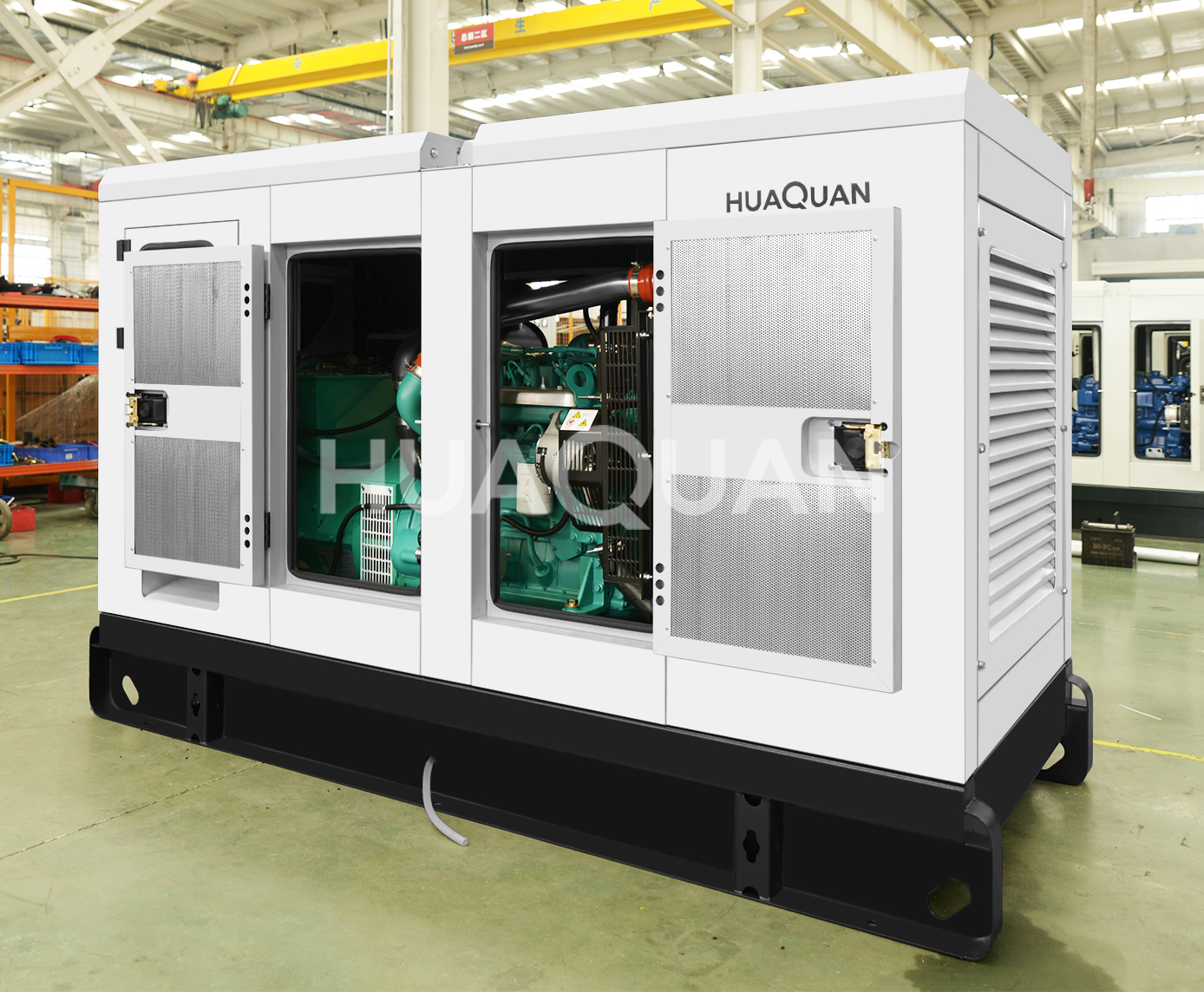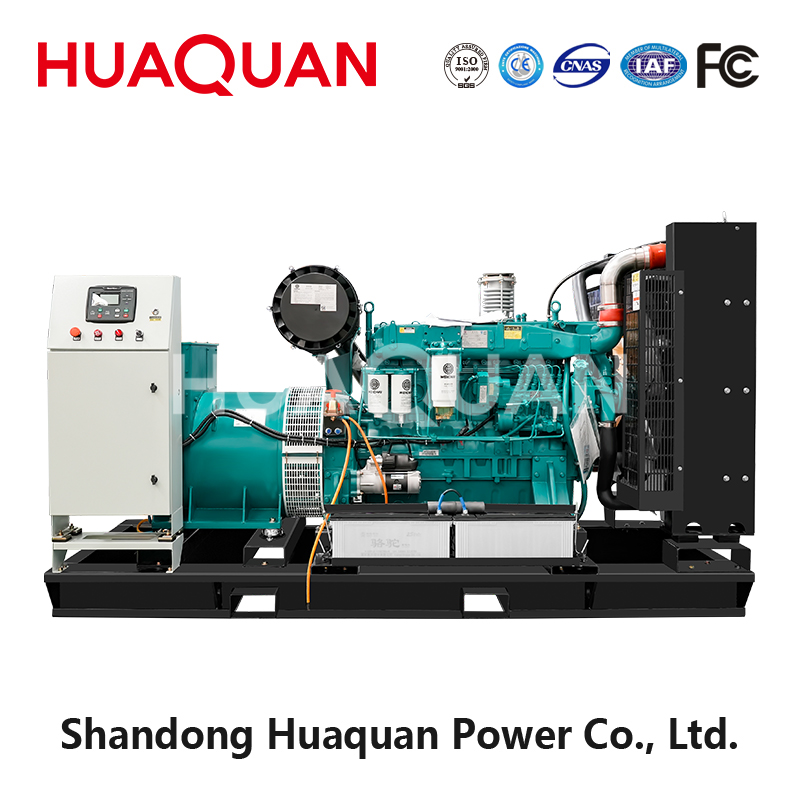
Sistem eksitasi a Pembangkit Diesel menyediakan arus searah yang diperlukan untuk memberi energi pada belitan medan rotor, yang pada gilirannya menghasilkan medan magnet yang diperlukan untuk produksi tegangan di stator. Huaquan Power merangkum panduan rinci berikut tentang sistem eksitasi generator diesel, mencakup prinsip-prinsip kerja, klasifikasi, parameter teknis, dan rekomendasi pemeliharaan.
Apa Fungsi Inti Sistem Eksitasi Generator Diesel?
Sistem eksitasi menyuplai arus DC yang diatur ke belitan medan rotor generator. Lebih-lebih lagi, arus searah ini menciptakan medan magnet berputar yang menginduksi tegangan bolak-balik pada belitan stator. Akibatnya, tanpa sistem eksitasi yang berfungsi dengan baik, generator tidak dapat menghasilkan keluaran listrik yang dapat digunakan. Selain itu, sistem eksitasi secara langsung mengontrol tegangan terminal generator dengan mengatur arus medan secara real time.
Bagaimana Sistem Eksitasi Mengatur Tegangan Generator?
Pengatur Tegangan Otomatis (AVR (Pengatur Tegangan Otomatis)) terus memantau tegangan keluaran generator dan membandingkannya dengan nilai referensi yang ditetapkan. Secara khusus, ketika tegangan keluaran turun di bawah target, AVR meningkatkan arus eksitasi untuk memperkuat medan magnet. Karena itu, generator menghasilkan tegangan yang lebih tinggi untuk mengembalikan level yang diinginkan. Lebih-lebih lagi, siklus regulasi ini terjadi dalam milidetik, memastikan tegangan stabil dalam kondisi beban yang bervariasi. Penting, Kekuatan Huaquan Generator feature advanced AVR systems that maintain pengaturan tegangan accuracy within ±1% of the rated value.
Apa Komponen Utama Sistem Eksitasi?
| Komponen | Fungsi | Spesifikasi Khas |
|---|---|---|
| AVR (Pengatur Tegangan Otomatis) | Mengontrol arus medan untuk mengatur tegangan | Akurasi regulasi ±0,5% hingga ±1% |
| Stator Penggetar | Menyediakan medan magnet tetap untuk rotor eksitasi | Permanent magnet or wound type |
| Exciter Rotor (Armature) | Generates AC current rotated by main rotor | 3-fase, 100–400 Hz output |
| Rotating Rectifier Assembly | Converts exciter AC output to DC for main field | Silicon diodes, 2–6 pieces |
| Main Field Winding | Carries DC current to produce main magnetic field | Resistance 0.5–5.0 Ω at 25°C |
Bagaimana Cara Kerja Sistem Eksitasi Brushless pada Generator Diesel?
Brushless excitation represents the most widely adopted method in modern diesel generators. Lebih-lebih lagi, this system eliminates the need for slip rings and carbon brushes, which significantly reduces maintenance requirements. Selain itu, Huaquan Power exclusively uses brushless excitation systems across its generator product line for superior reliability and performance.
Bagaimana Proses Kerja Eksitasi Brushless?
The brushless excitation process follows a clear sequence. Pertama, the AVR sends a small DC current to the exciter stator winding. Subsequently, ini menciptakan medan magnet stasioner di sekitar rotor pembangkit. Kemudian, saat mesin memutar poros rotor utama, belitan rotor eksiter memotong medan magnet dan menghasilkan arus AC tiga fasa. Lebih-lebih lagi, rakitan penyearah berputar mengubah arus AC ini menjadi DC. Akhirnya, arus DC mengalir langsung ke belitan medan rotor utama, menghasilkan medan magnet yang menghasilkan tegangan keluaran pada stator utama.
| Melangkah | Deskripsi Proses | Parameter Kunci |
|---|---|---|
| 1. Sinyal AVR | Output AVR mengontrol DC ke stator eksiter | 0–200 mA tipikal |
| 2. Pembangkitan Medan Magnet | Stator eksiter menciptakan medan stasioner | Kerapatan fluks 0,6–0,9 T |
| 3. Generasi AC | Rotor eksiter menghasilkan AC 3 fasa | 100Frekuensi –400Hz |
| 4. Pembetulan | Dioda yang berputar mengubah AC menjadi DC | Peringkat PIV ≥1000V |
| 5. Energisasi Lapangan | Arus DC memberi energi pada belitan rotor utama | Arus medan 1–10 A tipikal |
Apa Saja Berbagai Jenis Sistem Eksitasi Generator Diesel?
Generator diesel menggunakan beberapa metode eksitasi, masing-masing dengan kelebihan dan Skenario aplikasi. Akibatnya, memahami perbedaannya membantu operator memilih sistem yang paling sesuai untuk kebutuhan spesifik mereka. Lebih-lebih lagi, Huaquan Power menawarkan panduan ahli untuk mencocokkan sistem eksitasi dengan tuntutan aplikasi.
Bagaimana Perbandingan Sistem Self-Excited dan Separately Excited?
| Fitur | Bersemangat pada diri sendiri (Melangsir) | Secara terpisah Bersemangat | Tanpa sikat |
|---|---|---|---|
| Sumber Daya | Terminal keluaran generator | Sumber DC eksternal atau PMG | Mesin eksitasi integral |
| Waktu Respons | 0.3–0,8 detik | 0.1–0,3 detik | 0.2–0,5 detik |
| Regulasi Tegangan | ±2% hingga ±3% | ±0,5% hingga ±1% | ±0,5% hingga ±1% |
| Tingkat Pemeliharaan | Rendah (tidak ada kuas) | Rendah (tidak ada kuas) | Sangat Rendah (tidak ada kuas) |
| Dukungan Sirkuit Pendek | Terbatas (3× dinilai) | Kuat (3–5× dinilai) | Bagus (3–4× dinilai) |
| Biaya | Rendah | Sedang | Sedang-Tinggi |
| Aplikasi Khas | Kekuatan siaga, set kecil | Industri, beban kritis | Semua generator Huaquan |
Self-excited systems draw power from the generator output terminals to supply the field current. Namun, during hubungan pendek kondisi, the terminal voltage collapses, causing the excitation to fail. Karena itu, separately excited systems using Permanent Magnet Generators (PMG) provide superior short circuit support. Penting, the PMG maintains excitation power independently from the main output, ensuring sustained fault current for protective relay operation.
Apa Yang Terjadi Jika Sistem Eksitasi Gagal?
Excitation system failure leads to complete loss of generator output voltage. Lebih-lebih lagi, partial excitation failure causes under-voltage, frequency instability, and potential damage to connected equipment. Akibatnya, recognizing failure symptoms early prevents costly downtime and equipment damage.
| Failure Symptom | Kemungkinan Penyebabnya | Tingkat Keparahan |
|---|---|---|
| No output voltage | Kegagalan AVR, loss of excitation power | Kritis |
| Low output voltage (70–85% rated) | Partial rectifier diode failure | Tinggi |
| Voltage fluctuation ±5% or more | AVR adjustment drift, loose connection | Sedang |
| Tegangan berlebih (110%+ dinilai) | Kerusakan AVR, field short circuit | Kritis |
| High harmonic distortion | Rectifier diode open circuit | Sedang |
| Excessive rotor vibration | Rectifier assembly imbalance | Tinggi |
⚡ Jelajahi Solusi Terkait
- 🏭 500kW Pembangkit Diesel
- 🏭 1000kW Pembangkit Diesel
- 🏭 500kW Pembangkit Diesel YC
- 🔧 KMS (Cummins/Doosan) Seri
- 📋 Genset Diesel
- 📋 Proses Pemesanan — Cara Membeli
- 📋 Hubungi kami
💡 Butuh solusi khusus? Hubungi tim teknik kami untuk rekomendasi spesifik proyek.
Cara Memelihara dan Mengatasi Masalah Sistem Eksitasi?
Regular excitation system maintenance ensures reliable generator performance and extends service life. Selain itu, systematic inspection identifies developing faults before they cause unplanned outages. Karena itu, Huaquan Power recommends the following maintenance procedures.
Apa Prosedur Perawatan yang Direkomendasikan?
| Tugas Pemeliharaan | Selang | Key Action Points |
|---|---|---|
| AVR visual inspection | Setiap 500 jam | Check connections, clean dust, verify LED status |
| Rectifier diode test | Setiap 2000 jam | Measure forward/reverse resistance with multimeter |
| Field winding resistance | Setiap 2000 jam | Compare with nameplate value, tolerance ±5% |
| Exciter air gap check | Setiap 4000 jam | Verify uniformity, gap typically 1.5–3.0 mm |
| Uji ketahanan isolasi | Setiap 2000 jam | Megger test ≥1 MΩ at 500V DC |
| Tegangan keluaran PMG | Setiap 1000 jam | Verify 170–220V AC at rated speed |
Cara Mendiagnosis Kesalahan Eksitasi Umum?
When the generator fails to produce voltage, follow a systematic diagnostic approach. Pertama, verify the engine reaches rated speed (1500 atau 1800 RPM). Kemudian, check the AVR input power supply. Lebih-lebih lagi, measure the field winding resistance to confirm it matches the nameplate value. Selain itu, test each rectifier diode individually for proper forward conduction and reverse blocking. Secara khusus, a healthy diode should show low forward resistance (0.3–0.7V drop) and infinite reverse resistance. Lebih-lebih lagi, if all diodes test normal, inspect the AVR output by measuring the DC voltage to the exciter stator. Akibatnya, if the AVR produces no output, replace the AVR unit. Penting, Huaquan Power stocks genuine replacement AVRs and rectifier assemblies for rapid delivery.
| Langkah Diagnostik | Metode Tes | Hasil yang Diharapkan |
|---|---|---|
| 1. Verify engine speed | Tachometer reading | 1500/1800 RPM ±2% |
| 2. Check AVR power supply | Multimeter at AVR input | 170–220V AC (PMG type) |
| 3. Measure field resistance | Multimeter at field terminals | Nameplate value ±5% |
| 4. Test rectifier diodes | Multimeter diode mode | Forward: 0.3–0.7V; Reverse: OL |
| 5. Check AVR output | Multimeter at exciter stator | 0–50V DC variable |
Pertanyaan yang Sering Diajukan
Q1: Berapa waktu respons khas dari sistem eksitasi tanpa sikat?
The typical response time of a brushless excitation system ranges from 0.2 ke 0.5 seconds for a 90% voltage recovery after a full load step. Lebih-lebih lagi, with a PMG-augmented system, response time improves to 0.1–0.3 seconds. Selain itu, Huaquan Power generators with advanced AVRs achieve voltage recovery within 0.3 seconds under standard load conditions.
Q2: Seberapa sering dioda penyearah harus diuji?
Huaquan Power recommends testing rectifier diodes every 2000 jam operasional atau selama interval servis utama. Secara khusus, use a digital multimeter in diode mode to check each diode for proper forward voltage drop (0.3–0.7V) and reverse blocking. Lebih-lebih lagi, replace all diodes as a matched set if any single diode fails, ensuring balanced current distribution.
Q3: Bisakah generator beroperasi dengan satu dioda penyearah yang gagal?
Secara teknis, a generator can operate briefly with one failed rectifier diode, but this practice is strongly discouraged. Lebih-lebih lagi, a failed diode causes unbalanced excitation, leading to increased harmonic distortion, elevated rotor temperatures, and potential bearing damage. Karena itu, shut down the generator and replace the faulty diode immediately to prevent cascading failures.
Q4: Apa perbedaan eksitasi PMG dan AREP?
PMG (Permanent Magnet Generator) excitation uses a separate permanent magnet generator to supply independent power to the AVR. Sebaliknya, AREP (Auxiliary Winding Regulation and Excitation Principle) uses auxiliary windings in the main stator. Selain itu, PMG provides superior short circuit support (3–5× rated current), while AREP offers simpler construction with fewer components. Lebih-lebih lagi, Huaquan Power menawarkan kedua opsi berdasarkan kebutuhan aplikasi.
Q5: Keakuratan pengaturan tegangan apa yang dapat dicapai oleh generator Huaquan?
Huaquan Power generators achieve Regulasi Tegangan accuracy of ±1% under steady-state conditions with standard AVRs. Lebih-lebih lagi, premium AVR configurations can improve this to ±0.5%. Selain itu, transient voltage dip remains within 15–20% of rated voltage during sudden full-load application, recovering to steady state within 0.3 detik. Karena itu, Huaquan generators reliably power sensitive electronic equipment.
Kesimpulan
The diesel generator excitation system plays a fundamental role in voltage generation and regulation. Huaquan Power merekomendasikan tiga praktik utama: (1) Perform regular rectifier diode testing every 2000 jam operasional. (2) Always use genuine AVR replacement units to maintain specified regulation accuracy. (3) Monitor generator output voltage daily to detect excitation issues early. For expert technical support and genuine replacement parts, hubungi Huaquan Power di +86-159-0536-0210 atau kunjungi huaquanpower.net.