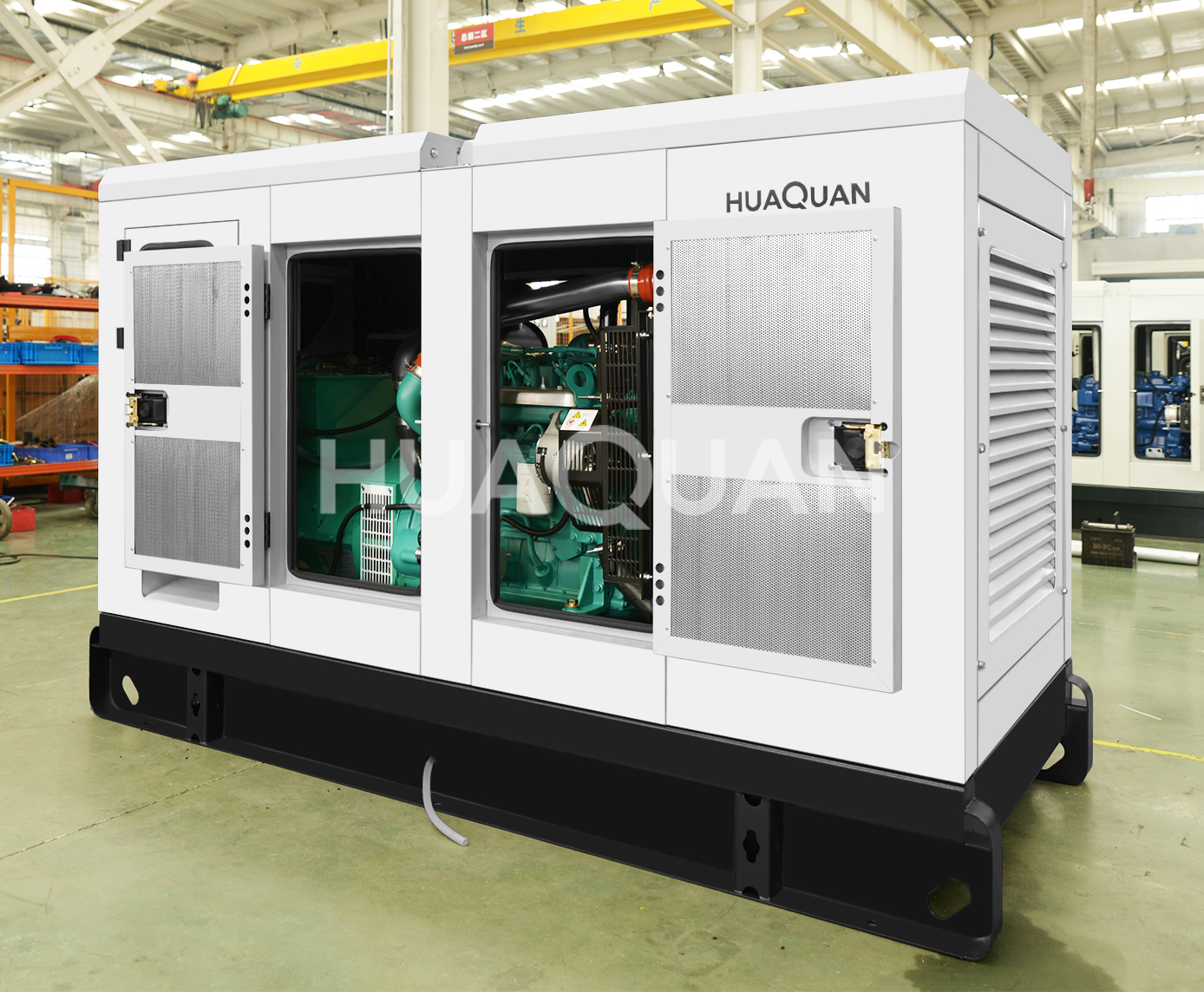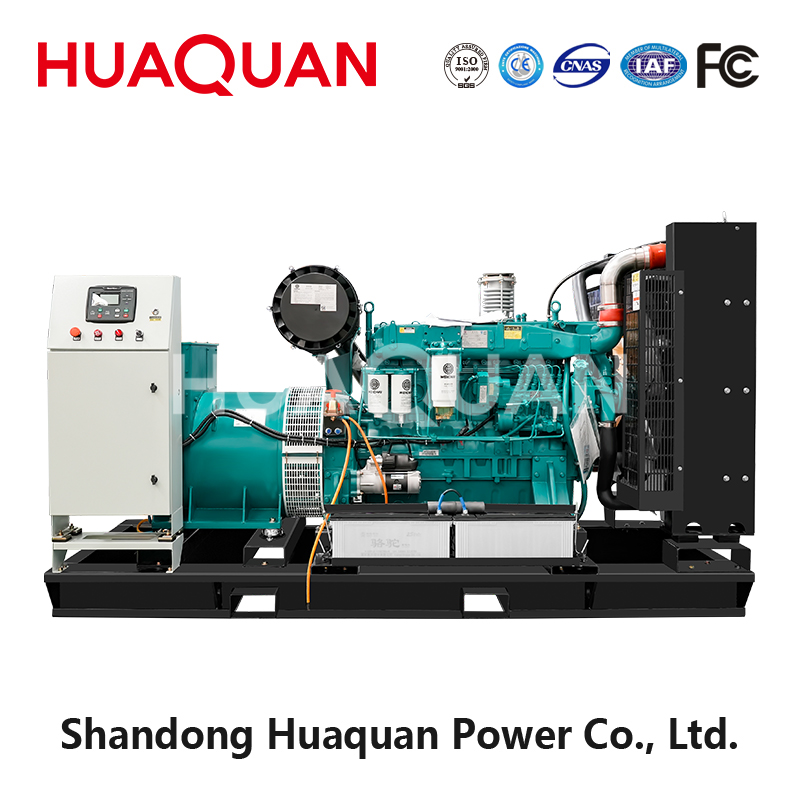
The mechanical efficiency of a Diesel Generator engine typically ranges from 35% to 45%, representing the ratio of useful electrical output to the fuel energy input. Huaquan Power summarizes the following detailed guide on diesel generator mechanical efficiency, covering calculation methods, influencing factors, and optimization strategies.
What Does Mechanical Efficiency Mean in a Diesel Generator?
Mechanical efficiency quantifies how effectively a diesel generator converts the chemical energy in fuel into useful electrical power. Furthermore, this metric accounts for all energy losses throughout the conversion chain, including combustion losses, friction losses, and generator losses. Consequently, understanding mechanical efficiency helps operators evaluate generator performance and identify improvement opportunities.
How Is Overall Generator Efficiency Composed?
The overall efficiency of a diesel generator consists of multiple sequential efficiency stages. Specifically, combustion efficiency (92–98%) represents how completely fuel burns in the cylinder. Then, thermal efficiency (40–50%) measures conversion of heat energy to mechanical work. Additionally, mechanical efficiency (85–92%) accounts for friction and parasitic losses in the engine. Finally, generator efficiency (92–96%) covers electrical conversion losses. Therefore, the overall system efficiency equals the product of all individual efficiencies.
| Efficiency Stage | Typical Range | Primary Loss Mechanism |
|---|---|---|
| Combustion Efficiency | 92–98% | Incomplete combustion, unburned fuel |
| Thermal Efficiency (BTE) | 40–50% | Heat rejected to coolant and exhaust |
| Mechanical Efficiency | 85–92% | Friction, pumping losses, accessory drive |
| Generator Efficiency | 92–96% | Copper losses, iron losses, windage |
| Overall System Efficiency | 35–45% | Cumulative of all stages |
How to Calculate Diesel Generator Mechanical Efficiency?
Calculating mechanical efficiency requires measuring both the fuel energy input and the electrical power output. Furthermore, accurate measurement instruments ensure reliable efficiency calculations. Additionally, Huaquan Power provides detailed efficiency data for all generator models.
What Is the Standard Calculation Formula?
The overall efficiency formula uses the brake specific fuel consumption (BSFC) and the calorific value of diesel fuel. Specifically, the formula is: Overall Efficiency (%) = (Electrical Output Power × 100) / (Fuel Consumption Rate × Calorific Value). Furthermore, diesel fuel has a lower calorific value of approximately 42.5 MJ/kg. Therefore, for a generator producing 500 kW with fuel consumption of 130 kg/h, the calculation yields: Efficiency = (500 × 3600) / (130 × 42500) × 100 = 32.5%. Moreover, this result represents the overall brake thermal efficiency of the system.
| Parameter | Symbol | Unit | Typical Value |
|---|---|---|---|
| Electrical Output Power | Pe | kW | Nameplate rating |
| Fuel Consumption Rate | Gf | kg/h | Measured flow rate |
| Calorific Value (LHV) | Hu | MJ/kg | 42.5 (diesel) |
| BSFC | ge | g/kWh | 200–260 |
| Overall Efficiency | ηe | % | 35–45 |
How to Calculate Brake Thermal Efficiency from BSFC?
Brake thermal efficiency (BTE) provides a convenient metric derived directly from BSFC. Specifically, BTE (%) = (3600 / (BSFC × Hu)) × 100. Furthermore, for a generator with BSFC of 220 g/kWh, BTE = (3600 / (0.220 × 42500)) × 100 = 38.5%. Additionally, lower BSFC values indicate higher thermal efficiency. Therefore, Huaquan Power Generators featuring advanced fuel injection systems achieve BSFC values as low as 195 g/kWh at rated load, corresponding to BTE of approximately 43.5%.
What Factors Affect Diesel Generator Mechanical Efficiency?
Multiple operational and design factors influence the mechanical efficiency of diesel generators. Consequently, understanding these factors enables operators to optimize performance. Moreover, Huaquan Power designs generators to maximize efficiency across varying load conditions.
| Factor | Impact on Efficiency | Typical Efficiency Loss |
|---|---|---|
| Low load operation (below 30%) | Significant reduction due to incomplete combustion | 5–15% loss |
| Ambient temperature above 40°C | Reduced air density lowers combustion efficiency | 2–5% loss |
| Altitude above 1000m | Reduced oxygen availability | 3–8% loss per 1000m |
| Poor fuel quality | Lower calorific value, incomplete combustion | 2–6% loss |
| Engine wear and aging | Increased friction, reduced compression | 3–7% loss over life |
| Incorrect injection timing | Suboptimal combustion phasing | 3–8% loss |
| Restricted air intake | Reduced air-fuel ratio | 2–5% loss |
What Are the Efficiency Ranges for Different Generator Sizes?
Generator size significantly impacts mechanical efficiency. Furthermore, larger generators generally achieve higher efficiency due to better surface-to-volume ratios and reduced friction losses per unit of output. Additionally, Huaquan Power offers generators across all power ranges with optimized efficiency curves.
| Generator Power Range | Typical Overall Efficiency | BSFC at Rated Load (g/kWh) | Peak Efficiency Load Point |
|---|---|---|---|
| 10–50 kW | 30–36% | 240–280 | 80–90% load |
| 50–200 kW | 34–39% | 220–250 | 75–85% load |
| 200–500 kW | 37–42% | 210–235 | 75–85% load |
| 500–1000 kW | 39–43% | 200–225 | 70–80% load |
| 1000+ kW | 41–45% | 195–215 | 70–80% load |
How to Improve Diesel Generator Mechanical Efficiency?
Improving mechanical efficiency reduces operating costs and extends engine life. Furthermore, several proven strategies deliver measurable efficiency gains. Therefore, Huaquan Power recommends implementing these optimization methods systematically.
What Maintenance Practices Maximize Efficiency?
| Practice | Efficiency Gain | Implementation Frequency |
|---|---|---|
| Replace air filter at scheduled intervals | 1–3% | Every 500–1000 hours |
| Calibrate fuel injection timing | 2–5% | Every 3000–4000 hours |
| Clean intercooler/aftercooler | 1–4% | Every 2000–3000 hours |
| Use correct viscosity engine oil | 0.5–2% | At every oil change |
| Maintain coolant temperature 80–95°C | 1–2% | Continuous monitoring |
| Operate at optimal load (75–85%) | 5–15% | Load management strategy |
| Clean fuel injectors professionally | 2–4% | Every 4000–6000 hours |
⚡ Explore Related Solutions
- 🏭 500kW Diesel Generator
- 🏭 1000kW Diesel Generator
- 🏭 500kW YC Diesel Generator
- 🔧 KMS (Cummins/Doosan) Series
- 📋 Diesel Generator Sets
- 📋 Order Process — How to Buy
- 📋 Contact Us
💡 Need a customized solution? Contact our engineering team for project-specific recommendations.
Frequently Asked Questions
Q1: What is a good BSFC value for a diesel generator?
A good BSFC value for a modern diesel generator ranges from 195 to 220 g/kWh at rated load. Furthermore, premium engines with common rail injection systems achieve values as low as 190 g/kWh. Additionally, BSFC above 260 g/kWh indicates potential maintenance issues or suboptimal loading. Therefore, Huaquan Power recommends monitoring BSFC trends to detect performance degradation early.
Q2: How much fuel does a 500 kW diesel generator consume per hour?
A 500 kW diesel generator typically consumes 110–130 liters per hour at full load, assuming a BSFC of 220 g/kWh and diesel density of 0.85 kg/liter. Furthermore, at 75% load, consumption drops to approximately 85–100 liters per hour. Additionally, Huaquan Power provides detailed fuel consumption curves for each generator model in the technical documentation.
Q3: Does generator efficiency change with load?
Yes, generator efficiency varies significantly with load. Specifically, efficiency peaks at 75–85% of rated load and decreases at both low and overload conditions. Furthermore, at 25% load, efficiency typically drops 10–15 percentage points from peak. Therefore, Huaquan Power recommends sizing generators to operate within the 50–90% load range for optimal efficiency and engine health.
Q4: How does turbocharging improve diesel generator efficiency?
Turbocharging improves efficiency by recovering exhaust gas energy to compress intake air, increasing the air-fuel ratio and enabling more complete combustion. Furthermore, turbocharged engines achieve 5–10% higher thermal efficiency compared to naturally aspirated engines. Additionally, intercooling further improves efficiency by reducing intake air temperature and increasing air density. Consequently, Huaquan Power turbocharged generators deliver superior fuel economy.
Q5: What is the difference between mechanical efficiency and thermal efficiency?
Thermal efficiency (BTE) measures how effectively the engine converts fuel energy into mechanical work at the crankshaft. In contrast, mechanical efficiency measures the ratio of brake power to indicated power, accounting only for friction and parasitic losses. Furthermore, BTE is the more commonly referenced metric for overall generator performance. Additionally, the relationship is: Brake Thermal Efficiency = Indicated Thermal Efficiency × Mechanical Efficiency. Therefore, both metrics matter for comprehensive performance evaluation.
Conclusion
Understanding diesel generator mechanical efficiency empowers operators to optimize performance and reduce fuel costs. Huaquan Power recommends three essential practices: (1) Operate generators within 50–90% of rated load for best efficiency. (2) Monitor BSFC trends to detect efficiency degradation early. (3) Follow scheduled maintenance to preserve optimal combustion and mechanical conditions. For technical consultation and high-efficiency generator solutions, contact Huaquan Power at +86-159-0536-0210 or visit huaquanpower.net.