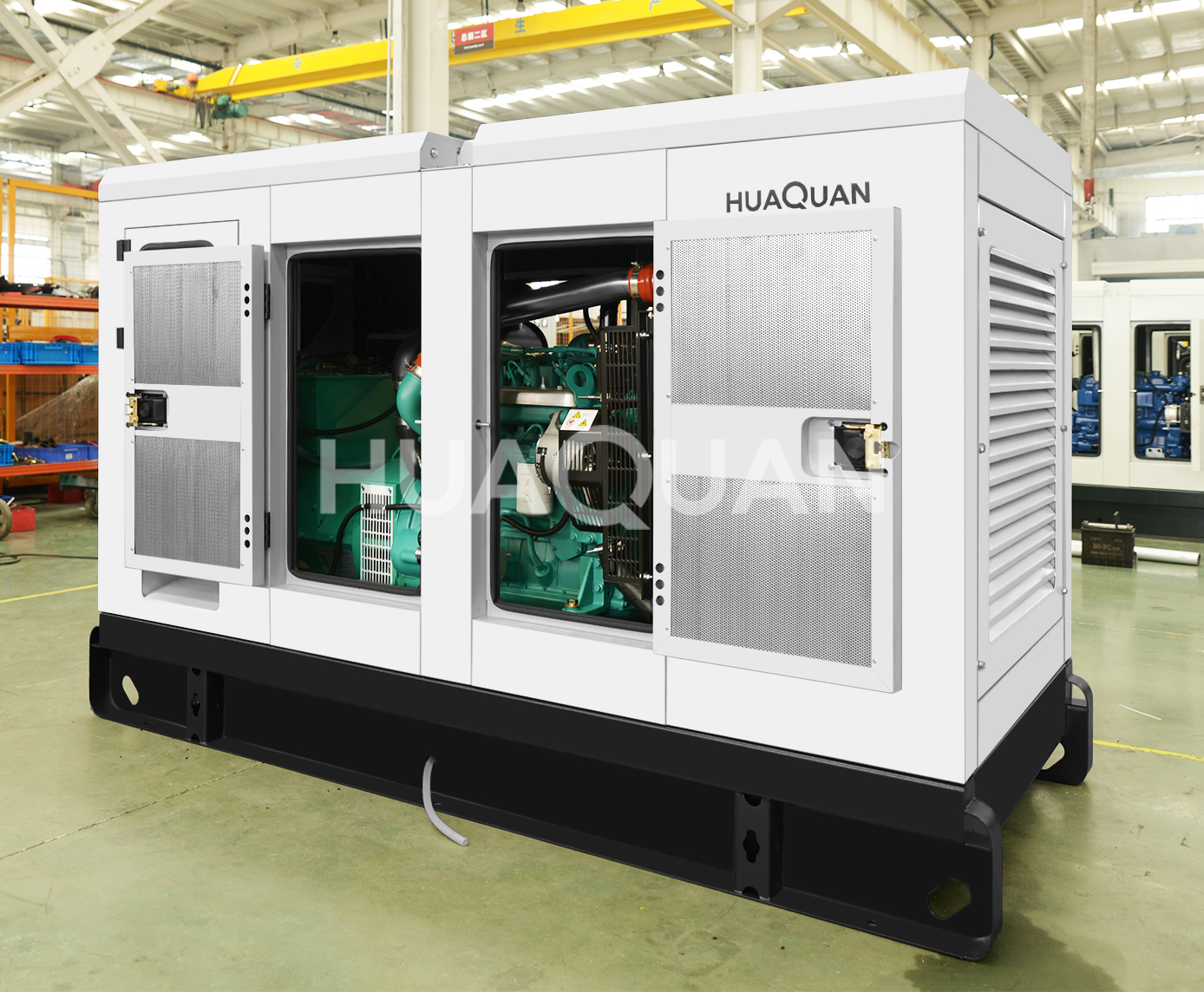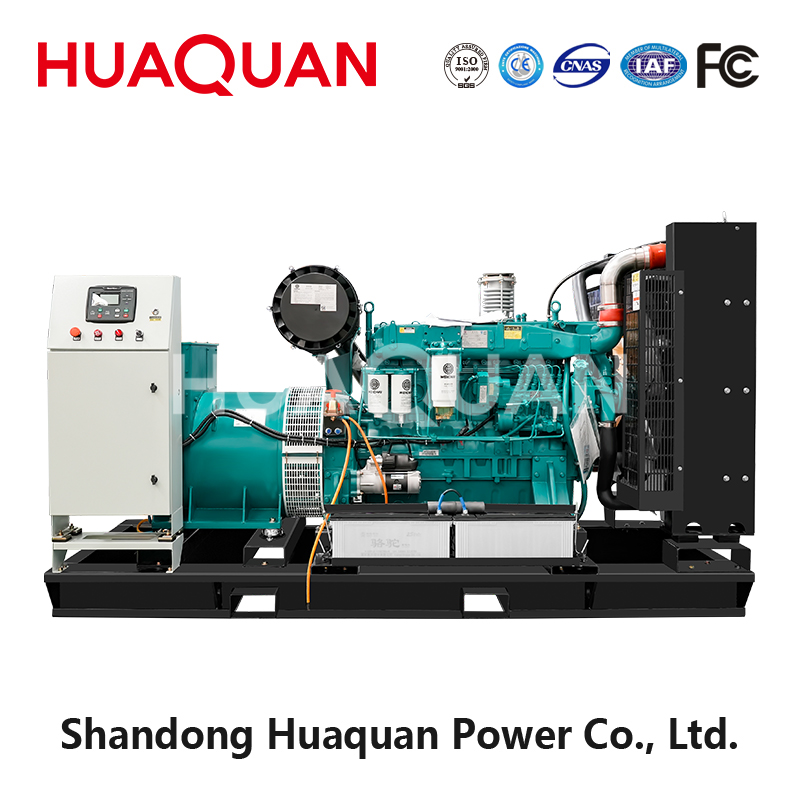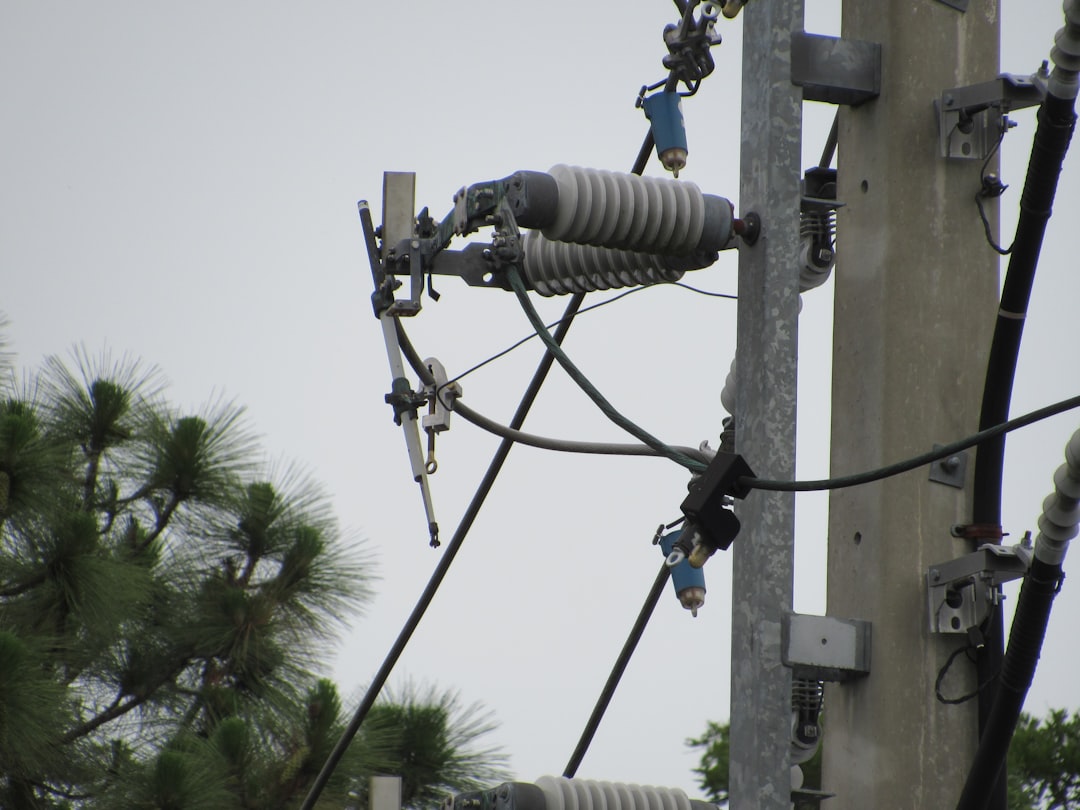
The short circuit capability of a diesel generator defines its ability to safely deliver fault current during electrical short circuits, which is essential for operating protective devices and maintaining system safety. Huaquan Power Generators are designed with defined short circuit ratings to ensure proper protection coordination.
What Is Short Circuit Capability in a Diesel Generator?
Short circuit capability measures the maximum fault current that a diesel generator can deliver and sustain for a specified duration without sustaining damage. Specifically, this rating determines whether the generator can produce enough current to operate circuit breakers, fuses, and other protective devices during fault conditions. Furthermore, adequate short circuit capability is essential for electrical safety, as it ensures that faults are cleared quickly before equipment damage or fire risk develops.
Short Circuit Current Categories
Generator short circuit current is divided into three time-dependent components that describe the fault current behavior from the instant of the fault through steady state. Additionally, understanding these components helps engineers design protection systems that coordinate properly with generator capability.
| Current Component | Duration | Typical Magnitude | Decay Characteristic | Primary Use |
|---|---|---|---|---|
| Subtransient (Xd″) | 0-5 cycles | 8-12x rated current | Rapid decay | First-cycle protection |
| Transient (Xd′) | 5-60 cycles | 3-5x rated current | Moderate decay | Time-delayed protection |
| Steady-state (Xd) | Over 60 cycles | 1-2x rated current | Constant | Sustained fault current |
Furthermore, the subtransient current determines the peak fault current that protective devices must interrupt. Additionally, the transient component provides the current available for time-delayed protection stages. Therefore, Huaquan Power specifies all three reactance values for every alternator model to support comprehensive protection system design.
How Is Short Circuit Capability Rated and Calculated?
Generator short circuit ratings are determined by the alternator internal reactances and the excitation system design. Consequently, these parameters directly influence the available fault current at the generator terminals.
Reactance Values and Fault Current Calculation
Engineers calculate the available short circuit current by dividing the rated voltage by the appropriate reactance value. Specifically, the subtransient reactance determines the initial fault current, while the transient reactance determines the intermediate fault current. Additionally, the synchronous reactance determines the sustained fault current. Therefore, lower reactance values result in higher available fault current, which improves protection coordination but increases mechanical stress on the generator.
| Alternator Model | Xd″ (pu) | Xd′ (pu) | Xd (pu) | Sustained SC Current | SC Duration Rating |
|---|---|---|---|---|---|
| Stamford S1 | 0.12 | 0.20 | 1.80 | 0.56x rated | 10 seconds |
| Stamford S4 | 0.10 | 0.18 | 1.60 | 0.63x rated | 10 seconds |
| Stamford S6 | 0.11 | 0.19 | 1.70 | 0.59x rated | 10 seconds |
| Mecc Alte ECO32 | 0.10 | 0.17 | 1.50 | 0.67x rated | 10 seconds |
| Mecc Alte ECO38 | 0.09 | 0.16 | 1.45 | 0.69x rated | 10 seconds |
Sustained Short Circuit Current
Sustained short circuit current represents the steady-state fault current that the generator can deliver continuously. Furthermore, this current is determined by the excitation system ability to force current through the fault impedance. Additionally, Huaquan Power generators equipped with PMG excitation systems can sustain 300% of rated current for 10 seconds, which ensures reliable operation of time-delayed protective devices. Therefore, PMG excitation is recommended for applications requiring high sustained fault current capability.
Why Does Short Circuit Capability Matter for System Safety?
Short circuit capability directly impacts the safety and reliability of the entire electrical distribution system. Furthermore, insufficient fault current can prevent protective devices from operating, leaving faults uncleared and creating fire and equipment damage hazards.
| Safety Concern | Insufficient SC Current | Consequence | Risk Level |
|---|---|---|---|
| Fault clearance | Breakers fail to trip | Sustained arc fault | Critical |
| Arc flash energy | Lower than expected | Underestimated hazard | High |
| Equipment damage | Extended fault duration | Fire and destruction | Critical |
| Personnel safety | Delayed fault isolation | Electric shock hazard | Critical |
| System selectivity | Lack of coordination | Widespread outage | High |
Huaquan Warning: Protection Coordination Failure
When generator short circuit current is insufficient to operate downstream protective devices, faults may remain uncleared indefinitely. Specifically, this condition creates extreme fire and electrocution hazards. Furthermore, the minimum pickup current of circuit breakers and fuses must be verified against the available fault current from the generator. Therefore, Huaquan Power provides detailed short circuit data for protection coordination studies during the system design phase.
What Standards Govern Diesel Generator Short Circuit Ratings?
Several international standards define the requirements and testing procedures for generator short circuit capability. Furthermore, compliance with these standards ensures that generators perform safely under fault conditions.
| Standard | Scope | Key Requirement | Test Method |
|---|---|---|---|
| IEC 60034-1 | Rotating machines | Withstand 3x rated current for 10s | Factory type test |
| IEEE C37.13 | LV AC circuit breakers | SC capability for breaker coordination | Calculation method |
| ISO 8528-5 | Generating sets | Voltage and frequency performance | Load testing |
| NEMA MG1 | Motors and generators | SC withstand ratings | Calculation and test |
| UL 2200 | Standby generators | SC ratings for listed equipment | UL testing protocol |
Additionally, Huaquan Power generators comply with IEC 60034-1 short circuit withstand requirements and are tested to verify fault current capability during factory acceptance testing. Moreover, certified test reports are available for every generator model to support protection system engineering.
How to Perform Short Circuit Analysis for Generator Systems?
A comprehensive short circuit analysis ensures that all protective devices operate correctly within the generator fault current capability. Furthermore, this analysis should be performed during system design and updated whenever the electrical configuration changes.
| Analysis Step | Method | Data Required | Output |
|---|---|---|---|
| 1. Gather data | Collect equipment parameters | Generator reactances, cable impedance | Input data package |
| 2. Calculate fault currents | IEC 60909 method | System voltage, X/R ratios | Available fault current at each bus |
| 3. Evaluate protection | Time-current curves | Breaker/fuse characteristics | Coordination verification |
| 4. Check ratings | Compare calculations | Equipment interrupt ratings | Adequacy confirmation |
| 5. Document results | Prepare coordination study | All calculations | Study report |
| 6. Review periodically | Update for changes | System modifications | Revised study |
Step-by-Step Fault Current Calculation
First, obtain the generator subtransient, transient, and synchronous reactance values from the alternator data sheet. Additionally, determine the system voltage and the impedance of all cables and transformers between the generator and the fault location. Then, calculate the total impedance from the generator to each fault point using complex number arithmetic. Furthermore, divide the prefault voltage by the total impedance to determine the fault current at each location. Consequently, compare these values against protective device ratings and minimum operating currents.
| Step | Action | Formula/Method | Verification |
|---|---|---|---|
| 1 | Obtain generator data | Xd″, Xd′, Xd from data sheet | Confirm with Huaquan |
| 2 | Calculate cable impedance | R + jX per unit length | Use cable manufacturer data |
| 3 | Sum total impedance | Ztotal = Zgen + Zcable + Ztransformer | Complex arithmetic |
| 4 | Calculate fault current | If = Vprefault / Ztotal | Check at each bus |
| 5 | Compare to device ratings | If under device interrupt rating | All devices must be adequate |
| 6 | Verify minimum operating | If above device minimum pickup | All breakers must trip |
Frequently Asked Questions About Diesel Generator Short Circuit Capability
Q1: What is the minimum sustained short circuit current required for breaker coordination?
Most low-voltage circuit breakers require a minimum fault current of at least 3-5 times their rated current for reliable instantaneous tripping. Furthermore, the generator must supply this current at the breaker location, accounting for cable impedance between the generator and the breaker. Additionally, Huaquan Power generators with PMG excitation typically sustain 300% rated current for 10 seconds, which supports most breaker coordination requirements.
Q2: Does generator paralleling affect short circuit capability?
Yes, paralleled generators combine their fault current contributions at the common bus. Furthermore, two identical generators operating in parallel can deliver approximately twice the short circuit current of a single unit. Additionally, this increased fault current improves protection coordination but requires that bus work and breakers be rated for the combined fault level. Therefore, Huaquan Power provides paralleling-specific short circuit calculations for multi-generator installations.
Q3: How does the excitation system affect short circuit current?
The excitation system determines the sustained short circuit current capability of the generator. Specifically, PMG-excited systems can force excitation current well above normal levels during fault conditions, maintaining 300% rated current for 10 seconds. Furthermore, self-excited systems rely on residual magnetism and the voltage regulator, which provides lower sustained fault current. Additionally, Huaquan Power recommends PMG excitation for applications where short circuit capability is critical for protection coordination.
Q4: What happens if a short circuit exceeds the generator rating?
If a fault persists beyond the generator short circuit duration rating, the alternator windings will overheat and sustain insulation damage. Furthermore, extreme cases can cause winding failure and fire. Therefore, protective devices must clear faults within the generator rated short circuit duration. Additionally, Huaquan Power generators include overcurrent protection that disconnects the generator output if the fault is not cleared by downstream devices within the rated time.
Q5: How do I obtain short circuit data for Huaquan Power generators?
Huaquan Power provides complete short circuit data including subtransient, transient, and synchronous reactances in the technical data sheet for every generator model. Furthermore, this data is available upon request from the Huaquan Power Engineering team. Additionally, certified type test reports with measured fault current values are available for projects requiring verified performance data.
Conclusion
Short circuit capability represents a fundamental safety parameter that ensures proper operation of protective devices during Electrical faults. Specifically, the generator must deliver sufficient fault current to clear faults quickly and safely. Huaquan Power designs generators with defined short circuit ratings and provides comprehensive data for protection system engineering. Furthermore, PMG excitation systems enhance sustained fault current capability, which improves protection coordination reliability for critical installations.
Huaquan Power Key Recommendations:
- Perform short circuit analysis during system design using Huaquan Power alternator reactance data
- Verify that all protective devices can operate within the available fault current
- Select PMG-excited generators for applications requiring high sustained fault current capability
For expert guidance on generator short circuit analysis, contact Huaquan Power at +86-159-0536-0210 or visit huaquanpower.net.
⚡ Explore Related Solutions
- 🏭 500kW Diesel Generator
- 🏭 1000kW Diesel Generator
- 🏭 500kW YC Diesel Generator
- 🔧 KMS (Cummins/Doosan) Series
- 📋 Diesel Generator Sets
- 📋 Order Process — How to Buy
- 📋 Contact Us
💡 Need a customized solution? Contact our engineering team for project-specific recommendations.