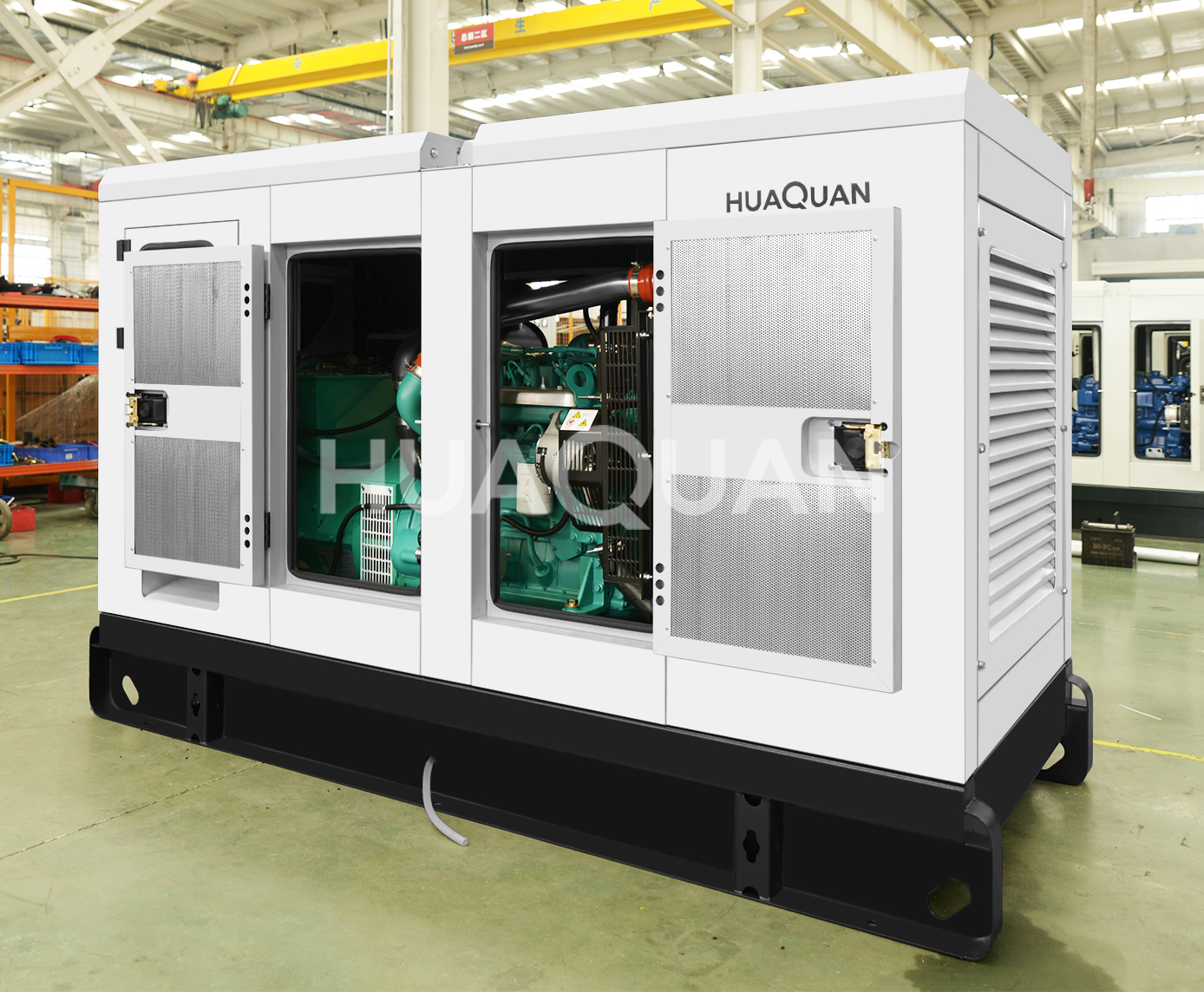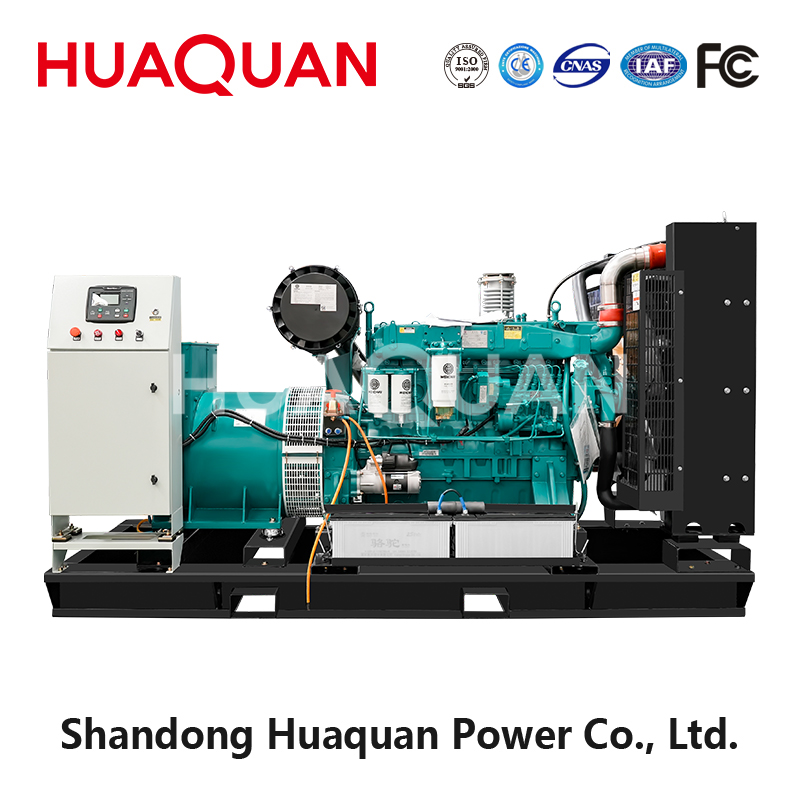
The recommended generator room clearance defines the minimum space around a Diesel Generator required for safe operation, maintenance access, and adequate ventilation. Huaquan Power has compiled this comprehensive guide covering clearance specifications, ventilation requirements, and room design best practices for optimal generator installations.
Why Is Generator Room Clearance Important?
Adequate clearance around diesel Generators serves three critical functions: cooling airflow, maintenance access, and fire safety. Furthermore, insufficient clearance causes recirculation of hot cooling air, which leads to engine overheating and derating. Specifically, Huaquan Power specifies minimum clearances for each generator model to ensure safe and efficient operation throughout the equipment’s service life. Additionally, building codes and insurance requirements mandate minimum clearance distances for fire protection.
Clearance Categories and Their Purposes
Generator room clearance requirements fall into several categories, each serving a distinct purpose. Furthermore, understanding these categories helps designers optimize room layouts without compromising safety or performance. Therefore, Huaquan Power provides detailed clearance drawings for every generator model showing all required dimensions. Moreover, these drawings include both minimum required clearances and recommended clearances for optimal maintenance access.
| Clearance Zone | Purpose | Minimum Distance | Recommended Distance |
|---|---|---|---|
| Front (radiator end) | Cooling air discharge | 1.0 m | 1.5-2.0 m |
| Rear (alternator end) | Service access | 0.8 m | 1.0-1.2 m |
| Left side | Maintenance and airflow | 0.8 m | 1.0-1.2 m |
| Right side | Maintenance and airflow | 0.8 m | 1.0-1.2 m |
| Above (ceiling) | Ventilation and crane access | 1.5 m | 2.0-3.0 m |
What Are the Ventilation Clearance Requirements?
Ventilation clearance requirements ensure the generator room receives adequate combustion air and cooling airflow without recirculation. Furthermore, the radiator fan must discharge hot air freely without restriction that causes back pressure. Therefore, Huaquan Power calculates ventilation requirements based on generator heat rejection, room size, and maximum ambient temperature. Additionally, proper ventilation design directly affects generator power output and fuel consumption.
Airflow Pattern Design
The ideal airflow pattern draws cool air from low positions on one side of the room and exhausts hot air through the radiator on the opposite side. Furthermore, this cross-flow pattern prevents hot air recirculation that would otherwise raise the effective ambient temperature around the generator. Consequently, Huaquan Power recommends against placing generators in corners or against walls that block airflow on multiple sides. Moreover, the combustion air intake should connect to the outdoor atmosphere rather than drawing from the generator room.
| Generator Power (kW) | Combustion Air (m³/h) | Cooling Air (m³/h) | Total Ventilation (m³/h) |
|---|---|---|---|
| 50 | 150 | 5,000 | 5,500 |
| 100 | 300 | 12,000 | 13,000 |
| 250 | 750 | 28,000 | 31,000 |
| 500 | 1,500 | 55,000 | 60,000 |
| 1000 | 3,000 | 105,000 | 115,000 |
What Maintenance Access Clearances Are Required?
Maintenance personnel need sufficient space to perform routine service tasks safely and efficiently. Furthermore, inadequate access clearance increases maintenance time, reduces service quality, and creates safety hazards for technicians. Therefore, Huaquan Power designs generator installations with maintenance access as a primary consideration. Additionally, certain maintenance tasks require specific clearances for tools and equipment that exceed the basic operating clearances.
Service Task Clearance Requirements
Different maintenance tasks require different access clearances based on the tools and body positions involved. Furthermore, major overhaul operations such as cylinder head removal or crankshaft inspection require significantly more space than routine oil changes. Consequently, Huaquan Power provides task-specific clearance recommendations for all scheduled maintenance activities. Moreover, planning for major maintenance access during initial room design avoids costly modifications later.
| Service Task | Required Clearance | Access Direction | Equipment Needed |
|---|---|---|---|
| Daily walk-around inspection | 0.8 m all sides | Standing | Flashlight |
| Oil and filter change | 1.0 m service side | Kneeling/lying | Oil drain pan, wrenches |
| Valve adjustment | 1.2 m engine side | Standing/bending | Feeler gauges, wrenches |
| Alternator service | 1.5 m rear | Standing | Megger, hand tools |
| Engine major overhaul | 2.0 m all sides | Various | Engine hoist, special tools |
| Radiator removal | 2.0 m front | Standing | Crane or hoist |
What Fire Safety Clearances Apply to Generator Rooms?
Fire codes and insurance standards mandate specific clearances between generators and combustible materials. Furthermore, these requirements protect both the generator facility and adjacent structures from fire spread. Therefore, Huaquan Power designs generator installations that comply with NFPA 110, local fire codes, and insurance requirements. Additionally, fire suppression system design depends on proper room clearances to function effectively.
| Fire Safety Requirement | Specification | Code Reference |
|---|---|---|
| Distance to combustible materials | Minimum 1.0 m | NFPA 110 |
| Fire-rated wall construction | Minimum 2-hour rating | Local building code |
| Emergency egress pathway | Minimum 1.0 m wide | NFPA 101 |
| Fire suppression clearance | Nozzle to equipment per design | NFPA 15/17 |
| Fuel tank separation | Per local code (typically 1.5 m) | NFPA 30 |
How Do You Calculate the Minimum Generator Room Size?
Calculating the minimum room size requires adding the generator physical dimensions to all required clearance distances. Furthermore, the calculation must consider the largest generator in multi-unit installations and account for shared access paths. Therefore, Huaquan Power provides room sizing tools and layout drawings for each project. Additionally, future expansion needs should influence room size decisions during the initial design phase.
| Generator Size | Generator Dimensions (L×W×H) | Min Room Size (L×W×H) | Recommended Room Size |
|---|---|---|---|
| 50 kW | 2.2×0.8×1.3 m | 4.8×3.4×2.8 m | 5.5×4.0×3.5 m |
| 200 kW | 3.2×1.1×1.8 m | 6.8×3.9×3.3 m | 8.0×4.5×4.0 m |
| 500 kW | 4.5×1.6×2.2 m | 8.8×4.8×3.7 m | 10.0×5.5×4.5 m |
| 1000 kW | 5.8×2.0×2.5 m | 10.6×5.6×4.0 m | 12.0×6.5×5.0 m |
| 2000 kW | 7.5×2.5×3.0 m | 13.5×6.6×4.5 m | 15.0×8.0×5.5 m |
Frequently Asked Questions
Q1: Can I install a generator against a wall to save space?
A1: While some generators can be positioned with one side against a wall, you must maintain the minimum clearance on all other sides for cooling and maintenance. Furthermore, the radiator end must always have unrestricted airflow. Therefore, Huaquan Power evaluates each installation individually and provides layout recommendations that balance space efficiency with operational requirements.
Q2: What happens if the generator room is too small?
A2: An undersized generator room causes inadequate cooling airflow, resulting in elevated operating temperatures that trigger derating or shutdown. Furthermore, restricted maintenance access increases service costs and reduces service quality. Additionally, inadequate clearance may violate fire codes and void insurance coverage. Therefore, Huaquan Power strongly advises against compromising room size below minimum specifications.
Q3: Do I need a dedicated room for my diesel generator?
A3: Indoor generators require a dedicated room or enclosure that provides fire separation, ventilation, and noise control. Furthermore, the room must not be used for storage or other purposes that could obstruct access or create fire hazards. Therefore, Huaquan Power recommends purpose-built generator rooms that comply with all applicable codes and standards.
Q4: How does outdoor installation differ from indoor room requirements?
A4: Outdoor generators in weatherproof enclosures eliminate the need for a dedicated room but still require clearance for airflow and maintenance access. Furthermore, outdoor installations must account for wind patterns, drainage, and security considerations. Additionally, Huaquan Power offers weatherproof canopy and containerized solutions designed for outdoor deployment.
Q5: Can multiple generators share the same room?
A5: Yes, multiple generators can share a room, but each unit requires its own clearance envelope and the room must have sufficient ventilation for all units operating simultaneously. Furthermore, adequate spacing between generators prevents acoustic coupling and simplifies maintenance access. Therefore, Huaquan Power provides multi-unit layout designs that optimize space while maintaining all clearance requirements.
Huaquan Power Recommendations: Always design generator rooms with both minimum required clearances and future maintenance access in mind. Additionally, ensure ventilation calculations account for the maximum expected ambient temperature at the installation site. Furthermore, plan for major maintenance operations such as engine overhauls that require additional temporary space. Contact Huaquan Power at +86-159-0536-0210 or visit huaquanpower.net for professional generator room design and layout services.
⚡ Explore Related Solutions
- 🏭 500kW Diesel Generator
- 🏭 1000kW Diesel Generator
- 🏭 500kW YC Diesel Generator
- 🔧 KMS (Cummins/Doosan) Series
- 📋 Diesel Generator Sets
- 📋 Order Process — How to Buy
- 📋 Contact Us
💡 Need a customized solution? Contact our engineering team for project-specific recommendations.