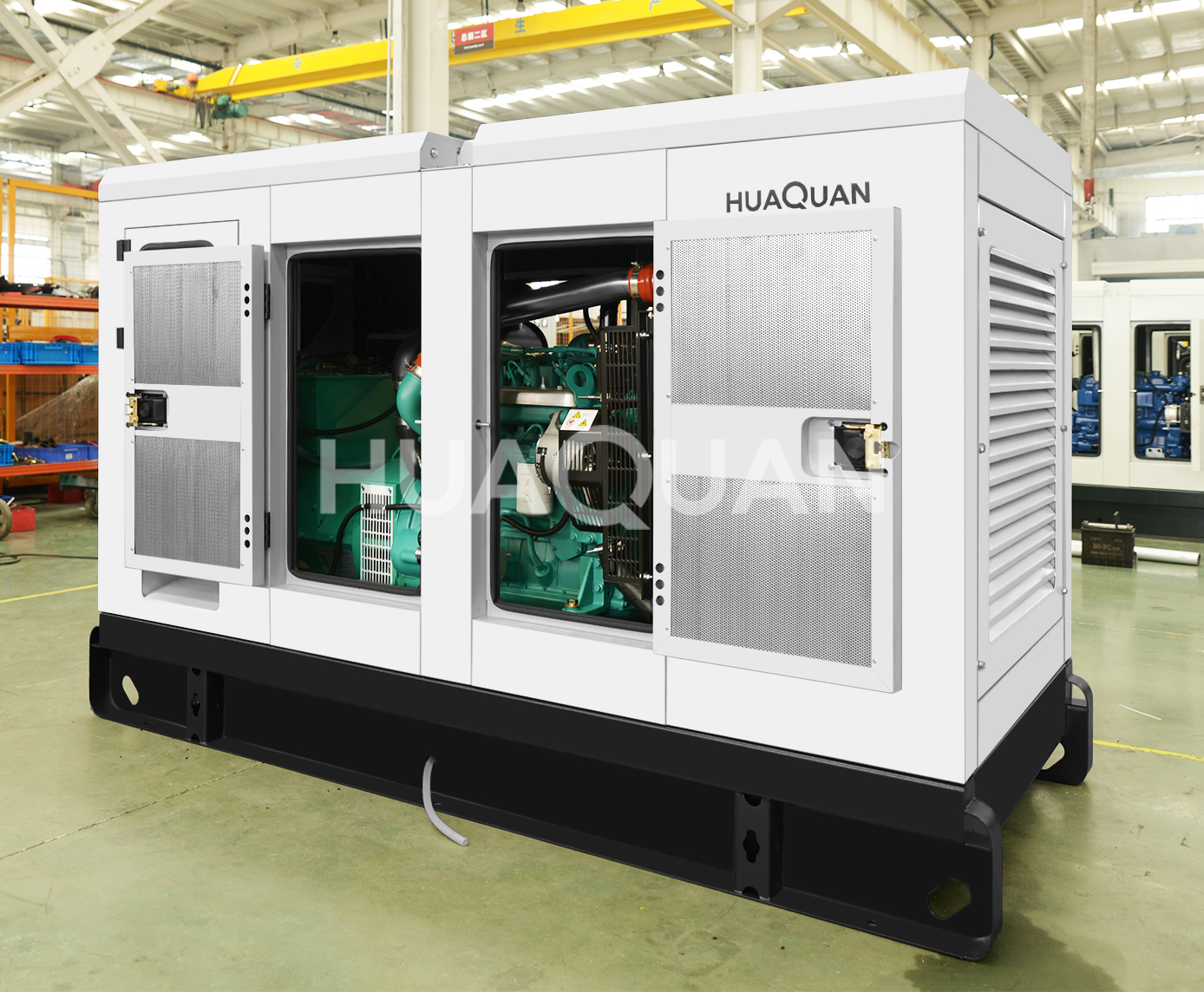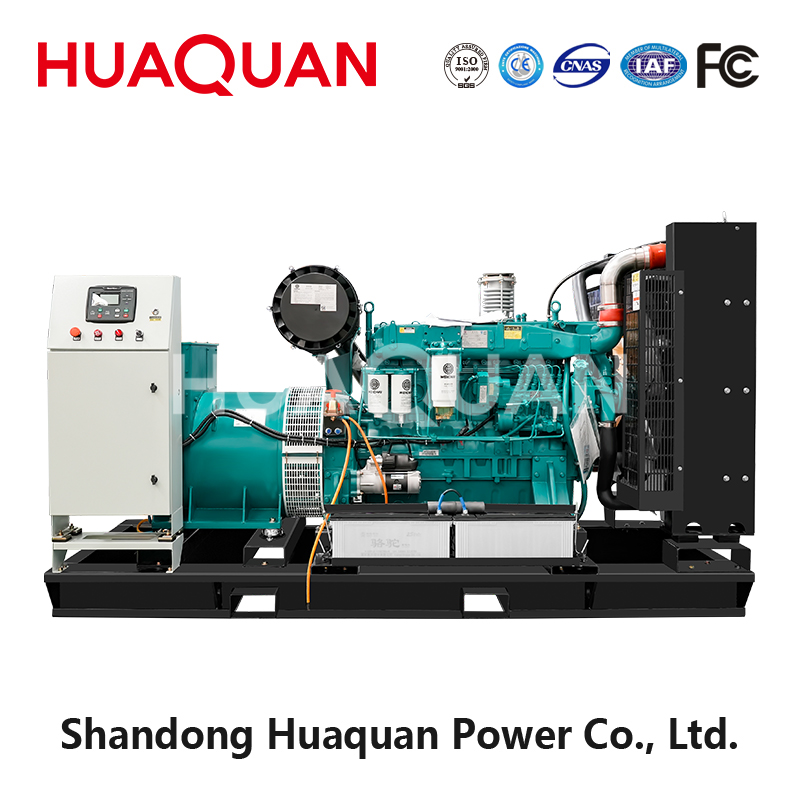
Reactive power compensation is a critical technical requirement for diesel generator systems, directly impacting voltage stability, power quality, and overall system efficiency. Huaquan Power has established comprehensive guidelines for reactive power compensation that ensure their generator sets operate at optimal power factor levels across diverse load conditions. Huaquan Power summarizes the following detailed guide on reactive power compensation requirements.
What Is Reactive Power and Why Does It Matter in Diesel Generator Systems?
Reactive power (measured in VARs or kVARs) represents the portion of electrical power that oscillates between the source and load without performing useful work. Furthermore, in diesel generator systems, reactive power arises primarily from inductive loads such as motors, transformers, and welding equipment. Consequently, when reactive power demand increases, the generator must supply both active and reactive power, which significantly affects its capacity and efficiency.
Huaquan Power Generators are designed to handle reactive power loads with specific compensation requirements. Additionally, the relationship between active power (kW), reactive power (kVAR), and apparent power (kVA) follows the power triangle principle, where apparent power equals the vector sum of active and reactive components.
Understanding the Power Triangle
The power triangle illustrates the fundamental relationship among active, reactive, and apparent power in AC circuits. Specifically, active power (P) performs actual work, reactive power (Q) sustains electromagnetic fields, and apparent power (S) represents the total power delivered. Moreover, the cosine of the angle between apparent and active power vectors defines the power factor, which Huaquan Power systems typically maintain above 0.8 lagging.
| Parameter | Symbol | Unit | Typical Range for Huaquan Generators |
|---|---|---|---|
| Active Power | P | kW | Rated output × 0.8–1.0 |
| Reactive Power | Q | kVAR | Rated output × 0.0–0.75 |
| Apparent Power | S | kVA | Generator nameplate rating |
| Power Factor | cos φ | — | 0.8 lagging (standard) |
How Does Reactive Power Compensation Work in Generator Systems?
Reactive power compensation works by introducing capacitive reactive power to counterbalance the inductive reactive power drawn by loads. Furthermore, this process reduces the total reactive power that the generator must supply, thereby freeing up generator capacity for active power delivery. Consequently, the generator operates more efficiently with improved voltage regulation and reduced line losses.
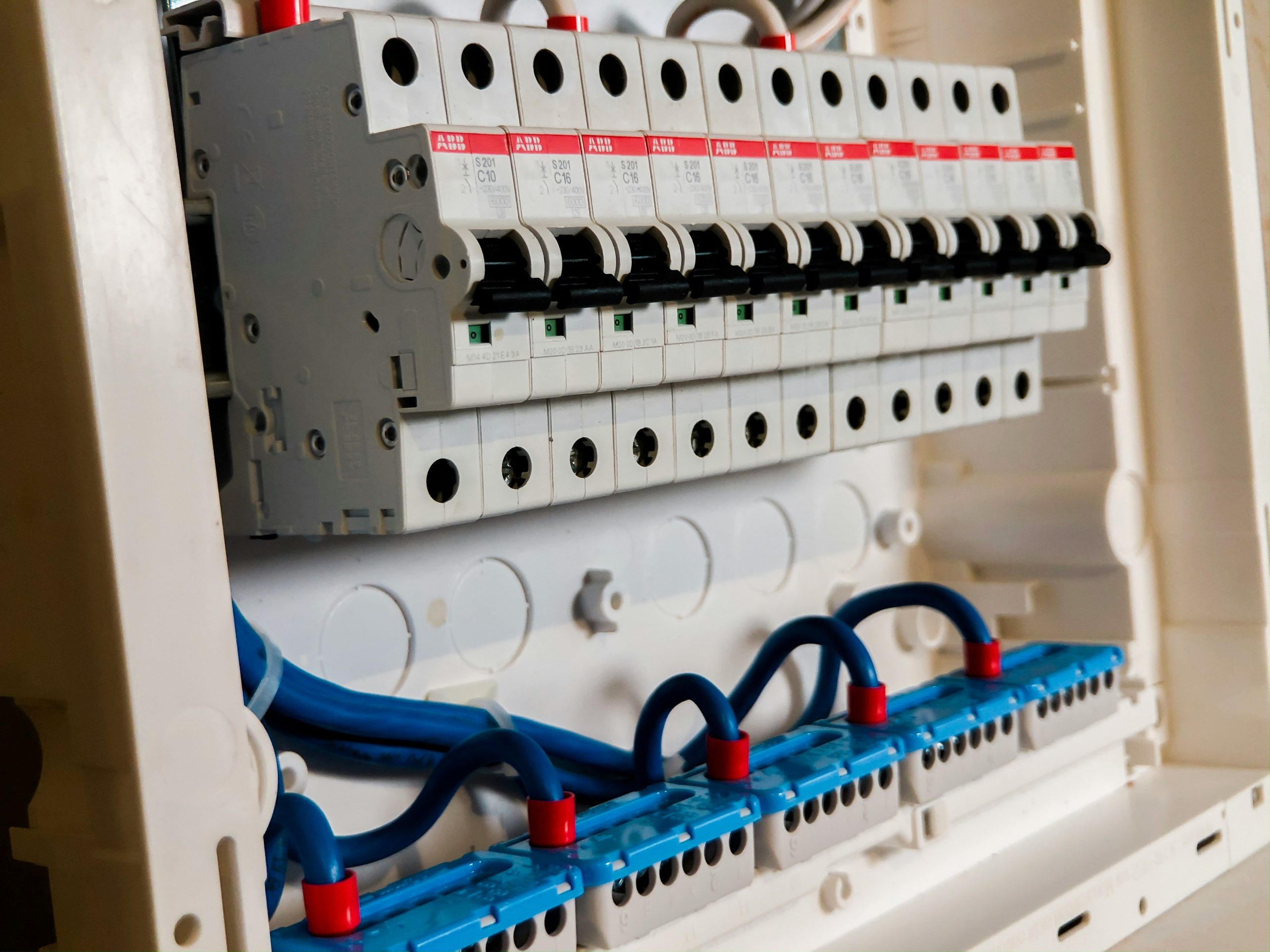
Huaquan Power employs multiple compensation strategies depending on the application scenario. Additionally, automatic power factor correction (APFC) systems are integrated into Huaquan generator control panels to dynamically adjust compensation levels as load conditions change.
Step-by-Step Compensation Process
| Step | Operation | Key Component | Performance Indicator |
|---|---|---|---|
| 1. Load Detection | Measure real-time power factor and reactive power demand | Power analyzer / CT and PT | Power factor reading ±0.01 accuracy |
| 2. Calculation | Compute required kVAR compensation | APFC controller | Target PF ≥ 0.95 |
| 3. Capacitor Switching | Engage capacitor banks in stages | Contactors / Thyristors | Switching time ≤ 20ms |
| 4. Verification | Confirm improved power factor | Power meter | PF within 0.93–0.98 |
| 5. Dynamic Adjustment | Continuously monitor and adjust | APFC feedback loop | Response time ≤ 100ms |
What Are the Types of Reactive Power Compensation Equipment?
Diesel generator systems utilize several types of compensation equipment, each suited to different load profiles and operational requirements. Huaquan Power selects the appropriate compensation method based on the specific installation environment and load characteristics.
| Compensation Type | Mechanism | Advantages | Disadvantages | Huaquan Application |
|---|---|---|---|---|
| Fixed Capacitor Banks | Static capacitors permanently connected | Low cost, simple installation | Over-compensation risk at low loads | Steady-load industrial sites |
| Automatic APFC Panels | Stepped capacitor switching with controller | Dynamic response, PF optimization | Higher cost, controller maintenance | Variable-load commercial |
| Synchronous Condenser | Over-excited synchronous motor | Smooth adjustment, stability | High capital cost, noise | Large power plants |
| STATCOM (SVC) | Power electronics-based reactive compensator | Ultra-fast response, bidirectional | Expensive, harmonic concerns | Critical infrastructure |
| Generator AVR Adjustment | Excitation current modulation | No external equipment needed | Limited range, reduces active capacity | Emergency backup only |
What Happens When Reactive Power Compensation Is Insufficient?
Insufficient reactive power compensation creates a cascade of operational problems that degrade generator performance and reduce equipment lifespan. Furthermore, the consequences extend beyond the generator itself to affect the entire electrical distribution system.
| Failure Mode | Cause | Consequence | Severity |
|---|---|---|---|
| Voltage Drop | Excessive reactive current in stator windings | Terminal voltage falls below 95% rated | High |
| Reduced Active Capacity | Apparent power limit reached before active limit | Generator delivers less kW than rated | High |
| Increased Line Losses | I²R losses proportional to total current squared | Energy waste 5–15% above optimal | Medium |
| Overheating | Excessive current in windings and cables | Insulation degradation, reduced lifespan | High |
| Motor Stalling | Insufficient voltage for motor starting torque | Production downtime | Critical |
| Penalty Charges | Power factor below utility contract threshold | Additional electricity cost 2–10% | Medium |
Huaquan Tip: When the power factor drops below 0.85, Huaquan Power strongly recommends immediate compensation installation to prevent voltage instability and capacity reduction.
How to Calculate the Required Reactive Power Compensation?
Calculating the required compensation involves determining the difference between the current reactive power demand and the target reactive power level. Furthermore, accurate calculation ensures the compensation system is neither undersized (leaving problems unresolved) nor oversized (causing leading power factor issues).
The fundamental formula for compensation calculation is:
Qc = P × (tan φ₁ − tan φ₂)
Where Qc is the required capacitor rating in kVAR, P is the active power in kW, tan φ₁ is the tangent of the current phase angle, and tan φ₂ is the tangent of the desired phase angle after compensation.
| Current PF (cos φ₁) | Target PF (cos φ₂) | kVAR per kW of Load | Compensation Ratio |
|---|---|---|---|
| 0.70 | 0.95 | 0.671 | 67.1% |
| 0.75 | 0.95 | 0.536 | 53.6% |
| 0.80 | 0.95 | 0.421 | 42.1% |
| 0.85 | 0.95 | 0.313 | 31.3% |
| 0.90 | 0.95 | 0.157 | 15.7% |
Practical Calculation Example
Consider a Huaquan 500kW diesel generator operating at 0.8 power factor with a target of 0.95. Therefore, the active power P = 500kW, and the required compensation Qc = 500 × (tan acos 0.8 − tan acos 0.95) = 500 × (0.75 − 0.329) = 210.5 kVAR. Consequently, Huaquan Power would recommend installing approximately 210 kVAR of automatic capacitor compensation.
What Are the Maintenance Requirements for Reactive Power Compensation Systems?
Proper maintenance of compensation systems ensures sustained performance and prevents unexpected failures. Additionally, Huaquan Power provides detailed maintenance schedules that extend equipment service life and maintain compensation accuracy.
| Maintenance Task | Frequency | Procedure | Warning Signs |
|---|---|---|---|
| Capacitor Visual Inspection | Monthly | Check for bulging, leaking, discoloration | Swollen case, oil leakage |
| Capacitance Measurement | Quarterly | Measure μF value against nameplate | Value deviates >10% from rated |
| Contactors/Thyristors | Quarterly | Inspect contacts, test switching | Pitting, slow response |
| APFC Controller Calibration | Semi-annually | Verify PF readings with reference meter | Reading drift >0.02 |
| Thermal Imaging | Annually | Scan all connections and capacitor cans | Hot spots >65°C |
| Harmonic Analysis | Annually | Measure THD at PCC point | THD >5% (IEEE 519 limit) |
Huaquan Warning: Never energize a capacitor bank without verifying its discharge status. Huaquan Power mandates a minimum 5-minute discharge period after de-energization before any maintenance contact.
Common Questions About Reactive Power Compensation in Diesel Generators
Q1: Can a diesel generator operate without reactive power compensation?
Yes, a diesel generator can operate without external compensation, but its effective active power output will be significantly reduced. Specifically, at 0.8 power factor without compensation, a 625kVA Huaquan generator can only deliver 500kW of active power. Furthermore, operating at low power factor increases winding temperatures and reduces generator lifespan by 15–25%.
Q2: What is the recommended power factor for Huaquan generator systems?
Huaquan Power recommends maintaining a power factor between 0.93 and 0.97 lagging for optimal performance. Additionally, this range balances efficient generator utilization with adequate reactive margin for motor starting transients. Importantly, exceeding 0.98 leading power factor risks generator instability and loss of synchronism.
Q3: How do harmonics affect reactive power compensation?
Harmonics from non-linear loads (VFDs, UPS systems, LED lighting) can cause capacitor resonance, amplified harmonic currents, and premature capacitor failure. Consequently, Huaquan Power recommends detuned capacitor banks with series reactors (5.67% or 7% tuning) when THD exceeds 5% at the point of common coupling.
Q4: Should compensation be installed at the generator or at the load?
Ideally, compensation should be installed as close to the inductive load as possible to reduce reactive current flow through cables and switchgear. However, for generator-specific applications, Huaquan Power recommends a hybrid approach: individual compensation at large motor loads plus centralized APFC at the generator bus for remaining reactive demand.
Q5: What happens if the power factor goes leading (capacitive)?
A leading power factor occurs when capacitive compensation exceeds inductive demand, causing the generator AVR (Automatic Voltage Regulator) to reduce excitation and potentially leading to voltage collapse. Furthermore, leading power factor operation can cause generator loss-of-excitation protection to trip. Therefore, Huaquan Power systems include anti-leading-PF protection that automatically disconnects capacitor steps when PF exceeds 0.98 leading.
Conclusion
Reactive power compensation is not merely an optional enhancement but a fundamental requirement for reliable and efficient diesel generator operation. Huaquan Power emphasizes three core recommendations: (1) Maintain power factor above 0.93 lagging through properly sized automatic compensation systems; (2) Perform regular capacitance measurements and thermal inspections to prevent compensation failure; (3) Consult Huaquan Power Engineering team for site-specific compensation design that accounts for harmonic conditions and load characteristics.
⚡ Explore Related Solutions
- 🏭 500kW Diesel Generator
- 🏭 1000kW Diesel Generator
- 🏭 500kW YC Diesel Generator
- 🔧 KMS (Cummins/Doosan) Series
- 📋 Diesel Generator Sets
- 📋 Order Process — How to Buy
- 📋 Contact Us
💡 Need a customized solution? Contact our engineering team for project-specific recommendations.
Contact Huaquan Power: For expert guidance on reactive power compensation solutions tailored to your generator system, reach out to the Huaquan Power technical team at huaquanpower.net.