There is an increasing demand for reliable and safe power distribution systems to support rapidly growing infrastructure projects. Highly populated areas cannot function without a stable and continuous power supply.
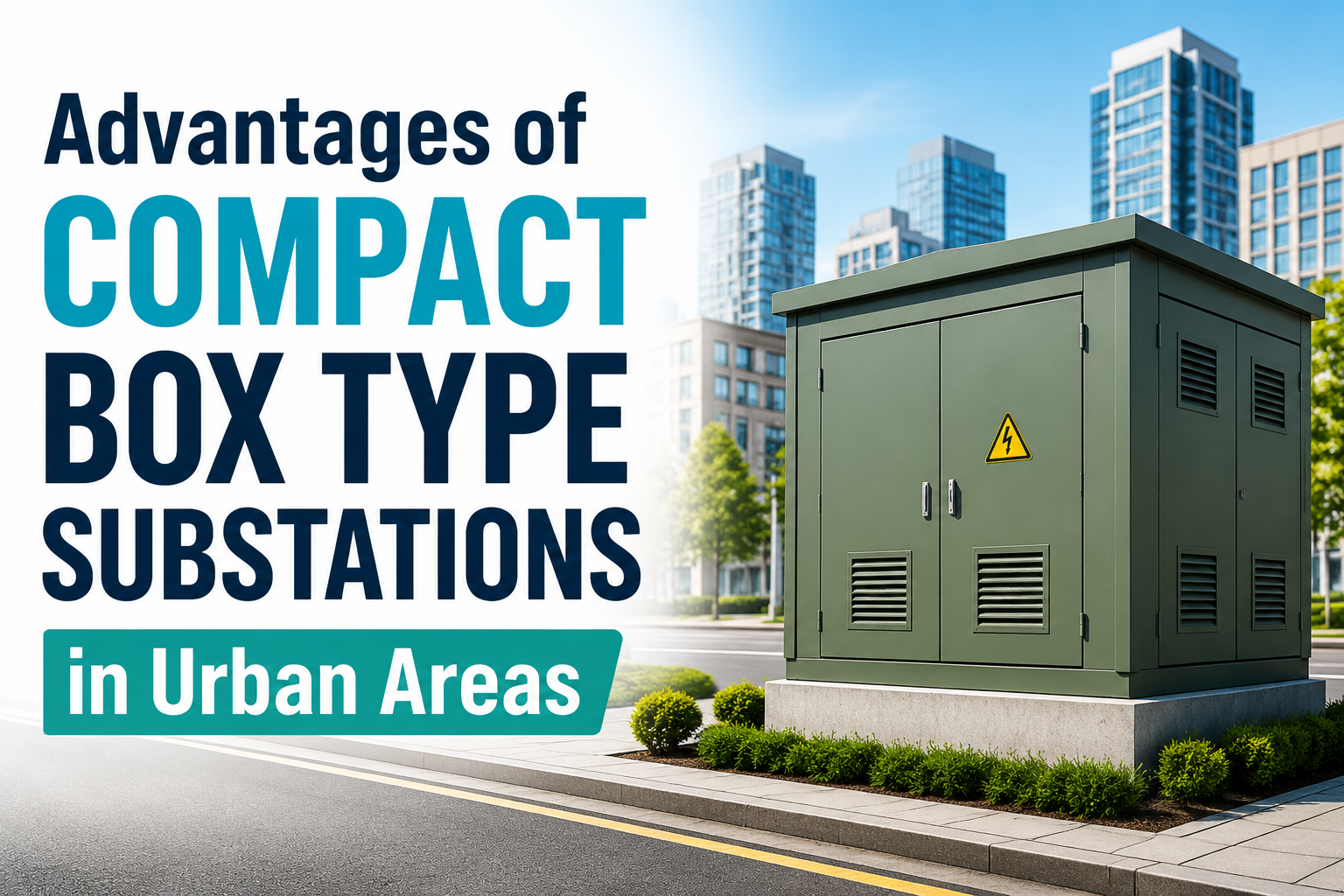
Moreover, the limited space available for electrical infrastructure is creating a significant challenge for efficient industrial operations. A compact box-type substation offers a smart and effective solution to this challenge. It integrates voltage conversion, power handling, and distribution equipment into one compact and ready-to-install unit.
In this article by HuaQuan, you will learn exactly what a compact box-type substation is, why urban areas desperately need them, their top space-saving advantages, and the key factors to consider before making an investment.
What Is a Compact Box-Type Substation?
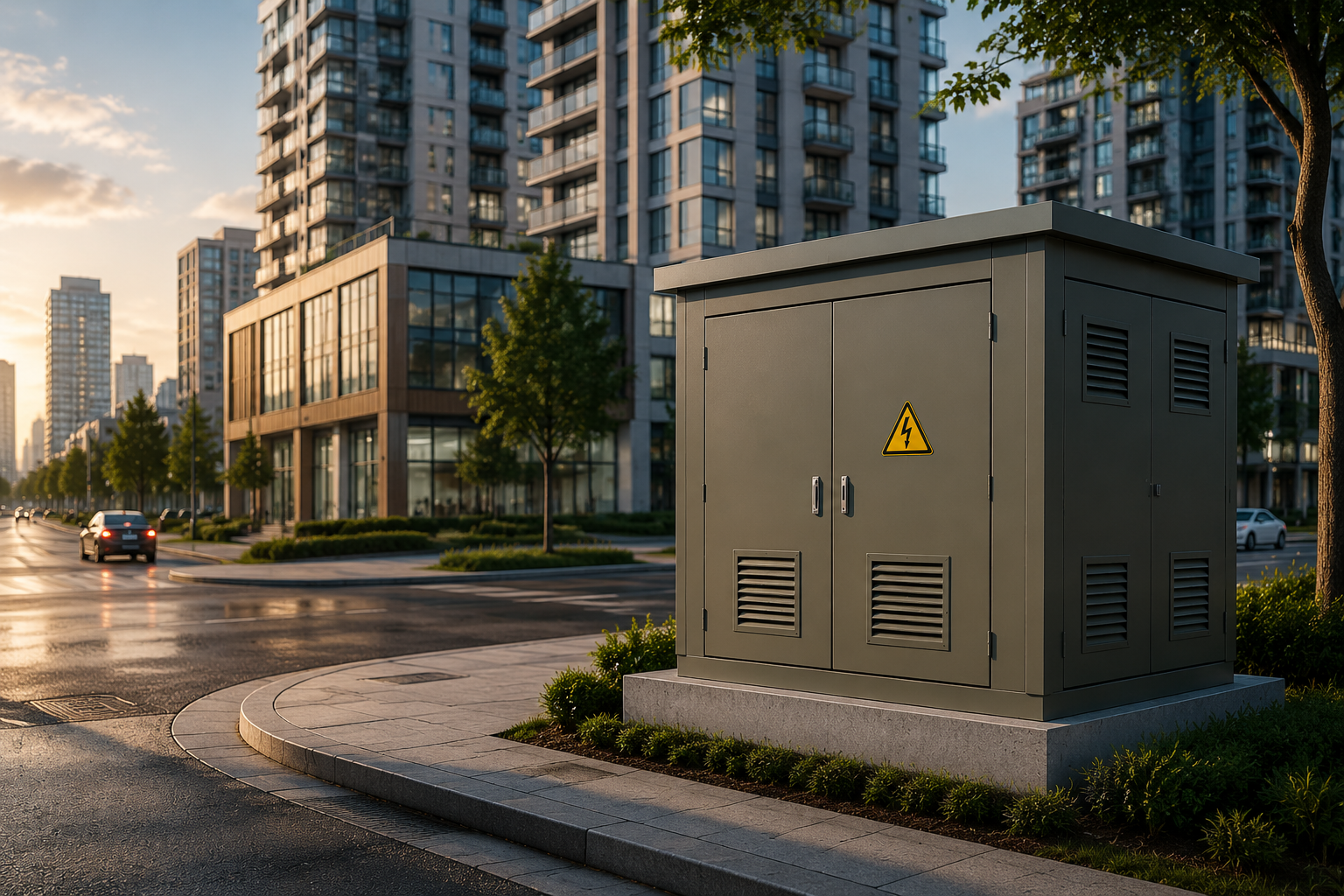
A compact box-type substation is a state-of-the-art electricity distribution system. It is a fully assembled unit that brings all functional components into a single compact unit. It combines a transformer, high-voltage switchgear, low-voltage switchgear, and an automated monitoring system housed inside a single enclosure. Unlike a traditional open-air substation, this system not only makes installation convenient but also occupies less space, which is a major obstacle in densely populated areas. The system is fully assembled and tested in the factory. This makes it very reliable and safe to use.
Why Urban Areas Need Compact Substation Solutions
Supplying continuous power to a busy city is not an easy task. It comes with many technical problems. Compact substations are specifically engineered to cater to high demand in urban settings:
- Limited land availability: Urban land is extremely expensive due to high demand and an ever-increasing population.
- High electricity demand: Modern infrastructure, including housing schemes and shopping malls, requires a huge amount of electrical supply at all times.
- Dense residential and commercial development: It is very common for cities to have tall and dense buildings. Ultimately, there is very limited space left for installing bulky electrical systems.
- Need for safe public-area installation: There is an immense demand for safe installation of equipment, so that it poses no threat to people living and walking nearby.
- Fast infrastructure expansion: As cities continue to expand, they require simple, ready-to-use power equipment.
- Requirement for reliable power supply: A reliable power supply is essential to protect cities from economic loss.
Major Advantages of Compact Box-Type Substations in Urban Areas
Space-Saving Design
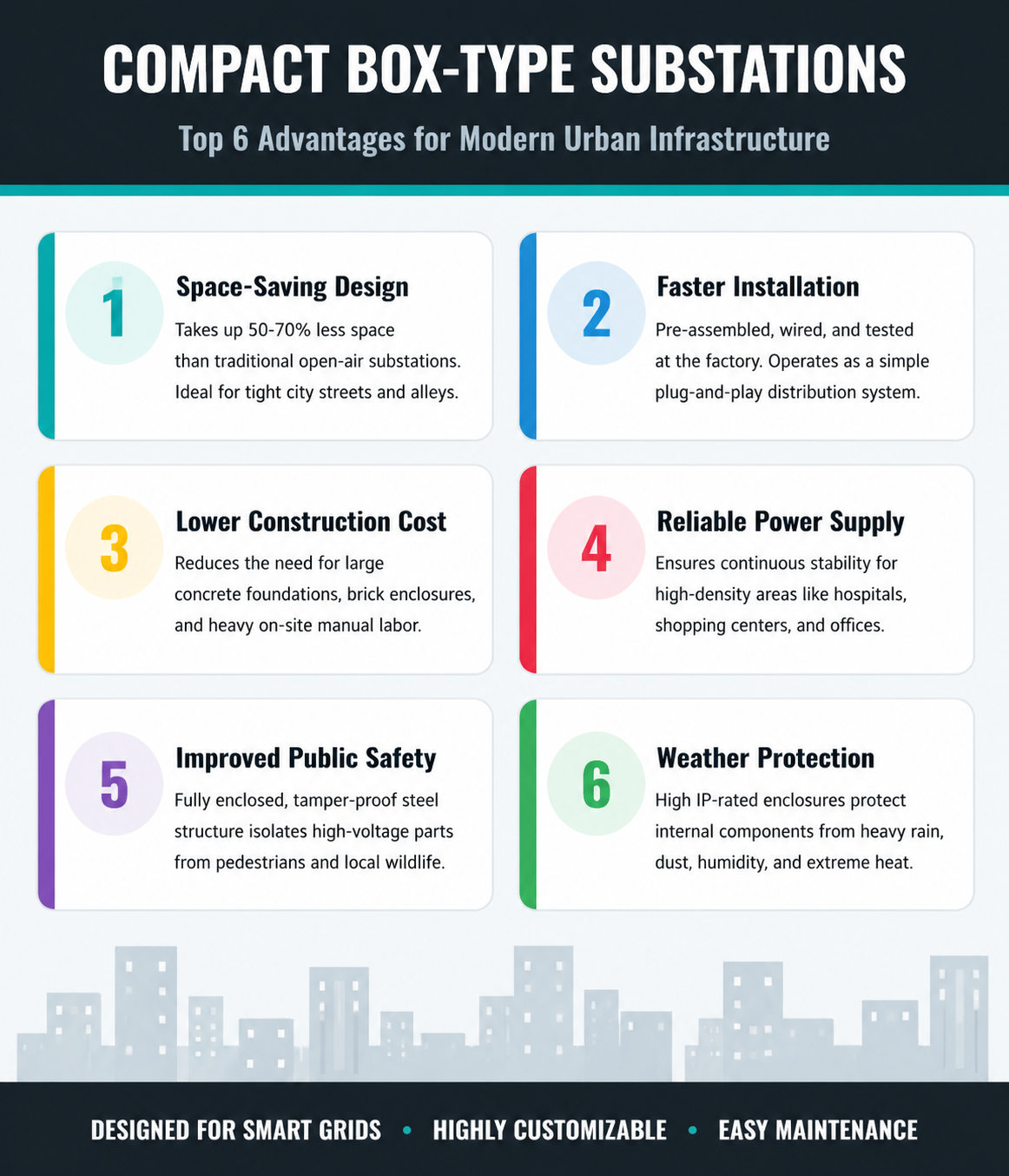
Space is a precious resource in an urban setting. It is very limited and expensive. Compact box-type substations are very advantageous in this situation. Their easy-to-handle structure is ideal for urban areas. They can be installed in small spaces along roads. They also fit between commercial buildings and within residential areas. Most importantly, they do this without disturbing the flow of the city.
Faster Installation
Another advantage of a compact box-type substation is that it is very convenient to install, and the process is not time-consuming at all. All of its components are pre-assembled, pre-wired, and carefully calibrated by the manufacturer. As a result, it is almost ready to use, like a plug-and-play system.
Lower Construction Cost
The compact and pre-assembled design of the compact box-type substation saves time and reduces costs. It requires minimal foundation work, unlike traditional substations. It also cuts the need for brick enclosures and extra labor on-site.
Reliable Power Distribution
Compact substations deliver a stable and uninterrupted power supply in urban areas. They prevent power interruptions like flickering lights or complete blackouts. They support densely crowded places such as shopping centres, hospitals, schools, and high-rise residential buildings.
Improved Safety
The advanced infrastructure of cities requires proper public safety at all times. This problem is also tackled by the highly enclosed structure of compact substations. Its compact structure is not easy to tamper with, and all electrical equipment is safely isolated inside. This greatly reduces the risk of people or animals coming into contact with dangerous high-voltage parts.
Weather and Environmental Protection
City infrastructure must work reliably throughout the year. It also needs to handle different weather conditions. These substations are built with strong metal or special non-metal enclosures that provide efficient weather resistance. They are designed to resist heavy rain, dust, high humidity, and high temperatures.
Easy Maintenance
Unlike traditional substations, the internal equipment of compact box-type substations is well organized and easy to understand. It is arranged clearly and logically. They also have dedicated access doors. This makes routine inspections, part replacement, and maintenance quick and convenient.
Flexible Customization
Not every building has the same power requirements. Compact box-type substations can be customized to match these varying needs. They can be designed based on voltage levels, transformer size, location limits, and local power demand.
Applications of Compact Box-Type Substations in Cities
These substations are impressively compact and non-disruptive and can be installed almost anywhere within city limits:
- Housing societies and hostels
- Commercial buildings and shopping centers
- Multi-storey office towers and open plazas
- Bridges and flyovers
- Airports and transport hubs
- Hospitals and healthcare facilities
- Universities and educational institutions
- Call centers and software houses
- Industrial zones
- Digital city infrastructure projects
Compact Box-Type Substation for Smart Urban Development
Urban infrastructure is rapidly integrating new technology and digital tools to improve the quality of life. This requires the improvement of existing power distribution systems. Compact box-type substations have become an integral part of modern urban infrastructure. They improve power reliability and add better monitoring for smart grids. They use less space and are easy to install. This helps complete projects faster without major construction work in the city.
Key Factors Before Buying a Compact Box-Type Substation
To get the most out of a compact box-type substation, consider the following points to make a smart investment:
- Transformer capacity: It should handle peak urban electricity demand without breaking down.
- Voltage rating: Make sure it matches your operational needs.
- Load demand: Load demand should also be considered. It is better to plan for future city growth and expansion.
- Cooling method: Helps in preventing overheating in tightly packed areas.
- Protection level: Look for high IP (Ingress Protection) ratings.
- Noise control: Noise control is important, especially for units near homes or offices.
- Enclosure material: Enclosure material should be strong, anti-corrosion, and weather-resistant.
- Manufacturer experience: Always buy from a trusted seller specializing in urban power solutions.
- Compliance with electrical standards: Check whether the device complies with IEC, IEEE, or local regulatory standards.
Why Quality Matters in Urban Power Projects
A high-quality power distribution system is mandatory to sustain massive urban infrastructure demands. Urban substations must be very safe and highly durable for their consumers. They also need to operate quietly. This is especially important when they are located close to pedestrians, office workers, and public facilities. A well-designed substation helps reduce equipment failures. It also lowers noise levels for nearby homes. Most importantly, it ensures the safety of the surrounding community.
Conclusion
A compact box-type substation is the most preferred power distribution system for tackling modern urbanization demands. It combines all key distribution components in one secure enclosure. This helps save valuable city space and allows for quick installation. It also improves public safety and supports a reliable power network.
Need a dependable compact box-type substation for an urban power project?
We provide a tailored solution designed for maximum space efficiency, reliable performance, and enhanced safety. Contact us today for product details and technical support.
Frequently Asked Questions
Do compact box-type substations make noise when installed near residential buildings?
Engineers design these substations with special noise reduction technology. The enclosures contain sound-absorbing materials, which reduce the noise produced by internal transformers. As a result, they meet strict urban noise standards.
How much space can a compact substation save compared to a traditional open-air substation?
A compact box-type substation saves about 50% to 70% of installation space compared with a conventional substation. It combines high-voltage switchgear, a transformer, and low-voltage controls into one compact unit, eliminating the need to install components separately. This offers a major advantage in urban areas, where space is limited and expensive.
Is it safe to install a compact substation on a busy public street or near a park?
Compact substations ensure public safety. The enclosures are well grounded, tamper-proof, and lockable, preventing unauthorized access. They also feature high Ingress Protection (IP) ratings, keeping out water and dust. Because of this fully enclosed design, pedestrians, children, and pets remain protected from live electrical parts.
Can these substations handle the growing power demand of a rapidly developing city?
City planners and developers can rely on these substations to meet expanding power needs. They can choose a unit with higher transformer capacity than current demand. Thanks to their modular and plug-and-play design, planners can easily add extra units as the city’s power needs increase.
⚡ Explore Related Solutions
- 🏭 500kW Diesel Generator
- 🏭 1000kW Diesel Generator
- 🏭 500kW YC Diesel Generator
- 🔧 KMS (Cummins/Doosan) Series
- 🏥 Box-Type Substation Solutions
- 📋 Diesel Generator Sets
- 📋 Order Process — How to Buy
- 📋 Contact Us
💡 Need a customized solution? Contact our engineering team for project-specific recommendations.