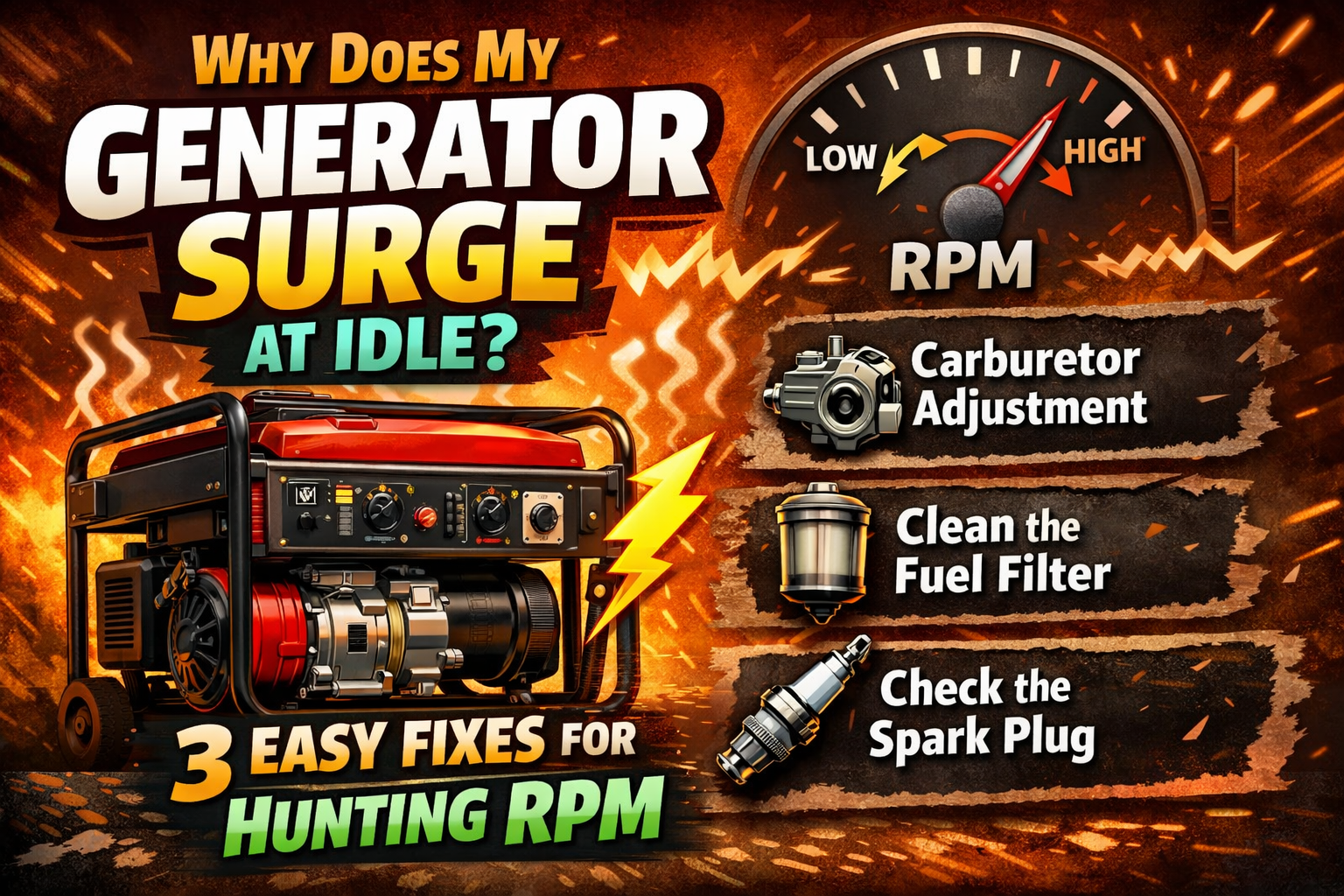
If you have a generator, there are some things related to it that become so irritating. Other than listening to its noisy sound, the generator surging is the most common problem for users. When the changing voices come to your ears, like a driver constantly rubbing the pedal, lights are sparkling in the house, and the UPS alarms start ringing.
This situation is known as generator surging and gives a more frustrating noise. In simple words, the generator is struggling hard to maintain a stable RPM despite the changing voltage power. If you want to protect your expensive appliances, you must follow the simple fixtures. In this guide, you will learn about the 3 easy hacks to resolve this issue.
What Is Generator Surging?
Generator surging is also called generator hunting. It is associated with the constant fluctuations of the engine’s speed or RPM values.
Not sure if your generator has this specific issue? Send us a short video and our engineers will diagnose it for free.
Manufacturers build the Generators for smooth working at an appropriate speed range. It includes 1500 RPM or 3000 RPM specific for 50 Hz and 1800 RPM or 3600 RPM typical for 60 Hz. This maintained speed is necessary for the stable frequency value in Hz.
In the case of generator surging, the RPM value increases and decreases frequently when the governor system tries to compensate for a stable functioning point.
The Notable Difference:
- Normal Fluctuation: If there is a small change in RPM due to the linkage of a heavy load, it is a normal situation. Here, the engine usually restores the power within seconds.
- Surging/Hunting (Mechanical Faultiness): The RPM or speed changes continuously, even if there is a zero load connected.
Why Generator Surging at Idle Is Harmful
You must not ignore the issue of generator surging if the generator is giving voltage to electrical appliances and bulbs. This power that it is giving is called dirty and harmful power.
- Voltage Fluctuations: As the RPM value decreases, the voltage decreases, and vice versa. These variations can disturb the other appliances.
- Destruction to Motors: Inductive loads, such as compressors of fridges and motors, get overheated instantly. It occurs if the frequency becomes lower than 50-60Hz.
- Engine Tiring: The frequent value changes put a huge exhaustion on the internal components. It will decrease the life of the generator.
Common Causes Behind Generator Inaccurate Surging
If your generator is disturbing, there are several reasons. These include:
Filthy or Choked Carburetor
One of the most common reasons for hunting in gasoline-related and diesel-associated generators is the dirty carburetor filled with mud. It will clog the generator system. If your fuel tank is old, it will convert into a greasy form. These become small jets in the carburetor. The engine demands fuel, causing a decrease in the RPM value.
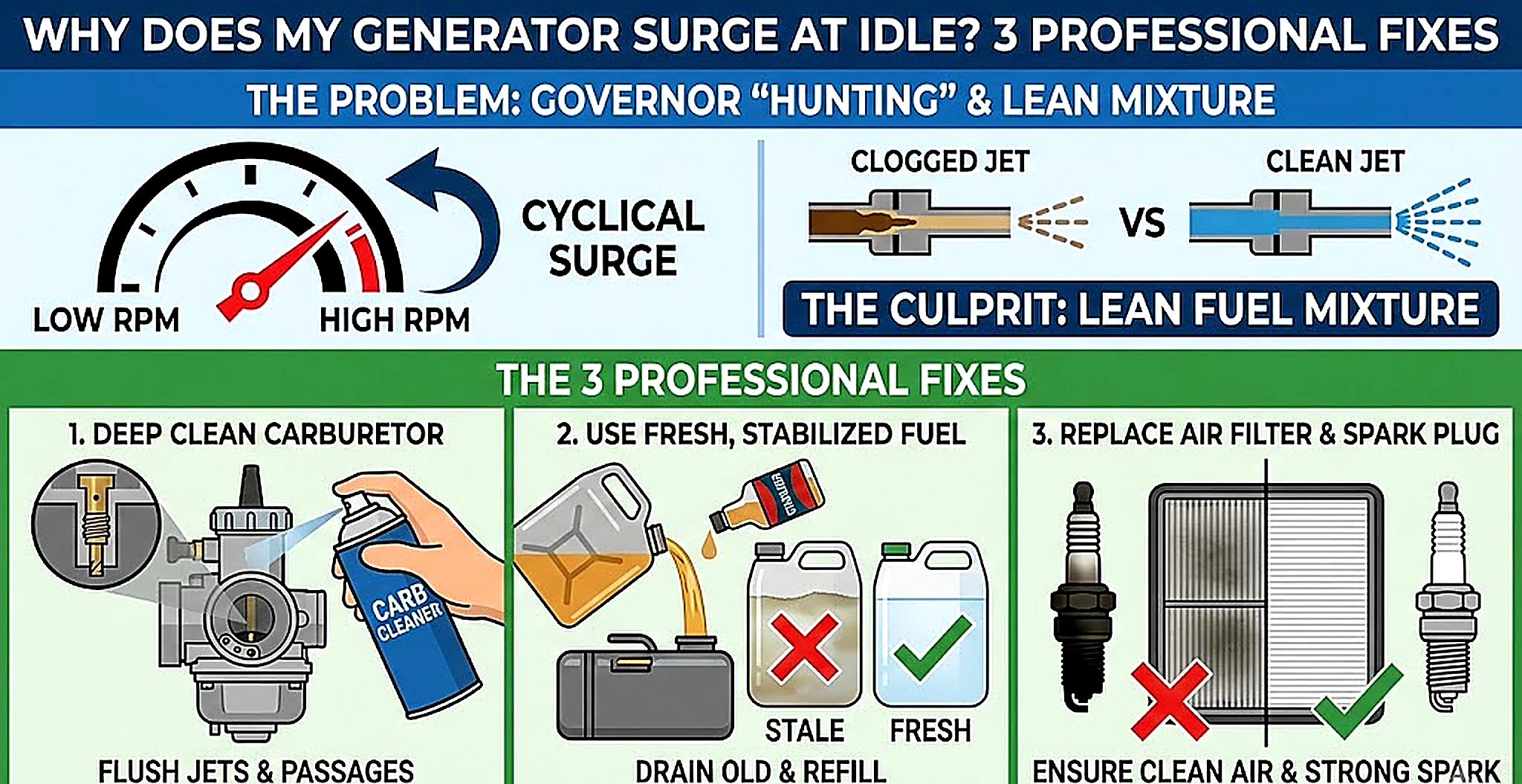
In this scenario, the governor opens the throttle widely to create a surge in value. But the choked system limits the fuel flow again and decreases the value. This situation causes an increase and a decrease, creating a cycle.
Failing Governor Spring System
The governor is an essential part of the generator. It is also referred to as the mechanical arm. It manages the throttle and regulates the speed.
If you inspect the governor springs and they are widely expanded or loosely connected, they will not work properly. As a result, the springs can not respond to the load variations. This situation is called generator hunting RPM.
Air Filter Passageways Blockage
The generator’s engine is called the air filter pump. If it is choked with mud or old fuel, it will disturb the appropriate air-fuel balance. The ratio will get too large, causing the loading up. As a result, the engine starts working at a slow pace and forces the governor to compensate for the air shortage.
Fuel Supply Problems
Old, greasy fuel is another common causative issue. If there is water overload in the fuel tank or absorption of air by the fuel, it will lead to the inappropriate working of diesel as well as gasoline. You will clearly hear the surging sound.
Vacuum Leaks
If the space between the inlet and the engine cracks, extra air gets in. The vacuum leaks force the engine to run at a higher, inappropriate speed, resulting in surging when it struggles for resolution.
Clear Signs Your Generator Is Surging
- Clearly Audible “Revving”: You can listen to the engine sound easily. It appears like a Vroom… die… frequently.
- Sparking Lights: The associated bulbs give bright and dull light on and off, along with the irritating engine sound.
- Fluctuating Power Output: It includes the slow running of UPS units, clocks, and refrigerators.
- Generator Stalls at Zero Load: The engine works a little finer if there is one or two bulbs linked. When you remove everything, the generator will start causing issues.
3 Easy Hacks for Fixing Generator Surging
Before taking your heavy generator on a loader to a repair service shop, perform these 3 simple fixes to resolve the bugs. According to experts, these measures resolve more than 90% of the generator surging issues.
Fix 1: Clean the Carburetor (or Injectors) Properly
For Gas-Associated Generators:
- Switch off the fuel valve.
- Now, take off the bowl-shaped carburetor. In many generators, it is like a single, casual bolt at the lower side.
- Spray the cleaner appropriately into the whole place, including major and minor holes.
- Cleanse or polish the fuel valve and needle.
- Restructure and check by switching on the generator.
For Diesel-Related Generators:
- Add a top-notch Diesel Cleaner for injectors to the big fuel tank.
- Operate the generator by giving a 50% load only initially for about 60 minutes. It will allow the cleaner to run through the entire generator system.
Fix 2: Inspect and Adjust the Governor
Most of the time, the issue is with the governor. The problem is related to its spring system, including the dislocation of springs or loss of tension.
- Find the arm of the governor system. You will find it after the throttle linkage.
- Now, inspect the spring tension for its expansion.
- Adjustment Tip: Many generators’ governors have a screw handle to adjust the spring. You must turn it a little, almost ¼ turn at a time. Then, check if the generator has started working correctly.
Warning: You must not readjust the speed screw on your own without noticing the frequency meter. Otherwise, it will result in a dangerous output voltage of about 70Hz power.
Fix 3: Change Old Fuel and Air Filters
Did you change your fuel last time, 6 months ago? You must waste it and add a new, cleaner one.
- Spill the fuel tank and the carburetor or injector compartment.
- Now, fill with new, high-quality fuel. It can be either diesel or high-octane.
- Change the Air Filter: If the air filter seems blackish or choked, remove it. New filters will cost you around $10 only and save your $1000 investment in the generator.
- Check Fuel Lines: Find if there is any breakage to allow air to enter the system and cause surging.
Troubleshooting Suggestions
- Inspect Sparking Plugs: A burnt switch plug can lead to exploding, a situation mocking the surging. You must remove that plug, clean it, or insert a new one.
- Balance Load Conditions: Some generator editions show rough working when there is no plug inserted. In this situation, insert a small smooth fan or a light energy saver bulb to streamline its working.
- Check Air Leaks: If you want to check an air leak, sprinkle a little amount of carburetor cleaner around the gaskets inlet when the engine is working. If the RPM shows a change in value, know that your generator has a vacuum leak.
When to Contact a Professional Servicer
If you followed all the tips and tricks, and still you face the problem of inappropriate surging, it is time to contact an expert team. Your generator has some serious internal problems, such as:
- Engine Issues: Include low dissipation, loose valves, or strained rings.
- Electrical Shortcomings: Include a faulty AVR and a stator with inappropriate winding. These will destroy the engine’s working due to the excessive load on the internal side.
- Warranty Privileges: If you buy a generator from Huaquan Power, you will get a warranty card. If you face any generator-related issue, just contact our service team instead of tiring yourself.
How to Prevent Generator Surging On Time
If you want to avoid generator surging before it’s too late, follow these easy measures:
- Use Fuel Stabilizer: If you are dealing with gas-associated generators, you must use a fuel stabilizer in combination. It will stop the fuel from converting into grease and mud and clogging the pathways.
- Get Regular Maintenance Services: You must have a proper maintenance timetable to maintain the parts and replace the fuel and filters.
- Run the Generator Frequently: You must switch on the generator and let it run for about half an hour. Do this at least once or twice a month. It will keep the carburetors and inlets free of tarnish and allow the engine to work smoothly.
- Use Clean Fuel: You should store extra fuel in a tight container to avoid germ accumulation and water absorption. Otherwise, the fuel will become dirty and cause issues in the generator.
FAQs
What is the big reason behind if my generator starts surging?
If the generator surges, there are usually several causes involved. These include fuel limitation, choked injectors, stained filters, or a poorly managed generator system. These disturb the balance between air-fuel working ratio, or engine velocity standards.
Should I consider the generator surging harmful for the overall voltage system?
Yes, definitely. The disturbed management system causes inappropriate RPM and then results in constant voltage highs and lows. This variation is dangerous for other heavy electronic machines, such as LEDs, computers, and refrigerators.
Can low-quality and old fuel disturb the accurate working ratio of generators?
Yes, if you use bad-quality fuel and don’t replace the fuel timely. As old fuel breaks down on its own, it results in choking the fuel airways. As water is also a part of fuel composition, it causes burning and leads to generator hunting RPM.
How can I stop the surging of the generator in the first place?
If your generator surged just now, take these measures to combat it. First, clean the generator’s carburetor, then clean the injectors to replace the diesel. Now, remove the clogged air filter and place a new one. If these steps do not work, check the governing management spring system and take an overview of the leaks around inlets.
Why does my generator start surging even with no load?
If the generator surges even with no load, it represents a lean mixture inside. It includes pilot jet choking, especially in gas generators. It means that the engine does not receive sufficient fuel to keep working. In this case, the governor will show an overactive response to energize the system.
Final Note
Frequent Generator Surging is a common issue that irritates a lot. If you manage it on time, it will not destroy your engine. According to experts, it is just due to the mismanagement of the generator parts. If you replace fuel, clean the components, and insert fresh filters regularly, you will not face this issue.
Otherwise, your burnt engine will ruin all of your other electrical appliances as well. If you follow the above-mentioned 3 simple measures, you can easily manage the whole house or office’s voltage system.
Do you require spare parts for generators? Or do you need expert problem-solvers for resolving the generator surging? Get in touch with the Huaquan Expert Service Team for professional suggestions, engines, carburetors, and regular maintenance kits to get away from the problem today!
Still Having Generator Problems? We Can Help.
Thank you for reading this troubleshooting guide. We are Huaquan Power, a professional diesel generator manufacturer with 15+ years of experience. Our technical team has helped thousands of customers diagnose and resolve generator issues worldwide.
If you are unable to resolve the problem described in this article, we offer:
- Free remote fault diagnosis — send us a video or photo of the issue
- On-site troubleshooting support for complex cases
- Genuine replacement parts with fast global shipping
- Preventive maintenance service plans
Two ways to reach us:
- Email: huaquan@huaquanpower.com (we reply within 24 hours)
- WhatsApp: +86 159 0536 0672
Quick Diagnosis: Not sure what is wrong with your generator? Send us a short video of the startup process, and our engineers will diagnose the issue for free.
Click here to submit your problem →
⚡ Explore Related Solutions
- 🏭 500kW Diesel Generator
- 🏭 1000kW Diesel Generator
- 🏭 500kW YC Diesel Generator
- 🔧 KMS (Cummins/Doosan) Series
- 🏥 Silent Generator Solutions
- 📋 Diesel Generator Sets
- 📋 Order Process — How to Buy
- 📋 Contact Us
💡 Need a customized solution? Contact our engineering team for project-specific recommendations.