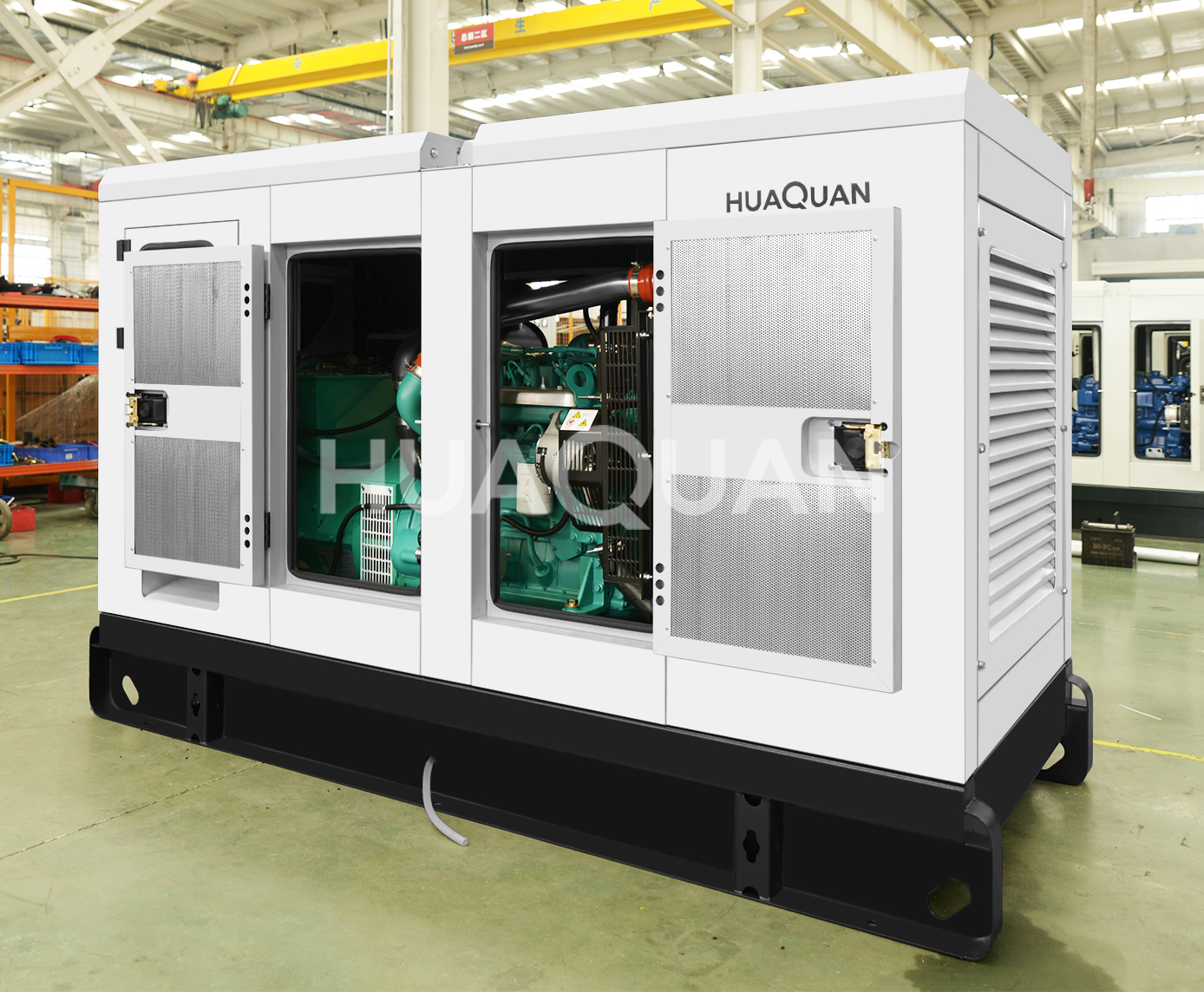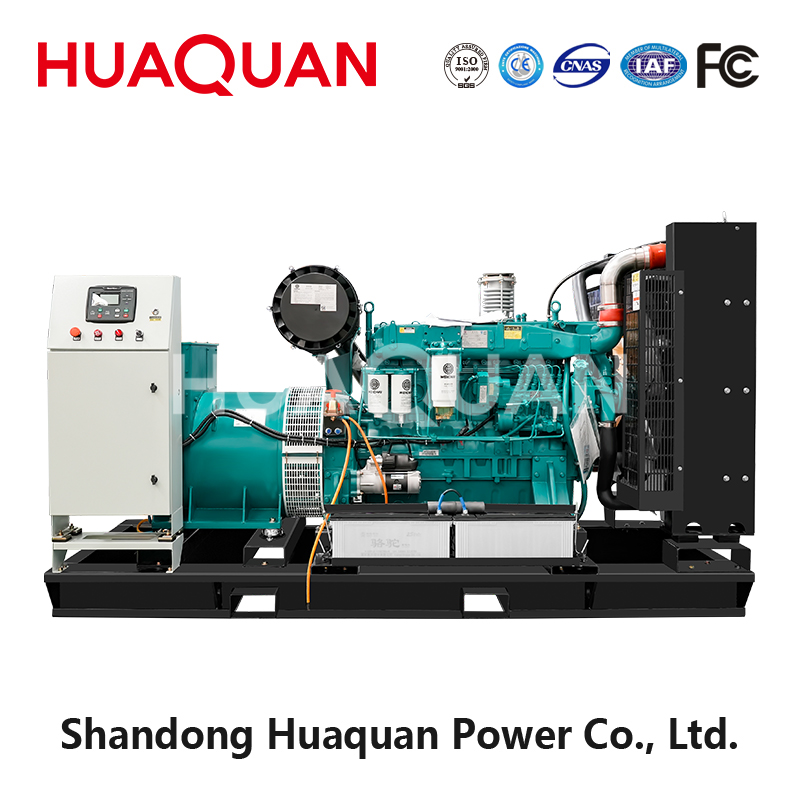
voltage regulation accuracy defines how precisely a Diesel Generator maintains its output voltage under varying load conditions. Huaquan Power Generators achieve Voltage Regulation within plus or minus 1% using advanced automatic voltage regulators (AVR (Automatic Voltage Regulator)), ensuring stable power supply for all connected equipment.
What Is Voltage Regulation in a Diesel Generator?
Voltage regulation measures the ability of a generator to maintain constant output voltage as the electrical load changes from no load to full load. Specifically, regulation accuracy is expressed as a percentage of the nominal output voltage. Furthermore, tight voltage regulation protects sensitive equipment from damage caused by overvoltage or undervoltage conditions.
Voltage Regulation Formula and Standards
Engineers calculate voltage regulation using the formula: Regulation % = ((Vno-load – Vfull-load) / Vfull-load) x 100. Additionally, this measurement reveals how much the output voltage varies across the entire load range. Therefore, a generator with plus or minus 1% regulation maintains voltage within 1% of the setpoint under steady-state conditions. Moreover, Huaquan Power generators meet or exceed ISO 8528-5 voltage regulation requirements for all duty classes.
| Regulation Class | Steady-State Accuracy | Transient Deviation | Recovery Time | Application |
|---|---|---|---|---|
| Class G1 | Plus/minus 5% | Plus/minus 25% | 10 seconds | General purpose |
| Class G2 | Plus/minus 2.5% | Plus/minus 20% | 5 seconds | Commercial/light industrial |
| Class G3 | Plus/minus 1% | Plus/minus 15% | 3 seconds | Sensitive equipment |
| Class G4 | Plus/minus 0.5% | Plus/minus 10% | 2 seconds | Critical/Precision |
How Does an Automatic Voltage Regulator Work?
The automatic voltage regulator (AVR) serves as the primary voltage control component in diesel generators. Furthermore, understanding AVR operation helps operators maintain optimal voltage regulation performance.
AVR Control Loop Operation
The AVR continuously monitors the generator output voltage and adjusts the excitation current to the alternator field winding. Specifically, when the load increases and voltage begins to drop, the AVR increases excitation current to restore the voltage to the setpoint. Additionally, when the load decreases, the AVR reduces excitation current to prevent overvoltage. Therefore, this closed-loop control maintains output voltage within the specified regulation band. Moreover, Huaquan Power uses digital AVR technology with PID control algorithms for superior regulation accuracy.
| AVR Component | Function | Failure Mode | Impact on Regulation |
|---|---|---|---|
| Voltage sensing circuit | Measures output voltage | Drift or offset | Steady-state error |
| PID controller | Computes correction | Tuning instability | Oscillation or hunting |
| Power stage | Drives field current | Reduced output | Reduced excitation capacity |
| Excitation winding | Creates magnetic field | Short or open turn | Voltage collapse |
| PMG (if equipped) | Supplies AVR power | Loss of PMG output | Voltage regulation failure |
Types of AVR Systems
Huaquan Power offers several AVR configurations to match different application requirements. Furthermore, each type provides different levels of regulation accuracy and transient response performance.
| AVR Type | Regulation Accuracy | Transient Response | Cost | Best Application |
|---|---|---|---|---|
| Self-excited (SHUNT) | Plus/minus 2-3% | Moderate | Lowest | General standby |
| Self-excited with AREP | Plus/minus 1-2% | Good | Low-Medium | Commercial backup |
| PMG-excited | Plus/minus 0.5-1% | Excellent | Medium | Industrial/IT |
| Auxiliary winding | Plus/minus 1-1.5% | Good | Medium | Standard industrial |
| Digital AVR | Plus/minus 0.25-0.5% | Excellent | Medium-High | Precision/critical |
Furthermore, Huaquan Power recommends PMG-excited systems for applications requiring both tight voltage regulation and strong motor starting capability. Additionally, the PMG provides a constant power source to the AVR that is independent of the main generator output, which ensures reliable excitation even during severe load transients.
What Factors Affect Voltage Regulation Accuracy?
Multiple factors influence the voltage regulation performance of diesel generators. Consequently, understanding these factors helps operators maintain optimal regulation and troubleshoot problems effectively.
| Factor | Effect on Regulation | Magnitude | Mitigation |
|---|---|---|---|
| Load power factor | Worse at low PF | Moderate | Size for worst-case PF |
| Load step size | Larger steps cause bigger transients | High | Stagger load application |
| Ambient temperature | Thermal drift affects AVR | Low-Moderate | Temperature-compensated AVR |
| Engine speed variation | Frequency affects voltage | Moderate | Maintain speed regulation |
| Cable length/voltage drop | Apparent regulation worse | High | Proper cable sizing |
| Harmonic loads | AVR sensing interference | Moderate | Use true-RMS sensing AVR |
Huaquan Warning: Low Power Factor Impact
Operating a generator at low power factor (below 0.8) significantly degrades voltage regulation performance. Specifically, the alternator must supply more reactive current to maintain voltage, which increases excitation demand and heating. Furthermore, prolonged operation at low power factor can overheat the alternator field winding and reduce generator life. Therefore, Huaquan Power recommends power factor correction to maintain PF above 0.85 for optimal regulation performance.
How to Test and Calibrate Generator Voltage Regulation?
Regular testing and calibration of the voltage regulation system ensures that the generator maintains output voltage within specifications. Furthermore, calibration becomes necessary whenever load conditions change or after AVR component replacement.
| Test Type | Equipment Required | Acceptance Criteria | Frequency |
|---|---|---|---|
| Steady-state regulation | True-RMS voltmeter | Within 1% of rated | Quarterly |
| Transient response | Power analyzer/scope | Recovery within 3 sec | Annually |
| Voltage waveform | Oscilloscope | THD under 5% | Annually |
| AVR output current | Clamp meter | Within nameplate rating | Semi-annually |
| Excitation voltage | DC voltmeter | Per manufacturer spec | Semi-annually |
Step-by-Step AVR Calibration Procedure
First, operate the generator at rated speed under no-load conditions and verify the output voltage. Additionally, adjust the voltage setpoint potentiometer on the AVR until the output matches the nominal voltage. Then, apply load in 25% increments and record the voltage at each step. Furthermore, adjust the stability and gain settings if voltage oscillation occurs. Consequently, proper calibration ensures stable voltage output across the entire load range.
| Step | Action | Target | Warning |
|---|---|---|---|
| 1 | Start generator | No-load rated speed | Verify frequency first |
| 2 | Set voltage | Nominal voltage 0.5% | Use calibrated meter |
| 3 | Apply 25% load | Check voltage stability | Voltage should remain 1% |
| 4 | Apply 50% load | Check regulation | Adjust UFRO if needed |
| 5 | Apply 75% load | Verify transient response | Record recovery time |
| 6 | Full load test | Verify steady-state | Must be within 1% |
| 7 | Load rejection | Check overshoot | Overshoot under 5% |
What Are Common Voltage Regulation Problems and Solutions?
Voltage regulation problems manifest in several ways, each with specific causes and remedies. Therefore, systematic troubleshooting helps identify and resolve issues quickly.
| Problem | Symptom | Probable Cause | Solution |
|---|---|---|---|
| Voltage too high | Lights flickering bright | AVR setpoint too high | Adjust voltage potentiometer |
| Voltage too low | Equipment malfunction | Excitation loss | Check AVR and field circuit |
| Voltage oscillation | Meter needle swings | AVR gain too high | Reduce gain setting |
| Slow recovery | Voltage dip after load step | AVR stability too high | Adjust stability setting |
| Voltage drift | Gradual change over hours | AVR thermal drift | Replace AVR or recalibrate |
Additionally, Huaquan Power provides remote monitoring options that alert operators to voltage regulation issues before they affect connected equipment. Moreover, the Huaquan Power service team offers on-site calibration and troubleshooting for generators experiencing regulation problems.
Frequently Asked Questions About Diesel Generator Voltage Regulation
Q1: What is the difference between steady-state and transient voltage regulation?
Steady-state regulation measures voltage variation under constant load conditions, while transient regulation measures the temporary voltage deviation during sudden load changes. Furthermore, Huaquan Power generators achieve plus or minus 1% steady-state regulation and recover from transients within 3 seconds. Additionally, both parameters are important for ensuring reliable power supply to sensitive equipment.
Q2: Can I improve voltage regulation on an existing generator?
Yes, several upgrades can improve voltage regulation on existing generators. Specifically, upgrading from a self-excited to a PMG-excited system typically improves regulation from plus or minus 2.5% to plus or minus 1%. Furthermore, installing a digital AVR with advanced PID algorithms can enhance both steady-state and transient performance. Additionally, Huaquan Power offers upgrade kits for many generator models.
Q3: How does cable length affect voltage regulation at the load?
Long cable runs cause voltage drop that appears as poor regulation at the load terminals, even when the generator maintains accurate voltage at its output. Furthermore, the voltage drop increases with cable length and load current. Therefore, proper cable sizing using voltage drop calculations is essential for installations with long cable runs. Additionally, Huaquan Power provides cable sizing guidelines for various installation configurations.
Q4: What is the UFRO feature on generator AVRs?
UFRO (Under Frequency Roll-Off) is a protective feature that reduces generator output voltage proportionally when engine speed drops below rated value. Furthermore, this prevents alternator over-excitation during engine underspeed conditions, which protects both the AVR and the field winding. Additionally, Huaquan Power AVRs include adjustable UFRO settings that activate at 95-97% of rated frequency.
Q5: How often should the AVR be calibrated?
Huaquan Power recommends AVR calibration during the annual maintenance service or whenever voltage regulation appears to drift outside specifications. Furthermore, calibration should be performed after any AVR component replacement or major load change. Additionally, generators operating in extreme temperature environments may benefit from semi-annual calibration checks to compensate for thermal drift effects.
Conclusion
Voltage regulation accuracy stands as a fundamental performance parameter that determines power quality and equipment protection in diesel generator systems. Specifically, the AVR system plays the central role in maintaining stable voltage output under varying load conditions. Huaquan Power offers a range of AVR configurations from basic self-excited systems to advanced digital PMG-excited designs, ensuring the right solution for every application. Furthermore, regular testing and calibration preserve regulation accuracy throughout the generator service life.
Huaquan Power Key Recommendations:
- Select PMG-excited generators for applications requiring plus or minus 1% voltage regulation or better
- Calibrate the AVR system annually and after any component replacement
- Address power factor issues to maintain optimal voltage regulation performance
For expert guidance on generator voltage regulation, contact Huaquan Power at +86-159-0536-0210 or visit huaquanpower.net.