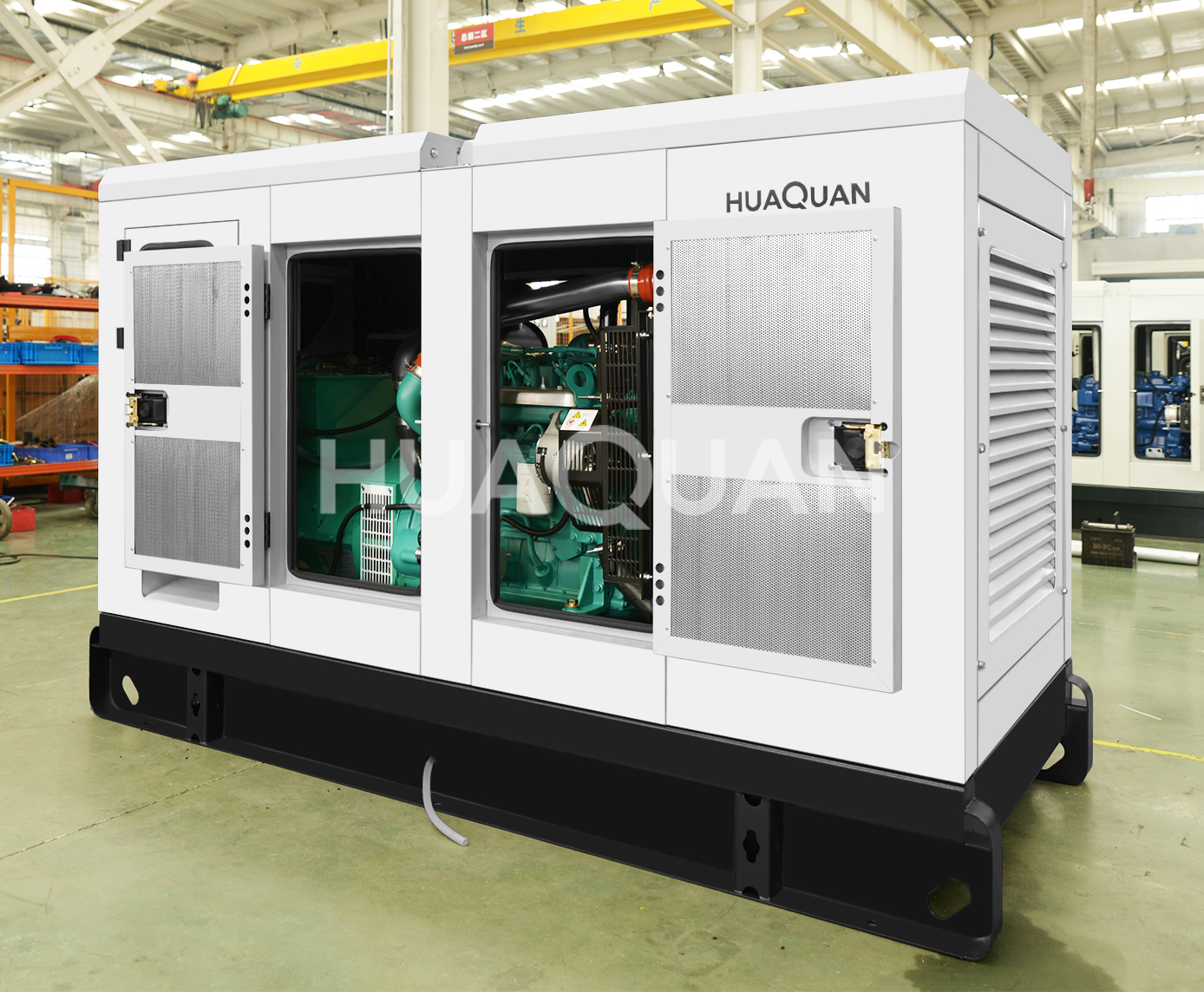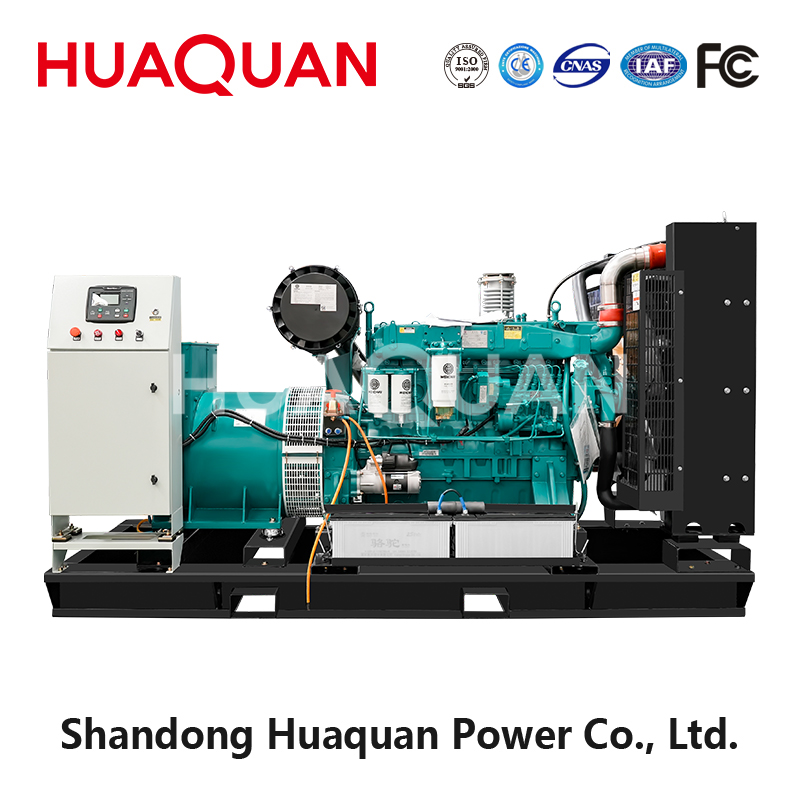
The coolant flow rate in a Diesel Generator engine ensures adequate heat removal from the combustion chamber and critical components. Huaquan Power engineers specify precise Coolant flow rates for each generator model to maintain optimal operating temperatures and prevent overheating.
What Is Coolant Flow Rate and Why Does It Matter in Diesel Generators?
Coolant flow rate measures the volume of coolant circulating through the engine cooling system per unit of time, typically expressed in liters per minute (L/min) or gallons per minute (GPM). Specifically, adequate flow rate ensures that the heat generated by combustion transfers efficiently to the radiator for dissipation. Furthermore, insufficient coolant flow leads to localized overheating, which can cause cylinder head cracking, piston seizure, and catastrophic engine failure.
Heat Removal Fundamentals
The Cooling System must remove approximately 30-35% of the total heat energy produced by fuel combustion. Additionally, the heat removal rate depends on three factors: coolant flow rate, temperature differential across the engine, and coolant specific heat capacity. Therefore, maintaining the specified flow rate is essential for achieving the designed heat transfer rate. Moreover, Huaquan Power calculates coolant flow requirements based on engine power output, combustion efficiency, and operating environment conditions.
| Engine Power Range | Heat Rejection to Coolant | Required Flow Rate | Typical Temperature Rise |
|---|---|---|---|
| 50-100 kW | 45-90 kW | 80-150 L/min | 5-8°C |
| 100-250 kW | 90-225 kW | 150-350 L/min | 6-10°C |
| 250-500 kW | 225-450 kW | 350-650 L/min | 7-10°C |
| 500-1000 kW | 450-900 kW | 650-1300 L/min | 8-12°C |
| 1000-2000 kW | 900-1800 kW | 1300-2500 L/min | 8-12°C |
How Is Coolant Flow Rate Determined for Different Engine Models?
Engine manufacturers specify the required coolant flow rate based on the engine heat rejection characteristics and the design of the cooling passages. Furthermore, these specifications account for the maximum heat load condition at rated power output.
Flow Rate Specifications by Engine Brand
Different engine platforms require different coolant flow rates due to variations in displacement, combustion design, and cooling passage geometry. Additionally, Huaquan Power matches each engine with appropriately sized cooling systems that meet or exceed flow requirements.
| Engine Brand | Model | Rated Power | Coolant Flow Rate | Coolant Capacity | Thermostat Opening |
|---|---|---|---|---|---|
| Cummins | NTA855-G1 | 300 kW | 320 L/min | 45 L | 82°C |
| Perkins | 2006TWG2 | 200 kW | 210 L/min | 32 L | 80°C |
| Volvo | TAD1343GE | 350 kW | 380 L/min | 52 L | 83°C |
| Deutz | BF6M1015C | 400 kW | 420 L/min | 58 L | 81°C |
| MTU | 12V2000G65 | 800 kW | 850 L/min | 120 L | 84°C |
Furthermore, Huaquan Power verifies coolant flow rates during factory testing of every generator set. Specifically, flow meters installed in the cooling circuit confirm that the actual flow meets or exceeds the engine manufacturer minimum requirement. Moreover, this quality assurance step ensures reliable cooling performance in the field.
What Components Affect Coolant Flow Rate?
Several cooling system components directly influence the coolant flow rate. Consequently, maintaining these components in proper condition is essential for adequate cooling performance.
| Component | Function | Flow Impact | Failure Mode | Maintenance Interval |
|---|---|---|---|---|
| Water pump | Circulates coolant | Primary flow driver | Impeller wear/cavitation | Inspect every 2000h |
| Thermostat | Regulates flow path | Controls bypass vs. radiator | Stuck open or closed | Replace every 4000h |
| Radiator | Dissipates heat | Flow resistance source | Internal blockage | Clean annually |
| Coolant hoses | Transport coolant | Flow restriction if collapsed | Age cracking/kinking | Replace every 5 years |
| Engine water jackets | Absorb heat | Fixed flow passages | Scale/corrosion buildup | Flush every 2000h |
| Coolant filter | Clean coolant | Slight flow restriction | Clogged filter element | Replace every 500h |
Water Pump Specifications
The water pump is the primary driver of coolant flow in the cooling system. Specifically, engine-driven pumps rotate at a fixed ratio to engine speed, which means flow rate varies with engine RPM. Furthermore, Huaquan Power selects pump configurations that deliver adequate flow even at low engine speeds during idle operation. Additionally, some large generators incorporate supplementary electric coolant pumps that continue circulation after engine shutdown to prevent hot spots.
| Pump Type | Drive Method | Flow Rate vs. Speed | Advantage | Limitation |
|---|---|---|---|---|
| Engine-driven | Gear or belt | Proportional to RPM | Reliable, no extra power | No flow at engine stop |
| Electric auxiliary | Electric motor | Constant or controlled | Post-shutdown cooling | Power consumption |
| Dual pump | Both | Combined | Redundant flow | Higher complexity |
| Thermostat-controlled | Engine + bypass | Variable by temp | Fast warm-up | Thermostat dependency |
What Problems Result from Insufficient Coolant Flow?
Inadequate coolant flow causes a cascade of problems that can lead to severe engine damage. Therefore, recognizing early warning signs helps operators take corrective action before major failures occur.
| Problem | Early Warning | Advanced Symptom | Potential Damage | Urgency |
|---|---|---|---|---|
| Localized overheating | Temperature gauge fluctuation | Hot spot on cylinder head | Head gasket failure | High |
| Cavitation in pump | Unusual noise from pump area | Pitted cylinder liners | Liner perforation | High |
| Thermostat failure | Slow warm-up or overheating | Temperature oscillation | Engine overheating | Medium-High |
| Radiator blockage | Gradual temperature rise | Frequent high-temp alarms | Chronic overheating | Medium |
| Air in system | Bubbles in coolant | Erratic temperature readings | Uneven cooling | Medium |
| Coolant degradation | Discolored coolant | Scale buildup, rust | Flow restriction | Low-Medium |
Huaquan Warning: Cavitation Damage
Cavitation occurs when localized low-pressure zones in the cooling system cause coolant to vaporize and then collapse violently. Furthermore, this collapse creates micro-jets that erode metal surfaces, particularly on the outside of cylinder liners. Specifically, cavitation damage appears as pitting that can eventually perforate the liner wall, allowing coolant to enter the combustion chamber. Therefore, Huaquan Power requires the use of SCA (supplemental coolant additive) or OAT (organic acid technology) coolant to form a protective film on liner surfaces.
How to Measure and Maintain Proper Coolant Flow Rate?
Regular monitoring of coolant flow rate helps detect cooling system problems before they cause engine damage. Furthermore, several methods are available for measuring and verifying flow performance.
| Measurement Method | Equipment | Accuracy | Best Application |
|---|---|---|---|
| Inline flow meter | Turbine or ultrasonic meter | Plus/minus 2% | Permanent monitoring |
| Ultrasonic clamp-on | Portable ultrasonic meter | Plus/minus 3% | Non-invasive testing |
| Temperature differential | Thermometers on inlet/outlet | Plus/minus 10% (calculated) | Basic verification |
| Pump pressure test | Pressure gauges | Qualitative | Pump performance check |
| Visual flow check | Flow sight glass | Qualitative | Quick verification |
Step-by-Step Coolant Flow Verification
First, ensure the engine is at operating temperature with the thermostat fully open. Additionally, install a flow meter in the radiator inlet hose or use an ultrasonic clamp-on meter on the outlet hose. Then, record the flow rate at rated engine speed and compare it against the manufacturer specification. Furthermore, repeat the measurement at different engine speeds if the generator operates at variable speeds. Consequently, this verification confirms that the cooling system delivers adequate flow under all operating conditions.
| Step | Action | Parameter | Acceptance |
|---|---|---|---|
| 1 | Warm up engine | Coolant temperature 80-90°C | Thermostat fully open |
| 2 | Install flow meter | Correct orientation | No air in system |
| 3 | Run at rated speed | 1500 or 1800 RPM | Stable operating condition |
| 4 | Record flow rate | L/min or GPM | At or above manufacturer minimum |
| 5 | Check temperature rise | Inlet vs. outlet | Within 8-12°C range |
| 6 | Inspect coolant condition | Color, clarity, SCA level | Per specification |
Frequently Asked Questions About diesel generator coolant Flow Rate
Q1: What happens if I use a coolant with different viscosity than specified?
Coolant viscosity directly affects flow rate through the cooling system. Furthermore, using a thicker coolant (such as 100% propylene glycol in cold conditions) reduces flow rate and heat transfer efficiency. Additionally, Huaquan Power specifies a 50/50 mixture of ethylene glycol and distilled water for most applications, which provides optimal flow and freeze protection. Therefore, always follow the manufacturer coolant specification.
Q2: How does altitude affect coolant flow rate requirements?
At higher altitudes, lower air density reduces the radiator cooling capacity, which means the coolant must circulate faster to remove the same amount of heat. Furthermore, Huaquan Power recommends larger radiators or supplementary cooling for generators operating above 1500 meters elevation. Additionally, the coolant flow rate specification remains the same, but the cooling system must dissipate heat more efficiently.
Q3: Can I increase coolant flow rate with a larger water pump?
Installing a larger water pump can increase flow rate, but it must be compatible with the engine cooling passage design. Furthermore, excessive flow rate can cause cavitation and erode cooling passages. Additionally, the radiator must be capable of handling the increased flow without excessive pressure drop. Therefore, Huaquan Power recommends consulting with factory engineers before modifying the cooling system.
Q4: How does coolant flow affect generator derating in hot climates?
In hot ambient conditions, the reduced temperature differential across the radiator decreases heat dissipation capacity. Furthermore, if coolant flow is also reduced due to pump wear or blockage, the generator may need to be derated to prevent overheating. Additionally, Huaquan Power provides derating curves for each model based on ambient temperature and cooling system condition.
Q5: What is the normal coolant flow rate for a 500 kW diesel generator?
A 500 kW diesel generator typically requires a coolant flow rate of 650-750 L/min at rated engine speed. Furthermore, the exact specification depends on the engine model and radiator configuration. Additionally, Huaquan Power publishes detailed coolant flow specifications in the technical data sheet for every generator model. Therefore, always refer to the specific model documentation for accurate flow requirements.
Conclusion
Coolant flow rate is a fundamental parameter that ensures effective heat removal from diesel generator engines. Specifically, maintaining the specified flow rate prevents overheating, cavitation damage, and premature engine wear. Huaquan Power designs cooling systems with adequate flow capacity for each generator model, verified through comprehensive factory testing. Furthermore, regular monitoring and maintenance of cooling system components preserve flow performance throughout the generator operational life.
Huaquan Power Key Recommendations:
- Verify coolant flow rate during annual maintenance using appropriate measurement tools
- Use the specified 50/50 ethylene glycol and distilled water mixture for optimal flow
- Replace water pump and thermostat at recommended intervals to maintain flow performance
For expert guidance on diesel generator cooling system maintenance, contact Huaquan Power at +86-159-0536-0210 or visit huaquanpower.net.