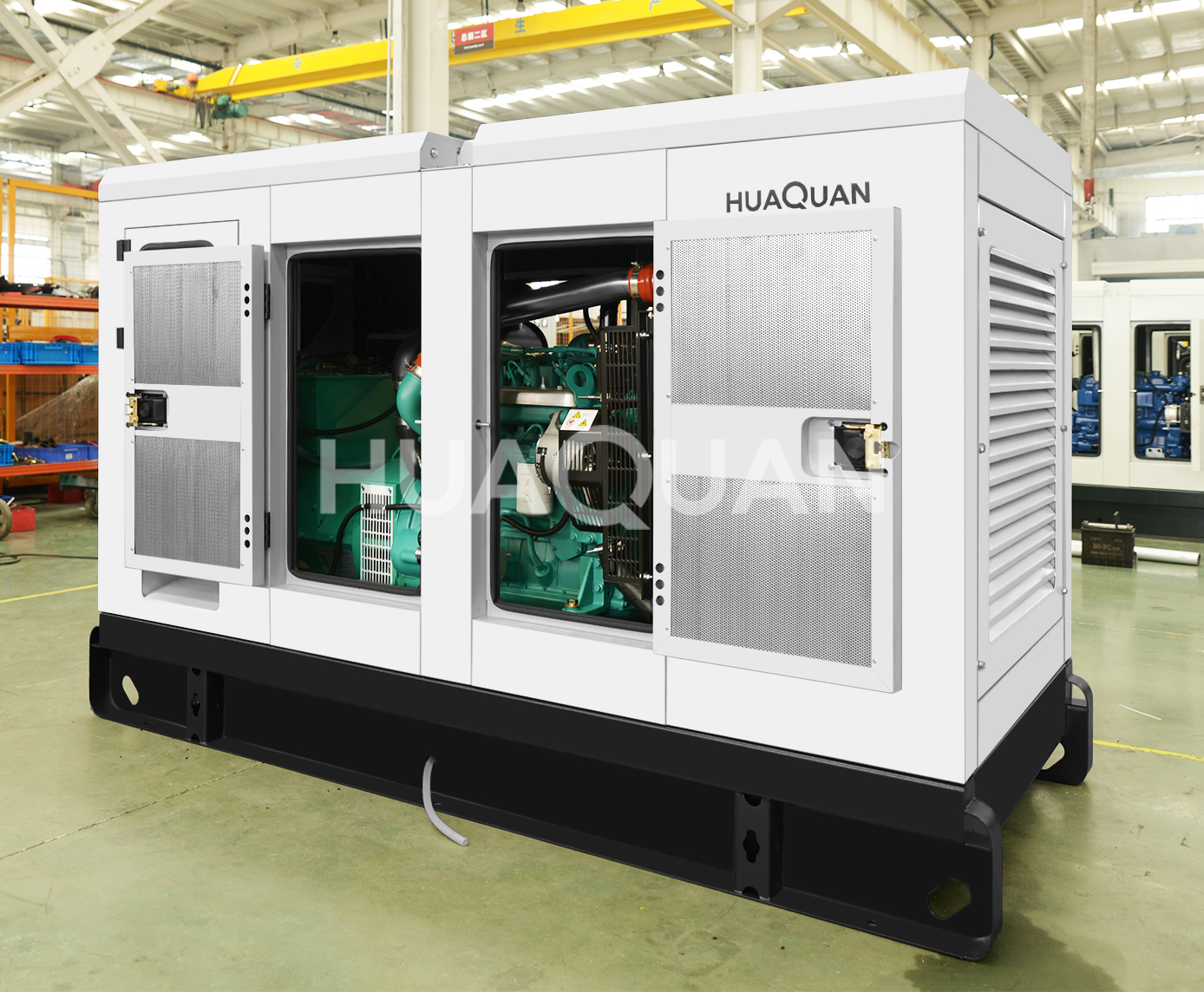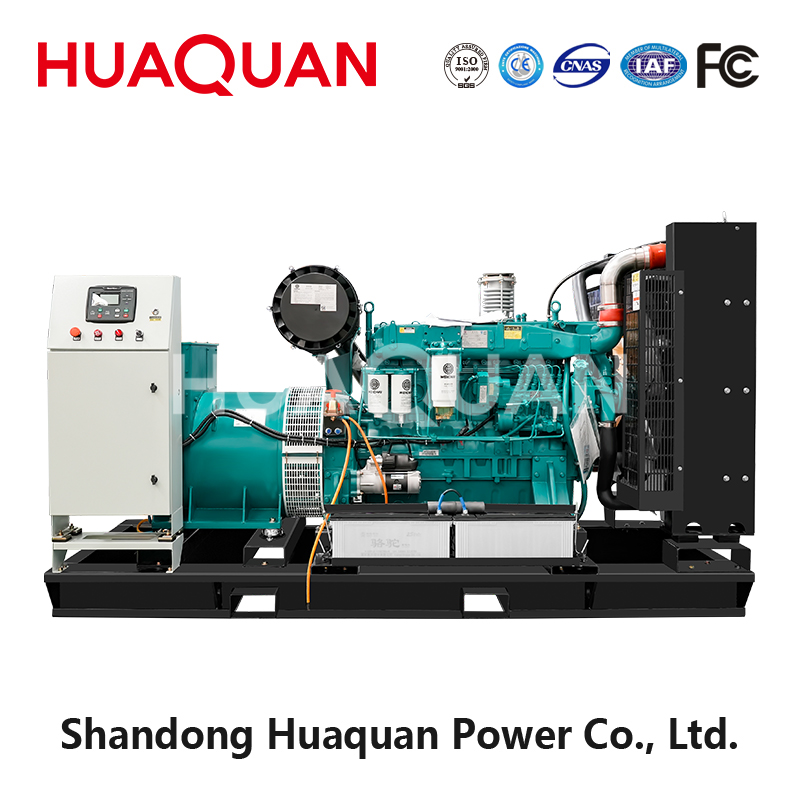
The rated speed of a Diesel Generator determines its output frequency and directly affects power quality, engine wear, and overall efficiency. Huaquan Power manufactures Generators in both 1500 RPM (50 Hz) and 1800 RPM (60 Hz) configurations to serve global markets with precise frequency control.
What Is Rated Speed in a Diesel Generator?
Rated speed refers to the rotational speed at which a diesel generator engine operates to produce the designated electrical frequency. Specifically, this speed is locked to the frequency requirement: 1500 RPM for 50 Hz systems and 1800 RPM for 60 Hz systems with 4-pole alternators. Furthermore, maintaining the correct rated speed is essential because even small deviations cause frequency variations that can damage sensitive equipment.
Relationship Between Speed, Poles, and Frequency
The formula connecting these parameters is: Frequency (Hz) = (RPM x Number of Poles) / 120. Therefore, a 4-pole alternator running at 1500 RPM produces 50 Hz, while the same alternator at 1800 RPM produces 60 Hz. Additionally, Huaquan Power engineers precisely calibrate the governor system on every generator to maintain rated speed within plus or minus 0.5% of the target value.
| Poles | 1500 RPM Frequency | 1800 RPM Frequency | 3000 RPM Frequency | Common Application |
|---|---|---|---|---|
| 2 | 25 Hz | 30 Hz | 50 Hz | Small portable units |
| 4 | 50 Hz | 60 Hz | 100 Hz | Standard industrial |
| 6 | 75 Hz | 90 Hz | 150 Hz | Special applications |
| 8 | 100 Hz | 120 Hz | 200 Hz | Marine/special |
How Does Rated Speed Affect Generator Performance?
Rated speed influences multiple performance characteristics of diesel generators. Consequently, selecting the correct speed rating for your application requires careful consideration of several factors.
Power Output and Torque Characteristics
Engines designed for 1500 RPM generally produce more torque per unit of displacement compared to 1800 RPM engines. Furthermore, this higher torque at lower speed translates to better fuel efficiency and reduced mechanical stress. Additionally, the slower rotational speed reduces wear on bearings, pistons, and other moving components. Therefore, 1500 RPM generators typically offer longer service intervals and extended engine life compared to their 1800 RPM counterparts.
| Parameter | 1500 RPM (50 Hz) | 1800 RPM (60 Hz) | Impact Difference |
|---|---|---|---|
| Specific fuel consumption | 195-210 g/kWh | 200-220 g/kWh | 3-5% better at 1500 RPM |
| Engine wear rate | Lower | Higher | 20-30% longer life at 1500 |
| Power density | Lower | Higher | Smaller footprint at 1800 |
| Noise level | Lower | Higher | 2-4 dB difference |
| Vibration | Lower | Higher | Reduced at 1500 RPM |
Frequency Stability and Power Quality
The governor system maintains rated speed under varying load conditions. Specifically, electronic governors on Huaquan Power generators achieve speed regulation within plus or minus 0.5% from no load to full load. Moreover, this precision ensures that the output frequency remains stable, which protects connected equipment from damage caused by frequency fluctuations. Importantly, sensitive electronic devices such as computers and medical equipment require frequency stability within plus or minus 1% for safe operation.
What Are the Speed Specifications of Huaquan Generator Models?
Huaquan Power offers a comprehensive range of diesel generators with various rated speeds to meet regional and application-specific requirements. Furthermore, each model undergoes extensive testing to verify speed stability and frequency accuracy.
| Model Series | Engine Brand | Rated Speed | Frequency | Power Range | Application |
|---|---|---|---|---|---|
| HQ-C series | Cummins | 1500 RPM | 50 Hz | 20-1000 kW | Industrial/Commercial |
| HQ-C60 series | Cummins | 1800 RPM | 60 Hz | 20-800 kW | North American market |
| HQ-P series | Perkins | 1500 RPM | 50 Hz | 10-600 kW | Backup/Standby |
| HQ-V series | Volvo | 1500/1800 RPM | 50/60 Hz | 50-550 kW | Versatile global use |
| HQ-D series | Deutz | 1500 RPM | 50 Hz | 30-400 kW | Construction/Mining |
Additionally, Huaquan Power provides custom speed configurations for special applications. For instance, some marine generators operate at 750 RPM or 900 RPM for reduced noise and vibration on vessels. Therefore, customers with unique requirements can work with Huaquan engineers to develop tailored solutions.
What Problems Arise from Speed Deviations?
When a diesel generator fails to maintain its rated speed, several operational issues can develop. Consequently, monitoring speed performance proves critical for preventing equipment damage and ensuring power quality.
| Speed Problem | Symptom | Common Cause | Consequence |
|---|---|---|---|
| Overspeed | High frequency output | Governor malfunction | Equipment damage |
| Underspeed | Low frequency output | Overload or fuel restriction | Motor stalling |
| Speed fluctuation | Frequency hunting | Governor adjustment needed | Equipment malfunction |
| Slow speed recovery | Transient frequency dip | Fuel system restriction | Sensitive load tripping |
| Speed drift | Gradual frequency change | Governor linkage wear | Clock/timing errors |
Huaquan Warning: Overspeed Protection
Overspeed represents a critical safety hazard in diesel generator operation. Specifically, when engine speed exceeds 110% of rated speed, the mechanical forces can cause catastrophic engine failure. Therefore, Huaquan Power equips every generator with both electronic and mechanical overspeed protection devices. Moreover, these redundant safety systems automatically shut down the engine before dangerous speeds are reached.
How to Maintain Proper Generator Speed Control?
Proper speed control maintenance ensures reliable generator performance and protects connected equipment from frequency-related damage. Furthermore, a systematic maintenance approach prevents most speed-related problems before they cause failures.
| Maintenance Task | Interval | Procedure | Critical Parameter |
|---|---|---|---|
| Governor linkage inspection | 500 hours | Check for wear, looseness | Free movement, no binding |
| Governor calibration | 2000 hours | Verify speed setting | Within 0.5% of rated |
| Fuel system check | 500 hours | Inspect filters and lines | Adequate fuel flow |
| electronic governor test | 1000 hours | Verify response time | Recovery within 5 seconds |
| Overspeed trip test | 2000 hours | Simulate overspeed | Shutdown at 110% rated |
Step-by-Step Governor Calibration
First, operate the generator at rated speed under no-load conditions and record the frequency. Additionally, apply a step load of 50% and observe the speed recovery time. Then, adjust the governor gain and stability settings according to the manufacturer specifications. Furthermore, repeat the load test to verify that speed recovery occurs within the specified time frame. Consequently, proper governor calibration ensures stable frequency output under all load conditions.
| Step | Action | Target | Warning |
|---|---|---|---|
| 1 | Start generator | No-load rated speed | Verify frequency first |
| 2 | Record base frequency | 50.0 or 60.0 Hz | Check with calibrated meter |
| 3 | Apply 50% load step | Observe transient dip | Should recover in 3-5 sec |
| 4 | Adjust gain | Reduce overshoot | Avoid hunting oscillation |
| 5 | Full load test | Steady-state within 0.5% | Check all loads |
| 6 | Load rejection test | Overshoot within 5% | Verify overspeed trip |
Frequently Asked Questions About Diesel Generator Rated Speed
Q1: Can a 50 Hz generator be converted to 60 Hz operation?
Converting a 50 Hz generator to 60 Hz requires increasing the engine speed from 1500 to 1800 RPM. Additionally, the alternator and engine must be rated for the higher speed. Furthermore, the engine derating factor at higher speed may reduce available power output. Therefore, Huaquan Power recommends purchasing the correct frequency generator rather than converting an existing unit.
Q2: What happens if the generator speed drops below rated value?
When generator speed drops, the output frequency decreases proportionally. Furthermore, motors connected to the generator will slow down and draw more current to maintain their load, which can trip protective devices. Additionally, continuous operation at reduced frequency can overheat motors and transformers. Consequently, Huaquan Power governors maintain speed within plus or minus 0.5% to prevent these issues.
Q3: Why do some generators use 1000 RPM instead of 1500 RPM?
Large industrial generators sometimes use 1000 RPM with 6-pole alternators to produce 50 Hz output. Furthermore, the slower speed reduces mechanical wear and noise level regulationss significantly. Additionally, these low-speed generators offer extended engine life and are preferred for continuous-duty applications. Therefore, Huaquan Power offers low-speed configurations for prime power applications above 1000 kW.
Q4: How does load change affect generator speed?
When a load is applied to a generator, the engine momentarily slows down before the governor increases fuel delivery to restore rated speed. Specifically, this transient speed dip typically lasts 2-5 seconds with a well-tuned governor. Moreover, Huaquan Power generators with electronic governors achieve faster recovery times compared to mechanical governor systems.
Q5: What is isochronous speed control?
Isochronous speed control maintains constant engine speed from no load to full load with zero steady-state speed droop. Furthermore, this mode is essential for applications requiring precise frequency regulation. Additionally, Huaquan Power electronic governors operate in isochronous mode by default, ensuring frequency stability within plus or minus 0.25% across the entire load range.
Conclusion
Rated speed fundamentally determines the electrical characteristics and mechanical longevity of diesel generators. Specifically, the choice between 1500 RPM and 1800 RPM depends on regional frequency requirements, application demands, and lifecycle cost considerations. Huaquan Power offers both configurations with precision governor control that ensures stable frequency output under all operating conditions. Furthermore, proper speed maintenance through regular governor calibration and fuel system care preserves generator performance throughout its service life.
Huaquan Power Key Recommendations:
- Select the rated speed matching your regional frequency requirement (50 Hz or 60 Hz)
- Calibrate the governor system every 2000 operating hours for optimal speed stability
- Test overspeed protection devices regularly to ensure safe generator operation
For expert advice on diesel generator speed specifications, contact Huaquan Power at +86-159-0536-0210 or visit huaquanpower.net.