The cylinder bore and stroke of a Diesel Generator engine range from approximately 85mm bore x 90mm stroke in small units to over 300mm bore x 380mm stroke in large power plants. Huaquan Power (鍗庡叏鍔ㄥ姏) selects bore and stroke dimensions carefully because these parameters directly determine engine displacement and power output characteristics.
What Do Bore and Stroke Mean in a Diesel Generator Engine?
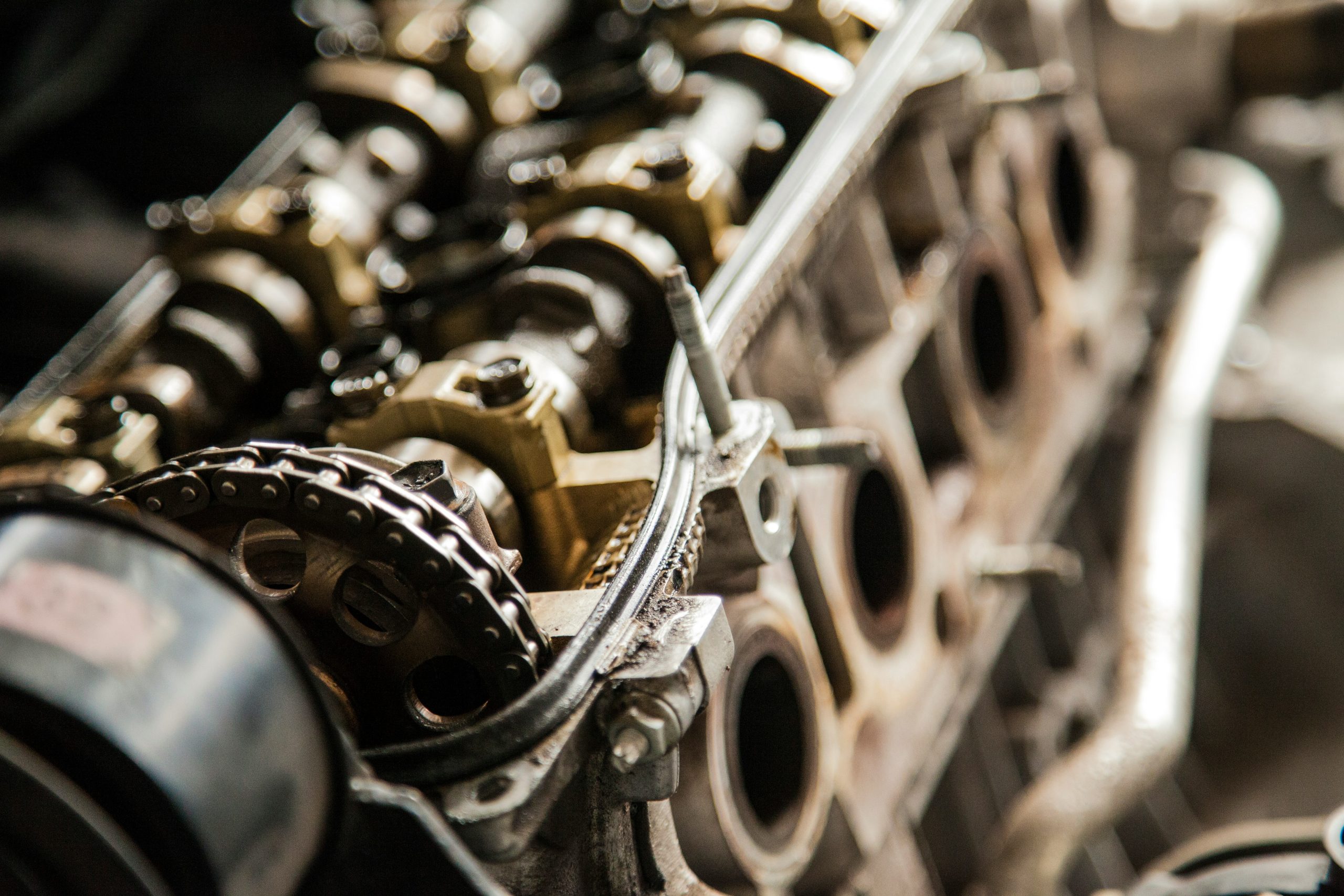
Bore refers to the internal diameter of the engine cylinder, while stroke measures the distance the piston travels from top dead center to bottom dead center. Furthermore, these two dimensions define the swept volume of each cylinder. Specifically, the relationship between bore and stroke determines whether an engine has oversquare, square, or undersquare geometry. Therefore, understanding these basic dimensions is fundamental to engine selection.
Oversquare vs. Undersquare Designs
Oversquare engines have a bore larger than the stroke, which allows larger valves for better airflow and typically higher RPM capability. Additionally, undersquare engines feature a stroke longer than the bore, producing higher torque at lower speeds. Moreover, Huaquan Power generator engines generally use undersquare or square designs because Generators require steady torque at fixed RPM. Consequently, the bore-stroke ratio reflects the intended application.
| Design Type | Bore-Stroke Ratio | Characteristics | Typical Application |
|---|---|---|---|
| Oversquare | >1.1:1 | Higher RPM, larger valves | Automotive engines |
| Square | 1.0:1 | Balanced performance | Multi-purpose engines |
| Undersquare | <1.0:1 | Higher torque, lower speed | Generator engines |
| Long-stroke | <0.85:1 | Maximum low-end torque | Marine propulsion |
How Do Bore and Stroke Determine Engine Displacement?
Engine displacement equals the total swept volume of all cylinders. Furthermore, each cylinder’s swept volume is calculated using the formula: cylinder volume equals pi multiplied by bore squared divided by four, then multiplied by stroke. Therefore, even small changes in bore or stroke dimensions produce meaningful displacement differences. Specifically, increasing bore by just 5mm on a 150mm bore engine adds approximately 12 percent displacement per cylinder.
Displacement Calculation Formula
The displacement formula for a single cylinder is V = (蟺 脳 B虏 脳 S) / 4, where B represents bore and S represents stroke. Additionally, total engine displacement equals the single-cylinder volume multiplied by the number of cylinders. Moreover, Huaquan Power engineers optimize bore and stroke to achieve target displacement while maintaining structural integrity and emission compliance. Consequently, displacement determines the engine’s air processing capacity and ultimately its power potential.
| Engine Model | Bore (mm) | Stroke (mm) | Cylinders | Displacement (L) |
|---|---|---|---|---|
| HQ-4CYL-S | 105 | 125 | 4 | 4.33 |
| HQ-6CYL-M | 130 | 150 | 6 | 11.96 |
| HQ-6CYL-L | 150 | 170 | 6 | 18.06 |
| HQ-8CYL-V | 170 | 190 | 8 | 34.57 |
| HQ-12CYL-V | 200 | 220 | 12 | 83.12 |
How Does Bore Size Affect Diesel generator performance?
Larger bore diameters allow bigger intake and exhaust valves, which improve engine breathing capacity. Furthermore, increased bore area provides more surface for combustion pressure to act upon, generating greater force on the piston. Therefore, Huaquan Power engines with larger bores typically produce more power per liter of displacement. Additionally, larger bores permit higher fuel injection volumes because more air fills the combustion chamber.
Valve Area and Breathing Efficiency
The maximum valve diameter is limited by the cylinder bore, typically reaching 45 to 50 percent of bore diameter for intake valves. Additionally, better breathing efficiency means the engine can process more air per cycle. Moreover, this directly translates to higher power output at the same engine speed. Consequently, bore size constrains the maximum power potential of any given engine architecture.
| Bore Size (mm) | Max Intake Valve (mm) | Max Exhaust Valve (mm) | Relative Airflow | Power Density (kW/L) |
|---|---|---|---|---|
| 100 | 45 | 38 | 1.00 | 18鈥?2 |
| 130 | 58 | 49 | 1.40 | 20鈥?5 |
| 160 | 72 | 61 | 1.85 | 22鈥?8 |
| 200 | 90 | 76 | 2.50 | 25鈥?0 |
| 250 | 112 | 95 | 3.30 | 20鈥?6 |
How Does Stroke Length Influence Engine Characteristics?
Stroke length directly determines piston speed at any given RPM and affects the torque characteristics of the engine. Furthermore, longer strokes produce higher torque because the connecting rod applies force to the crankshaft over a greater rotational arc. Additionally, longer stroke engines operate at lower maximum RPM because piston speed limits restrict safe operating range. Therefore, Huaquan Power matches stroke length to the generator’s required operating speed.
Piston Speed Calculations
Mean piston speed equals twice the stroke multiplied by RPM divided by 60. Moreover, diesel generator engines typically limit mean piston speed to 8 to 12 meters per second for durability. Consequently, longer stroke engines must run at lower RPM to stay within safe piston speed limits. For instance, a 170mm stroke engine at 1500 RPM has a mean piston speed of 8.5 m/s, which is within the safe range.
| Stroke (mm) | At 1000 RPM (m/s) | At 1500 RPM (m/s) | At 1800 RPM (m/s) | Max Safe RPM |
|---|---|---|---|---|
| 100 | 3.3 | 5.0 | 6.0 | 2400 |
| 130 | 4.3 | 6.5 | 7.8 | 1846 |
| 160 | 5.3 | 8.0 | 9.6 | 1500 |
| 200 | 6.7 | 10.0 | 12.0 | 1200 |
| 250 | 8.3 | 12.5 | 15.0 | 960 |
What Is the Relationship Between Bore-Stroke Ratio and Fuel Efficiency?
The bore-stroke ratio influences thermal efficiency because it affects the surface-to-volume ratio of the combustion chamber. Furthermore, undersquare engines with longer strokes achieve higher compression ratios more easily, which improves thermal efficiency. Additionally, longer strokes provide more time for complete combustion at fixed RPM. Therefore, Huaquan Power generators typically use undersquare configurations to maximize fuel efficiency.
Surface-to-Volume Ratio Effects
Combustion chambers with lower surface-to-volume ratios lose less heat to cylinder walls during the power stroke. Moreover, longer stroke engines create a more compact combustion chamber at top dead center, reducing heat loss. Consequently, thermal efficiency improves because more combustion energy converts to mechanical work. For instance, a 0.85 bore-stroke ratio engine may achieve 42 percent thermal efficiency versus 38 percent for a 1.15 ratio engine.
| Bore-Stroke Ratio | Compression Ratio | Thermal Efficiency (%) | BSFC (g/kWh) | Relative Fuel Cost |
|---|---|---|---|---|
| 0.80 | 18:1 | 43 | 198 | 0.92 |
| 0.90 | 17:1 | 42 | 203 | 0.95 |
| 1.00 | 16:1 | 41 | 208 | 0.97 |
| 1.10 | 15.5:1 | 40 | 214 | 1.00 |
| 1.20 | 15:1 | 38 | 225 | 1.05 |
How Do Manufacturers Select Bore and Stroke Dimensions?
Engine manufacturers balance multiple competing requirements when selecting bore and stroke dimensions. Furthermore, power density targets, fuel efficiency goals, emission standards, and manufacturing constraints all influence the final design. Additionally, Huaquan Power engineers use simulation software to optimize these parameters before prototyping. Therefore, the selected dimensions represent the best compromise for the intended application.
Design Optimization Process
The design process begins with the target power output and operating speed requirements. Specifically, engineers calculate the minimum displacement needed to achieve the power target at the specified speed. Moreover, they then distribute this displacement across cylinder count options and optimize the bore-stroke ratio. Consequently, each Huaquan Power engine model reflects thousands of simulation iterations to find optimal dimensions.
| Design Factor | Favors Large Bore | Favors Long Stroke | Compromise Strategy |
|---|---|---|---|
| Power density | Better breathing | Higher torque | Match to load profile |
| Fuel efficiency | Lower friction | Higher compression | Slightly undersquare |
| Emissions | Better mixing | Longer burn time | Square to undersquare |
| Durability | Lower piston speed | Lower RPM | Limit piston speed |
| Manufacturing | Standard tooling | Simpler geometry | Common architecture |
What Are Typical Bore and Stroke Specifications Across Generator Sizes?
Diesel generator bore and stroke dimensions increase proportionally with engine power output. Furthermore, smaller engines typically use higher RPM and shorter strokes, while large engines run at lower speeds with longer strokes. Therefore, Huaquan Power offers a complete range of engine specifications to match every power requirement from 20 kW standby to 2000 kW continuous.
Specifications by Power Range
Small generator engines below 100 kW typically feature bores from 85 to 110mm with strokes from 90 to 125mm. Additionally, medium engines from 100 to 500 kW use bores from 110 to 160mm with strokes from 125 to 180mm. Moreover, large engines above 500 kW employ bores from 160 to 300mm with strokes from 180 to 380mm. Consequently, the physical size increases substantially with power output.
| Power Range (kW) | Typical Bore (mm) | Typical Stroke (mm) | Cylinder Count | Operating Speed (RPM) |
|---|---|---|---|---|
| 20鈥?0 | 85鈥?00 | 90鈥?10 | 2鈥? | 1500鈥?000 |
| 50鈥?00 | 100鈥?15 | 110鈥?30 | 4 | 1500鈥?800 |
| 100鈥?50 | 110鈥?35 | 125鈥?55 | 4鈥? | 1000鈥?500 |
| 250鈥?00 | 135鈥?65 | 150鈥?85 | 6鈥? | 1000鈥?500 |
| 500鈥?000 | 160鈥?00 | 180鈥?30 | 8鈥?2 | 750鈥?000 |
| 1000鈥?000 | 200鈥?00 | 230鈥?80 | 12鈥?6 | 500鈥?50 |
Frequently Asked Questions
Q1: Does a larger bore always mean more power?
Not necessarily, because power depends on total displacement and engine efficiency rather than bore alone. Furthermore, a small-bore long-stroke engine can produce equal power to a large-bore short-stroke engine of similar displacement. However, larger bores do allow better airflow through bigger valves. Therefore, Huaquan Power optimizes the bore-stroke combination for each power range.
Q2: Why do generator engines use longer strokes than automotive engines?
Generator engines operate at constant speed and require steady torque output, which long-stroke designs provide efficiently. Additionally, longer strokes enable higher compression ratios that improve fuel efficiency. Moreover, generators do not need the high RPM capability that oversquare automotive engines prioritize. Consequently, the undersquare design perfectly suits generator duty cycles.
Q3: Can I calculate displacement from bore and stroke myself?
Yes, use the formula: displacement = (蟺 脳 bore虏 脳 stroke 脳 cylinders) / 4,000,000 to get the result in liters. Furthermore, ensure all measurements are in millimeters for consistent results. Additionally, Huaquan Power specification sheets list bore, stroke, and displacement for every engine model to simplify verification.
Q4: What happens if the bore becomes worn over time?
Cylinder bore wear reduces compression and increases oil consumption because piston rings cannot seal properly against a worn surface. Furthermore, excessive wear causes blow-by gases to enter the crankcase, contaminating the lubricating oil. Therefore, Huaquan Power recommends bore measurement during major overhauls and reboring when wear exceeds specified limits.
Q5: How does cylinder count interact with bore and stroke?
More cylinders allow smaller bore and stroke dimensions for the same total displacement, which reduces vibration and improves balance. Additionally, increasing cylinder count while maintaining displacement allows each cylinder to be smaller and lighter. Moreover, Huaquan Power offers various cylinder configurations to match power requirements with acceptable vibration levels.