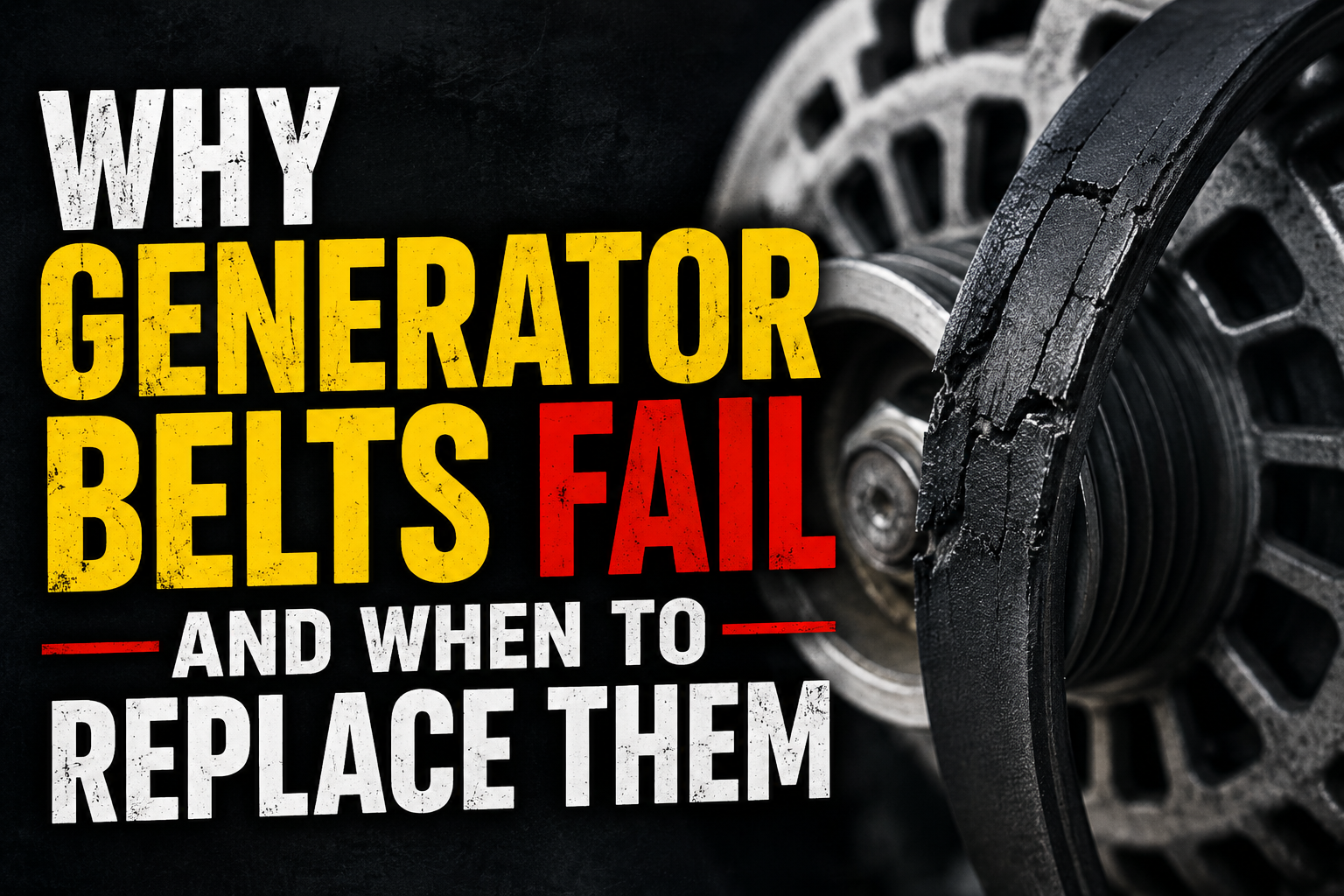
UM Gerador Diesel relies on a number of moving parts that must function correctly and at the correct speed to provide reliable backup power. The engine block and alternator are typically the largest parts that receive the most attention. No entanto, o Generator Belts are equally important for the system to function as intended.
The effects of this heavy-duty rubber belt slipping out of place or failing completely are serious. Superaquecimento, reduced charging of the battery, poor cooling fan performance, e, in some cases, generator shutdown are possibilities. Knowing the reasons behind belt failure, identifying the warning signs, and replacing it at the appropriate time can help save valuable equipment and prevent costly downtime.
Neste guia de Huaquan, learn why generator belts failures happen and their warning signs, replacement timing, and maintenance tips to keep your Geradores efficient throughout the day.
What Are Generator Belts?
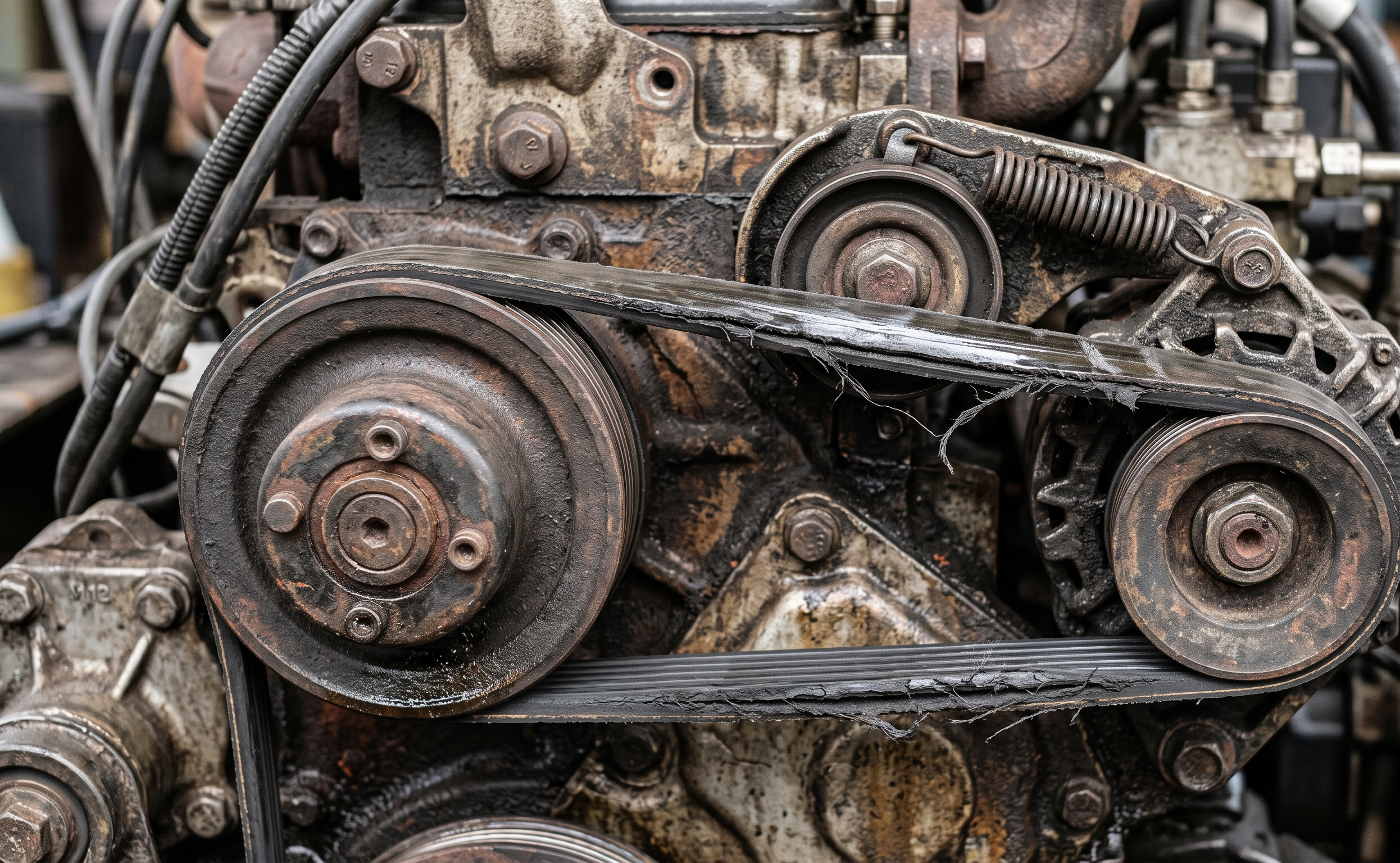
The Generator Belt, also referred to as a drive belt, fan belt, or serpentine belt, is a strong rubber belt that carries power from the engine crankshaft to a few different parts of the engine.
The belt drives the charging alternator, bomba de água, e ventilador de resfriamento, among other systems, as the engine spins. These components rely on steady belt movement to function correctly. Worn, stretched, or slipping belts will result in reduced engine cooling, unreliable battery charging, and reduced generator efficiency almost immediately.
Why Generator Belts Fail
Although today’s belts are constructed of strong synthetic rubber and reinforced internal materials, they are still subjected to stress all the time. There are a few common problems that can reduce the lifespan of a Generator Belt.
1. Incorrect Belt Tension
Tension must be perfectly calibrated.
- Too loose: The belt is so loose it will not grip the pulleys properly. It starts to slip while in use, leading to squealing sounds, loss of power transfer efficiency, and friction-induced wear.
- Too tight: Undue tension puts unnecessary strain on pulley systems and bearings. This excess pressure can cause wear to the water pump bearings, alternator bearings, and other rotating components over time.
2. Normal Wear and Aging
Honestly, no belt lasts forever. The rubber becomes weak with continuous bending, engine heat, and operation over time. The Generator Belt becomes less flexible and weaker as it gets older. At first, small cracks will start to show, the surface will get shiny and hard, the ribs may get worn down, and eventually, the belt may fail altogether.
3. Óleo, Combustível, or Coolant Contamination
A Generator Belt is designed to remain clean and dry while it is in service. When engine oil, combustível diesel, or coolant leaks onto the belt, problems begin to occur in no time. The rubber becomes slippery and loses strength. The belts get contaminated and tend to slip under load and wear out much sooner than belts in clean conditions.
4. Overloaded Generator Operation
Extended periods of running a generator at full load introduce extra stress to the system. Engine accessories are subjected to greater stress and the Generator Belt has to work harder. Believe it or not, continuous overloading can cause the belt to become stretched, wear out rapidly, and reduce its service life.
5. Misaligned Pulleys
The belt should go in a straight line over all pulleys. A pulley misalignment, either in the alternator or water pump pulley, will cause the belt to track unevenly. Excessive edge wear, fraying, and internal reinforcement cord damage result. Misaligned belts can wear out prematurely if left uncorrected.
6. Heat and Harsh Working Conditions
Generators are frequently used in challenging conditions. The materials used in belts suffer from heat, dusty worksites, humid conditions, and long operating hours. The situation becomes even worse if the enclosure is not properly ventilated. Abrasion and heat over time slowly shorten the life of the Generator Belt.
Signs Your Generator Belts Need Replacement
You do not need advanced mechanical training to identify a worn-out belt. Look for and listen for these warning signs:
- Squealing or chirping noise: If the belt squeals or chirps during startup or sudden load changes, it is likely that the belt is slipping on a pulley.
- Visible cracks: Cracks that are deep in the ribbed side of the belt are signs of aging and wear.
- Frayed edges: The edges are frayed, torn, or have exposed reinforcing fibers.
- Shiny or glazed surface: The belt develops a smooth, glossy finish instead of a normal textured surface, showing heat damage and hardening.
- Belt is loose: Rubber belt bends easily between pulleys.
- Superaquecimento do gerador: Any decrease in water pump or cooling fan operation can cause excessive engine temperature.
- Battery charging warning: Low-voltage alarms may be triggered if the alternator does not rotate efficiently.
- Burning rubber smell: If the belt slips too much, it can get so hot that it literally burns the rubber.
- Fan or water pump not working properly: Cooling components can reduce or cease operation at the proper speed.
When Should You Replace Generator Belts?
Don’t wait for a Generator Belt to break completely before replacing it.
- Substitua imediatamente if you notice it is cracked, physically broken, soaked in oil, or badly frayed at the edges.
- Inspect during routine generator maintenance: During monthly or quarterly maintenance, inspect the condition and tension of the belt. Look at it today and save a lot of money later!
- Follow the schedule: Tipicamente, this is between one and three years or after a number of operating hours.
- Account for the environment: Industrial generators frequently operate in dusty environments, hot weather, and in applications that need to move heavy loads, necessitating more frequent belt inspections and replacements.
How to Inspect Generator Belts
The comprehensive belt inspection only takes a few minutes. I can’t stress enough that those several minutes can save you from having a major engine problem and unexpected downtime.
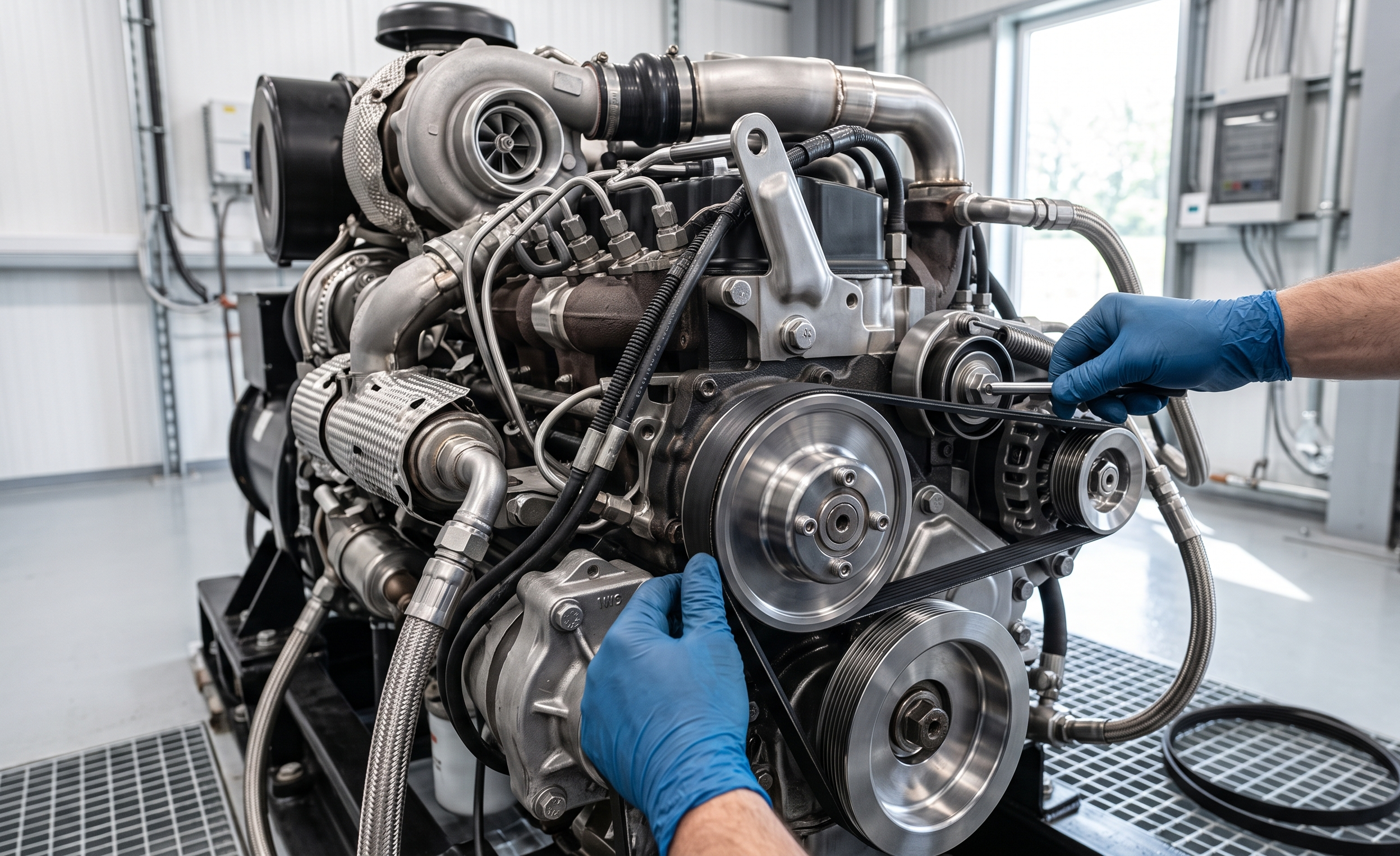
- Primeiro, please turn off the generator:
Ensure the generator is turned off before an inspection is begun. Lock out the control panel, disconnect the starter battery and make sure the engine cannot start up by itself while working near moving parts.
- Let the engine cool:
Never examine the belt after operating. Let the engine and other metal pieces surrounding the exhaust manifold cool completely. This easy step will avoid a painful burn and make it easier to inspect.
- Check belt surface:
Carefully check both sides of the belt with a flashlight. Check for deep cracks, missing rubber sections, bordas desgastadas, hardened spots and shiny glazed areas, all of which are indicators of excessive wear.
- Check belt tension:
Squeeze the longest length of belt between two pulleys. The belt should only move about 13 mm or ½ inch. If it hangs low, it is probably in need of adjustment.
- Check pulley alignment:
Check the belt path carefully. The Generator Belt must be perfectly straight in all of the pulley grooves. When the pulley looks twisted or is off-center, the pulley may be misaligned, or it may be that the pulley bearings are worn.
- Look for oil or coolant leakage:
Check the area near the belt for any signs of wear or damage. Before installing a replacement belt, check if the belt is wet, sticky or smeared with fluid, and find and fix the leak.
Generator Belts Maintenance Tips
Here are some simple maintenance tips to keep your Generator Belt in good shape and your generator reliable:
- Maintain a clean, dry belt: Minimize dust accumulation and moisture in the generator enclosure whenever possible.
- Keep tension correct: When performing regular maintenance, adjust the tensioner or alternator bracket to avoid slipping.
- Promptly repair oil and/or coolant leaks: Oil and coolant can work very quickly on belt materials.
- Don’t overload for long periods: Do not exceed the generator ratings because it causes stress on the generator drive system.
- Change belts in sets if necessary: If more than one belt is used, change all belts at the same time for even wear.
- Select high-quality replacement parts: Cheap belts tend to wear out faster in harsh industrial environments.
- Have spare belts on hand for critical locations: Have a spare belt on site for critical locations for emergency repair.
Why Choosing the Right Generator Belt Matters
Not all belts are created equal. Choosing the proper size, profile and material reduces slipping and ensures effective power transfer throughout the generator system. A high-quality OEM-spec Generator Belt will undoubtedly withstand heat much better than less costly belts. No entanto, a belt that is not installed properly or is of low quality can wear out quickly and cause uneven pressure on costly parts like the water pump and alternator bearings.
Wrap Up on Generator Belts!
Maioria generator belts fail suddenly. They usually fail because of incorrect tension, natural wear, fluid contamination, continuous overloading, or pulley alignment issues. By spending a few minutes on regular inspections and replacing worn belts before they fail, you can avoid expensive repairs, overheating problems, and unexpected downtime.
Believe it or not, preventive maintenance is often far cheaper than emergency repairs. Do not wait for a belt failure during a critical power outage.
Contact HUAQUAN today for quality generator parts and professional maintenance support to keep your generator operating safely and reliably.
Perguntas frequentes
What causes a Generator Belt to slip?
Tipicamente, a Generator Belt slips due to problems with tension, wear due to age, or contamination from leaking oil or coolant on the belt surface.
Can I run a generator with a loose belt?
Não. A loose belt decreases alternator performance and decreases the cooling fan and water pump speed. This can result in an automatic shutdown of the generator very quickly and overheating.
How often should a Generator Belt be replaced?
While monthly inspections are recommended, most manufacturers advise replacing the Generator Belt every 1 para 3 years or after a specific number of running hours, depending on operating conditions and engine requirements.