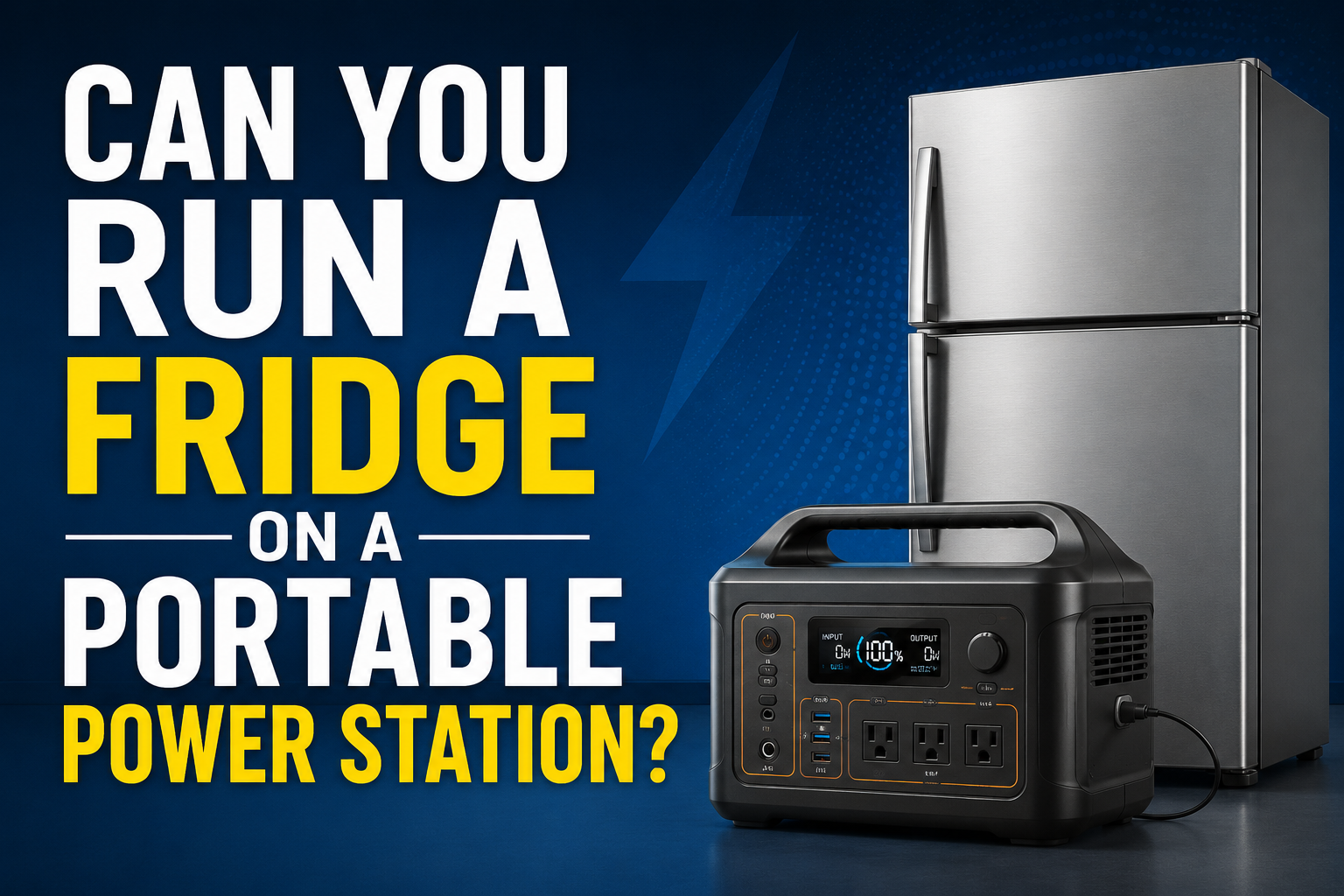
Pode um Central Elétrica Portátil power a refrigerator? Sim, it is truly possible! Na verdade, many modern refrigerators work very well with a portable power station. The real question is whether your power station has enough capacity and output to handle your specific fridge.
Parameters such as running wattage, start-up surge, battery size, and inverter output are all factors. Whether you are heading off-grid for a camping trip, on an RV or you experience a blackout at Lar, or you need an emergency backup, cold food is important. Honestly, nobody wants spoiled groceries.
Este guia de Huaquan explains how to connect your refrigerator to the right battery system, estimate the runtime, and choose the best power solution for your needs.
How a Portable Power Station Runs a Fridge
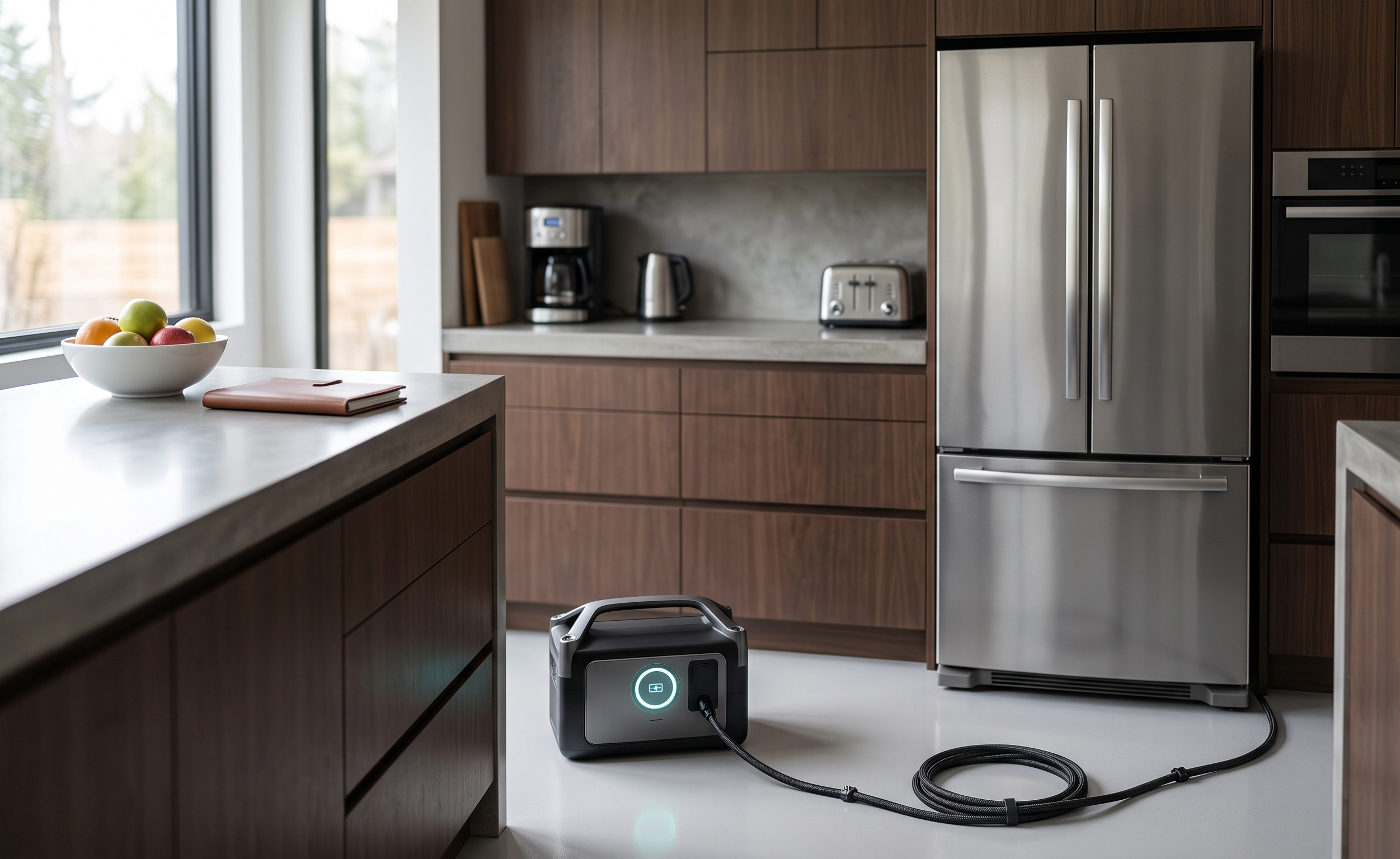
It’s not that difficult to figure out how a portable power station operates a refrigerator. Portable power stations have a large battery inside which stores electricity as corrente contínua (DC power).
No entanto, your refrigerator operates on alternating current (AC) poder. That is where the inverter comes into play. The inverter is built-in to transform the stored DC power into stable AC power suitable for household appliances. All you need to do is connect the refrigerator to one of the AC outlets on the power station.
A portable power station doesn’t require a fuel-burning engine, so it operates quietly without exhaust. Believe it or not, that makes it a much more comfortable option for indoor backup power and peaceful outdoor camping setups.
Check These 3 Things Before Running a Fridge
Before connecting your refrigerator to power, be sure to check the power station to see if it can support the refrigerator’s electrical requirements.
1. Running Wattage
The regular amount of electricity used by a refrigerator is called running wattage. This is the power required to operate the compressor and to control the internal temperature.
For smaller applications like mini fridges or dorm units, expect to see a rating of just 50–100 watts. The larger household refrigerators tend to consume a lot of electricity. The efficiency ratings, along with design and age, will dictate the running wattage of many full-sized units, which average between 300 e 800 watts.
2. Starting Surge Power
Refrigerators don’t use the same amount of electricity every minute. The compressor draws a large initial surge of electricity when it turns on. This is called “surge power” ou “startup power.” In most instances, the startup wattage will be two to three times the running wattage.
A 500-watt refrigerator, por exemplo, could require approximately 1,500 watts of electricity for a brief period while starting up. If the portable power station cannot handle that surge, the protection system may trip and prevent the fridge from running.
3. Capacidade da bateria
The station is able to start the refrigerator depending on the output. It can be stored as long as the battery capacity allows. Capacity is usually expressed in watt-hours (Wh).
Imagine it’s the energy tank’s size inside the unit. The more watt-hours (Wh), the higher the amount of electricity stored. Em outras palavras, the bigger the battery, the longer your refrigerator will run until it requires re-juicing.
How Long Can a Portable Power Station Run a Fridge?
Estimating runtime is fairly straightforward. A commonly used formula is:
Runtime = (Battery Capacity × 0.85) ÷ Fridge Average Power Use
(Observação: We multiply the battery capacity by 0.85 to account for the natural 15% efficiency loss that occurs when the inverter converts DC power to AC power).
Actual running time is subject to variations depending on actual conditions. Actual power consumption is a function of outdoor temperatures, refrigerator size, frequency of refrigerator door opening and compressor cycling frequency.
Por exemplo, suppose you have a 1000Wh portable power station and a refrigerator that averages 100 watts. Multiplying 1000Wh by 0.85 dá 850 usable watt-hours. Divide 850 por 100 watts and you get roughly 8 para 8.5 horário de funcionamento.
A larger 1500Wh portable power station paired with an efficient refrigerator can provide considerably longer backup time. In many situations, runtime can easily exceed 12 horas. Before selecting a unit, always check the appliance label or manual to verify actual power consumption.
What Size Portable Power Station Do You Need for a Fridge?
The first step in selecting the best portable power station is to determine the size and wattage of your fridge.
- Mini fridge: They are fairly low in power consumption. Tipicamente, a model that comes with a 500W inverter plus approximately 500Wh battery is sufficient.
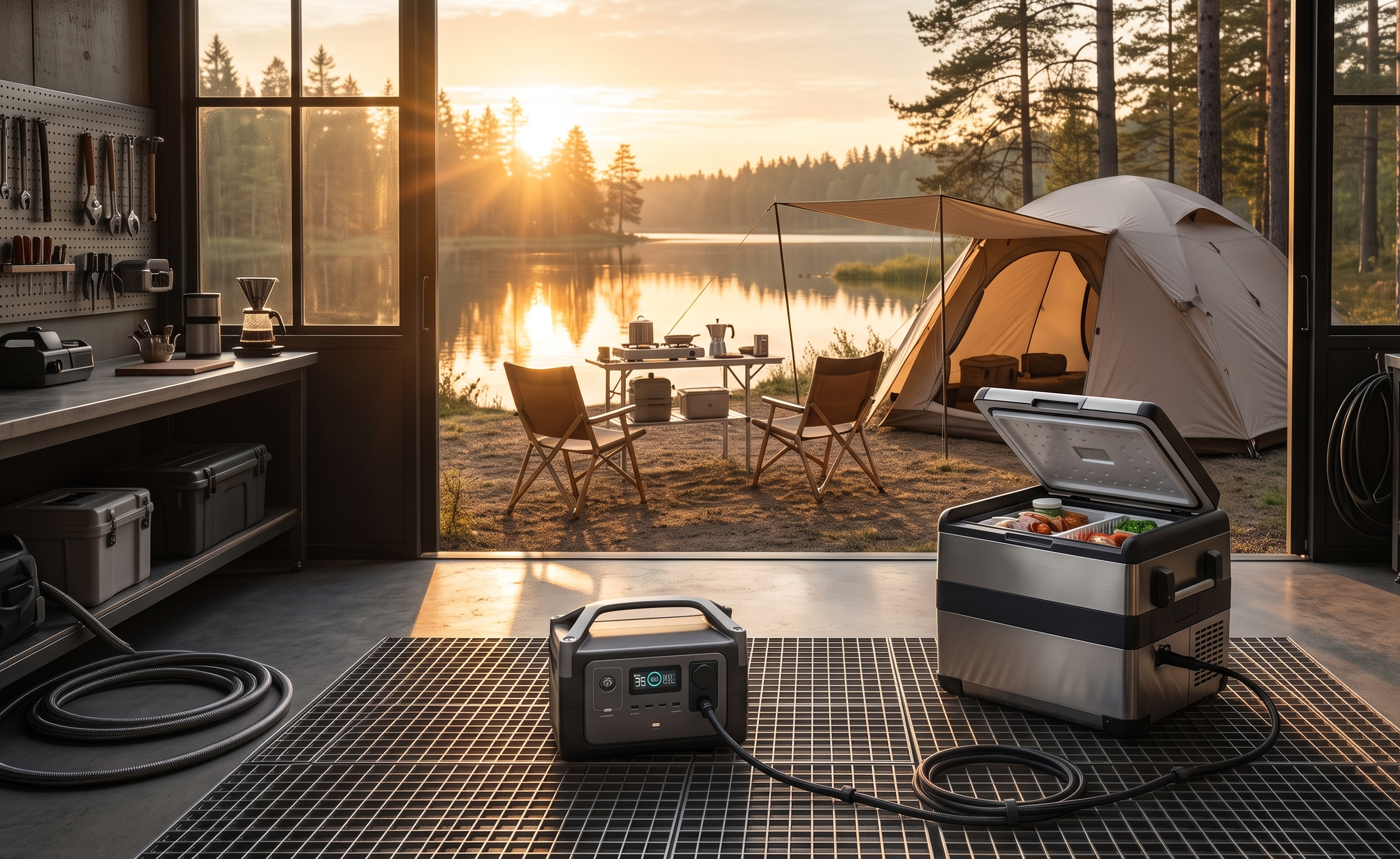
- Camping fridge/car fridge: Some of the portable coolers are designed to efficiently run on 12V and take direct DC power. They are generally easily managed by a 300Wh to 500Wh station.
- Standard household refrigerator: The power consumption of the refrigerator is much higher. Look for a unit with at least a 1500W inverter and roughly 1500Wh of battery capacity to handle compressor startup demands.
- Frigorífico + extra devices: For those who want to charge their laptops, run lights or other household appliances in addition to their fridge, opt for a bigger Sistema de armazenamento de energia (ESE) with over 2000Wh of battery capacity.
Best Uses for Running a Fridge on a Portable Power Station
A portable and quiet power source makes it easy to keep food and beverages cool in a variety of practical applications.
- Camping: When outdoors, meat, dairy products and cold drinks should be kept cold without the need to use crumbling ice bags that melt after a few hours.
- RV and self-driving travel: Run your RV refrigerator quietly – when campground rules say no or limit generator use.
- Beach trips, tailgate parties, picnics and all day sports events for kids: Take a powered cooler to events where fresh food and cold drinks are important.
- Emergency home backup: Keep refrigerator going if local power is lost or if you experience severe weather.
- Keeping food fresh during power outages: Preserve costly food items during prolonged power outages of more than a few hours.
- Medical storage or temperature-sensitive items: Preserve important medications including insulin at proper temperatures regardless of changing grid conditions.
Can a Portable Power Station Run a Fridge Overnight?
Sim, using a portable power station to power a fridge for an overnight period is possible provided the power station has enough battery capacity to power the fridge, and enough surge output to support the fridge compressor as it cycles on and off throughout the night.
Truthfully, it’s all in the preparation. Charging the station to 100% before connecting the refrigerator. If there is an eco mode on the unit, use it to save power when it’s not needed. Sobretudo, try and keep the refrigerator door shut as much as possible. Whenever the door is opened, cool air leaks out and the compressor must do more work to restore the correct temperature inside.
Tips to Make Your Fridge Run Longer
Get the most from your battery reserve by following these practical operating tips:
- Pre-cool the fridge before connecting: Let the refrigerator run on household electricity for several hours so the interior reaches the desired temperature before switching to battery power.
- Avoid opening the door often: Treat the fridge like a closed container and minimize unnecessary door openings to reduce compressor activity.
- Keep the fridge in shade or a cool area: A refrigerator exposed to direct sunlight has to work much harder to stay cold.
- Usar solar charging during the day: Connect compatible solar panels to recharge the battery while the portable power station continues powering the refrigerator.
- Do not overload the power station with too many devices: During an outage, dedicate most of the available battery capacity to the refrigerator.
- Choose a pure sine wave portable power station: Pure sine wave output closely matches household electricity and helps protect sensitive electronics found in modern refrigerators.
Wrap Up! Portable Power Station
Sim, a portable power station can operate a fridge without any issues if the inverter output matches the fridge’s requirement and there is sufficient battery capacity. Whether you’re dealing with a storm-related outage or enjoying time away from the grid, planning ahead is the key to reliable refrigeration. Before selecting a unit, always consider running wattage, startup surge and desired run time. That simple step helps ensure your food stays cold when it matters most.
Protect your food from unexpected outages. Contact HUAQUAN today to get a reliable portable power station for refrigerator backup, camping, RV travel and emergency power.
Perguntas frequentes
Can a portable power station run a refrigerator?
Sim. It can power a refrigerator effectively as long as it offers sufficient continuous output for normal operation, sufficient surge output for compressor start-up, and sufficient battery storage for the desired run-time.
What size portable power station do I need for a fridge?
A standard household refrigerator usually requires a unit that can deliver at least 1500W of continuous power and has around 1000Wh to 1500Wh of battery storage for a reliable backup power supply.
Can a portable power station run a mini fridge?
Sim. Mini fridges use comparatively low electricity. Many can be powered for multiple hours by a 500W inverter with about 500Wh of battery storage, depending on the environmental temperature.
Is a portable power station safe for indoor fridge backup?
Absolutamente. These units use lithium battery technology instead of fuel-burning engines, so they produce no carbon monoxide or harmful emissions, making them safe for indoor use.