In today’s competitive business environment, a reliable power supply is essential for smooth operations. Power outages can cause production delays, equipment damage, loss of productivity, and losses in manufacturing operations. That is why many businesses are investing in gas Generators to ensure a continuous, reliable supply of electricity.
As a result, commercial gas generators are becoming increasingly popular due to their ability to meet energy needs efficiently and economically, while being less polluting than traditional diesel systems.
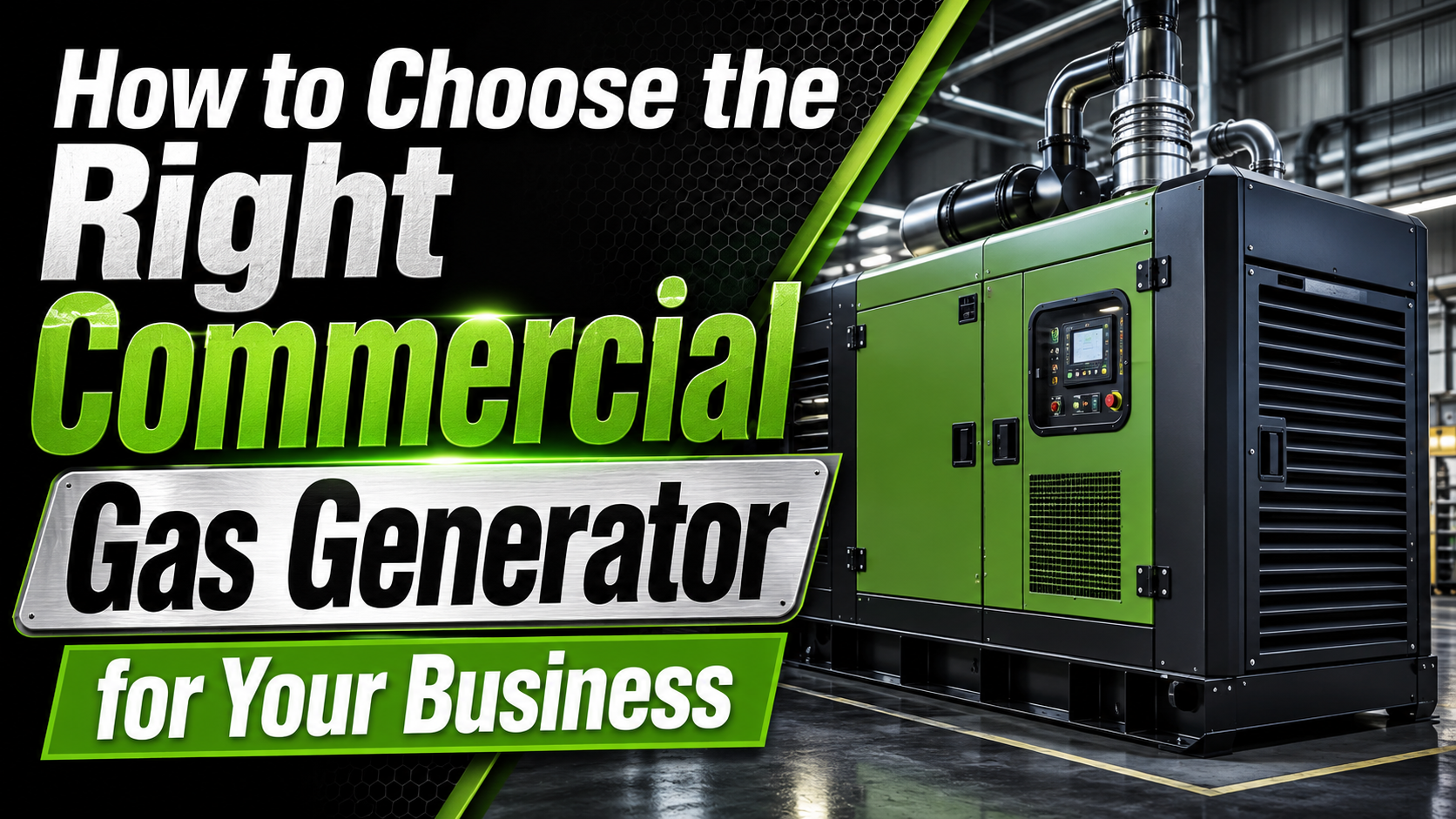
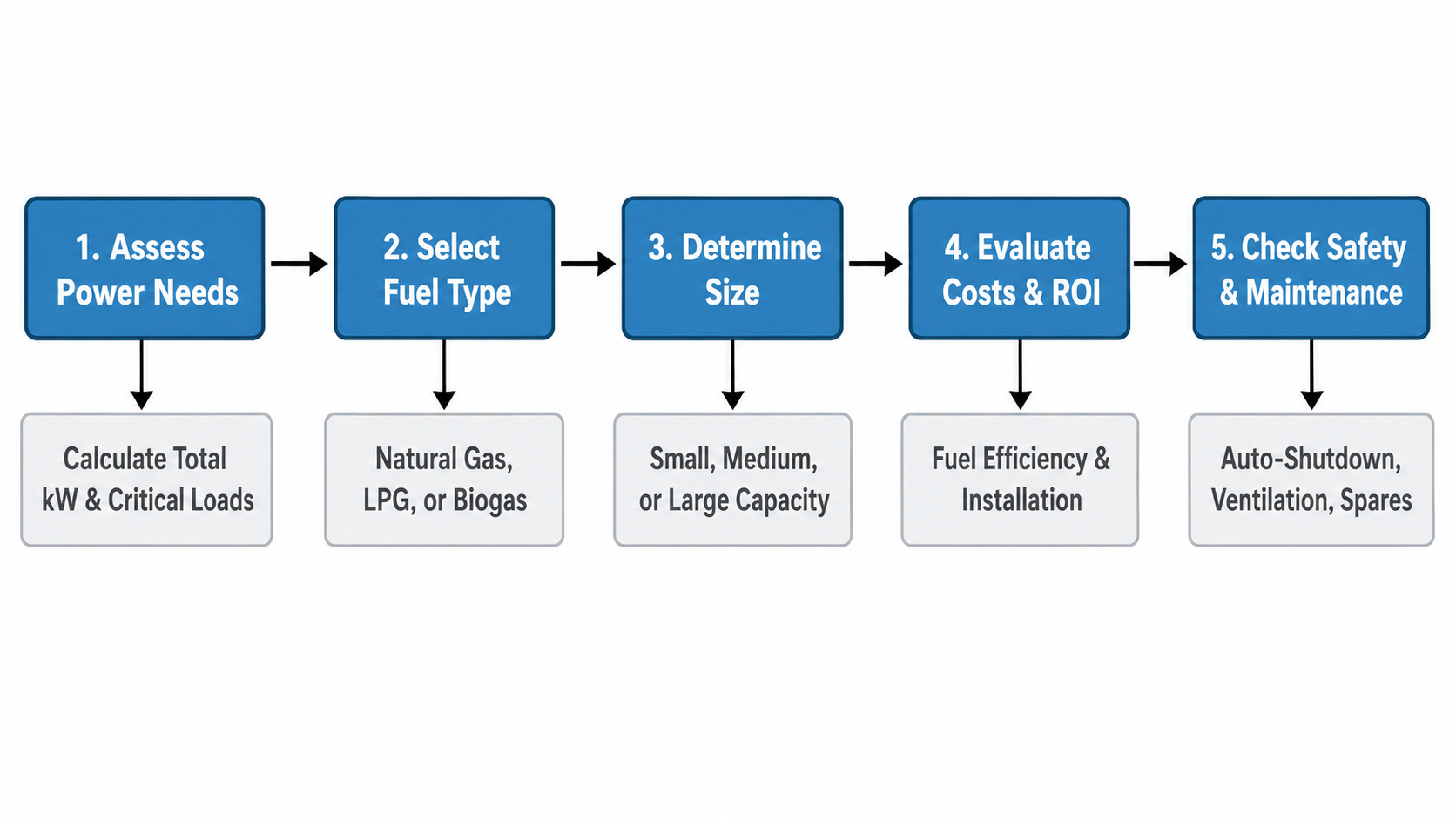
There are important considerations to note when choosing a generator, such as its power output, fuel type and consumption, and longevity. This guide by HuaQuan provides all the information businesses need before selecting the most appropriate commercial Gas Generator.
What Is a Commercial Gas Generator?
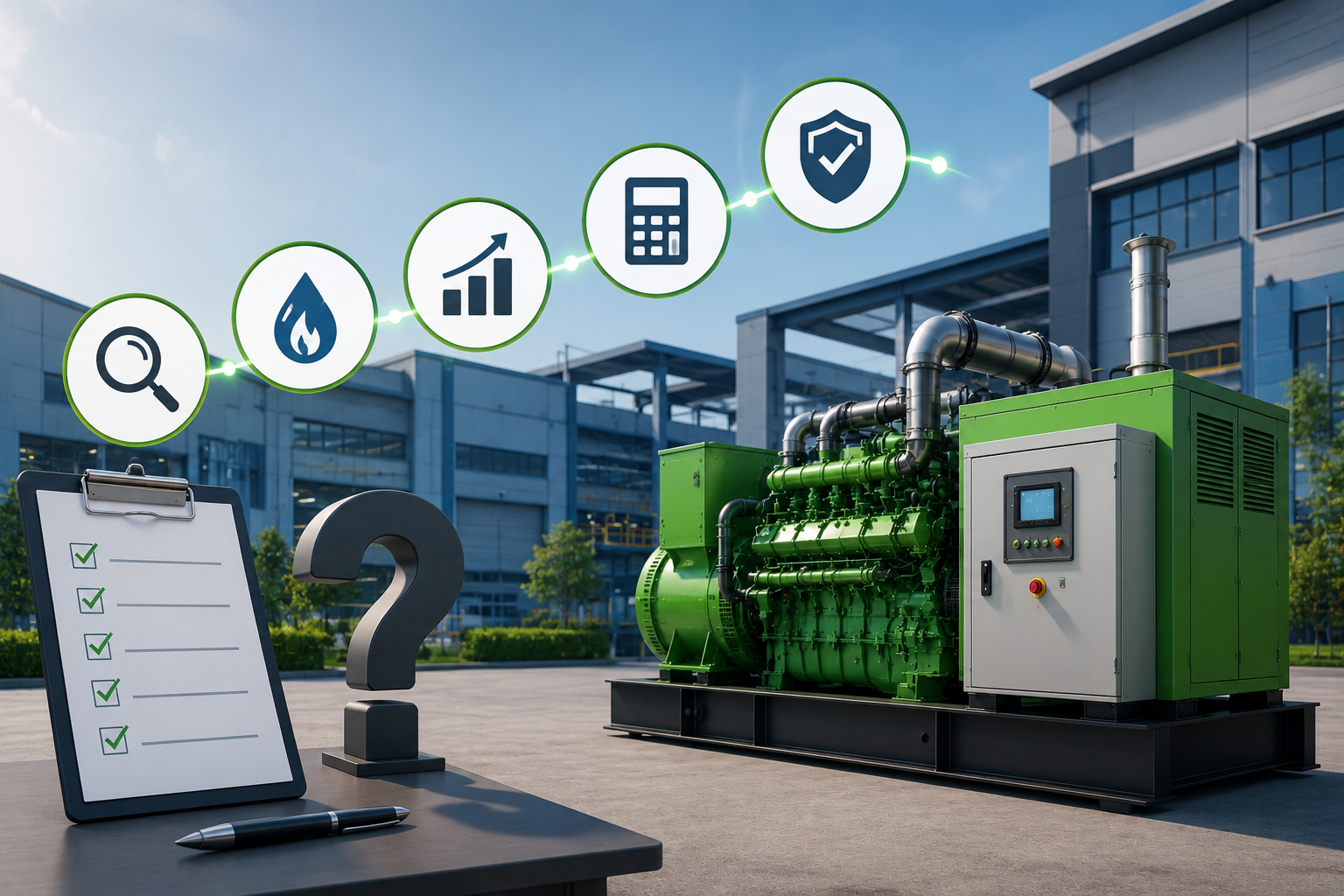
A commercial gas generator is a power generation system which converts gas fuel into electricity. The generator uses an internal combustion engine to convert the chemical energy of fuel to mechanical energy.
Commercial gas generators are typically used as backup or continuous power sources for facilities that need a constant supply of power.
Common Fuel Types
Natural Gas
One of the most popular fuels is natural gas, which is abundant, inexpensive, and emits fewer pollutants.
LPG
In areas where natural gas is unavailable, Liquefied Petroleum Gas (LPG) generators can be used. They have known that performance and fuel storage are easier.
Biogas
Renewable organic waste materials are used in a biogas generator. They are considered an environmentally friendly and sustainable energy source.
Industries That Use Commercial Gas Generators
Commercial gas generators are used in many industries, such as:
- Manufacturing plants
- Hospitals and healthcare facilities.
- Hotels and resorts
- Construction sites
- Data centers
- Warehouses
- Commercial buildings
Why Businesses Are Choosing Commercial Gas Generators
Lower Fuel Costs
Reduced fuel costs are a major benefit of a commercial gas generator. Natural gas is typically less expensive than diesel fuel, particularly for businesses that must operate around the clock.
Cleaner Energy Compared to Diesel
Gas generators emit fewer pollutants than diesel generators. This helps companies meet environmental laws and reduce their carbon footprint.
Reliable Continuous Power Supply
Electricity is needed at all times for commercial use. Gas generators are reliable power sources in the event of a power outage and can run for extended periods.
Reduced Maintenance Costs
Generally, gas-powered generators have cleaner combustion systems, resulting in lower engine wear and maintenance requirements than diesel generators.
Determine Your Power Requirements
Calculate Total Power Load
Businesses need to consider their power usage before buying a commercial gas generator. The wattage or kilowattage (kW) of a generator is typically used to measure capacity.
Determine the total power needs of all equipment and systems that will be used during a power outage.
Identify Critical Equipment
Some key equipment could be:
- Industrial machines
- HVAC systems
- Lighting systems
- Refrigeration units
- Computer servers
- Medical equipment
Future Expansion Considerations
Future growth is also an important factor to consider when businesses are considering buying equipment.
Choose the Right Fuel Type
Natural Gas Generators
The use of natural gas generators is popular due to lower fuel costs, continuous pipeline fuel supply, and cleaner combustion.
Advantages:
- Lower emissions
- Cost-effective fuel
- Continuous operation capability
LPG Generators
LPG generators are suitable for remote applications where natural gas pipelines are not available.
Advantages:
- Portable fuel storage
- Reliable performance
- These are suitable for backup applications.
Biogas Generators
The businesses primarily interested in sustainable and renewable energy are those interested in biogas generators.
Advantages:
- Eco-friendly operation
- Waste-to-energy benefits
- Reduced environmental impact
Consider Generator Size and Capacity
Small Business Applications
Retail stores, offices, and restaurants are examples of small businesses that may need generators with lower power ratings to provide lighting and power for computers and other critical equipment.
Medium Commercial Facilities
Medium-sized companies may require generators capable of supplying power to HVAC, refrigeration, machinery, and multiple operations and areas.
Large Industrial Operations
For industrial applications and data centers, the commercial gas generators need to support heavy machinery and uninterrupted power, making them high-capacity options.
Assess Fuel Efficiency & Operating Costs
Fuel Consumption Rates
Generators of varying capacities and hours of operation use varying amounts of fuel. Before buying, businesses should look into fuel efficiency.
Long-Term Energy Savings
Over time, a business with a high energy consumption can save a great deal on electricity costs with a commercial gas generator with an efficient, fuel-saving design.
Return on Investment (ROI)
While some gas generators may be more expensive up front, their lower operating and maintenance costs can, in the long term, offer a better return on investment.
Check Noise Levels and Environmental Impact
Low-Noise Operation
Today, commercial gas generators have been made with high soundproofing systems to minimize the noise made during operation.
Emission Regulations
Thus, businesses must ensure that generators comply with local environmental and emissions regulations.
Eco-Friendly Business Benefits
Organizations that make a transition to cleaner alternatives to energy create a better reputation. It also demonstrates that this company is indeed committed to sustainability, a concern that is paramount in today’s world.
Maintenance and Service Requirements
Routine Maintenance Needs
If you schedule routine maintenance, your generator will be operating normally and won’t cause any interruptions. Here are the main tasks you need to keep abreast of:
- Oil changes
- Filter replacement
- Spark plug inspection
- Cooling system checks
Availability of Spare Parts
Purchasing a generator with spare parts that are readily available. If parts are readily available, your repairs are quicker, and downtime is kept to a minimum.
Importance of Technical Support
They understand how important technical support is. In the event of trouble, it’s crucial that you obtain prompt and reliable assistance to restore your generator to working order with minimal delay.
Safety Features to Look For
Automatic Shutdown Systems
Auto Shutdown is one of those features which you never want to miss. It will keep your generator safe by turning it off if the pressure drops too low or it overheats, preventing any major damage.
Overload Protection
Overload protection prevents excessive amounts of electrical load from being applied to your equipment. It is automatic and will not cause damage, which may be costly to fix.
Gas Leak Detection
It is essential to have a gas leak detection system. It can detect leaks quickly and ensure that things are shut down before a dangerous situation arises.
Importance of a Trusted Manufacturer
Product Quality
When you purchase a generator from a trusted manufacturer, you will receive a generator that is built well, performs well, and won’t keep you awake all night with issues.
Warranty Coverage
A good warranty will safeguard your company from unanticipated repair costs. Be sure to know exactly what it covers and how much time it takes before buying.
Installation and Location Considerations
Indoor vs Outdoor Installation
Consider use and space prior to installation. This will help you decide if it’s better to go inside or outside.
Ventilation Requirements
It’s not an option; it’s necessary to provide good ventilation. It can otherwise cause overheating of your generator and poor performance. Ensure that there is sufficient ventilation in the installation space at all times.
Compliance With Local Regulations
Installations should be done in accordance with local building codes, safety, and environmental regulations. This can result in fines or forced shutdowns later if this step is not taken.
Conclusion
One of the most crucial choices a company can make is to choose the right commercial gas generator. It has a direct impact on your uptime, your operating costs, and your ability to maintain operations during a power outage.
Consideration of your power needs, fuel type, capacity, fuel costs, and maintenance requirements is all-important.
Businesses across numerous industries have a reliable, affordable, and cleaner power source with commercial gas generators. The right decision now is better productivity and enhanced growth next year. Contact us today.
FAQs
What is the capacity of a commercial-sized gas generator needed?
This will be based on the total power load. When estimating power requirements, add up the kW of all equipment and allow for future expansion.
What is more preferable between a commercial gas generator and a diesel generator?
In the long term, gas generators emit less, are quieter, and are usually more economical to operate and fuel than diesel generators.
How long can a commercial gas generator run for without needing to be shut down?
Most commercial gas generators can be used every day, as long as they have a continuous fuel supply and are serviced on a routine basis according to the maintenance schedule.
What would be the ideal fuel for a commercial gas generator?
The most widely used is natural gas, which is cleaner and cheaper. But LPG and biogas may be more suitable in some areas and for certain needs.
How to maintain a gas generator?
The most fundamental maintenance requirements for ensuring efficient, trouble-free operation of a gas generator are regular oil changes, filter replacements, spark plug maintenance, and system inspections.
⚡ Explore Related Solutions
- 🏭 500kW Diesel Generator
- 🏭 1000kW Diesel Generator
- 🏭 500kW YC Diesel Generator
- 🔧 KMS (Cummins/Doosan) Series
- 🔧 Gas Generator Sets
- 📋 Diesel Generator Sets
- 📋 Order Process — How to Buy
- 📋 Contact Us
💡 Need a customized solution? Contact our engineering team for project-specific recommendations.