< img height="1" width="1" style="display:none" src="https://www.facebook.com/tr?id=818233107660385&ev=PageView&noscript=1" />
x
Send Your Inquiry Today
Quick Quote

Best fuel for home generator?

Fuel Testing

The best fuel for a home generator depends on what matters most to you: convenience, cost, reliability, or environmental impact. There is no universal winner — natural gas wins on convenience, propane wins on shelf life, diesel wins on energy density and reliability, and gasoline wins on availability. Here is the quantitative comparison you need to make an informed choice.

Fuel Comparison: Side by Side

PropertyGasolinePropane (LP)Natural Gas (NG)Diesel
Energy density114,000 BTU/gal91,500 BTU/gal1,030 BTU/cu ft138,000 BTU/gal
Cost per unit$2.50–$4.00/gal$1.50–$3.00/gal$0.80–$1.50/therm$3.00–$4.50/gal
Cost per kWh delivered$0.30–$0.60/kWh$0.20–$0.40/kWh$0.10–$0.25/kWh$0.25–$0.45/kWh
Storage stability3–6 months (untreated); 12 months (stabilized)Indefinite (sealed tank)N/A (piped)12–24 months
Fuel deliveryPortable cansPortable tanks or bulk storagePiped from utilityPortable cans or bulk tank
Engine life factor1.0× (baseline)1.2–1.5× (cleaner burn)1.3–1.6× (cleanest)2–3× (1,800 RPM vs 3,600 RPM)
Cold weather startGood down to 0°FPoor below −20°F (vapor pressure drops)Good (gas utility pressure maintained)Excellent (needs block heater below 0°F)
CO emissionsHighest~30% less than gasoline~40% less than gasoline~20% less than gasoline (but more particulates)

Running Cost Calculation: 24-Hour Outage, 50% Load

For a 10,000W (10kW) generator running at 5,000W average load:

Fuel TypeConsumption at 50% load (10kW gen)Fuel PriceCost per 24 hours
Gasoline0.55 gal/hr × 24 = 13.2 gal$3.25/gal$42.90
Propane1.25 gal/hr × 24 = 30 gal$2.50/gal$75.00
Natural Gas135 cu ft/hr × 24 = 3,240 cu ft (~32 therms)$1.10/therm$35.20
Diesel0.40 gal/hr × 24 = 9.6 gal$3.75/gal$36.00

These numbers assume current U.S. national average fuel prices. Local rates can vary by ±30%.

When Each Fuel Makes Sense

  • Natural gas wins for whole-home standby Generators — lowest operating cost, zero refueling, unlimited runtime. Downside: if the gas mains fail during an earthquake or major storm, you have no fuel at all. The 2021 Texas winter storm left 4 million people without natural gas pressure for days.
  • Diesel wins for industrial reliability — diesel generators run at 1,800 RPM (half the speed of a 3,600 RPM gasoline engine) for dramatically longer life, typically 10,000–30,000 hours before major overhaul vs. 1,000–3,000 hours for a gasoline engine. Diesel fuel stores well and is non-flammable at room temperature (flash point >125°F vs. gasoline at −45°F).
  • Propane wins for medium-term backup — indefinite shelf life, cleaner combustion, and the ability to use 20 lb BBQ tanks for portable use or 500+ gallon bulk tanks for whole-house systems. Propane is the most popular fuel for off-grid installations where natural gas is unavailable.
  • Gasoline wins for portability — available everywhere, easy to carry, and most portable generators are gasoline from the factory. Downside: short shelf life, carburetor issues with ethanol blends, and the need to handle flammable liquid.

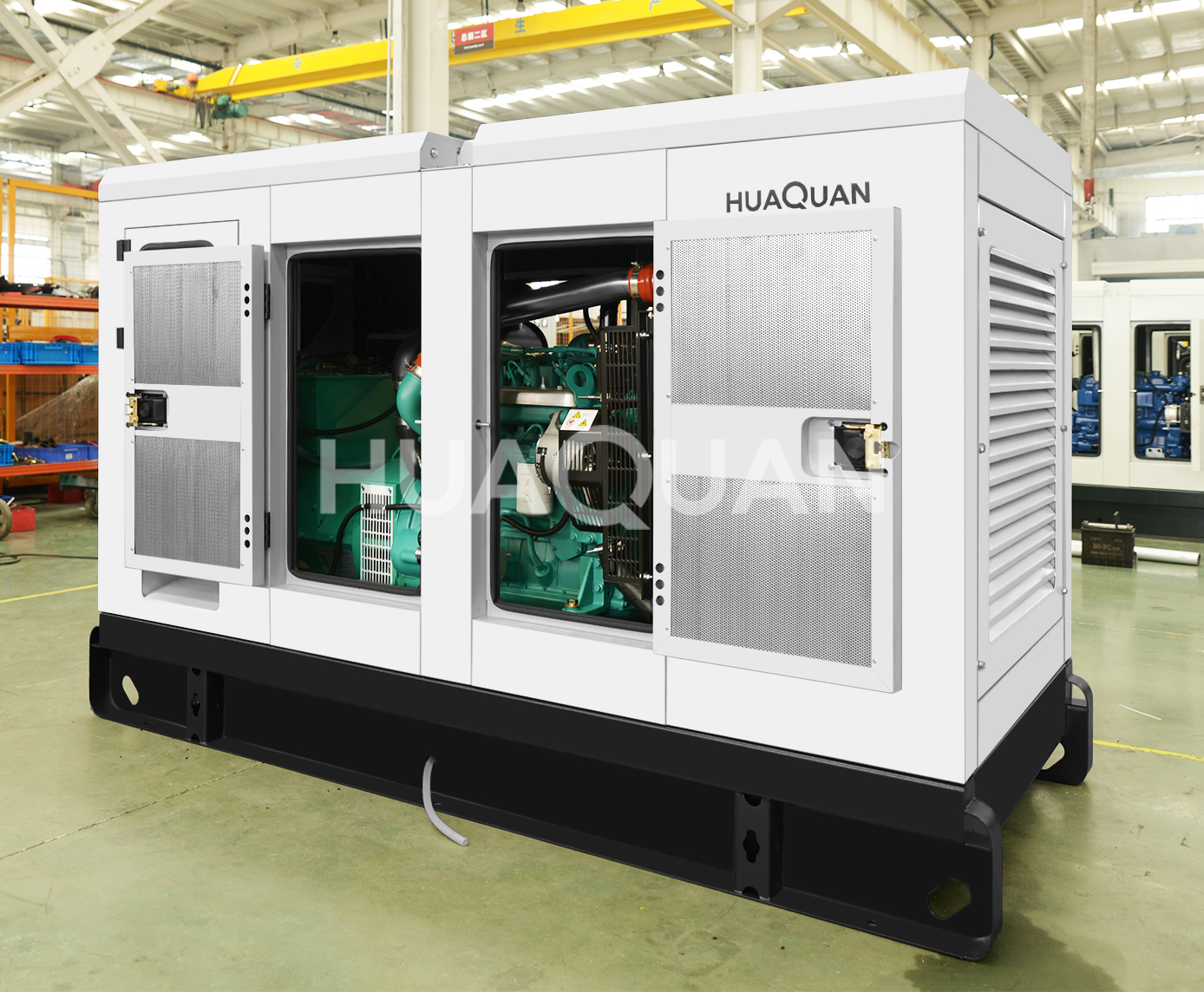
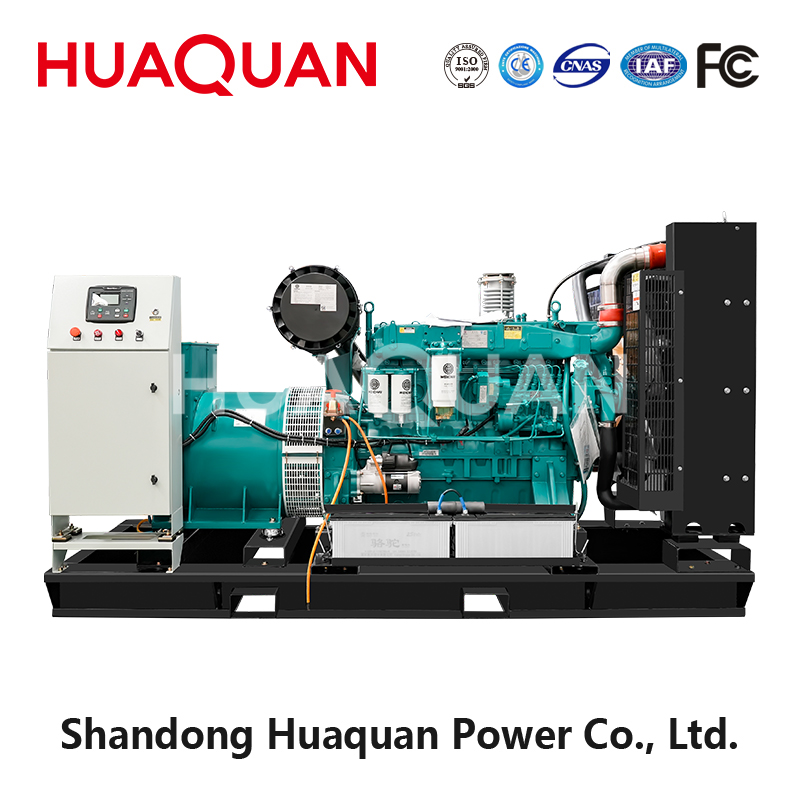
For commercial and industrial applications where reliability under continuous duty is the top priority, Huaquan Power diesel generators provide 1,800 RPM prime power with low fuel consumption and long service intervals.

Frequently Asked Questions

What is the best fuel for a whole-house standby generator?

Natural gas is the best fuel for a whole-house standby generator if a gas line is available at your property. It requires no refueling, no fuel storage, and has the lowest ongoing fuel cost ($0.08-0.15/kWh). For homes without natural gas access, propane is the best alternative-it stores indefinitely, burns cleanly, and works with the same generator engine that natural gas uses.

What is the best fuel for a Portable Generator?

Gasoline is the most practical fuel for portable generators below 10kW because it is universally available, easy to transport in 5-gallon cans, and portable generators are factory-optimized for gasoline. However, gasoline degrades in 3-6 months, so use fuel stabilizer and rotate stored fuel. For extended emergency use, consider a dual-fuel portable generator that also runs on propane-propane stores indefinitely and produces fewer engine deposits.

Which fuel is best for frequent, short-duration outages?

Natural gas is ideal for frequent short outages (30 minutes to 4 hours, occurring 10-50 times per year). The generator starts automatically when the grid fails and you never need to check fuel levels or refuel. With diesel or propane, you would need to monitor fuel consumption and potentially refill after 8-12 hours of cumulative runtime, which becomes tedious with frequent short outages.

Which fuel is best for long-duration outages (3-14 days)?

Diesel is the best fuel for extended outages. A 500-gallon diesel tank provides 2-3 weeks of continuous runtime for a typical home generator. Diesel is available at any fuel station even during widespread outages (gas stations with backup generators can pump diesel), and you can transport it in 5-gallon cans. Natural gas may lose pipeline pressure during extended regional outages, leaving you without fuel.

Is propane a good compromise fuel?

Propane is an excellent compromise: lower cost than diesel per kWh ($0.15-0.30 vs $0.20-0.35), indefinite storage life, cleaner combustion (less maintenance than diesel), and it works with the same generator models as natural gas. The main drawback is volumetric energy density-a 500-gallon propane tank provides only 60-70% of the usable runtime of a 500-gallon diesel tank. Propane also performs poorly in extreme cold (below -20F/-30C) due to reduced vaporization pressure.

What size propane tank do I need for a home generator?

A 20kW home generator running at 50% load (10kW) consumes approximately 2.5-3.5 gallons of propane per hour. A standard 120-gallon propane tank provides 35-50 hours of runtime. A 500-gallon tank provides 140-200 hours. For extended backup capability (7-14 days), a 500-gallon minimum is recommended. Compare this to a 100-gallon diesel tank that provides 200-300 hours of runtime for the same generator-diesel needs less than half the storage volume.

Can I use gasoline in a natural gas generator?

No. Natural gas generators have different carburetors/ fuel metering systems and cannot burn gasoline. However, dual-fuel generators that run on both gasoline and propane are available, and tri-fuel generators that run on natural gas, propane, and gasoline are also an option. If fuel flexibility is important, purchase a tri-fuel generator and install it with a natural gas connection plus a propane tank as backup.

Is a diesel generator too loud for residential use?

Modern diesel generators with sound-attenuated enclosures operate at 65-75 dB at 7 meters-comparable to a central air conditioner or a washing machine. Premium residential models with critical silencers and isolation mounts can achieve 60-65 dB, which is considered quiet for a generator. Natural gas and propane generators are typically 3-5 dB quieter than equivalent diesel units because the engine has lower compression and smoother combustion.

Which fuel is safest for home use?

Natural gas is the safest because it is lighter than air (dissipates upward if leaked), has a distinct odorant (mercaptan), and requires no on-site fuel storage. Propane is heavier than air (pools at ground level, creating explosion risk) and requires proper tank placement and ventilation. Diesel is the least volatile (high flash point of 126F/52C) but produces toxic exhaust requiring outdoor placement. All three are safe when installed and maintained according to code.

What is the best fuel for a home generator based on total cost of ownership over 10 years?

For a 20kW generator running 200 hours/year (typical home backup): Natural gas: $15,000-22,000 total (equipment $8,000 + installation $3,000 + fuel $1,600 + maintenance $2,400-9,400). Propane: $17,000-24,000. Diesel: $16,000-23,000. Gasoline (portable, similar runtime): $8,000-12,000. Natural gas wins on total cost when a gas line is available. For gasoline, the 10-year cost is surprisingly low because the equipment is so cheap, but you sacrifice convenience and automation.