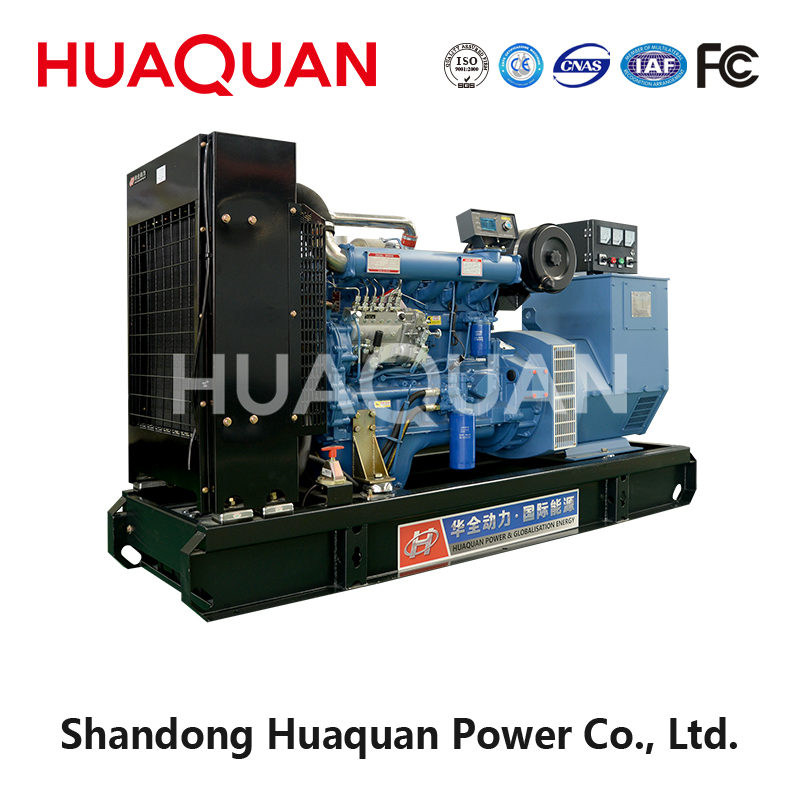
Annual overhaul inspection of the مولد الديزل involves an in-depth and comprehensive inspection. The purpose of this inspection is to maintain near-original performance and identify hidden faults. This inspection involves an internal inspection with partial or complete dismantling, so only trained professionals should perform it.
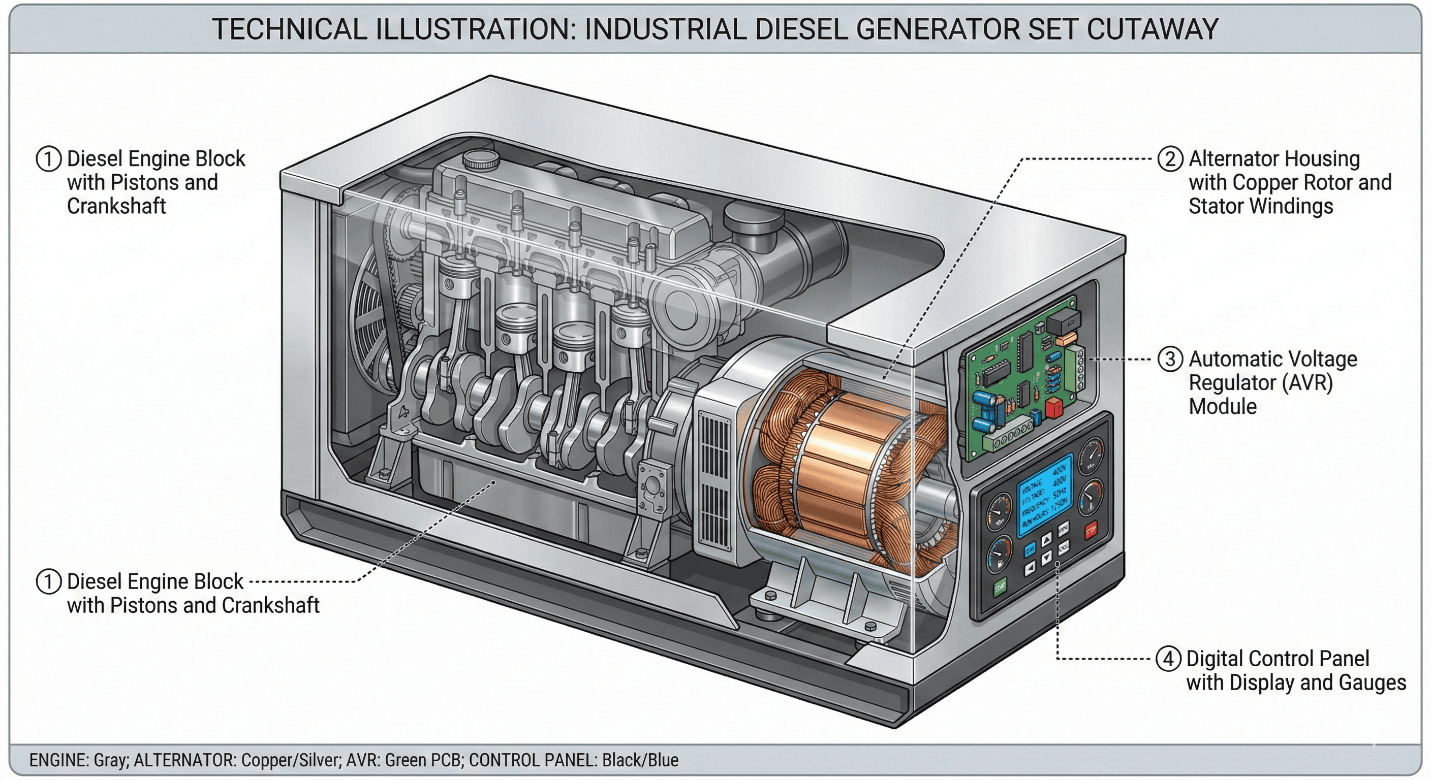
Here is a list of items to check during an annual overhaul of a diesel generator.
Diesel Generator Overhaul Essential Checks
- Generator Identification and Operation History
Before performing an annual maintenance, make sure to check the generator manufacturer, model, and kVA rating. This step is important because every generator has model-specific maintenance intervals.
kVA rating helps recognize alternator size, cooling capacity, and fuel consumption.
To avoid performing wrong operations, correctly identify the equipment.
علاوة على ذلك, before performing any activity with the diesel generator, isolate the electrical supply. Follow battery safety procedures and wear personal protective equipment.
- Mounting Frame and Vibration Check
A diesel generator’s mounting and structural elements guarantee steady operation, lessen vibration stress, and preserve internal parts. Improper mounting results can cause major mechanical breakdowns.
Hence:
- Perform a thorough check on anti-vibration mounts for malpositioning.
- Ensure the alignment between the engine and the alternator is proper.
- Check bolts or frames for rust.
- Note the intensity of vibrations while the generator is working.
- Engine Mechanical Inspection
The mechanical inspection of the engine focuses on locating internal wear and degradation that are difficult to detect during routine inspection.
- Check the cylinder head for carbon accumulation and overheating.
- Inspect pistons for scraping.
- Check piston rings and liners for cracks.
- Inspect cylinder liners for ruffling and measure clearances.
- Measure valve clearances and align according to OEM guidelines.
- Examine engine mountings for tightening and cracks.
- Fuel Analysis and Replacement
Fuel analysis and replacement involve checking the fuel quality and the fuel system to make sure the fuel is clean, flows properly, and allows the generator to run efficiently and reliably.
- Check fuel injectors for pressure and flow rate. Clogged injectors lead to extra fuel consumption.
- Check fuel lift for flow pressure.
- Inspect fuel lines for breakage and any loose connections.
- Check the fuel return lines. If they are blocked, the excess fuel cannot return, leading to leaks and increased pressure.
- Fluid System Analysis
Major fluid systems that require attention during overhaul inspection include engine oil levels, coolant levels, and fuel level and quality.
Engine Oil Analysis
- Engine oil analysis includes checking the color and density of engine oil.
- Check for soot, which is black powder formed due to incomplete fuel combustion.
- Assess additive levels.
Coolant Analysis
- Coolant needs to be changed annually as per the manufacturer’s recommendations.
- Check the level of cooling liquids.
- Check the pH of cooling fluids. pH deviating from normal indicates contamination.
- Perform an antifreeze ratio check to maintain adequate cooling.
Fuel Analysis
- Diesel if stored for a long time develops diesel bugs due to high moisture content and microbial growth. Examine for diesel bugs.
- Perform fuel polishing if fuel integrity is compromised, resulting in lower energy per unit volume.
- Check the density and cleanliness of additional fluids, like hydraulic fluids, if present.
- Air Inflow and Exhaust System
The overheating in a diesel generator is prevented by proper airflow and the exhaust system.
- Replace the air filters to increase engine efficiency.
- Check the system for air leaks. Unfiltered air may reach the engine through leaks, reducing engine efficiency.
- Check the exhaust manifold for gasket leakage. The malfunctioning gaskets increase fire hazards.
- A malfunctioning muffler causes unnecessary noise. Replace it annually.
- Measure exhaust pressure and ensure it is within the manufacturer’s limit.
- Control and Safety System Check
The control panel is the brain of a generator. To ensure reliable operation, check the followings:
- Check all the wire connections to the control panel to ensure they are functioning properly.
- Check all the meters and correct indicators.
- Inspect low oil pressure, high cooling temperature shutdowns
- Check Emergency Stop and overspeed shutdown.
- Check alarms for proper functioning.
- Replace any broken connectors and relays.
- Battery and Starting System
For efficient generator operation, particularly in emergency or standby power applications, the battery and starting system are essential. To make sure the generator can start in any situation, this system needs to be carefully tested and examined during the yearly overhaul.
- Check battery voltage and specific gravity.
- Check the output of the battery charger according to the manufacturer’s instructions and prevent overcharging.
- Check for proper connection of the starter motor to the flywheel. علاوة على ذلك, check the condition of carbon brushes.
- System Load Testing
Run the diesel generator under full load after maintenance of all essential parts of the generator has been completed. Check the voltage, frequency, and temperature of the generator during this testing.
Usually, hidden problems like fuel outreach, low battery voltage, and overheating can be detected by performing load bank testing. Identifying these problems and rectifying them in time saves you time and energy.
- Maintenance Record
Keep a record of maintenance activities performed and parts replaced during overhaul maintenance. This helps schedule the next maintenance and extends the warranty of the equipment.
Overhaul Diesel Generator Checklist
Here is an overview of the annual overhaul diesel generator checklist
Identification and Safety
Make / Model / Serial Nos.
Rated kVA / Voltage / Frequency
Total running hours
Duty type (Standby / Prime / Continuous)
Engine Mechanical
Compression (all cylinders)
Valves unclogged
Pistons checked
Crankshaft/bearings checked
Oil & coolant leaks checked
Fuel System
Fuel tank drained; water and sludge assessed
Primary and secondary fuel filters replaced
Fuel lines pressure-tested
Injectors tested and calibrated
Injection timing verified
Air Intake and Exhaust System
Air filter replaced
Intake system leak-tested
Intercooler cleaned
Exhaust manifold and piping inspected
Exhaust back pressure within the limit
Lubrication System
Engine oil sample analyzed
Engine oil replaced
Oil filters replaced
Oil pressure verified
Cooling System
pH of cooling liquid
Thermostat tested
Water pump inspected
Hoses and belts checked
Control and Safety System
Sensors calibrated
Overspeed trip tested
Low oil pressure shutdown tested
High coolant temperature shutdown tested
Emergency stop tested
Battery and Starting System
Battery load test performed
Battery charger output verified
Starter motor current measured
Cranking time recorded
Mounting and Vibration
Engine-alternator alignment measured
Anti-vibration mounts inspected
Base frame and foundation bolts checked
Operating vibration levels recorded
Load Test
No-load electrical readings recorded
Step-load and full-load tests completed
Voltage and frequency stability confirmed
Exhaust temperature and smoke observed
Parts replaced, logged, and sign-off completed
خاتمة
The efficiency of a diesel generator is maintained through scheduled overhauls. An in-depth examination helps detect hidden faults and extends engine life. It not only saves you from sudden breakdowns but also prevents internal component failures and maintains near-original performance.
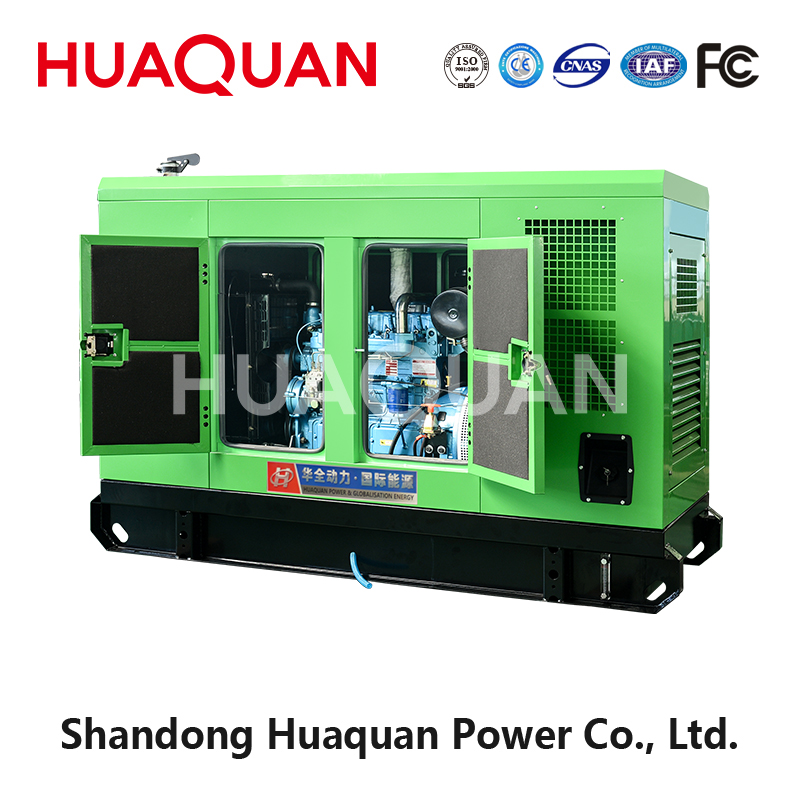
If you are looking for a compact and rust-free solution to your power generation problems, you can consider a galvanized and sound-insulated container generator by HuaQuan Power