A standby generator isn’t cheap. It’s a purchase that gives you peace of mind, so if the power goes out during a bad storm, your Home won’t. And in all seriousness, when properly maintained, they’re dependable for many years. However, there’s one thing no one wants to hear: machines don’t last forever.
Age matters, but it’s not the only factor. Repair frequency, total run hours, safety issues, changing power requirements and part availability are also important to consider. Waiting until the generator fails during an August hurricane or a January ice storm is asking for trouble.
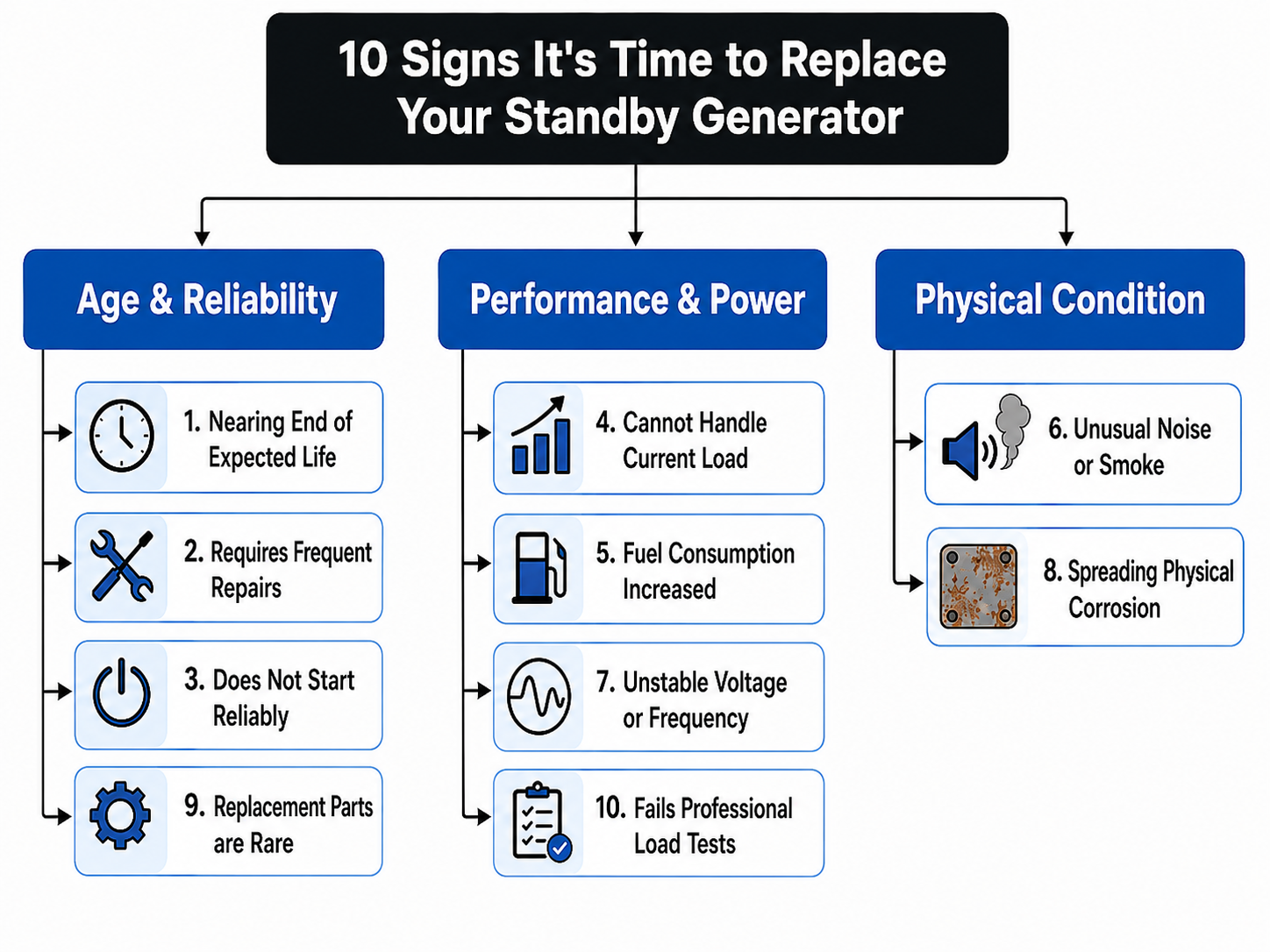
In this article by Huaquan, you will learn the ten critical warning signs to look out for so you can evaluate your generator’s reliability before the next major outage strikes.
How Long Does a Standby Generator Usually Last?
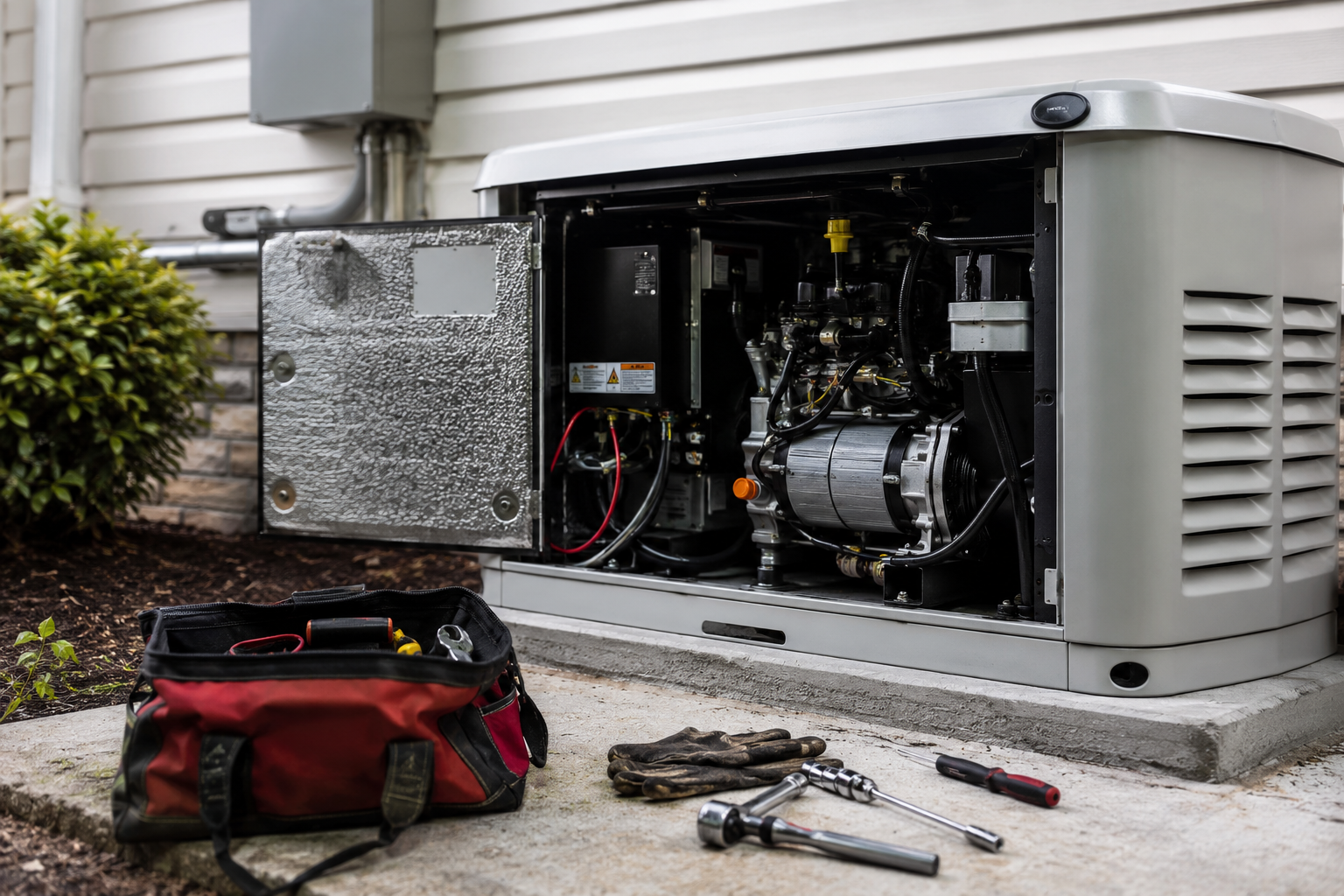
If a generator has been properly maintained, it will normally operate for about 15 to 30 years, or roughly 1,500 to 3,000 hours of actual run time. That’s quite a wide range, though. Where your generator falls depends heavily on maintenance, where it’s installed and how often it’s used.
A generator that only starts during short outages and performs weekly self-tests will usually last longer than one that’s constantly running through frequent multi-day blackouts. Plenty of things shorten a generator’s life too, including poor maintenance, chronic overloading, salty coastal air, contaminated fuel, long idle periods and sloppy installation.
1. Nearing the End of Its Expected Service Life
Why Generator Age Matters
As a generator gets older, internal components begin to wear out. Rubber seals become hard and brittle. Hoses crack. Wire insulation breaks down. And those sensitive circuit boards take a beating from years of heating up and cooling down.
Age Should Be Considered With Condition
Just because a generator is old doesn’t mean it’s worn out. A well-maintained 15-year-old generator may still be in excellent condition. Meanwhile, a seven-year-old unit that missed oil changes or survived flooding may already be ready for replacement. Don’t just look at the calendar. Check the installation date, maintenance history, total run hours and past repair records to understand the generator’s true condition.
2. The Generator Requires Frequent Repairs
If your generator repair technician knows both your name and your dog’s name, that’s already a warning sign.
Repeated Starting Problems
A weak starter motor. Battery charging issues that keep returning. Sensors that fail repeatedly. These ongoing problems make the unit less dependable.
Recurring Fuel-System Problems
Fuel pressure issues. Sticky regulators. Clogged injectors. Gas hoses deteriorating from the inside out. All of these point to a system that’s slowly falling apart.
When Repairs Stop Being Cost-Effective
Add up this year’s repair costs and compare them with the price of a new unit backed by a real warranty. If you’re spending thousands just to keep an aging generator running, replacing it is usually the smarter and safer choice.
3. The Generator Does Not Start Reliably
The whole purpose of a standby generator is to start automatically the moment the power goes out.
Delayed or Failed Automatic Startup
If it takes several cranks to start, throws random fault codes or simply refuses to start when the grid goes down, it’s failing at the one job it was built to do.
Why Reliability Matters More Than Occasional Success
A standby generator must work automatically without anyone supervising it. Running fine one month and failing the next creates real risk, especially if you’re depending on a sump pump or medical equipment that must stay powered.
4. The Generator Cannot Handle Your Current Electrical Load
Your Home’s Power Needs Have Increased
The generator you installed 10 years ago was probably the right size back then. But if you’ve added central air conditioning, an electric water heater, a home office or an EV charger, your electrical demand has increased significantly.
Signs the Generator Is Undersized
Breakers trip during outages. The engine bogs down under load. Lights dim when a large appliance starts. These are signs the generator is overloaded. A smart load-management system may help, but upgrading to a larger generator is often the real solution.
5. Fuel Consumption Has Increased Significantly
Why Older Generators May Use More Fuel
As engines age, compression and internal efficiency decline. Worn components, poor combustion and dirty engine parts force the generator to burn more natural gas or propane to produce the same amount of power.
Other Signs of Inefficient Operation
Watch for longer warm-up times, rough idling, a strong smell of unburned fuel or needing to refuel more often. Rule out basic issues first, such as dirty air filters and fouled spark plugs. If fuel efficiency continues to decline after that, it’s a strong sign the engine is wearing out.
6. Unusual Noise, Vibration or Smoke
New Mechanical Noises
Gas and diesel engines aren’t silent, but their sound should remain consistent. New knocking, grinding or metal-on-metal noises usually mean something serious is wearing out.
Excessive Vibration
If the unit shakes hard enough to rattle its enclosure, it’s likely caused by loose engine mounts, worn bearings or a larger mechanical imbalance.
Abnormal Exhaust Smoke
A small puff of smoke during startup is normal. However, continuous black smoke indicates a rich fuel mixture, blue smoke means the engine is burning oil and thick white smoke usually points to a coolant leak. All of these signal a serious engine problem. If you notice heavy smoke or grinding noises, shut the generator down immediately to help prevent a fire.
7. The generator generates unstable voltage or frequency.
These days, your house is full of sensitive electronic devices. They can be damaged if the generator is producing dirty power.
Common Warning Signs
Flickering lights. Computers or TVs randomly shutting off. Appliances behaving strangely during a power outage. All these indicate unstable power output.
Why is unstable output dangerous?
This instability typically is related to a failing Automatic Voltage Regulator, a failing alternator or a faulty engine speed governor. Left unchecked, it can damage your electronics and signals that an expensive failure is coming.
8. Corrosion and/or Physical Damage Is Spreading
Areas to Inspect
Carefully inspect the enclosure, base frame, electrical connections, battery terminals and exhaust system.
When Corrosion Becomes a Replacement Issue
Surface rust on the cabinet is mostly cosmetic. However, if coastal air, standing water or chemical exposure has weakened the frame, if water keeps getting into the electrical panels or if the fuel and exhaust connections have rotted through, the unit is no longer safe to operate and needs replacement.
9. Replacement Parts Are Difficult or Expensive to Find
Manufacturers eventually stop supporting older generator models as technology advances.
Why Parts Availability Affects Reliability
If the control board fails and the manufacturer no longer produces it, your technician has to search for used replacement parts. This may leave your home without backup power for weeks or even months. A new unit provides immediate access to parts along with solid warranty coverage.
10. The Generator Fails Professional Load Tests
What Is a Generator Load Test?
A load test connects the generator to an artificial load to measure its performance under real, maximum-demand conditions rather than idling with no load connected.
Signs of Poor Load-Test Performance
If it overheats, experiences major voltage drops, stalls or fails to carry its rated load, then it cannot be trusted during a real emergency. The generator may operate perfectly during its weekly 15-minute exercise cycle but fail the moment it’s required to power your entire home during an actual outage.
Conclusion
A standby generator only pays for itself if it starts the moment the power goes out. Unreliable starting, frequent repair costs, unstable voltage, serious structural corrosion, insufficient power capacity and replacement parts that are difficult to find are all clear signs to replace a standby generator. Don’t wait for a blizzard or hurricane to discover your aging system can no longer protect your home. Schedule a professional inspection and a full load test now so your backup power is truly ready the next time the lights go out.
Contact the Huaquan team today for a professional load test and expert guidance on sizing your replacement standby generator.