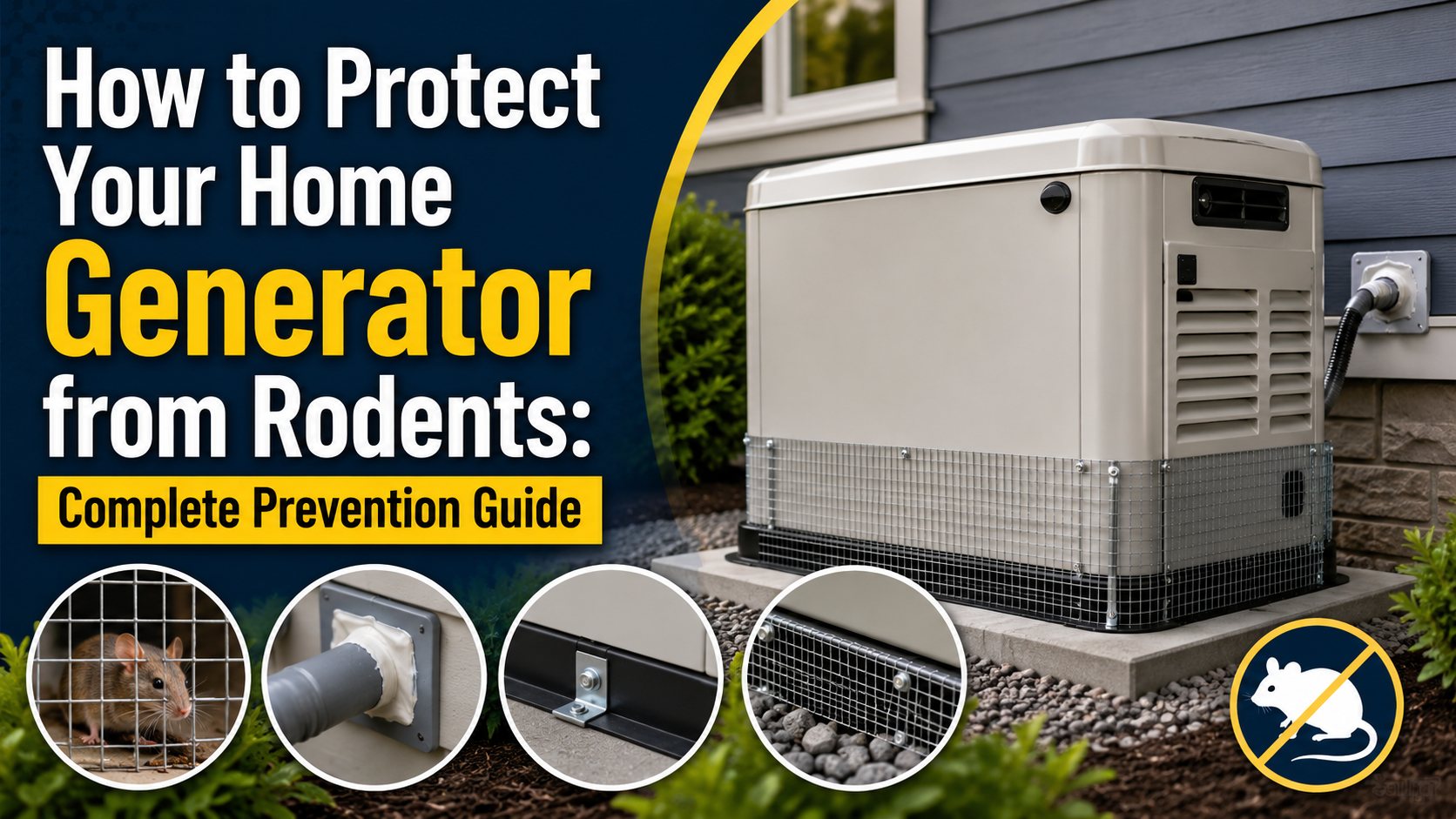
A standby or portable Home generator is a very valuable investment that allows people to enjoy peace of mind when severe weather strikes. It is the same kind of life-saving equipment that attracts mice, rats, squirrels and other destructive rodents.
The remaining warmth, heavy weather protection and ample nesting space inside a generator enclosure create a five-star rodent hotel during winter. Unfortunately, animals do not simply sleep when they move in. They gnaw through important wire insulation, shred filters for nesting material and chew on fuel lines. This type of rodent damage can result in complete starting failure, electrical shorts, dangerous fuel leaks and costly repairs. This guide explains how homeowners can protect home generator from rodents and keep pests away from their equipment.
In this article by Huaquan, you will learn how to identify early signs of infestation and implement proven strategies to protect your home generator from destructive rodents.
Why Rodents Are Attracted to Home Generators
Understanding what attracts pests to your power system is the first step in keeping them away.
Warmth Produced by the Generator
- Residual heat: The engine block gives off heat after weekly exercise cycles or after a power outage, acting like a huge space heater in your yard.
- Protected space: During freezing winter weather, that warmth becomes an irresistible shelter for small animals looking to escape the cold.
Shelter from Weather and Predators
- Enclosed generator cabinets: Standby generators sit inside heavy steel or aluminum enclosures that protect against rain, snow and freezing wind.
- Quiet locations: Generators are intentionally installed away from heavy foot traffic, usually near walls, fences, dense shrubs or garages, giving rodents a quiet, undisturbed hiding place away from owls and neighborhood cats.
Materials Rodents Use for Nesting
- Wire insulation: Rodents constantly chew because their teeth never stop growing. Many modern wire insulations are soy-based, making them smell and taste like food to mice.
- Debris: The dark corners inside an enclosure are perfect for collecting grass, dead leaves, fabric, paper and other debris.
Easy Access Through Small Openings
- Ventilation openings: Alternators require plenty of airflow to stay cool, and the enclosure louvers are often large enough for pests to slip through.
- Cable entry points: Electrical wiring enters through conduit holes that often leave small gaps behind.
- Drain holes: Base weeping holes designed to drain rainwater can also become an open doorway for mice.
What Types of Rodents Commonly Damage Generators?
These are the most common culprits behind generator damage.
- Mice: The most common invaders. They can squeeze through an opening as small as a dime.
- Rats: Bigger and far more destructive, capable of chewing through heavy-duty rubber fuel lines and thick battery cables.
- Squirrels: Love nesting in upper exhaust compartments and storing highly flammable acorns near the muffler.
- Chipmunks: They often burrow beneath the gravel or dirt foundation under the generator pad.
Even the smallest animals can squeeze through tiny gaps and still cause serious damage to components like the digital controller or alternator windings.
Signs of Rodent Activity Inside a Generator
You don’t need to actually catch a mouse in the act to know they’ve moved in. Watch for these obvious signs.
Chewed Wires or Insulation
- Exposed copper: Bright bare metal where the colored rubber insulation used to be before it was chewed away.
- Damaged sensor wiring: The thin wires connected to the oil pressure and temperature sensors are usually the first ones chewed.
- Loose electrical connections: Look for wires that have been chewed through and are now hanging loose and disconnected.
Droppings and Urine Odors
- Where droppings appear: Around the base pan, on top of the battery and beneath the control panel.
- Contamination risk: Rodent urine is highly acidic and speeds up rust and corrosion. Always handle droppings carefully because mouse feces may carry dangerous Hantavirus.
Nesting Materials
- Piles of dried leaves, grass, fabric and shredded insulation are scattered around.
- Nests are almost always found in the warmest parts of the machine, against the engine block, behind the battery or behind the control panel.
Unexplained Generator Starting Problems
- Failure to crank: You hear a click but the engine refuses to turn over.
- Random shutdowns: The generator starts normally but shuts down shortly afterward.
- Warning codes: The digital display shows Under Voltage or Sensor Fault because communication wires have been severed.
- Battery faults: The trickle charger cannot keep the battery topped off because the charging wires have been chewed through.
Scratching Sounds or Visible Tracks
- At night, you may hear faint scratching or scurrying sounds near the enclosure.
- Look for dark grease marks around entry holes, tiny paw prints in the dust on top of the engine and disturbed soil around the concrete pad.
What is the damage that can be caused to a home generator by rodents?
Turning your generator into their home can cause a lot of damage, which can be both hazardous and costly.
- Electrical Wiring Damage: Chewed wires directly result in short circuits, blown control fuses and complete failure of the main digital controller and safety sensors.
- Fuel System Damage: Rats chew through rubber fuel and vapor hoses. This results in dangerous natural gas or liquid propane leaks, creating a serious fire and safety hazard.
- Cooling and Ventilation Problems: A thick nest of leaves packed against the alternator louvers can block critical airflow, greatly increasing the risk of the generator overheating and damaging its internal parts.
- Battery and Starting System Problems: Damaged heavy-duty battery cables will not allow the starter motor to engage, while acidic urine corrodes the metal battery terminals.
- Fire Hazards: Stuffing dry grass, paper and other combustible nesting material directly against an exhaust manifold that can reach 600 degrees Fahrenheit is a disaster waiting to happen. These nests can easily catch fire from electrical arcing caused by exposed wiring.
- Warranty & Repair Concerns: Animal damage is not considered a factory mechanical defect. As such, manufacturers will not cover chewed wires under their standard warranty. Homeowners end up paying out of pocket for expensive rewiring or relying on homeowner’s insurance.
How to Protect Your Home Generator from Rodents
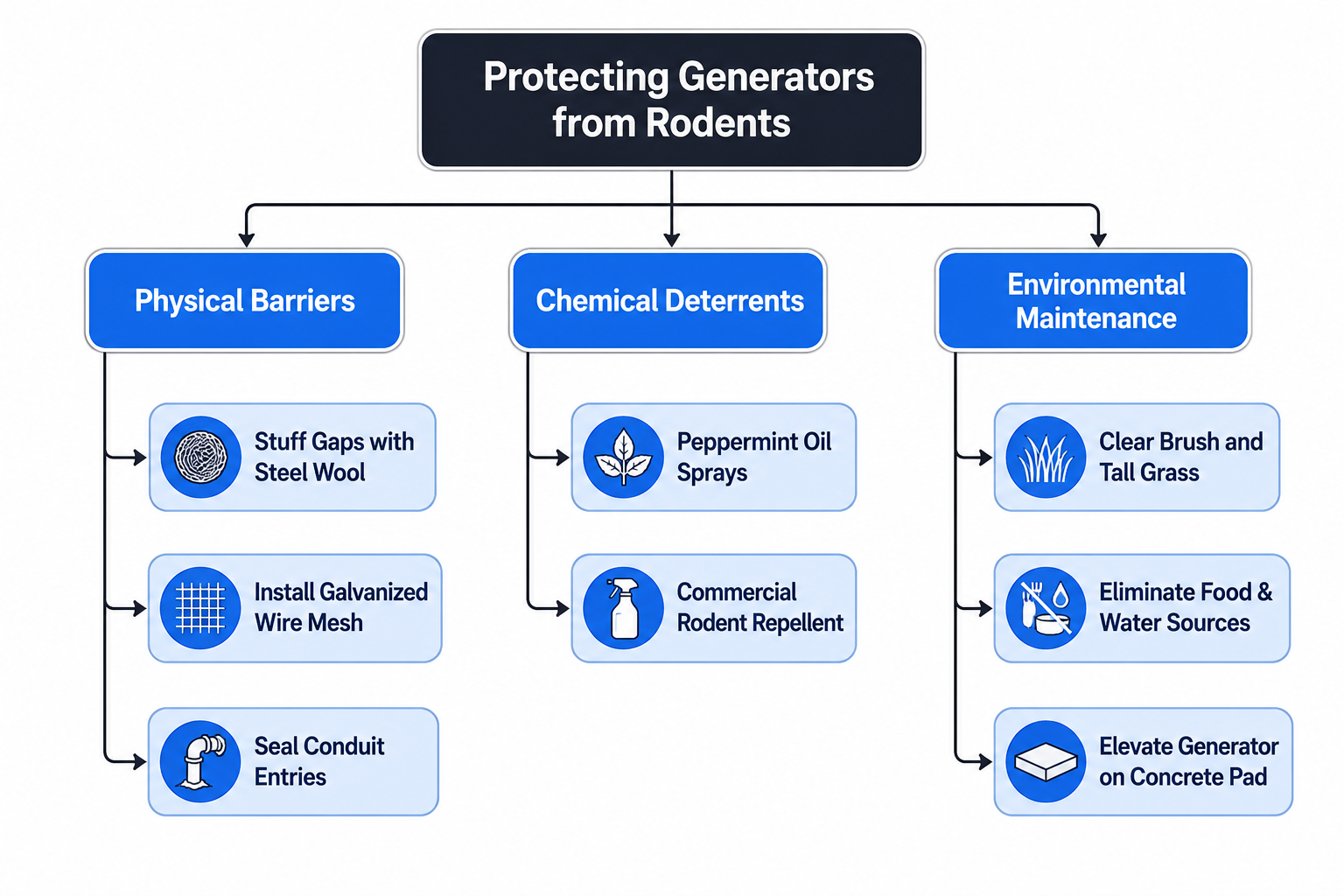
Don’t find out when the lights go out that a mouse has chewed your control board. Put these nine proactive steps into action.
1. Check and Seal Generator Entry Points:
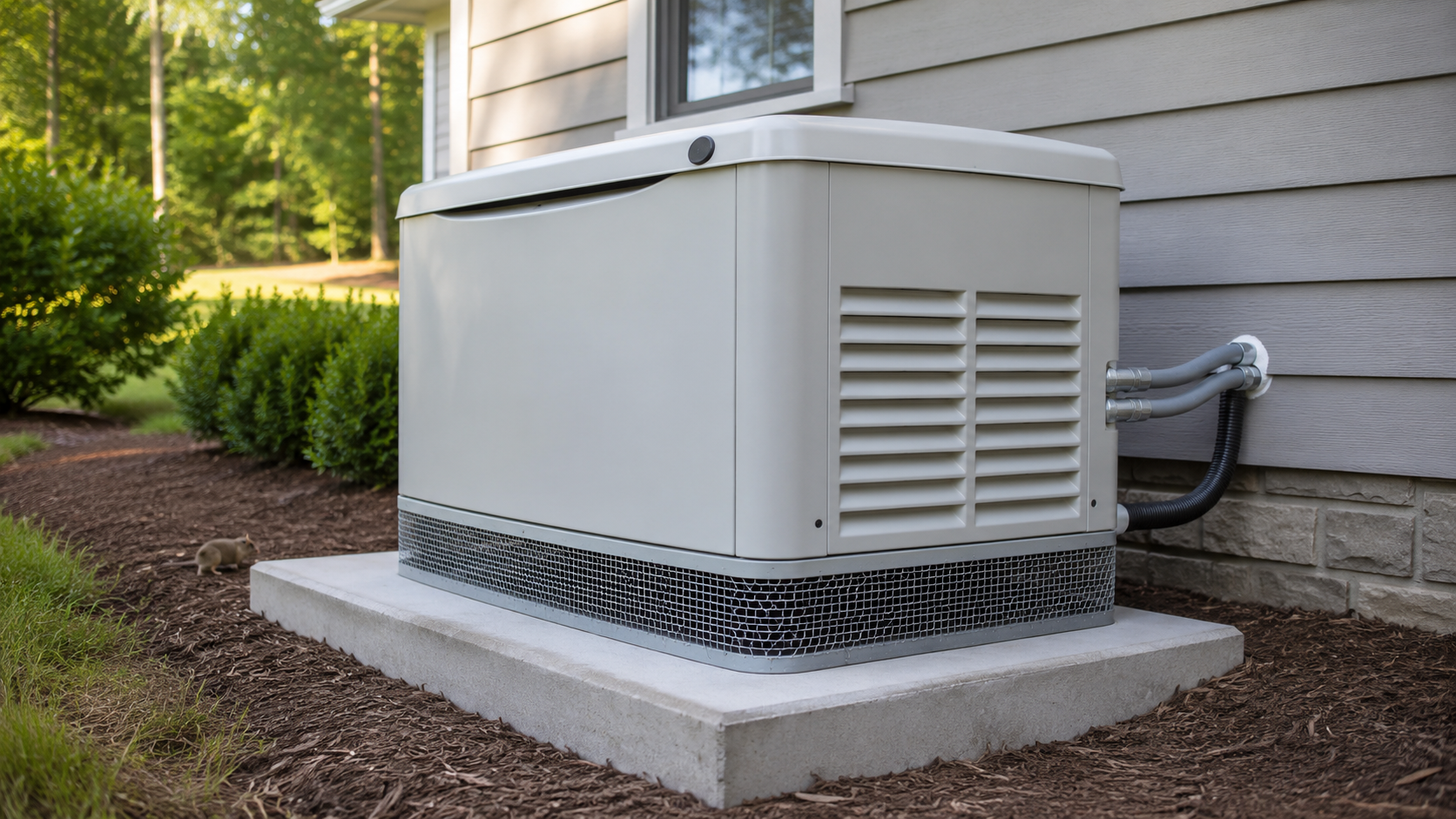
Thoroughly check the conduit cable openings, enclosure corners, louvers and the base pan. Carefully seal unnecessary gaps with rodent-proof expanding foam or metal caulking. Never restrict the required airflow or block the factory ventilation and exhaust areas.
2. Install Rodent-Resistant Metal Mesh:
Use high-quality, corrosion-resistant hardware cloth, preferably 1/4-inch steel mesh. Use openings that are small enough to keep mice from squeezing through the air intake louvers. Ensure the mesh stays secured and away from moving belts, cooling fans and hot exhaust components. If you’re modifying the enclosure, professional installation is recommended to avoid voiding the warranty.
3. Maintain the Area Around the Generator:
Remove fallen leaves, tall grass, cardboard boxes, stacked firewood and other debris from around the pad. Do not store birdseed, pet food or garbage cans near the unit. Maintain at least 3 feet of clear, bare space around the generator.
4. Trim Bushes and Vegetation:
Prune shrubs and climbing plants away from the enclosure. Trim low-hanging tree branches that provide squirrels with an easy path onto the generator roof.
5. Regularly Inspect the Generator:
Perform maintenance monthly or according to the manufacturer’s recommendations. Open the lid and inspect beneath the side panels whenever it is safe to do so. Use a flashlight to inspect the wiring harnesses, rubber hoses, air vents and the dark area behind the starting battery.
6. Follow the Manufacturer’s Instructions to Operate the Generator:
Most standby generators automatically perform a weekly 10-minute exercise cycle. The noise, vibration and sudden heat discourage rodents from making the generator their permanent home. However, this automatic exercise cycle should never replace your own visual inspections.
7. Carefully Use Rodent Deterrents:
Snap traps, strong peppermint-scented repellents or ultrasonic electronic deterrents can be placed near the base of the unit. Keep in mind that deterrents should be used as a supplement, not a replacement, for physical sealing and cleaning. Never place flammable mothballs or loose toxic bait blocks inside the generator enclosure.
8. Protect Nearby Utility Openings:
Inspect the openings where electrical lines and gas pipes enter your home’s exterior wall. Seal gaps around these cables and pipes using steel wool and specialized caulking. Don’t interfere with the electrical, gas, drainage or ventilation requirements of the home.
9. Schedule Professional Generator Maintenance:
Have a certified technician inspect the internal wiring every year. They will test the sensors, battery connections, fuel lines and transfer-switch operation. If they discover any issues, ask the technician to document evidence of animal damage for your insurance records.
Rodent-Proofing Methods to Avoid
- Don’t Block Air Intakes or Exhaust Openings: Taping or sealing louvers with foam restricts engine breathing, causing severe overheating, poor combustion and dangerous carbon monoxide buildup.
- Don’t Place Poison Inside the Generator: If a rodent eats bait and dies deep inside an inaccessible part of the alternator, the odor is terrible and difficult to remove. Loose poison also creates serious secondary risks for neighborhood pets and wildlife.
- Don’t Use Flammable Nesting Deterrents: Do not place heavily soaked peppermint cloths, paper towels, essential oils or any combustible material near the hot engine block.
- Don’t Modify the Enclosure Without Guidance: Drilling unauthorized holes or permanently changing the steel cabinet can affect ventilation, interfere with safe operation and void the manufacturer’s warranty.
Conclusion
The need to protect home generators from rodents is an important part of owning backup power. Prevention comes down to sealing physical access points, keeping surrounding vegetation under control, removing nearby food sources and inspecting the generator regularly.
The warmth and shelter inside an enclosure will always attract wildlife looking for a place to hide, but staying alert helps keep them away. If you notice chewed wiring, packed nests, fuel-line damage or sudden electrical faults, don’t try to fix the problem yourself. Call a professional for an inspection to keep your system safe and ready for the next blackout.
Contact the Huaquan team today for expert guidance on securing your generator and ensuring reliable backup power all year round.