Introduction
The generator power rating always shows the maximum operating output of the generator. It is possible to get this output when the generator reaches 100% of its efficiency, which is technically impossible. High mountains, scorching summers, humid tropical climates, and poorly ventilated installation sites affect the Generators. Generator derating helps here.
We will dive deep into the generator derating, understand how it works, and know the derating factors and other aspects. Let’s have a detailed discussion.
What is Generator Derating?
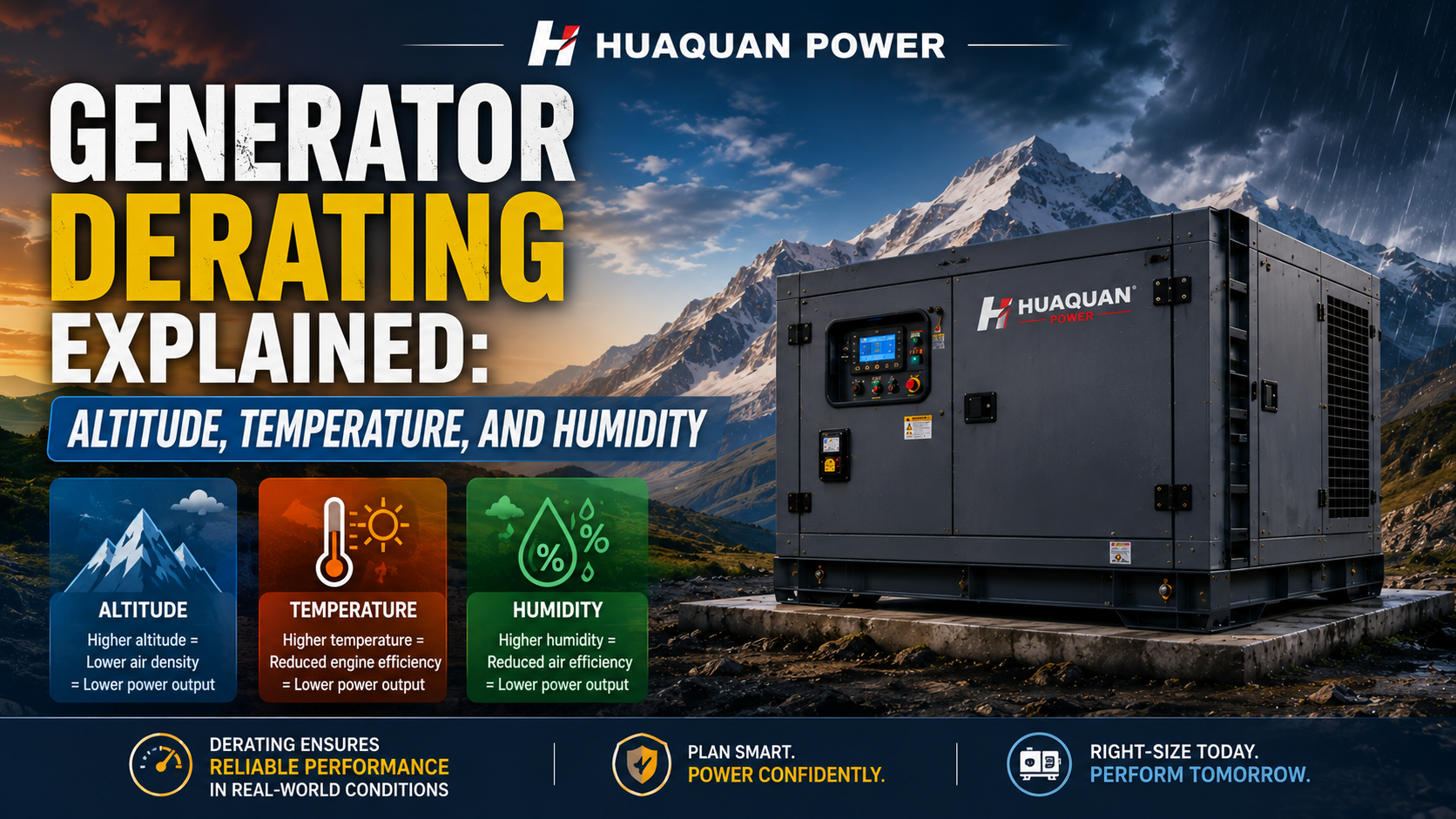
The name highlights it all!! Generator derating is the process in which the generator performs at an output lower than the maximum output. For example, the maximum or rated output of the generator is 500kW in the standard conditions. But at high altitude, generator performance decreases exponentially, and it will not achieve the 500kW or power closer to it.
That is where an intentional lowering of the power output occurs, where the purpose is to increase the safety of operating limits and get higher efficiency.
| Rated Generator | Actual Available Output | Reason |
| 500 kW | 500 kW | Standard conditions |
| 500 kW | 480 kW | High temperature |
| 500 kW | 455 kW | High altitude |
| 500 kW | 430 kW | High altitude + heat |
| 500 kW | 410 kW | Altitude + heat + humidity |
What Happens When a Generator Is Not Derated?
Ignoring the derating process can cause several issues with your generator systems. We have evaluated the key reasons and side effects of not derating your generators.
Engine Overloading
An engine relies on fuel combustion. When you are at high altitude and can’t have enough oxygen, it puts stress on the combustion system. There are a few typical results that occur during such a condition.
- Black exhaust smoke
- Fuel wastage
- Power loss
- Increased emissions
Higher Operating Temperatures
High operating temperatures are the headaches of your system. Generators already experience high heat due to the combustion system. Atmospheric temperature can further cause overheating and may have the following impacts on the generator systems.
- Coolant overheating
- Oil degradation
- Radiator overload
- Frequent shutdowns
Poor Voltage Stability
Since your generator is not performing up to the mark and the power output is continuously dropping, it leads to unstable voltage. Here are a few impacts.
- Voltage fluctuations
- Frequency variations
- Equipment malfunction
- Sensitive electronics shutting down
Reduced Engine Life
Engine Life depends on the operating conditions, temperature, fuel quality, and stress. With the high temperature or altitude conditions, the stress is higher, leading to a decreased lifespan of:
- Pistons
- Valves
- Turbochargers
- Bearings
- Cylinder liners
Unexpected Shutdowns
Modern systems have an automated shutdown mechanism whenever the temperature or altitude conditions exceed the limits. Here are a few conditions triggering the automated shutdown.
- High coolant temperature
- Low oil pressure
- Overfrequency
- Underfrequency
- Overload conditions
The Three Major Environmental Derating Factors
There are three major factors affecting the derating process and decreasing the engine performance. Let’s have a detailed look at the impact of each factor and understand how they perform in different conditions.
| Location | Altitude | Temperature | Humidity |
| Desert | Low | High | Low |
| Mountains | High | Moderate | Low |
| Tropical Coast | Low | High | High |
| Mining Site | High | High | Low |
| Rainforest | Low | High | Very High |
Factor #1: Generator Derating Due to Altitude
Altitude is one of the biggest factors behind the decreased performance of the generator engines. Therefore, generator derating becomes essential at this point.
How Altitude Affects Diesel Engines
Altitude affects diesel engines in many ways. For example, it lowers the oxygen levels. Here are a few more effects of the high altitude on the diesel engines.
- Reduced power
- Higher fuel consumption
- Increased smoke
- More carbon deposits
- Maximum generator capacity decreases.
- Continuous loading must be reduced.
Typical Generator Altitude Derating Values
You might wonder how much generator derating is required. Different manufacturers recommend different derating values. We have added the key values.
| Altitude | Typical Power Reduction |
| Up to 1000 m | None |
| 1500 m | 3% |
| 2000 m | 6% |
| 2500 m | 9% |
| 3000 m | 12% |
| 3500 m | 15% |
| 4000 m | 18% |
Example: Altitude Derating Calculation
Let’s calculate the generator derating using the following example.
Suppose:
Generator rating = 500 kW
Installation altitude = 2500 m
Recommended derating = 9%
Calculation:
Available Output
= 500 × (1 − 0.09)
= 455 kW
Although the generator rating is 500kW, after derating, it provides 455 kW of power at an altitude of 2500 meters.
Industries Most Affected by Altitude
There are several industries affected by the high altitude. Here is the list of all the industrial sectors.
| Industry | Typical Elevation |
| Mining | 2000–4500 m |
| Hydropower | 1500–3500 m |
| Mountain Hospitals | 1800–3000 m |
| Telecommunications | 2000–4000 m |
| Military Bases | Variable |
| Remote Villages | High elevation |
Factor #2: Generator Derating Due to High Temperature
High Temperature is a major critical factor in the decreased performance of the generators. The generator has overheating issues, which are likely to be triggered by the high temperature conditions.
Why High Temperatures Reduce Generator Output
Do you know that high temperatures decrease output? There are a few side effects of the generator output on the cooling process.
- Increased coolant temperature
- Hot engine oil
- Reduced radiator performance
- Higher alternator winding temperatures
Overheating can cause a few issues. For example, it affects:
- Insulation materials
- Rubber hoses
- Electronic control modules
- Bearings
- Lubricating oil
Typical Temperature Derating Guidelines
The exact derating values depend on engine design, cooling system capacity, and manufacturer recommendations.
Here are a few guidelines for temperature increases.
| Ambient Temperature | Typical Derating |
| Up to 40°C | None or Minimal |
| 45°C | 2–3% |
| 50°C | 4–6% |
| 55°C | 6–8% |
| 60°C | 8–12% |
Factor #3: Generator Derating Due to Humidity
Humidity has less of an impact compared to the other factors, such as high temperature or altitude. However, the humidity decreases the oxygen content by moving through the engines or influences the engineer’s performance very well.
How High Humidity Affects Generator Performance
High humidity has several impacts on different components. For example, it causes reduced oxygen content and has the following effects.
- Slight reduction in combustion efficiency
- Lower engine horsepower
- Increased fuel consumption
- Minor power loss
There are several electrical problems related to generator performance, such as:
- Insulation degradation
- Condensation inside alternators
- Short circuits
- Corrosion of electrical terminals
- Reduced insulation resistance
Typical Humidity Effects
Since there is a little humidity effect, generator derating is not always necessary unless there is a need.
| Relative Humidity | Typical Performance Impact |
| 30% | None |
| 50% | Negligible |
| 70% | Slight reduction |
| 85% | Minor derating may occur |
| Above 90% | Reduced combustion efficiency and increased maintenance needs |
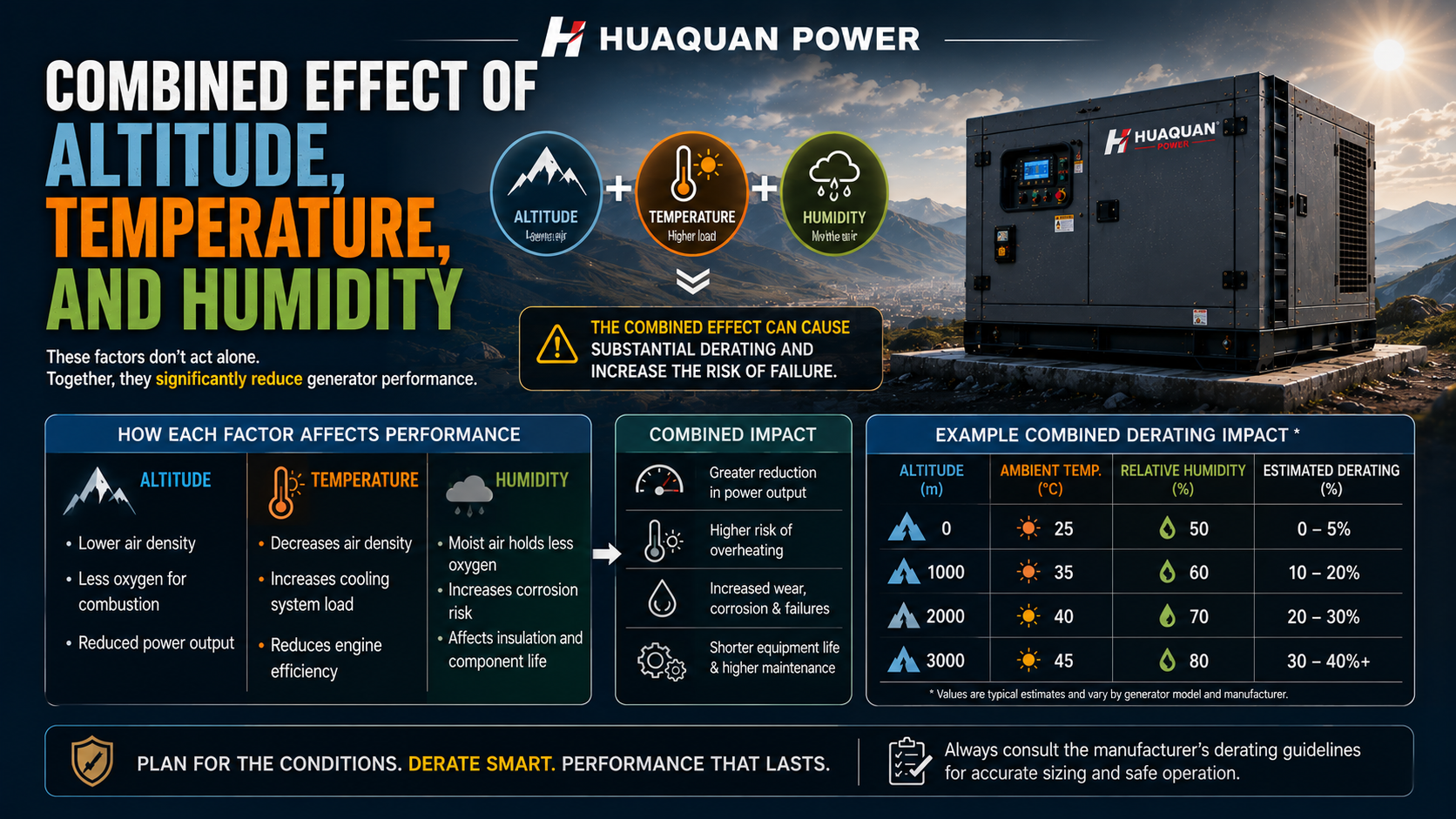
Combined Effect of Altitude, Temperature, and Humidity
The impact is even greater when you have all three factors affecting the generators.
Suppose an example here.
- Altitude: 2,500 m
- Ambient Temperature: 50°C
- Relative Humidity: 85%
The combined derating is at least 15% compared to the above example conditions.
| Condition | Estimated Power Reduction |
| Altitude | 9% |
| High Temperature | 5% |
| High Humidity | 1% |
| Total Approximate Reduction | 15% |
Generator Derating Calculation
Suppose the above example and the derating is 15%. Let’s have a calculation here.
Suppose you have installed a generator with 800kW. After 15% derating, the calculation and power output rating would be:
| Parameter | Value |
| Generator Rating | 800 kW |
| Installation Altitude | 2,500 m |
| Ambient Temperature | 50°C |
| Relative Humidity | 80% |
| Estimated Total Derating | 15% |
Available output = 800 × (1 − 0.15)
Available Output = 680 kW
Although the generator is 800kW, the available output is 680 kW after you have derated the generator.
Generator Derating Reference Table
To help you better understand, we have added the generator derating reference table.
| Altitude | Temperature | Estimated Derating | Available Output |
| Sea Level | 25°C | 0% | 500 kW |
| 1000 m | 35°C | 2% | 490 kW |
| 1500 m | 40°C | 5% | 475 kW |
| 2000 m | 45°C | 8% | 460 kW |
| 2500 m | 50°C | 15% | 425 kW |
| 3000 m | 55°C | 20% | 400 kW |
Practical Methods to Reduce Generator Derating
If you want to reduce the generator derating and meet the required demands, here are a few tips to avoid the derating impacts.
Select Large Generator
One of the best solutions at this point is oversizing. You should buy a generator with a larger size than required, as you can later derate it and get the same efficiency and power output.
For example, you need a generator with 500kW. Instead of going for 500kW, purchase a generator with 600kW output and fetch the adjustable power output when derating the system.
| Required Load | Recommended Generator |
| 450 kW | 500–550 kW |
| 700 kW | 800 kW |
| 900 kW | 1000 kW |
Inspect High-quality Cooling System
A high-quality cooling system can avoid unnecessary overheating and decreased engine performance.
For the cooling process, you should take the following steps.
- Larger radiators
- High-efficiency fans
- Remote cooling systems
- External heat exchangers
Improve Ventilation
Ventilation has several benefits. For example, it circulates the air and maintains its flow. Moreover, it causes the cooling phenomenon and helps ease the overheating.
Therefore, you should have the following practices for ventilation improvement.
- Large air inlets
- Proper exhaust routing
- Adequate clearance around equipment
- Ventilation fans
- Unrestricted airflow
Use a Turbocharged Engine
Turbochargers are the best option to minimize the impact of the high altitude and low air pressure. They assess and compress the air to provide maximum oxygen to the engines.
The benefits of the turbocharged engines include:
- Better high-altitude performance
- Improved combustion
- Reduced power loss
- Lower smoke emissions
Regular Maintenance
The efficiency and durability of the generators depend on maintenance. A regularly maintained generator always offers good efficiency.
You should look for the following maintenance hassles.
- Replace air filters
- Clean radiators
- Inspect turbochargers
- Check injectors
- Change engine oil
- Test coolant condition
- Verify alternator insulation resistance
Install Environmental Monitoring
Environmental Monitoring can help prevent issues due to harsh environmental conditions. Nowadays, advanced systems monitor:
- Ambient temperature
- Engine temperature
- Humidity
- Air pressure
- Altitude compensation
They help optimize the generators according to temperature, humidity, and altitude conditions and improve the overall efficiency. Therefore, you should have a powerful monitoring system as well.
Applications Where Generator Derating Is Critical
A few industries are particularly effective for the generator derating process. Here are those critical applications.
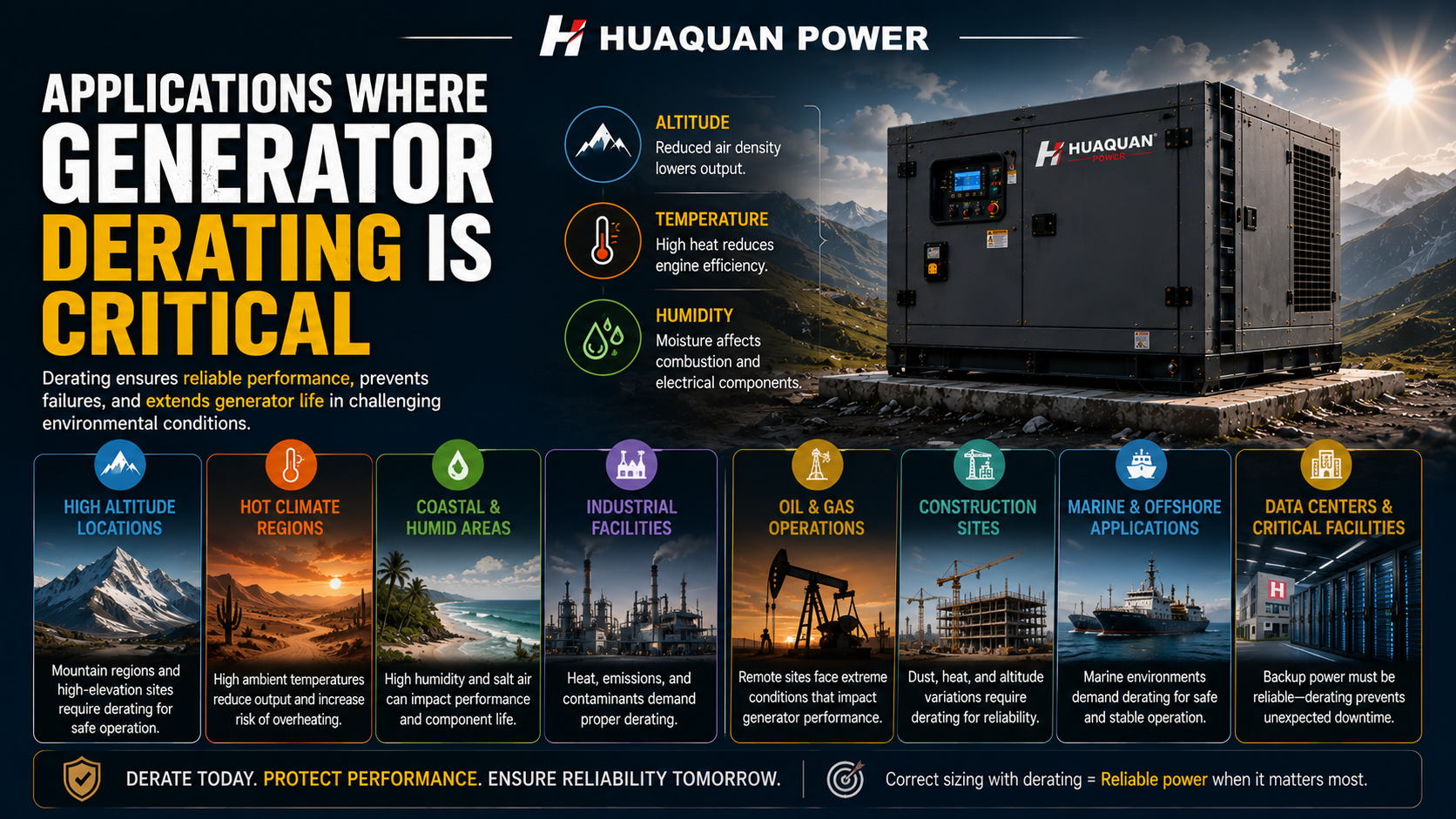
| Industry | Why Derating Matters |
| Mining | High elevations and heavy continuous loads |
| Oil & Gas | Desert heat and remote locations |
| Telecommunications | Mountain-top installations |
| Hospitals | Reliable backup power under all conditions |
| Data Centers | Tight voltage and frequency requirements |
| Construction | Temporary outdoor installations |
| Agriculture | Seasonal heat and dust |
| Hydropower | Mountainous environments |
| Military | Diverse climatic conditions |
FAQs
- Can turbochargers eliminate altitude derating?
To some extent, we can say yes. Turbochargers compress the air and elevate the pressure at high altitudes, but they can’t compensate for the whole time.
- Does humidity have a significant impact?
Yes. Humidity can intrude through the different components and cause electrical sparks. Especially in the batteries, it can cause failure, leading to generator failure as a whole.
- Does every generator require derating?
No. Not all the generators require derating. Only those generators installed in harsh environmental conditions with temperatures or high altitudes above the rated value might require derating for optimal power production.
- How much power can a generator lose at high altitude?
Power loss depends on the generator types, the reputation of the generator brand, and the quality. However, most generators lose 3–5% of their rated output for every 500 meters above 1,000 meters.
- Why does altitude reduce generator power?
High altitude causes decreased air pressure and a low oxygen supply. As a result, combustion of the fuel is very inefficient in the generator, causing more stress on the engines to produce the power.
- Where can I find official derating values?
You should consult manufacturers’ technical documentation, engine performance curves, and derating charts for the office derating values.
- Should I oversize my generator for harsh environments?
Yes. You should install a higher-capacity generator so you can derate it, but still meet the required power output demands.
- How can I minimize derating?
There are a few ways to minimize the derating of a generator. For example, choose a properly sized generator, improve ventilation, use high-capacity cooling systems, perform regular maintenance, and follow the manufacturer’s derating recommendations.
- What happens if I ignore derating?
If you ignore the derating, the generator performs at a lower output and causes more stress. It leads to overheating, excessive fuel consumption, voltage instability, frequent shutdowns, increased emissions, and reduced engine life.
Conclusion
Generator Derating is an ideal solution when the temperature conditions are very harsh. However, if you still need to meet the power demands, choose an oversized generator to install on such occasions. Derate them until they meet your required power demands. Choosing high-end generator systems can help you gain high efficiency.
Are you looking for top-notch generators? Contact Huaquan Power Solutions. We have premium generators that offer compatibility with high-altitude and temperature conditions. Our generators even perform under stressful environments. Contact Us right away!