Greece sits at the intersection of industrial ambition and infrastructure reality. The country’s manufacturing sector has grown 14% since 2020, its tourism industry welcomes over 33 million visitors annually, and its data centre market is projected to reach €1.2 billion by 2028. Yet parts of the national grid (particularly on the islands and in rural industrial zones) experience voltage fluctuations and seasonal instability that modern operations cannot absorb. This page covers the technical, logistical, and regulatory dimensions of deploying a 600kW diesel generator in Greece, from factory commissioning to on-site handover.

Project Overview
| Parameter | Detail |
|---|---|
| Country | Greece |
| Application Scenarios | Manufacturing plants, tourism hotels and resorts, data centres, commercial buildings, warehouses, construction sites |
| Power Requirement | 600kW prime / 660kW standby |
| Frequency | 50Hz (factory pre-configured) |
| Voltage | 400V/230V three-phase with neutral |
| Generator Type | Diesel engine, brushless AC alternator, silent canopy enclosed |
| Controller | Deep Sea DSE8610 with CAN bus and IoT module |
| Compliance | CE, EU Stage V, ISO 8528, IEC 60034 |
Customer Challenge
Industrial and commercial operators across Greece face power reliability challenges that vary by geography and season. Mainland facilities connected to the interconnected transmission system operated by ADMIE experience relatively stable supply, but voltage sags and transient interruptions remain common during summer months when air-conditioning load pushes the grid toward capacity limits. On islands served by autonomous power stations (Crete, Rhodes, Lesvos, Chios) frequency variation is more pronounced, and the risk of rotational load shedding during peak summer demand is a genuine operational concern.
The tourism sector faces a related but distinct set of challenges. A five-star resort on the Athenian Riviera or a luxury hotel on Santorini cannot function without uninterrupted power. Guest dissatisfaction from a single blackout during peak season, inoperable air conditioning at 38°C ambient, failed refrigeration spoiling thousands of euros of fresh food, security systems offline, booking and payment terminals dead, translates directly into negative reviews and compensation claims that erode the operating margin for weeks.
For manufacturers in the industrial zones of Thessaloniki, Volos, and the Aspropyrgos-Thriasion plain west of Athens, the calculus is even sharper. A single four-hour production stoppage at a food-processing plant operating three shifts results not just in lost output but in regulatory complications: interrupted cold-chain documentation, spoiled raw materials, and cascading delivery delays to supermarket distribution centres in Germany and the Netherlands, the principal export destinations for Greek processed foods.
Why Choose a 600kW Diesel Generator
Load Capacity
The 600kW prime rating delivers approximately 480kW of usable continuous electrical load. This covers a mid-sized Greek manufacturing facility with production machinery, compressed air, HVAC, and office IT load simultaneously. For a resort hotel, a 600kW generator powers the entire property, guest room air conditioning (the dominant summer load at 2-3kW per room), kitchen and laundry equipment, pool pumps and water treatment, lighting, lifts, and point-of-sale systems, with capacity to spare. The 660kW standby rating handles motor-start surges from the largest connected induction load, typically the central chiller compressor, without exceeding the alternator’s thermal limits.
Fuel Efficiency
At 75% prime load (450kW), the Cummins KTA19-G4 or Perkins 2806A-E18TAG2 engine burns approximately 126 litres per hour. At Greek industrial diesel prices of €1.25-€1.40 per litre (excluding VAT where recoverable), the hourly fuel cost ranges from €158 to €176. For a hotel operating the generator during a six-hour summer outage, fuel cost is approximately €950-€1,056, a fraction of the revenue loss and reputation damage from running without power. The electronic common-rail fuel system’s multi-injection strategy optimises combustion across the entire load range, delivering 12-15% better fuel economy than mechanical-injection engines of the same displacement manufactured before 2015.
Runtime Capability
The standard 1,000-litre sub-base tank provides approximately 8 hours of operation at 75% load. For island hotels and remote industrial sites where refuelling logistics are constrained, external bulk tanks of 3,000-10,000 litres extend runtime to 24-80 hours. The Huaquan Cloud IoT platform monitors fuel level continuously using an ultrasonic tank sensor and sends automatic refuelling alerts , eliminating the need for manual dipstick checks and preventing the fuel exhaustion events that account for 23% of generator failure-to-start incidents globally.
ATS Integration
The matched 1,600A four-pole Automatic Transfer Switch monitors all three phases of the utility supply. Loss of any single phase, under-voltage below 85% of nominal lasting more than two seconds, or over-voltage above 110% lasting more than one second triggers an immediate generator start. Transfer completes within ten seconds of grid failure detection. The ATS includes a programmable return-to-utility timer (default setting of 300 seconds of confirmed stable utility voltage) preventing repeated transfers during grid recovery oscillations. The entire start-transfer-cooldown sequence operates without human intervention, critical for hotels and factories that run overnight with reduced staffing.

Remote Monitoring
The Huaquan Cloud IoT module is factory-installed in the DSE8610 enclosure. It transmits data over 4G cellular (and Ethernet backup) to a cloud dashboard accessible via web browser, iOS, and Android. Greek operators view real-time voltage, current, frequency, power factor, fuel level, coolant temperature, oil pressure, and battery voltage from any location. The platform generates push-notification and email alerts for parameter deviations, provides maintenance interval countdowns linked to the ISO 8528 service schedule, and stores twelve months of operational history. For hotel chains and multi-site industrial operators, the fleet view displays all Generators across Greece on a single map with colour-coded status indicators.
Technical Specification
| Parameter | Specification |
|---|---|
| Prime Power Rating | 600 kW (750 kVA) |
| Standby Power Rating | 660 kW (825 kVA) |
| Frequency | 50 Hz |
| Voltage | 400V/230V, 3-phase 4-wire with neutral |
| Power Factor | 0.8 lagging |
| Engine Brand | Cummins / Perkins / MTU (configure to order) |
| Engine Model | KTA19-G4 (Cummins) / 2806A-E18TAG2 (Perkins) |
| Alternator | Stamford S5L1D-F4 / Marathon 574RSL4021, brushless, single-bearing, PMG excited |
| Voltage Regulation | ±0.5% steady-state (PMG excited AVR) |
| Controller | Deep Sea DSE8610 MKII, 7-inch colour touchscreen, CAN bus and Ethernet |
| Fuel Tank (Base) | 1,000L integral sub-base tank (~8 hours at 75% load) |
| Fuel Consumption @ 75% Load | ~126 L/hour |
| Noise Level | ≤72 dB(A) at 7 metres (standard silent canopy) |
| Enclosure Protection | IP54 galvanised steel with 50mm rock wool acoustic and thermal insulation |
| Cooling System | 50°C ambient-rated with thermostatic fan, tropical radiator core option to 55°C |
| Starting System | 24V DC, dual starter motors, battery charger, jacket water heater |
| Dimensions (L x W x H) | 5,400 x 2,300 x 2,600 mm (silent canopy) |
| Dry Weight | ~8,500 kg |
| ATS | 1,600A 4-pole motorised transfer switch (included) |
| Exhaust Emissions | EU Stage V compliant |
Specifications confirmed at order stage with factory acceptance test documentation. Contact Huaquan for detailed engineering drawings, single-line diagrams, and site-specific derating calculations for altitude and temperature.
Greece Applications
Manufacturing Plants
Greece’s manufacturing sector, concentrated in the industrial zones of Thessaloniki’s Sindos-Kalohori area, the Oinofyta-Schimatari corridor north of Athens, and the Volos industrial area, produces processed foods, aluminium products, cement, chemicals, and pharmaceuticals. These facilities share a common vulnerability: continuous-process equipment that cannot tolerate unplanned stoppage. A 600kW generator sized to 80% continuous load covers a mid-sized food-processing plant with refrigeration compressors, filling and packaging lines, and wastewater treatment. The PMG alternator’s ±0.5% voltage regulation protects PLC-controlled process equipment from voltage-related faults, the most common cause of production-line stoppages on generator transfer.
Tourism Hotels and Resorts
The Greek tourism sector (33 million annual arrivals contributing 18% of GDP) depends on uninterrupted hotel operations. A 600kW generator sized for a 300-400 room five-star resort covers guest room HVAC (the dominant load at up to 3kW per room during summer), commercial kitchen and laundry equipment, swimming pool filtration and heating, lifts, wastewater treatment, and IT infrastructure. The silent canopy enclosure (72 dB(A) at 7 metres) ensures that generator operation does not disturb guests in adjacent rooms or outdoor restaurant areas, a non-negotiable requirement for properties with average daily rates above €250. For island resorts on Santorini, Mykonos, Crete, and Rhodes (where grid supply is less reliable and access to service technicians is constrained) the remote IoT monitoring provides hotel engineering managers with full visibility without requiring on-site attendance.
Data Centres
Greece’s data centre market is growing at 12% annually, driven by the country’s position as a Southeastern European connectivity hub and the subsea fibre cables landing at Chania (Crete) and Piraeus. A 600kW generator supports approximately 480kW of IT load (roughly 100-140 standard-density racks) after UPS losses and cooling overhead. The DSE8610 controller’s CAN bus synchronisation enables N+1 parallel configurations, where a second 600kW unit provides full redundancy for Tier III-equivalent installations. For colocation providers serving Greek banks and government agencies, the generator’s load-step acceptance characteristic (recovering to ±5% voltage within 0.5 seconds of a 50% load application) satisfies the transient performance requirements specified in EN 50600-2-2 for data centre power infrastructure.
Commercial Buildings
Mixed-use commercial developments in Athens (Kifissias Avenue corridor, Elliniko redevelopment zone), office towers in Maroussi and Piraeus, and shopping centres across the Attica region increasingly specify standby generation as part of their base building specification. A 600kW unit covers life-safety systems (fire pumps compliant with Greek Fire Service Regulation 14/2014, evacuation lifts, smoke extraction fans) plus business continuity loads (server rooms, refrigerated retail displays, building management systems). The ATS transfers these loads within ten seconds , well inside the thirty-second maximum permitted for life-safety power supplies under the Greek Building Code’s fire-safety provisions.
Construction Sites
Major Greek construction projects, the Elliniko metropolitan park redevelopment, Athens Metro Line 4 extension, and resort hotel construction on Crete and Rhodes, require temporary site power that exceeds available grid connections. A mobile 600kW generator on a road-towable trailer supplies tower cranes (160-250kW starting demand), concrete batching plants, site accommodation, and tool power. The IP54 enclosure operates reliably through the Mediterranean winter rain season, and the unit’s compliance with EU Stage V emissions avoids the construction-permit complications that arise with older non-compliant generator stock.

Mediterranean Climate Considerations
Huaquan generators shipped to Greece include climate-engineering measures specific to the Mediterranean environment. The cooling system is rated for 50°C ambient operation (covering the extreme temperature days recorded in Athens (48°C in July 2023) and inland Thessaly) with an optional 55°C tropical radiator core for sites in southern Crete and Rhodes. The enclosure steelwork receives a C4-high corrosion-protection coating system (zinc-rich epoxy primer, high-build epoxy intermediate, and UV-stable polyurethane topcoat) rated for 600+ hours of salt-spray resistance per ISO 12944, addressing the salt-laden atmosphere of coastal and island installations. Air intake louvres incorporate a moisture-separation stage to prevent sea-spray ingress during winter storms, and all electrical connections within the enclosure are sealed to IP65 standard.
Case Study: 600kW Generator for a Food-Processing Plant in Thessaloniki
Customer Background
Mediterranean Foods SA (name anonymised) operates a 5,000-square-metre tomato-processing and packaging facility in the Sindos Industrial Area, fifteen kilometres west of Thessaloniki city centre. The plant processes approximately 40,000 tonnes of fresh tomatoes annually during the June-to-September harvest season, producing tomato paste, passata, and diced canned tomatoes for export to supermarket chains in Germany, the Netherlands, and the United Kingdom. Annual revenue is €32 million with 180 full-time employees rising to 380 during harvest season. The facility operates near-continuously during the four-month campaign window , incoming fresh produce cannot be stockpiled and must be processed within twelve hours of harvest to meet the quality specifications of European retail buyers.
The Problem
The Sindos industrial grid serves a dense concentration of heavy industrial users (steel processors, cement products, and chemical plants) whose combined load creates voltage instability during summer peak demand. In July 2024, the plant experienced a six-hour outage following a substation protection trip triggered by a cable fault in an adjacent plot. The outage halted processing mid-campaign: thirty-two tonnes of fresh tomatoes already in the washing and sorting line spoiled at an ambient temperature of 37°C, the evaporator and pasteuriser cooled uncontrollably requiring a sixteen-hour cleaning and recalibration procedure, and two export containers scheduled for next-day departure missed their vessel booking at Thessaloniki port. The total financial impact, spoiled raw material, lost production, cleaning and restart costs, and penalty clauses on missed deliveries, was calculated at €187,000. The facility’s insurer covered the raw-material loss only (€28,000), and one German retail buyer invoked a supply-contract clause allowing 3% price reduction on the subsequent three shipments as compensation for late delivery.
Requirements
The plant engineering manager and the group operations director specified six requirements for the backup power system. First, full production-line coverage, the generator must carry the complete process load including the evaporator (140kW), pasteuriser (95kW), filling and canning lines (110kW combined), refrigeration compressors (85kW), wastewater pumps (45kW), facility lighting and HVAC (60kW), and control-room IT (20kW), totalling 555kW of connected load with the evaporator and pasteuriser as continuous-duty loads. Second, automatic transfer within fifteen seconds, the aseptic filling line’s sterile zone breaches if power is absent for more than forty-five seconds, requiring an eight-hour decontamination procedure. Third, voltage regulation within ±1.5% under stepped load application to protect the PLC-controlled filling and labelling machinery. Fourth, remote monitoring accessible to the plant manager’s phone and the Athens headquarters. Fifth, CE compliance with full documentation for Greek customs clearance and insurance acceptance. Sixth, delivery and commissioning before the June 2025 harvest season.
Solution Delivered
Huaquan Power supplied a 600kW KMS series generator configured: Cummins KTA19-G4 diesel engine (19-litre, six-cylinder, turbocharged and aftercooled), Stamford S5L1D-F4 PMG alternator with Class H insulation and tropicalised windings, Deep Sea DSE8610 MKII controller with integrated IoT module, 1,600A four-pole motorised ATS with phase-failure and under-voltage sensing on all three phases, IP54 weatherproof silent enclosure with C4-high corrosion-protection coating, 2,500L sub-base fuel tank providing twenty hours of operation at 75% load, 50°C ambient-rated cooling system, jacket water heater for cold-start reliability during April startup testing, and a factory load-bank test certificate documenting steady-state and transient performance in 25% load increments from 0% to 110% of prime rating. The unit was pre-configured at Huaquan’s factory for 400V/230V 50Hz output with Greece-standard earthing arrangement.

Commissioning
The generator departed Shanghai port in late March 2025 and arrived at Thessaloniki port thirty-one days later via the Suez route. Customs clearance (handled by Huaquan’s nominated broker in Thessaloniki) took four working days using the pre-prepared documentation package. The generator was transported by low-loader to the Sindos facility and installed over five working days: reinforced concrete plinth poured adjacent to the main electrical room, ATS integrated into the existing 2,000A main switchboard with bypass isolation, underground cable ducting installed between generator and switchboard, fuel line connected from the sub-base tank to a secondary 5,000L bulk tank for extended runtime, and exhaust routed through a hospital-grade silencer to a discharge point eight metres from the nearest process building air intake. Commissioning testing spanned two days: a four-hour full-load resistive bank test, fifteen automatic start-and-transfer cycles triggered by simulated grid failure at varying load levels, and a twelve-hour endurance run at 75% load with temperature and voltage logged at fifteen-minute intervals. The plant manager and shift engineers received a half-day training session on controller operation, IoT dashboard navigation, and daily visual inspection procedures. Total timeline from order to operational handover: seventy-four days.
Results
During the June-September 2025 harvest campaign, the generator activated on four occasions: three voltage-sag events where the ATS detected phase-voltage depression below 85% lasting more than three seconds, and one extended outage (two hours and forty minutes) caused by a cable strike during roadworks on the industrial estate access road. In all four instances, the transfer completed within nine seconds and tomato processing continued without interruption. The plant manager calculated that the generator prevented approximately €340,000 in avoided losses during its first operating season, achieving a return on the total installed cost in under twelve months. The German retail buyer, notified of the backup power installation during a routine audit, removed the late-delivery clause from the supply agreement. The plant’s insurance underwriter reduced the business-interruption premium by 18%, and the Huaquan Cloud IoT dashboard (displayed on a wall-mounted screen in the control room) has become the default reference for shift supervisors monitoring power infrastructure status. The general manager has since placed an order for a 400kW unit to provide backup power for a separate warehouse and cold-store facility currently under construction on an adjacent plot.
Frequently Asked Questions
What is the fuel consumption of a 600kW diesel generator at typical operating loads?
At 100% prime load (600kW), the Cummins KTA19-G4 engine consumes approximately 158 litres per hour. At the 75% load point (450kW) (the recommended continuous operating band for optimal fuel efficiency and engine longevity) consumption is 126 L/hour. At 50% load (300kW), fuel consumption drops to 82-87 L/hour, approximately 55% of the full-load rate. For a Greek industrial facility paying €1.30 per litre for bulk diesel and operating the generator for forty outage hours annually at 75% load, the annual fuel cost is €6,552. For a resort hotel experiencing one six-hour outage during peak summer, fuel cost is approximately €983. The Huaquan Cloud IoT platform logs fuel consumption per run event and calculates cost using a user-entered fuel price, supporting both operational budgeting and generator fuel rebate applications where these are available under Greek excise duty regulations for standby generators used exclusively for emergency power.
What types and sizes of facility can a 600kW generator support?
The 600kW prime rating supports approximately 480kW of continuous electrical load. In an industrial context, this covers a manufacturing facility of 4,000-5,500 square metres with mixed process equipment, food processing, light assembly, or packaging operations. For a hotel or resort, 600kW powers a 300-400 room property with full guest-room air conditioning, commercial kitchen and laundry, pool plant, and IT systems; the generator is sized using a demand factor of 0.65-0.75 applied to the total connected load, as not all equipment operates simultaneously. For a data centre, 600kW supports roughly 120-150 racks at standard density (4-5kW per rack) after accounting for UPS losses and cooling overhead. For construction sites, a single 600kW unit supplies power for a major project with tower cranes, concrete batching, and site accommodation. The critical sizing factor is the largest motor start: a 600kW generator handles a single motor start of up to 185kW while carrying 300kW of existing load, maintaining voltage within the ±15% transient dip limit.
Does Huaquan have experience supplying generators to Greece?
Huaquan Power has supplied diesel generators to Greek customers across multiple sectors since 2020. Our units operate in industrial facilities in the Thessaloniki and Volos industrial zones, at resort hotels on Crete and the mainland coast, and at commercial buildings in the Athens metropolitan area. We maintain an active relationship with a Piraeus-based customs broker who handles import clearance for our shipments, and we work with electrical contractors in Thessaloniki, Athens, and Heraklion for installation and commissioning. Greek customers benefit from the full documentation suite (CE declaration, ISO 8528 test certificates, and EU Stage V emissions compliance) presented in English and supported by Greek-language summaries for customs and insurance purposes. Reference contacts at operational installations are available for qualified buyers, subject to client confidentiality agreements.
What is the delivery lead time for a 600kW generator to Greece?
Production lead time is 15-25 working days from order confirmation and deposit. The generator then ships from Shanghai or Ningbo port to Piraeus (Athens) or Thessaloniki, with sea transit of 28-33 days via the Suez Canal route. The direct Asia-Mediterranean service avoids the Northern European transshipment that adds 7-10 days for other Chinese generator suppliers who route through Rotterdam or Hamburg. Customs clearance at Piraeus or Thessaloniki takes 4-7 working days. Onward road transport to site adds 1-2 days. Total door-to-door timeline: 48-67 days. Urgent orders can ship by air freight to Athens International Airport in 5-7 days, with the generator partially disassembled for transport. We also maintain a small stock of popular generator ratings in bonded warehouse in Piraeus, with Greece-site delivery in 10-14 days, contact our sales team for current Mediterranean stock availability.
What compliance and certification documents are provided for Greek installations?
The documentation package supplied with every Huaquan generator for Greece includes: ISO 9001:2015 and ISO 14001:2015 factory certificates, CE Declaration of Conformity under the Machinery Directive 2006/42/EC, Electromagnetic Compatibility Directive 2014/30/EU, and Low Voltage Directive 2014/35/EU, type test certificate to ISO 8528-5:2022 covering steady-state and transient performance, alternator test certificate to IEC 60034-1 and IEC 60034-22 with winding insulation test results, EU Stage V emissions compliance certificate for the installed engine, factory load-bank test report in 25% load increments from 0% to 110% of prime rating, full wiring and single-line diagrams, protective device coordination study, and English-language user and maintenance manual with Greek-language quick-reference card. For the import process, we provide the commercial invoice with HS code 8502.13.40, packing list, bill of lading, and EUR.1 movement certificate for customs preference where applicable.
What installation requirements apply for a 600kW generator at a Greek site?
A complete generator installation requires six elements. The foundation: a reinforced concrete plinth typically 5,700mm x 2,500mm x 300mm deep, cast with steel rebar, designed to support the generator’s 8,500 kg dry weight plus dynamic and seismic loading per the Greek National Annex to Eurocode 8. Anti-vibration spring mounts between the generator base frame and plinth isolate vibration from the building structure, particularly important for hotel installations where guest rooms may be within fifty metres of the generator location. Exhaust routing uses an industrial silencer (residential-grade for hotel sites) with the discharge point at least three metres from any building air intake, window, or door; for hotel installations, the exhaust is routed vertically above roof level to prevent noise and fume complaints. Electrical integration connects the generator to the ATS via armoured cable in underground ducting, with the ATS installed adjacent to or within the main switchboard. Fuel storage requires a bunded tank with 110% secondary containment per Greek fire safety regulations, with the tank located at least six metres from the generator enclosure. Earthing requires electrode installation achieving resistance below one ohm, tested and certified. Installation by a licensed electrical contractor typically requires five to seven working days.
What maintenance does a 600kW generator require in Greek operating conditions?
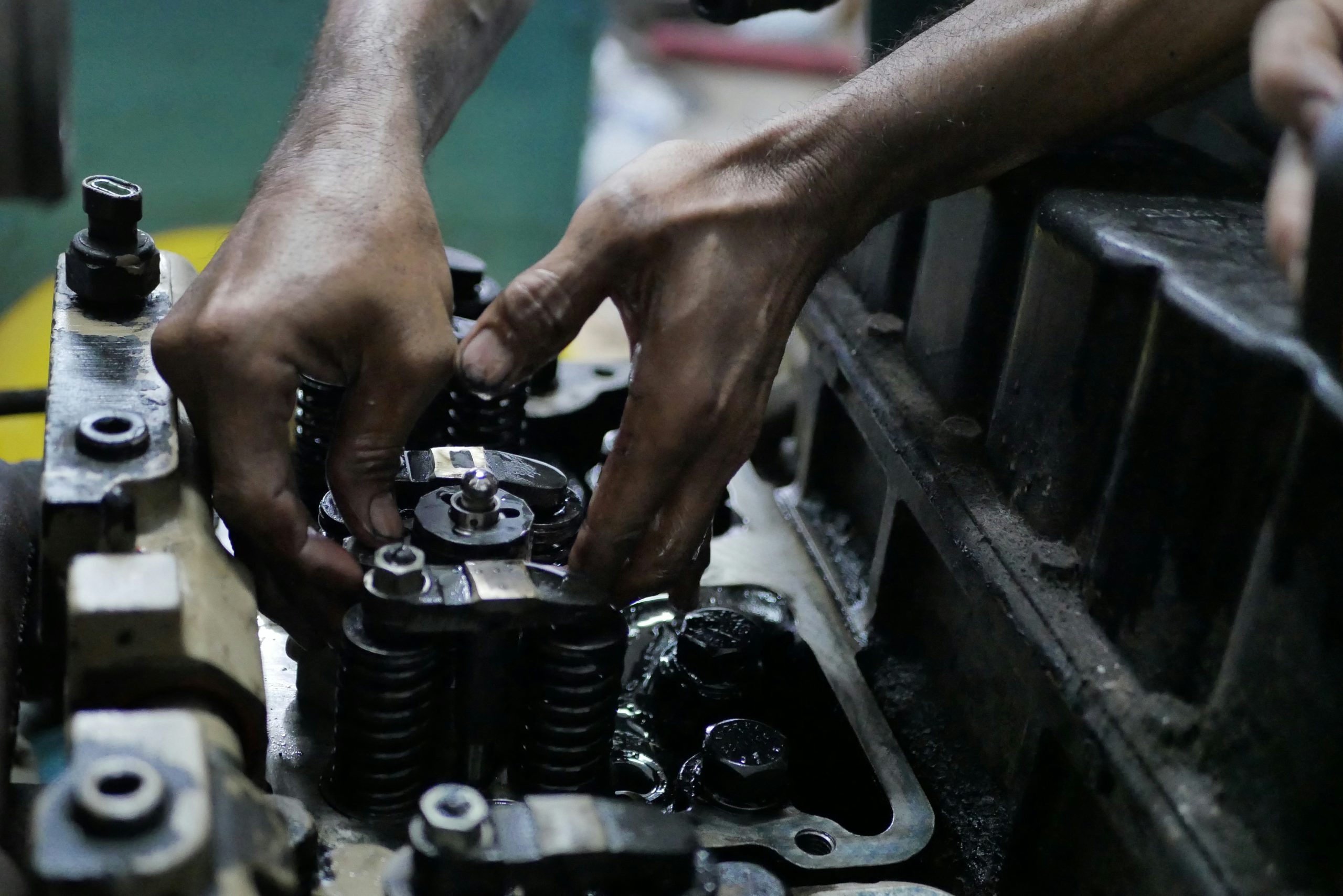
The maintenance schedule is structured in four tiers, with intervals adjusted for Greece’s hot, dry summer operating environment. Weekly checks: visual inspection of the enclosure for damage or fluid leaks, oil and coolant level check on dipstick and sight glass, battery charger verification (27.2-27.6V), and controller alarm review. Every 250 operating hours or six months: engine oil and filter change using SAE 15W-40 API CJ-4 oil (15W-40 grade is specified for Greek ambient temperatures), fuel filter replacement, air filter inspection, more frequent air filter cleaning is recommended during the dusty July-August period, particularly for sites on unpaved roads in agricultural or construction areas, fan belt tension and condition check, and a thirty-minute loaded exercise run. Every 500 hours or twelve months: full service including all filters, fuel-water separator drain, valve clearance inspection and adjustment, coolant concentration check (50/50 ethylene glycol mix protects to -37°C, sufficient for all Greek winter conditions including the mountains of northern Greece), and alternator winding insulation resistance test. Every 2,000 hours: injector testing, turbocharger inspection, alternator bearing replacement, and cooling system pressure test. The Huaquan Cloud IoT platform tracks all intervals and sends automatic reminders.
Can the generator be monitored remotely from a Greek location?
The Huaquan Cloud IoT module is factory-installed and included as standard equipment. It connects via 4G cellular with automatic fallback to Ethernet and transmits to a secure cloud platform. The dashboard (accessible from any browser, iOS, or Android device) displays real-time values for all operational parameters: line and phase voltage, current per phase, frequency, active and reactive power, power factor, engine RPM, coolant temperature, oil pressure, fuel level with estimated runtime, battery voltage, and enclosure ambient temperature. The platform stores twelve months of historical data at one-minute resolution with CSV export for energy audit and insurance compliance. Alerting is fully customisable: users set warning and alarm thresholds, choose delivery channels (push notification, SMS, or email), and configure escalation rules for unacknowledged alarms. Fleet operators managing generators at multiple Greek sites (a hotel group with properties on Crete, Rhodes, and the mainland, for example) see all units on a single map with colour-coded status. Automatic weekly exercise runs are scheduled and monitored remotely, with exercise-result reports emailed automatically. No licence fees or data charges apply.
What voltage and frequency standard applies for generators in Greece?
Greece operates on the harmonised European standard of 400V line-to-line, 230V line-to-neutral, at 50Hz , defined by EN 50160 and administered by HEDNO (Hellenic Electricity Distribution Network Operator) on the mainland interconnected system and by local operators on the non-interconnected islands. Huaquan generators for Greece are factory-configured to these values. The AVR is calibrated for 400V ±0.5% steady-state regulation, with transient voltage deviation limited to -15% maximum during a 50% load step and recovery within 0.5 seconds, satisfying the requirements of EN 61000 for equipment electromagnetic compatibility. Frequency is governed to 50Hz ±0.25Hz steady-state. For island installations where grid frequency may vary more widely than on the mainland, the DSE8610 controller’s frequency acceptance window can be widened from the default 47.5-52.5Hz to 45-55Hz, ensuring the ATS does not nuisance-trip during frequency excursions on autonomous island grids. The neutral-earth bonding arrangement is configured for the TT earthing system commonly used in Greek LV installations.
Can multiple 600kW generators be paralleled for N+1 redundancy or increased capacity?
Huaquan generators support parallel operation using the DSE8610 MKII controller with CAN bus synchronisation. Up to sixteen generators can be connected on a common bus without a master controller, each unit’s DSE8610 measures bus voltage and frequency, adjusts its own output to match, and closes its circuit breaker when within the synchronisation window (±0.1Hz, ±5V). Load sharing operates in isochronous mode with kW and kVAR sharing proportional to each generator’s rating; the CAN bus updates load information between controllers every twenty milliseconds, ensuring stable sharing during load changes. For N+1 redundancy (essential for data centres, hospitals, and continuous-process manufacturing) if any generator faults or is taken offline for maintenance, the remaining units automatically assume the dropped load share within 100 milliseconds. The system does not require external synchronisation hardware. For Greek applications, common configurations include 2 x 600kW N+1 for Tier III data centres, 3 x 600kW for large resort hotels with seasonal load variation, and 4 x 600kW for industrial sites that want to add capacity in phases as production expands.
What noise levels does the generator produce and do they satisfy Greek regulations?
The standard silent canopy produces 72 dB(A) at 7 metres, while the super-silent enclosure option achieves 63 dB(A) at the same distance, equivalent to normal conversation. At a typical Greek property boundary of 10-15 metres, measured levels are 62-65 dB(A) for standard and 53-56 dB(A) for super-silent enclosures. Greek noise regulation for fixed mechanical plant is governed by Joint Ministerial Decision 37393/2028 (implementation of EU Directive 2002/49/EC) and local municipal noise ordinances. Urban and suburban areas typically enforce a 45-50 dB(A) daytime limit at residential boundaries. For hotel installations, the more stringent constraint is guest-room noise, the Hellenic Chamber of Hotels’ technical guidelines recommend in-room background noise below 30 dB(A). Achieving this at a generator-to-room distance of thirty metres with a super-silent enclosure, acoustic louvres, and a residential-grade exhaust silencer is standard. For island resorts on Santorini or Mykonos where the generator may be within fifteen metres of guest accommodation, we specify a containerised super-silent enclosure with split cooling, remote radiators, and hospital-grade silencers that achieve 50 dB(A) at 7 metres, inaudible inside guest rooms with closed windows. Huaquan’s engineering team reviews the site plan and local noise ordinance during quotation and specifies the acoustic package accordingly.
What warranty and after-sales support applies for generators in Greece?
Standard warranty is twelve months or 2,000 operating hours from the commissioning date, whichever occurs first. The warranty covers parts and factory labour for manufacturing defects across the engine, alternator, controller, and fabricated steelwork, and is valid globally without geographic restriction. Extended warranty packages for twenty-four months or 4,000 hours are available at order stage at approximately 7% of the generator value. Spare parts for Greek customers ship from Huaquan’s central warehouse via DHL or FedEx priority, with delivery to Athens, Thessaloniki, or Heraklion in 48-72 hours. A recommended critical-spares kit (controller, AVR module, fuel lift pump, sensors, belt set, and gasket kit) is priced at a discount when ordered with the generator and eliminates dependency on express freight for common service items. English-language technical support is available by phone and email during European business hours (09:00-17:00 EET), with out-of-hours emergency support for units under extended warranty. The Huaquan Cloud IoT platform’s remote diagnostics capability allows our engineers to view real-time generator parameters during fault investigation sessions, resolving the majority of issues without dispatching a technician.
EU Compliance
Every Huaquan generator delivered to Greece carries the full suite of EU compliance documentation. The unit is CE marked under the Machinery Directive 2006/42/EC (covering the design, construction, and safety features of the complete generator set) the EMC Directive 2014/30/EU, and the Low Voltage Directive 2014/35/EU. Emissions compliance meets EU Stage V limits for non-road mobile machinery engines in the 130-560kW category, verified through the engine manufacturer’s type-approval documentation. Generator set performance is validated to ISO 8528-5:2022, covering steady-state voltage regulation (±0.5%), frequency regulation (±0.25Hz), transient voltage deviation during load application and rejection, and recovery time. The alternator conforms to IEC 60034-1:2022 (rating, performance, and temperature rise) and IEC 60034-22 (specific requirements for AC generators in reciprocating engine-driven generating sets), with Class H insulation rated for 125°C temperature rise, tropicalised windings, and IP23 protection as standard. Factory load-bank testing is conducted in accordance with ISO 8528-6 and the test report is included in the documentation package.

Shipping and Delivery to Greece
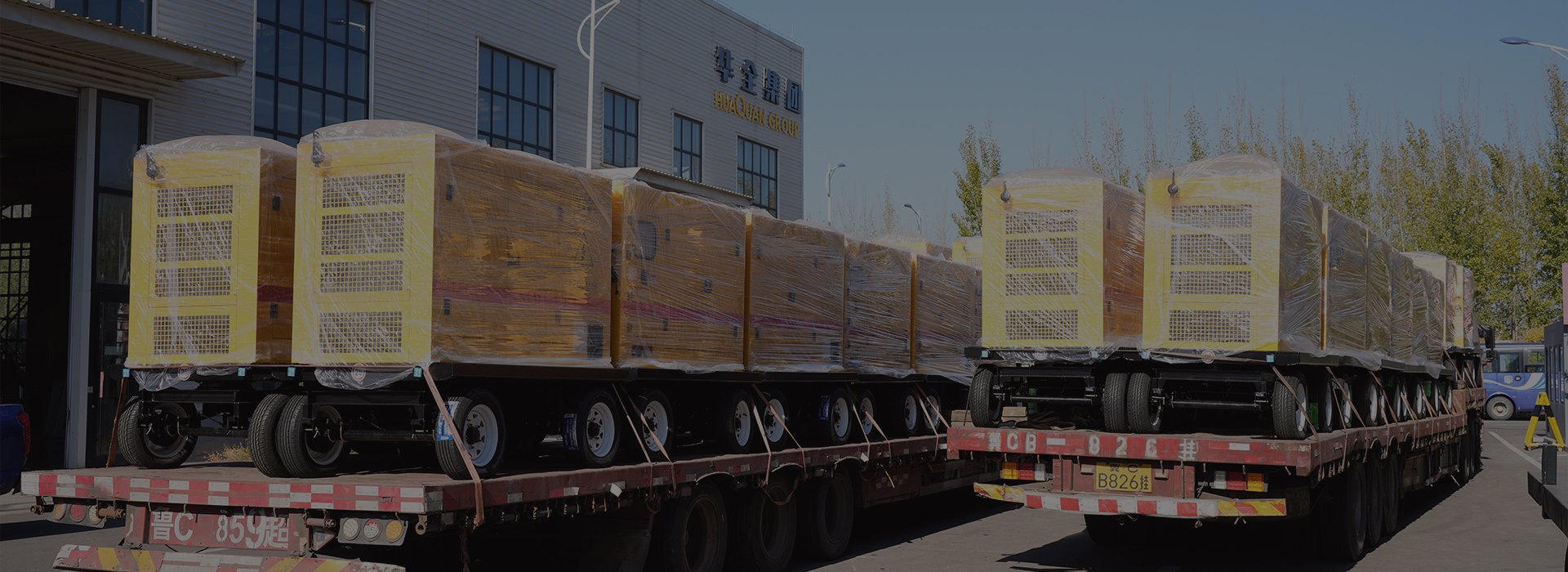
Huaquan generators for Greece ship from Shanghai or Ningbo port in 40-foot high-cube containers, with oversized units on flat-rack or open-top containers. The direct Asia-Mediterranean sea route passes through the South China Sea, Singapore Strait, Indian Ocean, Red Sea, and Suez Canal to the Eastern Mediterranean, arriving at Piraeus (serving Athens, the Peloponnese, and Central Greece) or Thessaloniki (serving Northern Greece) in 28-33 days. This direct routing avoids the 7-10 day transshipment delay that occurs when containers are routed through Northern European hub ports such as Rotterdam or Hamburg.
The generator is prepared for shipping with engine fluids drained for IMDG dangerous-goods compliance, steel strapping over rubber isolation pads, shrink-wrap weatherproofing, and silica-gel desiccant sachets placed inside the control panel enclosure to prevent condensation during the sea passage. Upon arrival, our Piraeus-based customs broker handles clearance under HS code 8502.13.40 (generating sets with compression-ignition engines, output 375-750kVA). EU import duty is 0% for diesel generator sets under this classification. Greek VAT at 24% applies and is recoverable for VAT-registered businesses through the normal periodic VAT return process. Port handling and clearance adds 4-7 working days. The final road leg from Piraeus or Thessaloniki to the installation site is arranged by low-loader, the generator’s 8.5-tonne weight and 5.4-metre length fall within standard Greek heavy-haulage regulations, though routing through central Athens requires a night-time movement permit obtainable in one working day. Site offloading requires a mobile crane or telehandler with 12-tonne minimum capacity. Huaquan’s logistics desk issues tracking updates at each milestone: factory dispatch, vessel departure, Suez Canal transit, port arrival, customs clearance, and final delivery.

Why Greek Buyers Choose Huaquan Power
Six factors differentiate Huaquan from European generator distributors and other Asian manufacturers for Greek customers:
Factory-direct pricing advantage. Selling directly from the Yangzhou manufacturing facility eliminates distributor tiers. Greek buyers typically save 20-30% compared to locally sourced generators of equivalent specification, a difference of €20,000-€40,000 on a 600kW unit, which covers the entire installation cost including civil works, electrical integration, and commissioning.
Pre-configured for the Greek grid. Every generator leaves the factory set to 400V/230V 50Hz with TT earthing configuration, the standard Greek low-voltage distribution arrangement. The ATS is calibrated to Greek voltage and frequency tolerance bands. Field configuration is not required; the generator connects directly to a Greek switchboard without voltage-adaptation transformers or control parameter changes.
Climate-engineered for Mediterranean conditions. Generators bound for Greece receive the C4-high corrosion-protection coating system, 50°C ambient-rated cooling with optional tropical radiator core to 55°C, IP65-sealed electrical connections, and moisture-separation louvres, all standard for Greek destinations. These are options or unavailable from many European distributors whose stock units are configured for Northern European climate conditions.
Established Greek logistics chain. Our Piraeus-based customs broker, Thessaloniki freight forwarder, and network of electrical contractors in Athens, Thessaloniki, and Heraklion ensure that the generator moves from port to operational site without logistic delays. The direct Shanghai-Piraeus sea route means faster transit than competitors who route through Northern Europe.
IoT monitoring at no added cost. The Huaquan Cloud IoT platform (a €2,500-€5,000 option on competitor units) is standard equipment. Greek operators use it for remote generator management, fuel consumption tracking, maintenance scheduling, and fleet oversight across multiple sites. No licence fees, no data restrictions.
Responsive European-time-zone support. Technical support is available in English during Greek business hours (09:00-17:00 EET). Out-of-hours emergency support is included for extended-warranty units. Spare parts ship within forty-eight hours via DHL to any Greek address. Remote diagnostics resolve most issues without dispatching a service technician.
Related Resources
- Diesel Generator Set: Complete Product Range
- Industrial Generator Solutions for Heavy-Duty Applications
- Generator Sizing Guide: How to Calculate Load Requirements
- Generator Maintenance: Complete Service Schedule and Best Practices
- Container Generator: Plug-and-Play Enclosed Solutions
- Europe Generator Solutions: Full Range for European Markets
- Diesel Generator Fuel Consumption Guide
- Diesel Generator Price Guide 2026
- Huaquan Overseas Project Case Studies
- Contact Huaquan Power: Engineering Consultation and Quotation