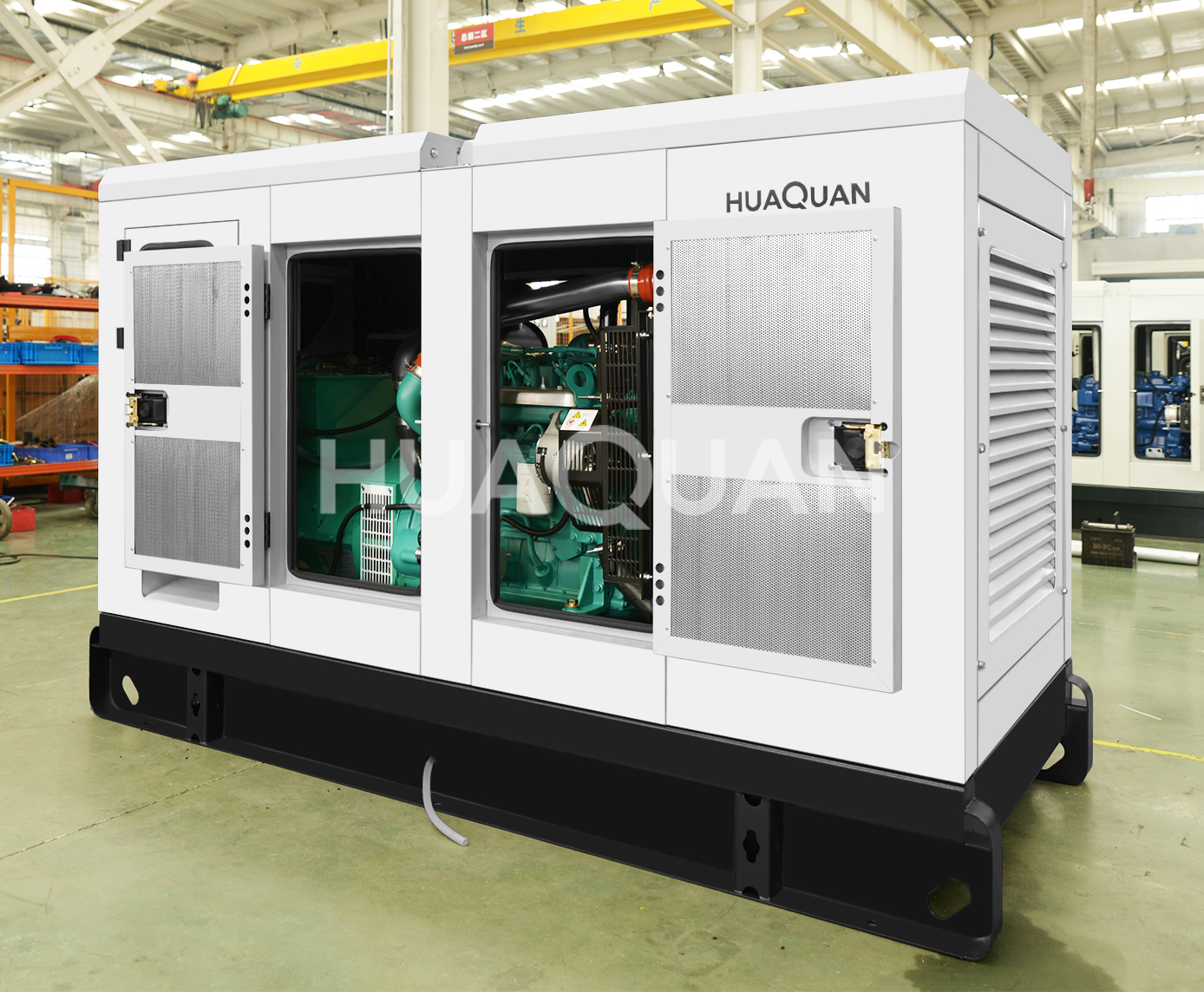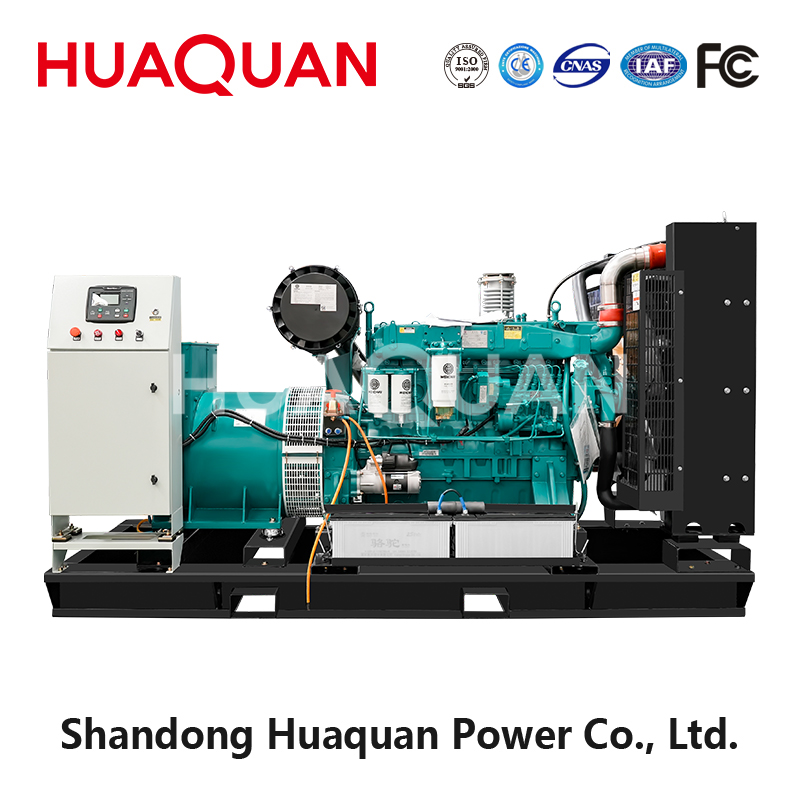
The exhaust back pressure limit for diesel generator engines defines the maximum allowable resistance in the exhaust system that the engine can overcome without performance degradation or damage. Huaquan Power designs exhaust systems to minimize back pressure because excessive restriction causes power loss, elevated temperatures, and increased fuel consumption. Huaquan Power has compiled the following detailed guide on exhaust back pressure limits for diesel Generators.
What Is the Exhaust Back Pressure Limit for Diesel Generator Engines?
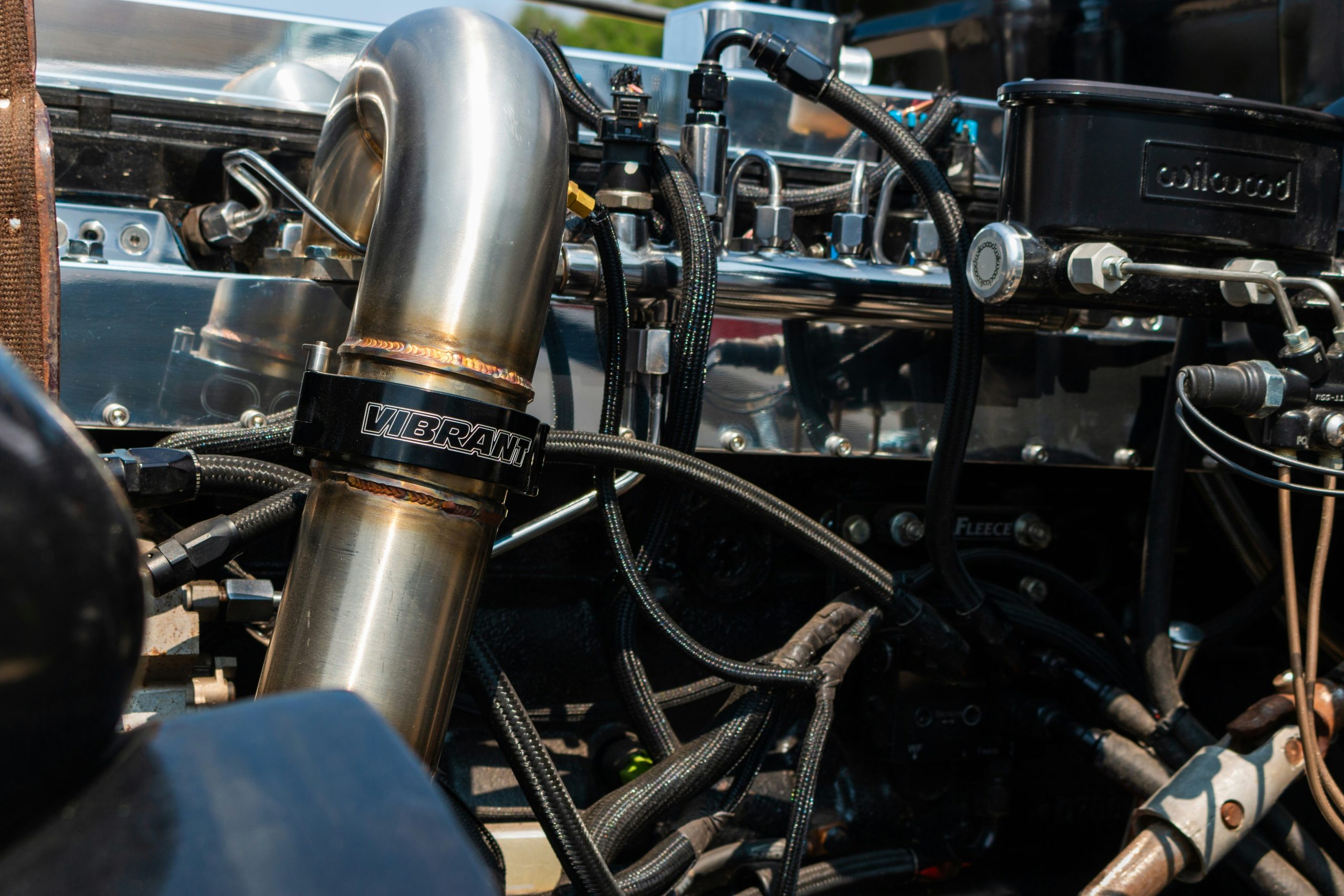
Exhaust back pressure refers to the static pressure measured at the exhaust manifold outlet that opposes the flow of exhaust gases from the engine cylinders. Specifically, every component in the exhaust path—manifold, piping, muffler, and rain cap—contributes to total system back pressure. Furthermore, Huaquan Power designs exhaust systems to keep total back pressure well below the engine manufacturer’s maximum limit at rated power output.
What Are the Standard Back Pressure Limits?
| Engine Type | Maximum Back Pressure (kPa) | Maximum Back Pressure (inHg) | Huaquan Design Target |
|---|---|---|---|
| Naturally aspirated | 6.7-10.0 | 2.0-3.0 | 50% of maximum |
| Turbocharged | 10.0-13.3 | 3.0-4.0 | 60% of maximum |
| Turbocharged aftercooled | 10.0-15.0 | 3.0-4.5 | 60% of maximum |
| High-performance industrial | 13.3-20.0 | 4.0-6.0 | 65% of maximum |
Importantly, Huaquan Power targets back pressure values significantly below the maximum limits to provide margin for system fouling and altitude effects. Therefore, Huaquan exhaust systems maintain performance even after extended operation with gradual muffler carbon buildup.
What Components Contribute to Exhaust Back Pressure?
| Component | Typical Contribution (%) | Design Considerations | Huaquan Optimization |
|---|---|---|---|
| Exhaust manifold | 5-10 | Runner length, diameter, and merge design | Optimized runner geometry per engine model |
| Exhaust piping | 10-20 | Pipe diameter, length, and number of bends | Minimum bends; oversized diameter standard |
| Muffler/silencer | 40-60 | Internal design, flow area, and absorption material | Industrial-grade reactive silencers |
| Rain cap/spark arrestor | 5-15 | Spring tension and flow area | Low-restriction rain cap designs |
| Flexible connectors | 2-5 | Internal corrugation and liner design | Lined flex connectors to reduce turbulence |
Additionally, the muffler or silencer typically contributes the largest single portion of total system back pressure. Consequently, Huaquan Power selects mufflers with generous internal flow areas and multiple expansion chambers to minimize restriction while achieving the required noise reduction.
How Does Excessive Exhaust Back Pressure Affect Generator Performance?
Excessive back pressure degrades engine performance through multiple interconnected mechanisms. Furthermore, even modest back pressure increases beyond the limit cause measurable power and efficiency losses. Therefore, Huaquan Power carefully designs and validates every exhaust installation.
What Are the Performance Impacts of High Back Pressure?
| Impact | Mechanism | Magnitude per 1 kPa Above Limit | Cumulative Effect |
|---|---|---|---|
| Power reduction | Incomplete cylinder scavenging reduces fresh air charge | 1-2% power loss | Progressive loss at higher loads |
| Fuel consumption increase | Engine must work harder to expel exhaust gases | 0.5-1.5% increase in BSFC | Significant cost increase over time |
| Elevated exhaust temperature | Hot residual gas heats incoming charge | 5-10°C increase | Thermal stress on valves and turbo |
| Turbocharger overspeed | Higher exhaust pressure drives turbine faster | Risk of turbo damage | Turbo bearing and blade failure |
| Valve burning | Hot exhaust gas delayed in cylinder | Accelerated valve seat wear | Valve leakage and compression loss |
Specifically, a turbocharged diesel generator operating with back pressure 5 kPa above the maximum limit will lose approximately 5-10% of rated power and experience 3-8% higher fuel consumption. Moreover, these losses increase progressively as back pressure continues to rise above the limit.
How to Measure Exhaust Back Pressure?
Accurate back pressure measurement requires proper instrumentation and technique to obtain reliable readings at rated load. Furthermore, measurement at the wrong location or under incorrect conditions produces misleading results. Therefore, Huaquan Power specifies a standardized measurement procedure.
What Are the Measurement Methods and Requirements?
| Method | Equipment | Measurement Location | Operating Condition |
|---|---|---|---|
| Static pressure gauge | 0-25 kPa pressure gauge (0.5% accuracy) | Tapped port in exhaust manifold, before turbo inlet | Full rated load, stabilized temperature |
| Digital manometer | 0-50 kPa digital manometer (0.1% accuracy) | Same as gauge method | Same as gauge method |
| Transducer + data logger | Pressure transducer with continuous recording | Multiple points for system analysis | Full load sweep from 25% to 100% |
Additionally, Huaquan Power requires back pressure measurement at full rated load with the engine at operating temperature. Moreover, never measure back pressure at idle or low load—the readings will be artificially low and do not represent worst-case conditions during emergency power operation.
How to Design a Low-Back-Pressure Exhaust System?
Proper exhaust system design minimizes back pressure while achieving the required noise reduction level. Furthermore, the design must balance flow efficiency with silencing effectiveness and code compliance. Therefore, Huaquan Power provides detailed exhaust design guidelines for every installation type.
What Are the Critical Design Rules?
| Design Parameter | Recommendation | Effect of Violation | Huaquan Standard |
|---|---|---|---|
| Exhaust pipe diameter | Minimum equal to engine outlet; larger for long runs | Back pressure increases with 1/diameter⁴ | One size larger than minimum for runs >10m |
| Number of bends | Minimum possible; use 45° instead of 90° | Each 90° bend adds equivalent of 3m straight pipe | Maximum 3 bends; all long-radius |
| Muffler selection | Size by engine displacement and power, not pipe size | Oversized pipe into undersized muffler wastes diameter gain | Muffler body volume ≥ 3× engine displacement |
| Pipe slope | Minimum 1:50 slope toward outlet; no low points | Condensation collects at low points causing corrosion | Continuous slope with drain at low point |
| Vertical stack height | Minimum 1.5m above roofline or nearby intakes | Exhaust re-entry through building openings | 3m above highest air intake within 10m radius |
⚡ Explore Related Solutions
- 🏭 500kW Diesel Generator
- 🏭 1000kW Diesel Generator
- 🏭 500kW YC Diesel Generator
- 🔧 KMS (Cummins/Doosan) Series
- 📋 Diesel Generator Sets
- 📋 Order Process — How to Buy
- 📋 Contact Us
💡 Need a customized solution? Contact our engineering team for project-specific recommendations.
What Causes Exhaust Back Pressure to Increase Over Time?
Even well-designed exhaust systems can develop increasing back pressure as components degrade or become obstructed. Furthermore, regular inspection and maintenance prevent gradual back pressure increases from causing engine damage. Therefore, Huaquan Power includes exhaust system checks in all maintenance programs.
What Are the Common Causes of Increasing Back Pressure?
| Cause | Mechanism | Detection Method | Correction |
|---|---|---|---|
| Carbon buildup in muffler | Soot and carbon deposits restrict internal flow passages | Back pressure measurement above limit | Replace or clean muffler; address combustion issues |
| Rain cap malfunction | Cap spring rusts or seizes, restricting exhaust flow | Visual inspection; back pressure test | Lubricate or replace rain cap mechanism |
| Internal pipe corrosion | Rust scale flakes off and partially blocks passages | Back pressure measurement; visual inspection | Replace corroded pipe sections |
| Muffler packing degradation | Absorption material migrates and blocks flow | Back pressure increase; noise increase | Replace muffler with correct type |
| External obstruction | Birds, debris, or ice block the stack outlet | Visual inspection of outlet; back pressure spike | Install spark arrestor screen; clear obstruction |
Additionally, Huaquan Power recommends measuring exhaust back pressure during every major service interval (2000-4000 operating hours) to establish a trend. Consequently, increasing back pressure trends can be detected early before they cause performance problems or engine damage.
Frequently Asked Questions
Q1: Can I use a residential-type muffler on a diesel generator?
No, Huaquan Power strongly advises against using residential mufflers on diesel generators. Specifically, residential mufflers are designed for low-temperature gasoline engine exhaust and cannot withstand diesel exhaust temperatures exceeding 500°C. Furthermore, they typically provide insufficient flow area and will cause excessive back pressure. Therefore, always use industrial-grade mufflers rated for diesel engine exhaust temperatures and flow rates.
Q2: How does altitude affect exhaust back pressure limits?
Altitude reduces atmospheric pressure, which means the exhaust system discharges into a lower-pressure environment. However, the engine also breathes less air at altitude, producing a lower exhaust mass flow rate. Therefore, the absolute back pressure limit remains the same, but the actual measured back pressure may be slightly lower at altitude due to reduced exhaust flow. Additionally, Huaquan Power recommends maintaining the same back pressure design targets regardless of altitude.
Q3: What is the difference between critical and non-critical exhaust silencers?
Critical silencers provide the maximum noise reduction (25-40 dB) and are used where noise must be minimized, such as hospital and residential installations. Non-critical silencers provide moderate noise reduction (15-25 dB) for industrial environments. Furthermore, critical silencers have larger internal volumes and more flow restrictions, resulting in higher back pressure. Therefore, Huaquan Power selects silencer type based on both noise requirements and back pressure budget.
Q4: Should exhaust pipes be insulated?
Huaquan Power recommends insulating exhaust pipes within the generator room for safety and heat management. Specifically, insulation reduces radiant heat emission, keeping the room temperature lower and protecting personnel from burn hazards. However, insulation does not significantly affect back pressure because the gas temperature (and therefore density) remains essentially unchanged through the short pipe runs typical of generator installations.
Q5: How often should exhaust back pressure be measured?
Huaquan Power recommends measuring exhaust back pressure during initial commissioning, then at every major service interval (2000-4000 operating hours). Additionally, measure back pressure immediately if you notice any symptoms of excessive restriction such as power loss, increased fuel consumption, or elevated exhaust temperatures. Furthermore, always measure at full rated load for accurate and comparable results.
In summary, controlling exhaust back pressure within specified limits is essential for diesel generator performance and longevity. Huaquan Power recommends three key practices: (1) Design exhaust systems with back pressure targets at 50-65% of the maximum limit, (2) Use industrial-grade mufflers sized for the specific engine, and (3) Measure back pressure regularly and investigate any increasing trends. For expert guidance on generator exhaust system design, contact Huaquan Power at +86-159-0536-0210 or visit huaquanpower.net.