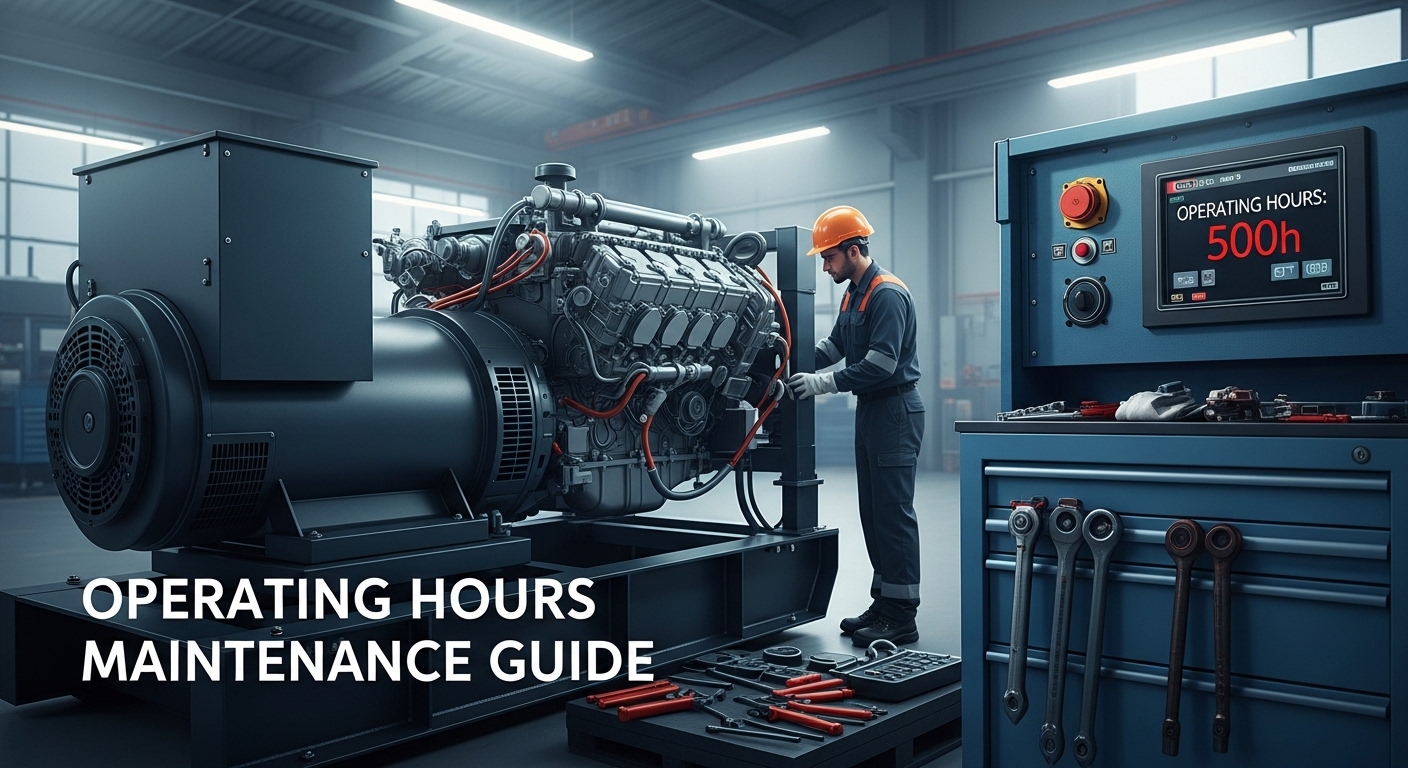

Diesel generator bearings are one of the components that ensure smooth operation and a long life cycle of Generators. They facilitate the rotation of parts, decrease friction, and maintain reliability in the running of the system. When it is not properly maintained, the bearings in your generator may end up being overused, overheated, or even fail, resulting in an expensive repair and downtime. So, you must inspect the diesel generator bearings. Read on to learn how!
Understanding Diesel Generator Bearing Types
Before going into Lubrication and Inspection of Diesel Generator Bearings, you have to understand what type of bearings you are handling . Most diesel generator bearings are of the three types:
Ball Bearings
Ball bearings are tiny workhorses that can carry either radial or thrust loads with negligible friction. They are small, low-priced, and this makes them shine where speed is of the essence. The most prevalent are deep groove, angular contact, and self-aligning. They are applicable in electric motors, computer fans, hard drives, and even in aerospace components like landing gear.
Roller Bearings
Roller bearings are used in cases of heavy load handling. Radial loads are processed using cylindrical rollers where the speed is high, tapered rollers when the load is combined in the gears and machinery, and spherical rollers where the misalignment is most likely to occur, as it occurs in mining or steel production. Their strength and durability are required in industrial applications like marine propulsion, railways, and so on.
Plain Bearings
Plain bearings are plain, although simple, and they are cheaper and do not consume much space. Metallic alloys, e.g., bronze or steel, are tough, heat dissipative, and non-metallic, e.g., PTFE, are self-lubricating. They are commonly applied in engine connecting rods, steering systems, conveyor systems, and food processing machine systems, where there is a need for shock absorption and low maintenance.
Typical Reasons Why You Encounter Generator Bearing Failure
Now, let’s examine the reasons why you experience diesel generator bearing failure.
Insufficient lubrication
Inadequate lubrication causes metal parts to rub together, creating friction and heat. This wears down the bearings and can ultimately lead to failure.
Contamination
Abrasive particles in the lubricant result in decreased bearing performance. And this further causes accelerated wear and potential bearing seizure.
Improper Alignment
Generator parts that experience misalignment create uneven load distribution on bearings which results in increased wear and premature failure.
Excessive load
Running the generator above its rated capacity puts extra stress on the bearings and can cause them to fail early.
False Brinelling
False brinelling occurs when a bearing that is not rotating but is vibrating. This results in holes and wear scarring in the axial direction of the raceway.
Lubrication Best Techniques For Diesel Generator Bearings
Now that you’ve learned about the reasons for generator bearing failure, it’s time to learn how to properly lubricate these bearings to keep them functioning smoothly.
Engine Oil Management Method
Engine oil does not slide between moving components when applied to engine-supported bearings. It forms a hydrodynamic coating that isolates surfaces of bearings, absorbs, and transfers heat off friction contact points, and even transfers tiny contaminants into the oil filter.
The difference between good and bad oil lubrication lies in the right selection of the oil grade and the API grade and classification, which will be determined by your car manufacturer. This is because the viscosity must be equal to the operating temperature and load. It will not work with an oil that is too thick or too thin to form a protective film, and it will not start up well.
Changing the oil and filters regularly as per the recommended frequency would prevent the oil degradation that may occur at both high and low-load standby conditions.
Grease Lubrication Recommendations
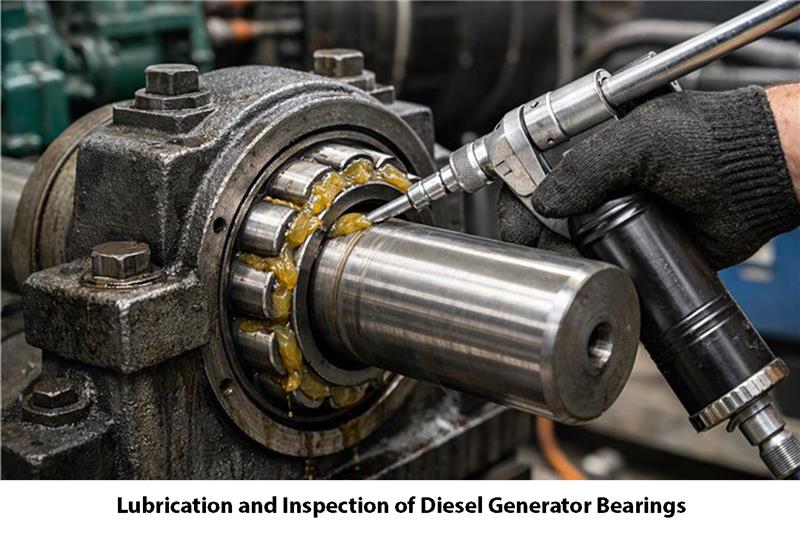
The use of grease rather than oil in many types of rolling bearings on generators is particularly true for alternators or accessory drives. As a rule of thumb, re-grease bearings depending on the operating hours, temperature, and load states; in most gensets, this may be every 1000-1500 running hours.
Being careful with greasing is also important; excessive grease will trap heat and raise the bearing temperature, whereas insufficient grease will leave parts vulnerable to wear. The goal is to fill the bearing cavity to the volume specifications of the manufacturer and always use grease that is compatible with the earlier grease.
Bearing Oil and Engine Oil Interaction
Bearing lubrication in diesel engines belongs to the larger lubrication system. The oil pump and oil galleries of the engine circulate oil under pressure at the support of hydrodynamic lubrication, in which a continuous oil film supports the load. In the meantime, splash or centrifugal action may help in lubricating the diesel generator bearings, which are not under a critical load.
Bearing health depends on the quality of the oil you use. Keeping both oil and grease clean and at the correct level not only directly protects the bearings but also helps maintain the engine in good operation.
How To Inspect Diesel Generator Bearings Step By Step
Now that we’ve covered lubrication, the next step is bearing inspection. Regular checks help catch early signs of wear before they turn into major problems. Follow these steps:
Step 1: Visual Inspection
Start with a visual observation of the bearing surfaces after clearing. Look for discoloration, corrosion, pitting, or scoring. These are the signs that the bearings have been running hot, contaminated, or worn.
Start with a visual observation of the bearing surfaces after clearing. Look for discoloration, corrosion, pitting, or scoring. These are the signs that the bearings have been running hot, contaminated, or worn.
Then, test rotational play and axial clearance. Now that the generator is off and it is safe to touch them, the shaft or alternator part that the bearing supports should be pushed around. Excessive play, wobble, or looseness normally indicates that the bearing has been worn out in a clearance and should be attended to.
Additionally, verify the condition of the bearing housing and seal. Busted seals or housing cracks let moisture and dirt in, which accelerates lubricant wear and degradation—neither of which is desirable.
Step 2: Measurement and Diagnostic Tools
Measurement improves the accuracy of your inspection, even though visual bearing inspection should be taken into account. Vibration spectrum analysis lets you be informed of any early generator bearing failure before you would notice it as noise. Ultrasonic testing uses high-frequency sound waves to detect imbalance or worn rolling components.
Temperature monitoring is another crucial tool, and infrared thermography identifies “hot spots” on bearing housings, which frequently point to excessive loading or lubrication problems. Feeler gauges or dial indicators help you to measure clearance between bearing races and the rolling elements; excessive clearance normally indicates wear.
Moreover, oil analysis involves testing of lubricant samples to detect lubricant degradation, chemical contamination, and metallic wear particles.
Step 3: Interpret Inspection Findings
Now that you have collected your observations and measurements, you will need to interpret them.
- Too much noise or vibration usually indicates an internal wear problem or a breakdown of the lubricant.
- High temperatures usually indicate either misalignments or a lack of lubricant.
- Unnatural clearance indicates excessive wear and should not be tolerated.
Once you have reached any of these thresholds, you can start to determine whether to have the generator bearings re-lubricated or whether to replace them. Always record your inspections and monitor trends over time so that you can continue to assess performance over time, giving you the ability to make educated decisions about your generator bearing maintenance.
Conclusion
By performing regular inspections and lubrication, you can maintain your diesel generator bearings, prevent failure, prolong their life, and help keep your generator operating reliably and smoothly. If you need professional expertise during your maintenance or specialized technical support for your diesel generator, please reach out to our highly skilled technical team at HuaQuan Power for assistance that is specific to your power system.
⚡ Explore Related Solutions
- 🏭 500kW Diesel Generator
- 🏭 1000kW Diesel Generator
- 🏭 500kW YC Diesel Generator
- 🔧 KMS (Cummins/Doosan) Series
- 🔧 YC (Yuchai) Series
- 📋 Diesel Generator Sets
- 📋 Order Process — How to Buy
- 📋 Contact Us
💡 Need a customized solution? Contact our engineering team for project-specific recommendations.