For any Bolivia business running critical operations, power interruptions are not an abstract risk — they have direct consequences measured in spoiled product, disrupted schedules, and damaged client relationships. This case study looks at how one Bolivia remote infrastructure operator approached the challenge of securing reliable backup power.
Case Study: 500kW Generator for a Remote-Infrastructure in Bolivia
Situation
A utility company operating critical infrastructure equipment in a remote area of Bolivia needed power support far from any reliable grid connection. Community facilities, relay stations, and pumping stations all required continuous electricity.
The Challenge
The operator needed a 500kW generator that could be installed in a remote location without grid access, run for extended periods between refueling, and start reliably even after long periods of standby.
Solution: Huaquan 500kW KMS Series Delivered to Bolivia
Huaquan Power configured and delivered a 500kW KMS series diesel generator set to meet the specific requirements of this remote infrastructure application in Bolivia:
- Fuel-efficient operation — lower running cost for continuous-duty applications
- High-altitude derating compensation — rated for 3000m+ elevation
- Voltage/frequency pre-configured: 440V/230V / 50Hz — no field modification required
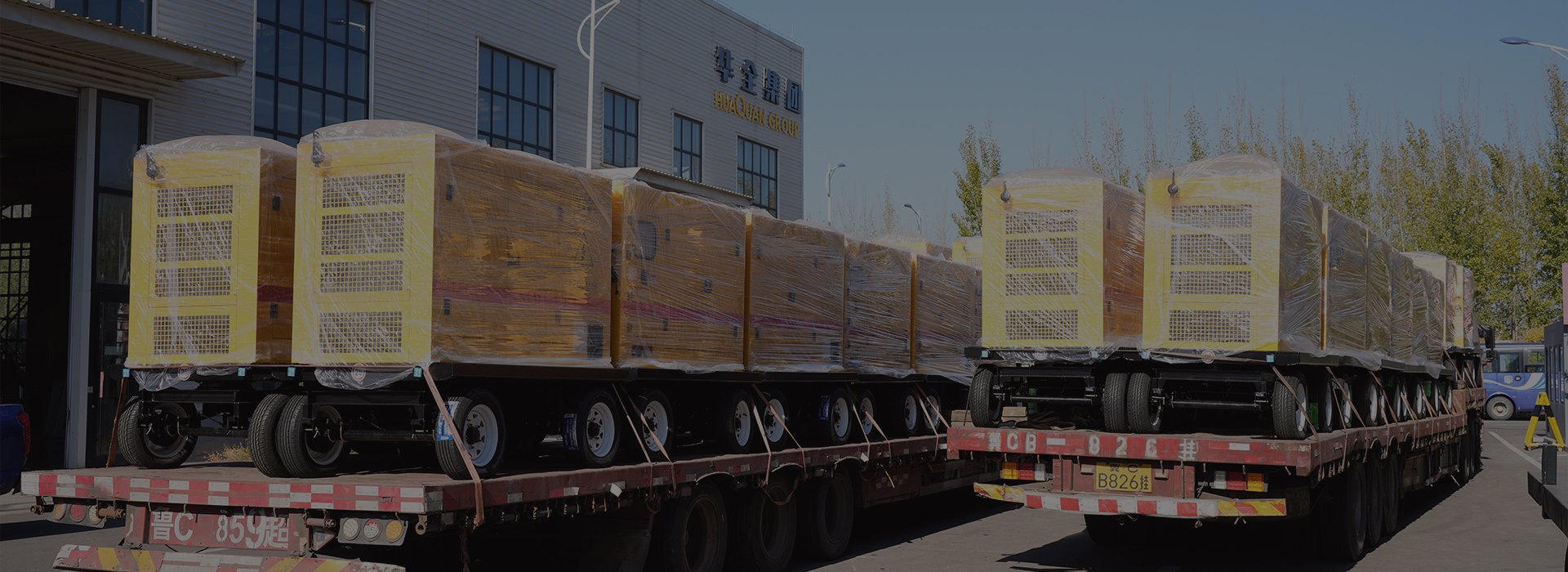
- Shipped to client via standard logistics and commissioned on-site
Outcome
The generator has been running reliably in its remote location, starting automatically as needed and operating for extended periods between refueling. Remote monitoring enables the operations team to track fuel levels and maintenance status without site visits.
Project Specifications
| Item | Specification |
|---|---|
| Country | Bolivia |
| Industry | Remote Infrastructure |
| Power Rating | 500 kW (625 kVA prime rating) |
| Standby Rating | 550 kW (687 kVA) |
| Engine Brand | Cummins / Perkins |
| Engine Model | Huaquan KMS Series |
| Alternator | Stamford / Marathon brushless |
| Voltage / Frequency | 440V/230V / 50Hz |
| ATS | Included (Automatic Transfer Switch, <10s transfer) |
| Fuel Tank Capacity | 72 Hours Runtime @ Full Load |
| Fuel Consumption | ~125 L/hour @ Full Load |
| Noise Level | ≤75 dB(A) @ 7m (Silent Canopy) |
| Cooling System | 50°C uprated radiator (Tropical/Desert Version) |
| Control Panel | Deep Sea DSE8610 with Remote Monitoring |
| Protection Rating | IP23 standard / IP55 optional |
| Warranty | 12 Months / 2,000 Hours |
| Delivery Terms | FOB Shanghai / CIF Destination Port |
Specifications may vary based on final configuration. Contact Huaquan for detailed technical drawings and factory test reports.
Why Remote Infrastructure in Bolivia Needs Autonomous Power Solutions
Remote infrastructure — from telecom relay stations and water pumping stations to community facilities in underserved areas — often operates far beyond the reach of reliable grid supply. These installations need power solutions that can run autonomously for extended periods, start reliably after long standby periods, and require minimal on-site maintenance.
Huaquan Generators for remote infrastructure applications feature extended fuel autonomy, robust starting systems for cold environments, remote IoT monitoring to track status without site visits, and compact footprints for installation in space-constrained locations.
Why Bolivia Businesses Choose Huaquan Power
- Factory-direct pricing: 15–30% below local distributor equivalents — same quality, better price
- Pre-configured for Bolivia: voltage, frequency, and climate rating set at the factory — no field modification required
- Fast delivery: 15–25 days production + sea freight to destination port; air freight available for urgent orders
- Compliance support: documentation assistance for Bolivia import certification
- Global warranty: 12 months / 2,000 hours, with remote diagnostics and 48-hour spare parts shipping
- Flexible configuration: silent canopy, containerized, trailer-mounted, or open-frame — choose the form factor that fits your site
Frequently Asked Questions
What voltage and frequency does Bolivia use?
Bolivia operates on 440V/230V at 50Hz. Huaquan generators for Bolivia are factory-configured to these standards — connect the cables and you’re ready to run.
Can this generator handle Bolivia’s climate conditions?
Yes. Every generator is equipped with an uprated cooling system rated for the destination climate — from tropical humidity to arid desert heat. Options for cold-weather starting packages and enhanced dust filtration are available.
How long does shipping to Bolivia take?
Production takes 15–25 working days. Sea freight to major {country} ports typically adds 25–40 days depending on routing. Air freight (5–7 days) is available for urgent orders. We handle export documentation and can assist with import clearance formalities.
What after-sales support do you offer in Bolivia?
Remote diagnostics via Huaquan Cloud IoT platform are available globally. Spare parts ship within 48 hours via express courier. For major markets, we can coordinate on-site technician dispatch. We also provide commissioning support and operator training for your maintenance team.
Does the 500kW KMS series come with a warranty?
Yes — 12 months or 2,000 operating hours, whichever comes first, covering parts and labor for manufacturing defects. Extended warranty packages are available.
Can I get a custom configuration for my remote infrastructure application in Bolivia?
Yes. We offer multiple form factors (silent canopy, containerized, trailer-mounted, open-frame), extended fuel tanks, parallel redundancy setups, and custom control panel configurations. Tell us your requirements and our engineering team will specify the right solution.
Ready to Discuss Your Bolivia Power Project?
If you have a remote infrastructure site in Bolivia and need reliable backup power, Huaquan’s engineering team can help you select the right capacity and configuration. We respond to all enquiries within 4 business hours.
Get a custom 500kW quote for your Bolivia project →
Or explore our order process to understand what to expect from inquiry to installation.