In industrial power generation, white smoke diesel exhaust is the number one issue. Whenever the facility managers or generator operators see thick white clouds billowing from the diesel genset, they sense something’s wrong is going on inside the generator. But why do these white, smoky clouds erupt? Is your generator engine going to fail soon? Or simply, the engine is cold. Or, what if white smoke diesel exhaust is due to water in the fuel?
Engineers design white diesel engines with maximum durability for premium combustion conditions. Whenever the conditions are not up to the mark, it ultimately emits white smoke. Never ignore white smoke diesel as it occurs due to washing down cylinders, oil dilutions or leading to an engine failure problem.
This guide covers why Generators complain of white smoke from diesel. How can you diagnose why it is happening and follow instant, quick step by step solutions to run your engine smoothly?
What Does White Smoke Diesel Indicate?
Usually, when the diesel engine is working exceptionally, the generator emits an invisible/faint haze exhaust under load. If you see any white smoke or excessive exhaust, it means raw, unburned fuel is passing through the combustion chamber and into the exhaust stream.
In comparison to black smoke, which refers to too much fuel consumption or not enough air. White smoke means there is a lack of heat. Usually, the generator works by compressing the diesel inside the cylinder. But unfortunately, it does not burn completely. Instead, the diesel vaporizes inside the hot exhaust pipe. Resultantly, the machine emits a white, pungent smell like raw diesel.
Key distinctions:
- Thin White Vapor: During the cold, winter seasons, the machine emits white vapors in freezing temperatures. Once the engine reaches its operating temperature, it automatically disappears.
- Thick, Persistent White Smoke: Thick white smoke is due to mechanical failure. If your engine has low compression, faulty injectors, or water contamination, your system will lead to a mechanical failure.
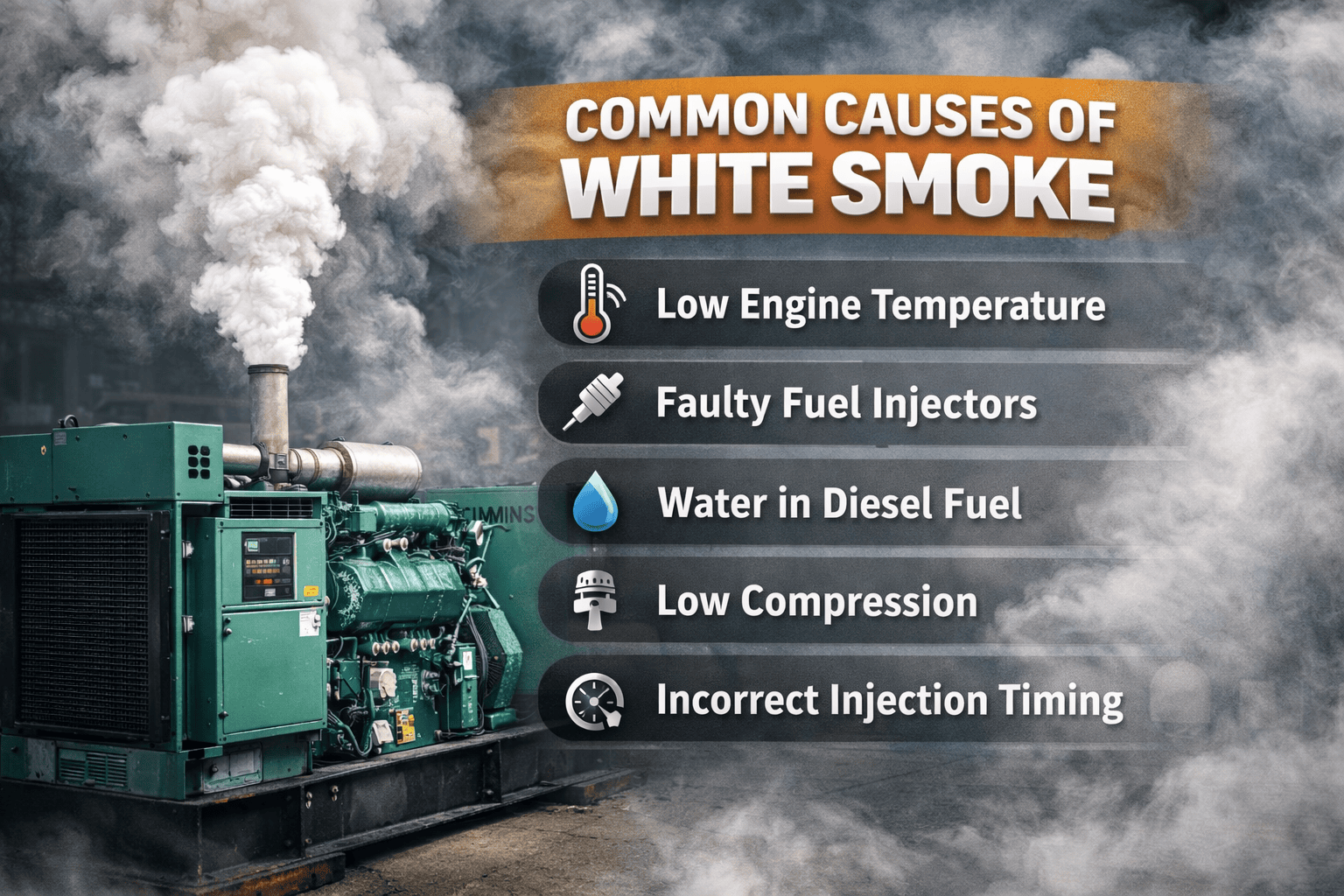
Common Causes of White Smoke Diesel in Generators
The generator is working at the right speed, but it still has white smoke. The common causes of white smoke in diesel generators include:
1. Low Engine Temperature (Cold Stacking)
Diesel engines use a compression strategy to ignite the generator. Suppose the cylinder walls and piston head are cold. The compressed air does not reach the temperature for full diesel ignition. Ultimately, the white smoke diesel emits at startup. However, if your engine thermostat is stuck, the engine does not reach the peak operating temperature, usually above 80°C/176°F. Ultimately, the smoke pressure rises.
2. Faulty Fuel Injectors
Experts suggest spraying diesel inside the fuel injectors to create a flawless fine mist atomization for proper combustion. Sometimes the injector tip clogs with carbon or worms out over time. The engine drops large fuel spray droplets. These big sized fuel drops take so long to burn completely. Ultimately, the engine emits white smoke and diesel vapors.
3. Water in Diesel Fuel
Water and diesel never get along. In some cases, the fuel storage tank of the generator complains of leaks or condensation. The condensed water enters the combustion chamber. When this water turns into steam, it resembles the white smoke of diesel exhaust with a “sputtering” engine sound.
4. Low Compression
Do you want to ignite your diesel without a spark plug? It’s time to compress the engine air to elevate the heat level. When the piston rings are worn or the walls are leaking, the air escapes from the cylinder liner. Ultimately, due to low heat and less pressure, diesel struggles with incomplete combustion, leading to white smoke emissions.
5. Incorrect Injection Timing
Engineers recommend injecting diesel at a precise millisecond when the piston hits the top stroke. If your reloading time is late, the fuel enters the cylinder when the piston is already moving down. The pressure drops and fuel struggles to burn completely, emitting white smoke.
How to Diagnose White Smoke Diesel Issue
Make sure to follow this logical diagnostic pattern to find out the exact source of white smoke from diesel without haphazardly tearing your engine.
Step 1: Observe the Timing of the Smoke
- Smoke only at startup? It indicates the generator has some temperature issues or the glow plug is failing.
- Smoke continuously while running? It might be the injectors, compression tank or improper timing that is causing a mechanical fault.
Step 2: Check Engine Temperature
Always use an infrared thermometer. Or, stick to the control panel gauge. What if the engine reaches at least 80°C (176°F)? Recheck your thermostat and coolant levels if your engine is still cold under load.
Step 3: Inspect Fuel Quality
Take a sample from the bottom of your fuel filter or water separator.
- Cloudy fuel: Indicates water contamination.
- Dark fuel: Indicates algae or sludge.
- If you find water, drain the tank and replace the filters immediately.
Step 4: The “Cracking” Test (Injector Isolation)
Warning: For the spot on cracking test or injector isolation, wear safety gear and be cautious.
Loosen the fuel line nut at one injector to stop the fuel from going to that cylinder when your engine is running.
- If the smoke stops: The issue is no longer there, as you have found the faulty injector.
- If the smoke continues: Type the fuel line nut again and switch to the next cylinder.
Note: Use diagnostic software for modern common rail engines to cut out the cylinder power electronically.
Step 5: Perform a Compression Test
Are your fuel and injectors fine? Use a compression gauge to test your cylinder pressure. Check the manufacturer’s specifications listed inside the manual to confirm the internal wear and tear for rings and walls if the reading is lower. This is the reason for the white smoke diesel issue.
How to Fix White Smoke Diesel in Generators
Have you identified the cause? It’s time to fix it with the right solution ASAP.
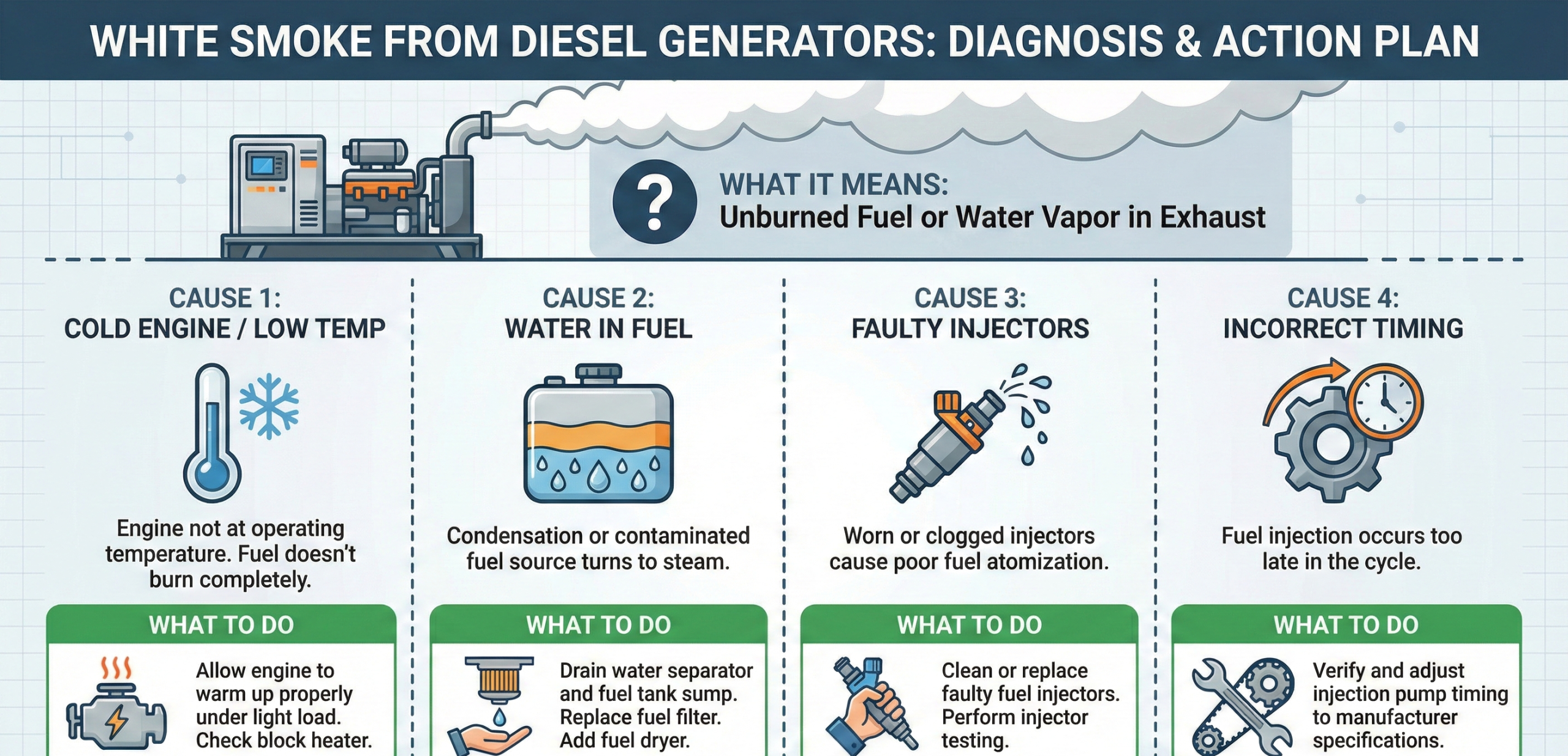
| Root Cause | Diagnostic Sign | Solution |
| Cold Engine | Smoke disappears after 5-10 mins. | Allow warm-up. Check glow plugs/block heater. |
| Bad Injectors | Smoke persists along with a knocking sound. | Clean the injectors/replace the nozzle tips. |
| Water in Fuel | The sputtering engine emits a cloudy fuel sample. | Drain the fuel tank. Also, replace the fuel water separator. |
| Low Compression | Hard starting with more oil consumption. | Replace the rings/liners for a complete engine overhaul. |
| Timing Issue | Low power and overheating. | Adjust the injection pump timing to spec. |
When Is White Smoke a Serious Warning?
People believe that whenever your engine emits smoke, it’s an emergency and you must immediately shut it down. But sometimes, the problem does not indicate immediate danger. Always treat white smoke diesel situations as an emergency.
- The smoke smells sweet: Due to blown gasket heads or cracked cylinders, the burning coolant smells sweet. It destroys the engine quickly.
- The oil level is rising: Sometimes, the unburned diesel pushes past the piston rings. This unburnt oil dilutes the engine oil, and it can no longer lubricate bearings, leading to an engine jam.
- Knocking sounds: Loud metallic banging, along with white smoke, diesel exhaust, means the injector is pre-igniting. It can melt to create our piston hole.
Preventing White Smoke Diesel Problems
Remember, experts always recommend prevention for such scenarios, and spot on maintenance is always cheaper than expensive repairs. To avoid seeing white smoke exhaust from your generators, make sure to:
- Use High-Quality Diesel Fuel: Always double check whether your supplier provides clean and water free fuel.
- Install a Block Heater: For power backup generators in cold temperatures, keep the coolant warm for smokeless, instant ignition.
- Regular Injector Maintenance: Use diesel additives to keep your engine clean and injector tips clean from any carbon deposits.
- Load Bank Testing: Always run your generator at 80% load to burn off carbon deposits and avoid wet stacking that leads to unnecessary future smoking issues.
- Adhere to Maintenance Schedules: Change your fuel filters and water separators every 250 hours (about 1 and a half weeks) or annually for premium performance.
Conclusion
Whenever your generator emits white smoke or diesel exhaust, it’s crying for help. This problem indicates whether the system is lacking heat or there is a fuel delivery problem. Above all, white vapor at freezing temperatures is normal. But persistent smoke means you are unnecessarily wasting fuel and damaging the engine.
Follow the diagnostic steps listed above. Always check the temperature, fuel quality, and compression to find the root cause immediately. From a simple filter change to a complex injector replacement, try to fix white smoke diesel problems ASAP so your power system remains reliable whenever you need it.
Contact the HuaQuan team today for a free consultation or to find the right fuel injectors and filters for your diesel generators.
FAQs
Is white smoke diesel from the generator a serious problem?
No, not always. Light white vapors during cold temperatures are normal. However, if your engine warms up, it still emits white smoke. There is something wrong inside the generator.
Does the bad diesel fuel cause white smoke emission issues?
Yes. Water contamination and poor quality diesel fuel lead to improper combustion; ultimately, the generator emits white smoke.
How can I stop this white smoke diesel emission during generator startup?
Make sure to warm up your engine properly. Use glow plugs and thermostats for better operational activity. Also, always use clean and high quality diesel fuel.