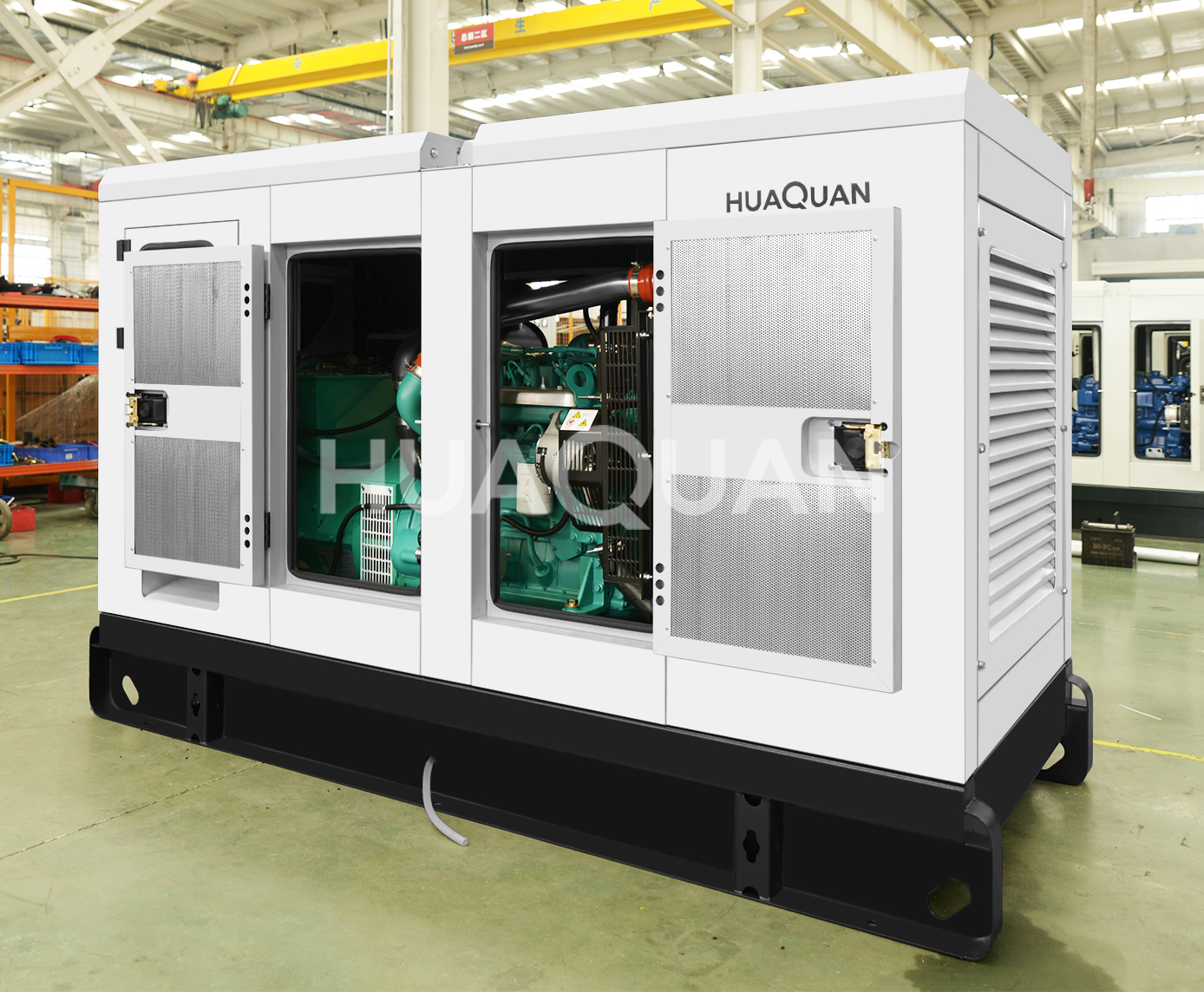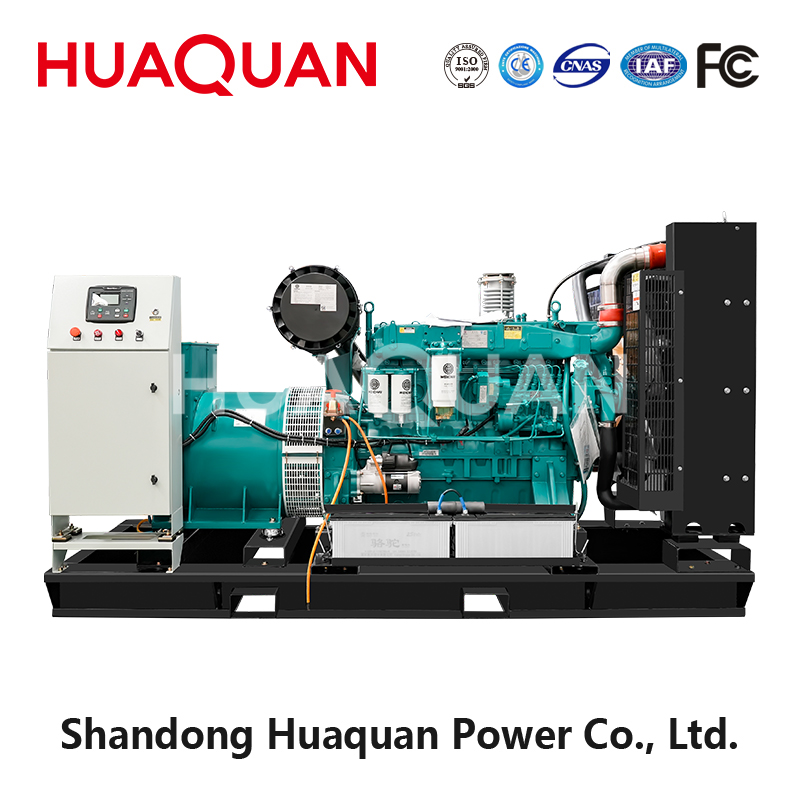
Diesel Generator voltage dip tolerance during motor starting defines the temporary voltage reduction that occurs when large electric motors draw high inrush currents. Huaquan Power designs generator sets with sufficient capacity and excitation response to limit voltage dips within acceptable limits, ensuring connected equipment continues operating reliably during motor starting events.
What Is Voltage Dip in Diesel Generator Systems?
Understanding the Voltage Dip Phenomenon
Voltage dip, also called voltage sag or transient voltage depression, occurs when a sudden large current demand momentarily overwhelms the generator’s voltage regulation capability. Specifically, when an induction motor starts, it draws 5 to 8 times its rated current for several seconds. Consequently, this heavy inrush current causes an immediate voltage drop at the generator terminals until the excitation system responds.
Huaquan Power engineers analyze every installation’s motor starting requirements to size Generators appropriately. Furthermore, the company provides detailed voltage dip calculations and performance curves for each generator model, enabling precise system design for demanding industrial applications.
Voltage Dip vs. Voltage Regulation
Voltage dip and steady-state Voltage Regulation are distinct but related concepts. Importantly, voltage dip describes the transient voltage reduction during sudden load changes, while voltage regulation refers to the generator’s ability to maintain steady voltage under varying loads. Therefore, a generator with excellent steady-state regulation may still experience significant voltage dips during motor starting if undersized.
| Parameter | Definition | Time Scale | Standard | Typical Value |
|---|---|---|---|---|
| Transient voltage dip | Maximum voltage drop during load step | 0.01 – 2 seconds | ISO 8528 | 15 – 30% |
| Voltage recovery time | Time to return to rated voltage | 0.5 – 5 seconds | ISO 8528 | 1 – 3 seconds |
| Steady-state regulation | Voltage deviation at stable load | Steady state | ISO 8525 | ± 2 – 5% |
| Frequency dip | Frequency drop during load step | 1 – 10 seconds | ISO 8528 | 2 – 8% |
What Causes Voltage Dip When Starting Motors?
Motor Inrush Current Characteristics
Induction motors draw significantly higher current during starting than during normal operation. During the initial acceleration period, the motor operates near its locked-rotor condition, presenting low impedance to the power source. Additionally, the motor’s power factor during starting is very low, typically 0.2 to 0.3, which further increases the generator’s reactive power demand and amplifies the voltage drop.
| Starting Method | Inrush Current Multiplier | Starting Torque | Voltage Dip Impact | Typical Application |
|---|---|---|---|---|
| Direct on-line (DOL) | 5 – 8x FLA | 100% | Severe (25 – 40%) | Small motors below 30 kW |
| Star-delta | 1.7 – 2.6x FLA | 33% | Moderate (10 – 18%) | Medium motors 30 – 75 kW |
| Soft starter | 2 – 4x FLA | Variable | Moderate (12 – 22%) | Various sizes |
| Variable frequency drive | 1.0 – 1.5x FLA | Programmable | Minimal (3 – 8%) | Large motors above 75 kW |
| Autotransformer | 2.5 – 4x FLA | 25 – 64% | Moderate (12 – 20%) | Medium-large motors |
Generator Excitation System Response
The generator’s excitation system determines how quickly it can recover from a voltage dip. Specifically, brushless alternators with automatic voltage regulators (AVR (Automatic Voltage Regulator)) sense the voltage drop and rapidly increase excitation current to restore voltage. Furthermore, the speed of this response directly affects the depth and duration of the voltage dip. Huaquan Power generators feature high-performance AVR systems optimized for motor starting applications.
What Are Acceptable Voltage Dip Limits for Diesel Generators?
Industry Standards and Guidelines
ISO 8528-12 defines transient voltage dip performance classes for generating sets. Additionally, IEEE Standard 446 recommends maintaining voltage above 80% of rated value for most industrial equipment during motor starting events. Therefore, generator sizing calculations must verify that the worst-case voltage dip remains within acceptable limits for all connected loads.
| Application | Maximum Acceptable Dip | Recovery Time | Sensitivity Level | Huaquan Power Design Target |
|---|---|---|---|---|
| General industrial | 25 – 30% | 1 – 3 seconds | Moderate | 20% maximum |
| Hospitals / medical | 10 – 15% | 0.5 – 1 second | High | 10% maximum |
| Data centers | 10 – 15% | 0.5 – 1 second | Very high | 10% maximum |
| Commercial buildings | 15 – 20% | 1 – 2 seconds | Moderate | 15% maximum |
| Telecommunications | 10 – 15% | 0.5 – 1 second | High | 12% maximum |
Equipment Sensitivity to Voltage Dips
Different types of electrical equipment tolerate voltage dips to varying degrees. Moreover, sensitive electronic equipment including computers, PLCs, and variable frequency drives may trip or malfunction during voltage dips as small as 10%. Therefore, Huaquan Power works closely with clients to understand their specific load profiles and voltage sensitivity requirements during the system design phase.
| Equipment Type | Tolerance | Failure Mode | Risk Level | Protection Method |
|---|---|---|---|---|
| Computers and servers | ± 10% | Shutdown, data loss | Critical | UPS system |
| Variable frequency drives | ± 15% | Undervoltage trip | High | Ride-through capability |
| Contactors and relays | ± 20% | De-energize, drop out | Medium | DC-held contactors |
| Lighting systems | ± 20% | Flicker, dimming | Low | Electronic ballasts |
| Resistance heaters | ± 30% | Reduced output only | Very low | Not needed |
How Can You Calculate Voltage Dip for Motor Starting?
Per-Unit Method for Dip Calculation
The per-unit method provides a straightforward approach for estimating voltage dip during motor starting. Specifically, the voltage dip equals the motor starting kVA divided by the sum of the generator kVA rating and the motor starting kVA. Additionally, this calculation assumes constant generator impedance and does not account for AVR response time, making it a conservative estimate.
Detailed Calculation Example
Consider a 500 kVA Huaquan Power generator starting a 75 kW motor with 6x inrush current. The motor starting kVA equals approximately 540 kVA. Consequently, the estimated voltage dip equals 540 divided by 500 plus 540, yielding approximately 52% without AVR correction. With Huaquan Power’s advanced AVR system, the actual dip reduces to approximately 25% within 0.1 seconds.
| Generator Rating | Motor Size | Starting Method | Calculated Dip (no AVR) | Actual Dip (with AVR) |
|---|---|---|---|---|
| 200 kVA | 37 kW | DOL | 45% | 22% |
| 500 kVA | 75 kW | Star-delta | 18% | 10% |
| 800 kVA | 110 kW | Soft starter | 20% | 11% |
| 1000 kVA | 150 kW | VFD | 8% | 5% |
| 1500 kVA | 200 kW | DOL | 35% | 18% |
How Can Voltage Dip Be Minimized During Motor Starting?
Proper Generator Sizing
Selecting a generator with adequate capacity for the largest motor starting event is the most fundamental voltage dip mitigation strategy. Importantly, Huaquan Power application engineers perform detailed load analysis considering all simultaneous and sequential motor starting scenarios. Furthermore, the generator’s subtransient reactance significantly affects voltage dip magnitude, with lower reactance designs providing better transient performance.
Motor Starting Techniques
Using reduced-voltage or reduced-current motor starting methods dramatically decreases voltage dip impact. Additionally, sequencing motor starts to prevent simultaneous inrush from multiple motors prevents cascading voltage collapse. Huaquan Power’s control systems can implement automatic motor starting sequences that maintain generator voltage within acceptable limits.
| Mitigation Strategy | Voltage Dip Reduction | Implementation Cost | Complexity | Effectiveness |
|---|---|---|---|---|
| Oversize generator | 30 – 60% reduction | High | Low | Very effective |
| Soft starter | 40 – 60% reduction | Medium | Medium | Very effective |
| VFD starting | 70 – 90% reduction | High | High | Most effective |
| Star-delta | 40 – 50% reduction | Low | Low | Effective |
| Sequential starting | 30 – 50% reduction | Low | Medium | Very effective |
Generator AVR Optimization
Optimizing the AVR response parameters including voltage gain, stability margins, and excitation ceiling voltage significantly improves voltage dip recovery. Moreover, modern digital AVRs offer programmable response characteristics that can be tuned for specific load profiles. Huaquan Power calibrates every AVR during factory testing to achieve the best possible transient response for each generator model.
FAQ: Diesel Generator Voltage Dip During Motor Starting
Q1: What voltage dip is acceptable when starting a motor on a generator?
Acceptable voltage dip ranges from 10% for critical loads like medical equipment and data centers to 30% for general industrial applications. Huaquan Power designs generator systems to maintain voltage dip below 20% for most standard applications. Always consult with Huaquan Power engineers for applications with sensitive electronic equipment.
Q2: How do you reduce voltage dip when starting large motors?
Effective methods include using reduced-voltage starters like soft starters or VFDs, oversizing the generator, and sequencing motor starts. Huaquan Power engineers calculate optimal generator sizes considering motor starting profiles. Using a soft starter typically reduces voltage dip by 40 to 60% compared to direct-on-line starting.
Q3: Can a generator handle multiple motor starts simultaneously?
Simultaneous motor starting creates extreme voltage dip and should generally be avoided. Huaquan Power control systems implement sequential starting with adjustable time delays between each motor. A properly sized generator can typically start motors totaling 30 to 40% of its rated capacity when started sequentially.
Q4: Does generator size directly determine voltage dip magnitude?
Yes, larger generators have lower impedance and greater fault current capability, which directly reduces voltage dip magnitude. Doubling the generator kVA rating typically reduces voltage dip by 30 to 50%. Huaquan Power application engineers select generator sizes that ensure voltage dip stays within specified limits during worst-case motor starting events.
Q5: How quickly does generator voltage recover after a motor starts?
Recovery time depends on generator size, AVR response speed, and motor characteristics. Most Huaquan Power generators recover to within 5% of rated voltage within 1 to 3 seconds after motor starting. Advanced digital AVR systems achieve initial recovery within 0.1 to 0.5 seconds, protecting sensitive connected equipment.