Introduction
Generator monitoring takes a lot of time and requires you to be physically on-site. It consumes time and takes human effort. What if you make this system fully remote and automated? A remote generator monitoring system is all about distant monitoring and control.
Are you ready to explore the remote generator monitoring system? We will uncover the remote monitoring system in this article and understand how this process works. Let’s know together.
What is a Remote Generator Monitoring System?
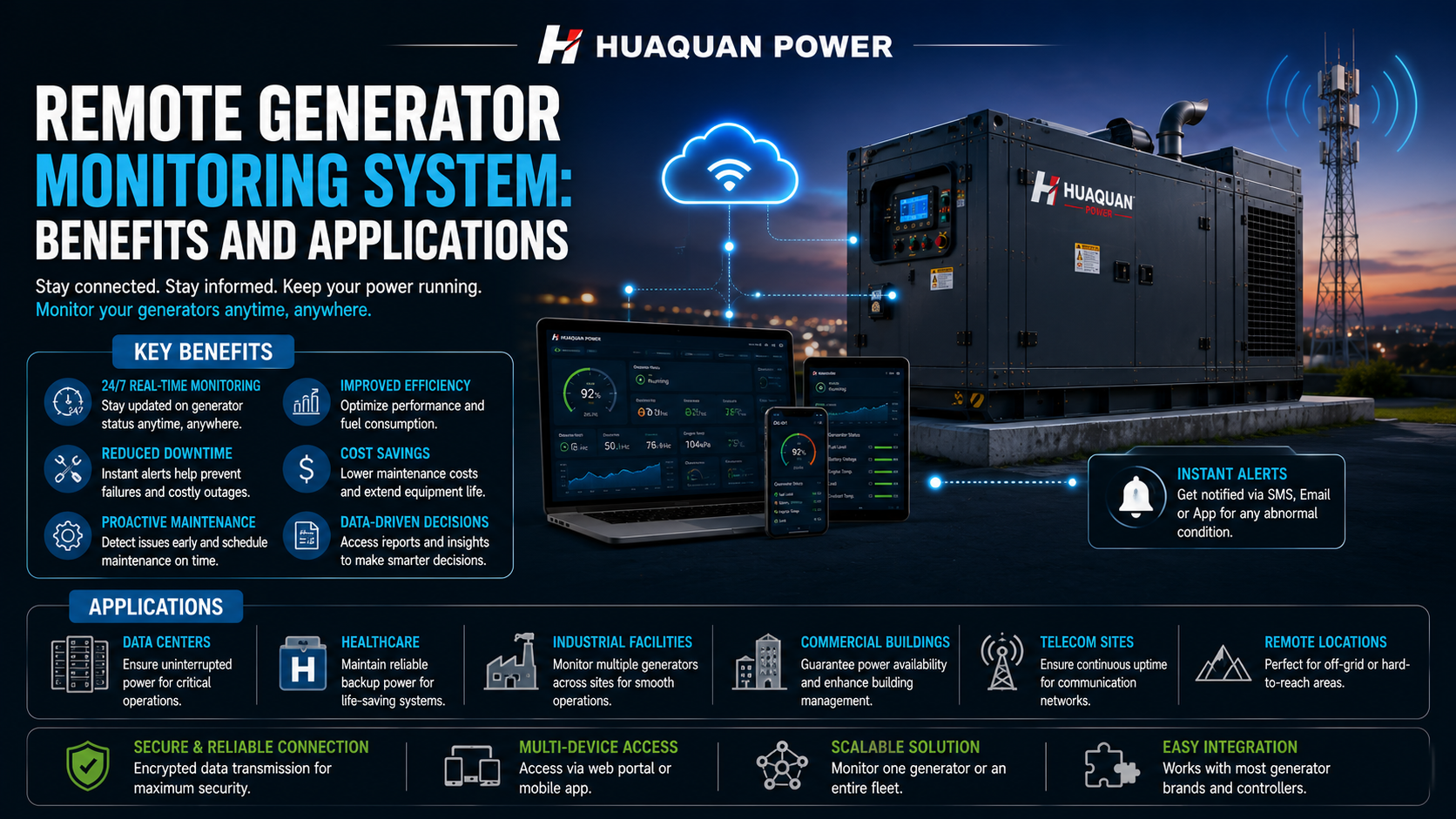
A remote generator monitoring system is a straightforward solution that monitors the current status of the Generators and collects all the data. When connected through the internet, it transmits the data to the remote users and provides real-time information about the generator.
Typically, a remote generator monitoring system calculates the information about the following aspects:
- Engine status
- Generator output
- Fuel levels
- Battery health
- Operating hours
- Maintenance schedules
- Alarm conditions
- Fault codes
- GPS location (for mobile generators)
Modern systems even have proper display systems and provide a detailed setup.
Traditional Monitoring Vs. Remote Monitoring
Nowadays, the system is distributed. You don’t have to rely only on one communication tower. An enterprise can have multiple offices, factories, and locations where generators are installed.
For example:
- Telecom tower networks
- Construction companies
- Hospitals
- Data centers
- Mining companies
- Utility companies
- Rental generator fleets
- Agricultural operations
In such a case, manual or traditional monitoring is nothing less than a headache. It presents more challenges and creates more problems. Here is the comparison.
| Feature | Traditional Generator Monitoring | Modern Remote Monitoring |
| Monitoring Method | Manual on-site inspections | Remote monitoring via cloud or mobile app |
| Data Availability | Periodic/manual readings | Live operational data |
| Alarm Notifications | Manual discovery during inspections | Instant SMS, email, or app alerts |
| Maintenance Strategy | Time-based preventive maintenance | Condition-based maintenance |
| Fault Diagnosis | On-site troubleshooting required | Remote diagnostics with fault codes |
| Fuel Monitoring | Manual tank checks | Real-time fuel level monitoring |
| Fleet Management | Individual generator management | Centralized monitoring of multiple generators |
| Data Storage | Paper logs or spreadsheets | Cloud-based historical records |
| User Access | Local control panel only | Web portal and mobile applications |
| Operational Efficiency | Low | High |
| Downtime Risk | High due to delayed fault detection | Lower through real-time alerts |
| Best Suited For | Small facilities with one generator | Commercial buildings and medium-sized businesses |
How Remote Generator Monitoring Systems Work
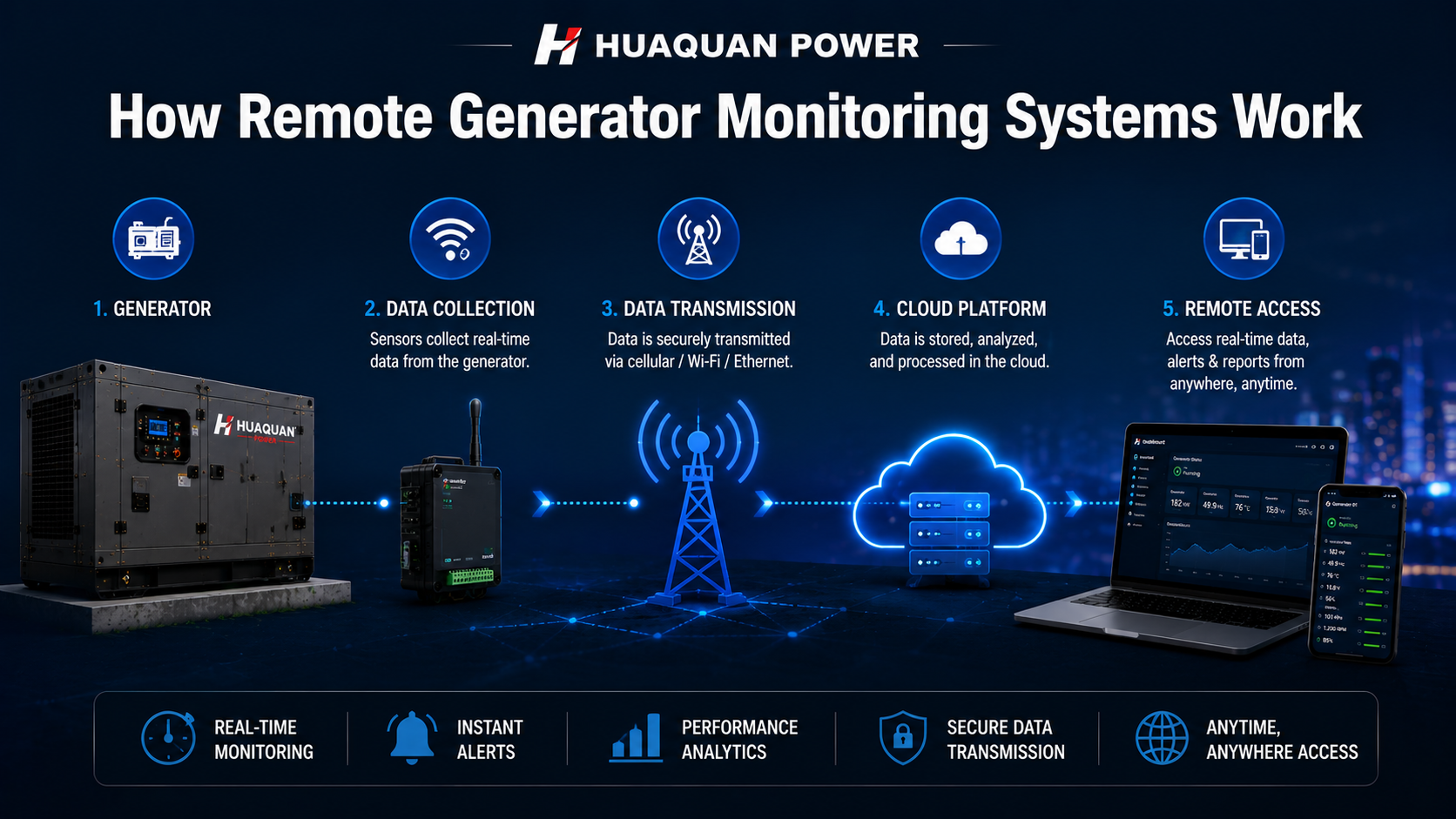
Are you wondering how the monitoring system exactly works? There are a few steps to deeply understand the remote monitoring system. Let’s get to know them together.
Step 1: Data Collection
The very first step is data collection. The monitoring system collects all the data related to the following aspects:
- Oil pressure
- Coolant temperature
- Fuel level
- Battery voltage
- Engine RPM
- Output voltage
- Frequency
- Current
- Power factor
- Active power
- Reactive power
- Ambient temperature
Later on, this data is transmitted through the internet or cloud systems to the users for analysis and responses.
Step 2: Generator Controller Monitoring
A generator controller is like the central nervous system. It processes the collected data, analyzes it, and helps transmit it to the users.
Here are a few more monitoring tasks a generator controller can do:
- Automatic start commands
- Shutdown conditions
- Engine protection
- Electrical protection
- Load demand
- Event history
Step 3: Communication Module
The communication module is the most important component regarding the transfer of data. It helps transmit data through the following technologies.
- Cellular (4G/5G) is often used for remote sites.
- Ethernet is the best option with proper wiring for industrial facilities.
- Wi-Fi helps transmit data through commercial buildings.
- Satellite is ideal for mining and offshore sites where the internet supply is less likely to be available.
- Radio offers better transmission support for utility networks.
- A fiber optic system is ideal for large campuses.
Step 4: Cloud Monitoring Platform
There comes the cloud monitoring system where the data is stored, analyzed, and monitored. Users can log into their accounts and know the following aspects.
- Real-time dashboards
- Historical reports
- Alarm management
- Maintenance scheduling
- Trend analysis
- User permissions
- Fleet management
- Mobile applications
Step 5: Automatic Notifications
When abnormal conditions occur in the system, an instant alert goes out. The methods of the alerts are here.
- SMS
- Mobile app notifications
- Voice calls
- SCADA integration
- Control room alarms
These systems alert the users and help them understand and take control of the situation.
Types of Data That Can Be Monitored
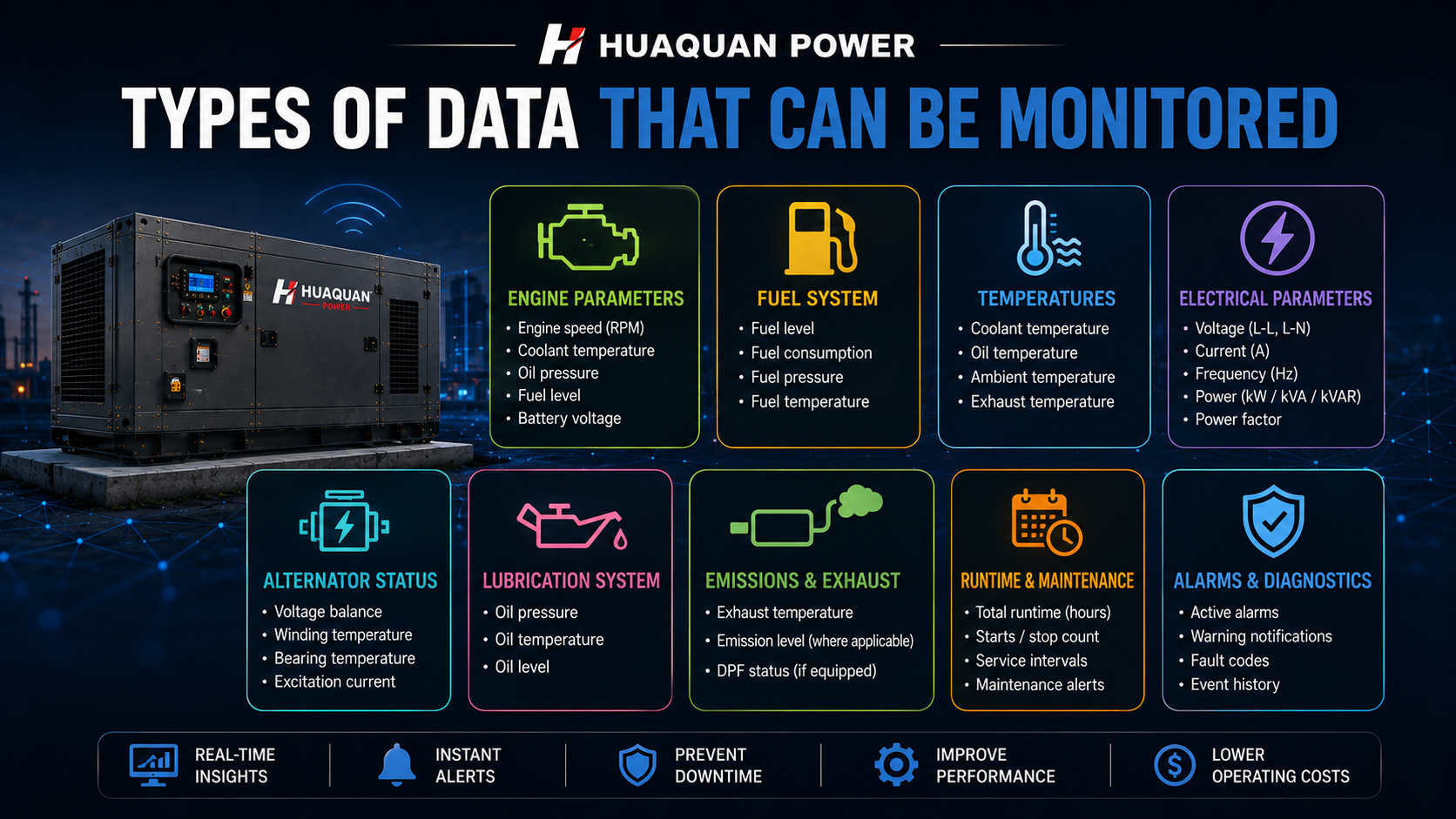
You might want to know what data you can analyze and get details about. It is technically essential as you can better decide if you could get the right data. Here are a few data aspects regarding the monitoring systems.
Engine Performance
Engine performance gives an idea about the overall running conditions. It also predicts upcoming failures and maintenance. Here are a few aspects checked through this process.
- Engine speed
- Oil pressure
- Coolant temperature
- Fuel consumption
- Fuel pressure
- Intake temperature
- Engine hours
- Start attempts
Electrical Performance
Deranged electrical performance can also cause the issues. You should know and understand the overall conditions and monitoring status of the following aspects.
- Voltage
- Current
- Frequency
- Power output
- Load percentage
- Power factor
- Harmonic distortion
- Generator efficiency
Fuel System
One of the most critical systems is the fuel system. Without fuel supply, the generator won’t perform for a single second. Fuel monitoring helps reduce downtime and optimize the running conditions.
Typical fuel monitoring includes:
- Tank level
- Fuel usage
- Estimated runtime
- Refueling history
- Fuel theft detection
- Low fuel alarms
Battery Monitoring
Battery failure is the major generator issue. If you get all the alerts about the battery status, it helps take early measures in case of battery failures. There are a few necessary aspects of the batteries that a monitoring system can help with:
- Battery voltage
- Charging current
- Battery temperature
- Charging status
- Cranking performance
- Battery health
Operating Status
Is your system stopped or running? The operating status of the system helps define the current state and provides detailed information about real-time monitoring of the operating conditions. Here are a few conditions to know:
- Running
- Stopped
- Standby
- Warm-up
- Cool-down
- Maintenance mode
- Emergency shutdown
- Fault condition
Key Benefits of Remote Generator Monitoring
Remote generator monitoring systems help with various conditions and offer several benefits listed below.
Real-Time Equipment Visibility
There is no more guessing about conditions. Users can better understand the real-time equipment status and know the following aspects.
- Generator availability
- Current operating condition
- Active alarms
- Running hours
- Fuel remaining
- Electrical output
It makes the generator more visible and transparent in all conditions.
Faster Fault Detection
Do you know the best thing about remote monitoring systems? They highlight the issue before you go through the inspection. The automated alert system warns users of early failures if you don’t manage the issues.
Here are a few issues that are almost instantly detected.
- Low oil pressure
- Engine overheating
- Battery failure
- Overload
- Low fuel
- Emergency shutdown
- Sensor failures
Reduced Maintenance Costs
Remote monitoring gives an idea about upcoming failures. Instead of an issue snowballing, you can catch the problem in the early stages.
It leads to reduced maintenance and more benefits, such as:
- Fewer unnecessary inspections
- Reduced travel expenses
- Better technician scheduling
- Optimized spare parts inventory
- Longer equipment life
Improved Generator Reliability
Generators are tools of emergency. Standby generators are especially there to help in emergency conditions. Understanding the real-time status helps improve generator visibility.
Users can better predict:
- Successful weekly exercise tests
- Battery charging status
- Fuel availability
- Cooling system health
- Engine operating conditions
Improved Compliance and Reporting
Many generator systems have to report all the data and collect the monitoring and inspection info. A remote monitoring system already collects all the data and stores it in cloud systems. Therefore, it is better for compliance and reporting with the following benefits.
- Automatically logs generator operating hours
- Stores maintenance and service history
- Records alarm events and fault codes
- Generates downloadable performance reports
- Simplifies regulatory audits and inspections
- Reduces human error in recordkeeping
Better Operational Efficiency
Since you are getting alerts and monitoring the system every single day, it improves the overall efficiency of the system. Here is the list of benefits that lead to better operational efficiency.
- Optimize generator loading to improve fuel efficiency
- Reduce unnecessary site visits
- Minimize generator idle time
- Schedule maintenance during planned downtime
- Improve technician productivity
Applications of Remote Generator Monitoring Systems
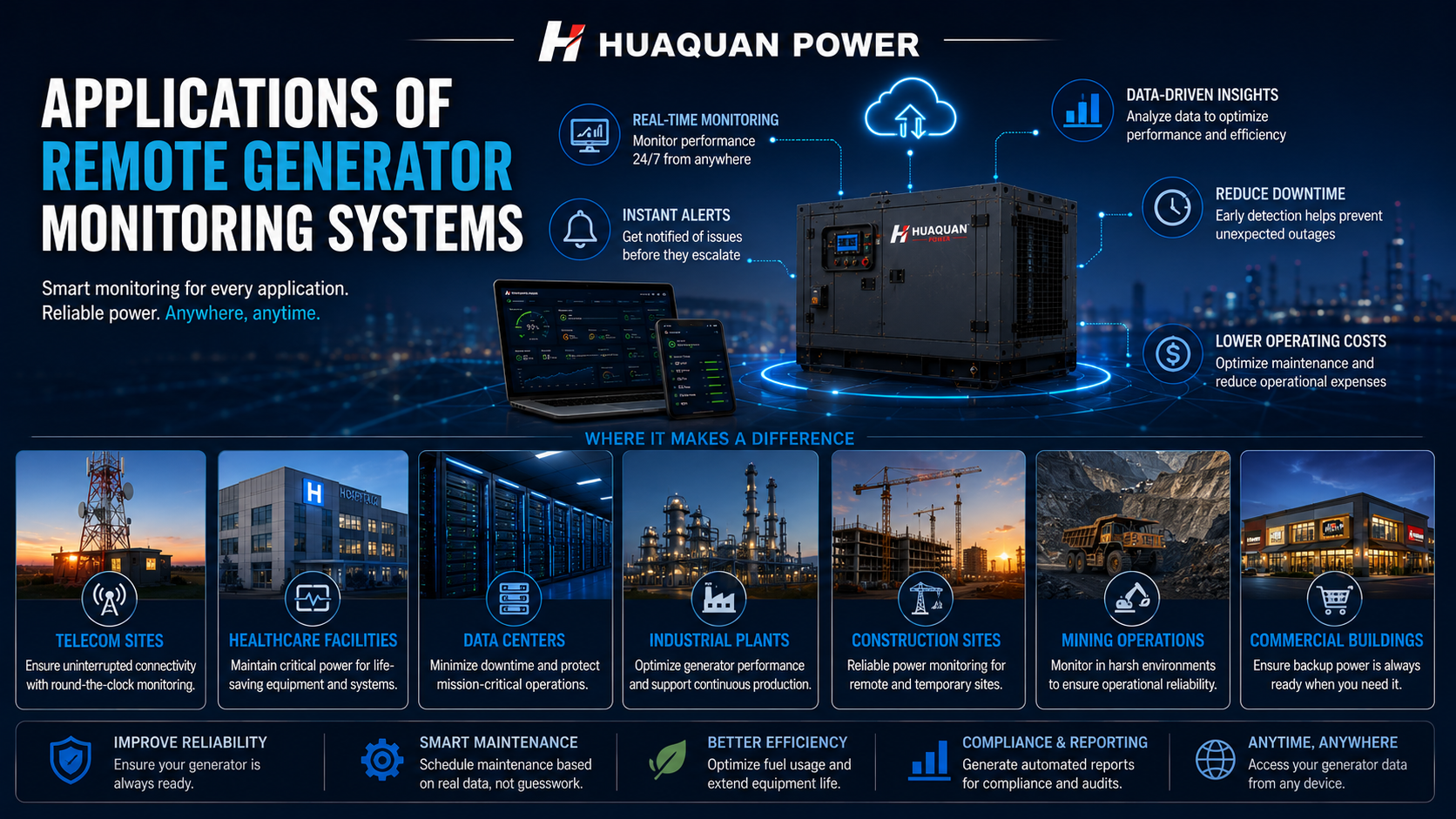
Remote generator monitoring systems have been very efficient for all the places where generators are typically installed. Let’s explore a few examples here.
Hospitals and Healthcare Facilities
Healthcare facilities require the availability of generators 24/7. A single minute power cut can cost patients’ lives. Radiology, operation theatres, and many critical machines are running in such spaces.
The priorities of healthcare facilities for monitoring systems are:
- Automatic transfer switch (ATS) status
- Battery condition
- Fuel availability
- Generator exercise tests
- Engine health
- Alarm notifications
Data Centres
Data centers also require the instant availability of power for extended periods. Thanks to a remote generator monitoring system that helps:
- Verify generator readiness
- Monitor load during outages
- Track fuel consumption
- Review generator performance after power events
- Coordinate with UPS systems
Telecommunications
Telecommunication towers are often located in distant places where accessibility is not easy. Users have to monitor the system and minimize downtime. That’s where remote generator monitoring systems help:
- Check generator availability
- Monitor battery charging
- Track fuel levels
- Detect communication failures
- Schedule maintenance efficiently
Construction Sites
Construction Sites have their own portable generators that stay with them at different locations. A remote monitoring system can give an idea about various aspects, such as:
- Track equipment location using GPS
- Monitor operating hours
- Detect unauthorized use
- Schedule servicing
- Optimize equipment utilization
Mining Operations
Mines are always hundreds of miles away. Generators experience more harsh environmental conditions compared to other areas. A monitoring system can also help here with the following monitoring aspects.
- Generator loading
- Fuel consumption
- Cooling system performance
- Engine protection alarms
- Equipment utilization
Agriculture
Agricultural lands are often miles away from the city. They also require generators for irrigation purposes. A monitoring system can help with the following aspects.
- Irrigation systems
- Grain storage
- Livestock facilities
- Greenhouses
- Dairy operations
Utility Companies
Utility companies often use the monitoring system to assess system performance and monitor real-time errors.
Remote monitoring through the generator systems can improve:
- Fleet deployment
- Fuel logistics
- Generator readiness
- Fault response
- Equipment utilization
Rental Generator Companies
In recent years, rental generator companies have adopted the remote monitoring system for the following purposes.
- Track customer usage
- Monitor maintenance requirements
- Prevent unauthorized operation
- Detect overload conditions
FAQs
- Can remote monitoring be added to an existing generator?
Yes. Remote monitoring systems are compatible with new or old generator systems. Make sure you have the compatible modules and systems.
- Does remote monitoring require an internet connection?
Yes. You have to transfer the real-time information to distant users. It is possible with different communication systems, such as cellular, Ethernet, Wi-Fi, or satellite communication.
- Can one dashboard monitor generators from multiple locations?
Yes. There are specialized units called fleet management platforms. They help monitor generators from multiple locations.
- Does remote monitoring improve generator reliability?
A remote monitoring system predicts failures and helps maintain the system effectively. It also ensures the availability of the system during emergency cases. Therefore, it improves the reliability of generator systems.
- Is remote monitoring suitable for portable generators?
Yes, portable generators can enjoy GPS tracking, operating hour monitoring, maintenance scheduling, and fuel management.
- Can remote monitoring reduce maintenance costs?
Since the remote monitoring system predicts failures earlier and avoids the snowballing of issues, they help reduce failure costs and improve overall efficiency.
- What types of alarms can be monitored remotely?
There are different types of alarms, such as low oil pressure, high coolant temperature, low fuel level, battery faults, overload conditions, communication failures, and emergency shutdowns.
- How secure are remote monitoring systems?
Modern remote monitoring systems have encrypted communication, user authentication, role-based access, and secure firmware updates. Overall security depends on the configuration and monitoring of the system.
Conclusion
Remote generator monitoring systems are very helpful in all cases. While sitting miles away, you know the status of your generators and receive alerts about any emergency situations. You can even control the current conditions of the generators and enjoy a seamless transition of energy. Make sure you buy a compatible and high-end monitoring system that alerts you instantly.
If you are looking for the premium range of diesel, gas, or hybrid generators, look no further. Huaquan Power is always at your door to help you with generator solutions. Our generators are top-notch and deliver exceptional performance in all seasons. Contact our experts right away!