Qual é a classificação máxima de carga contínua para geradores a diesel e como ela é determinada?
Understanding the maximum continuous load rating for diesel Geradores is fundamental to proper power system design and reliable operation across all types of installations. Huaquan Power manufactures diesel generator sets across a wide power range from 20 kVA para 3000 kVA, and each unit carries specific continuous load ratings that operators must respect for safe and reliable operation. Consequentemente, exceeding these ratings leads to accelerated engine wear, thermal damage to alternator windings, and significantly reduced equipment lifespan that increases total cost of ownership dramatically. Além disso, proper understanding of continuous load ratings prevents the common mistake of under-sizing generators that results in chronic overloading, or over-sizing that wastes capital investment and increases fuel consumption per kilowatt-hour generated.
Power Rating Classifications and Definitions
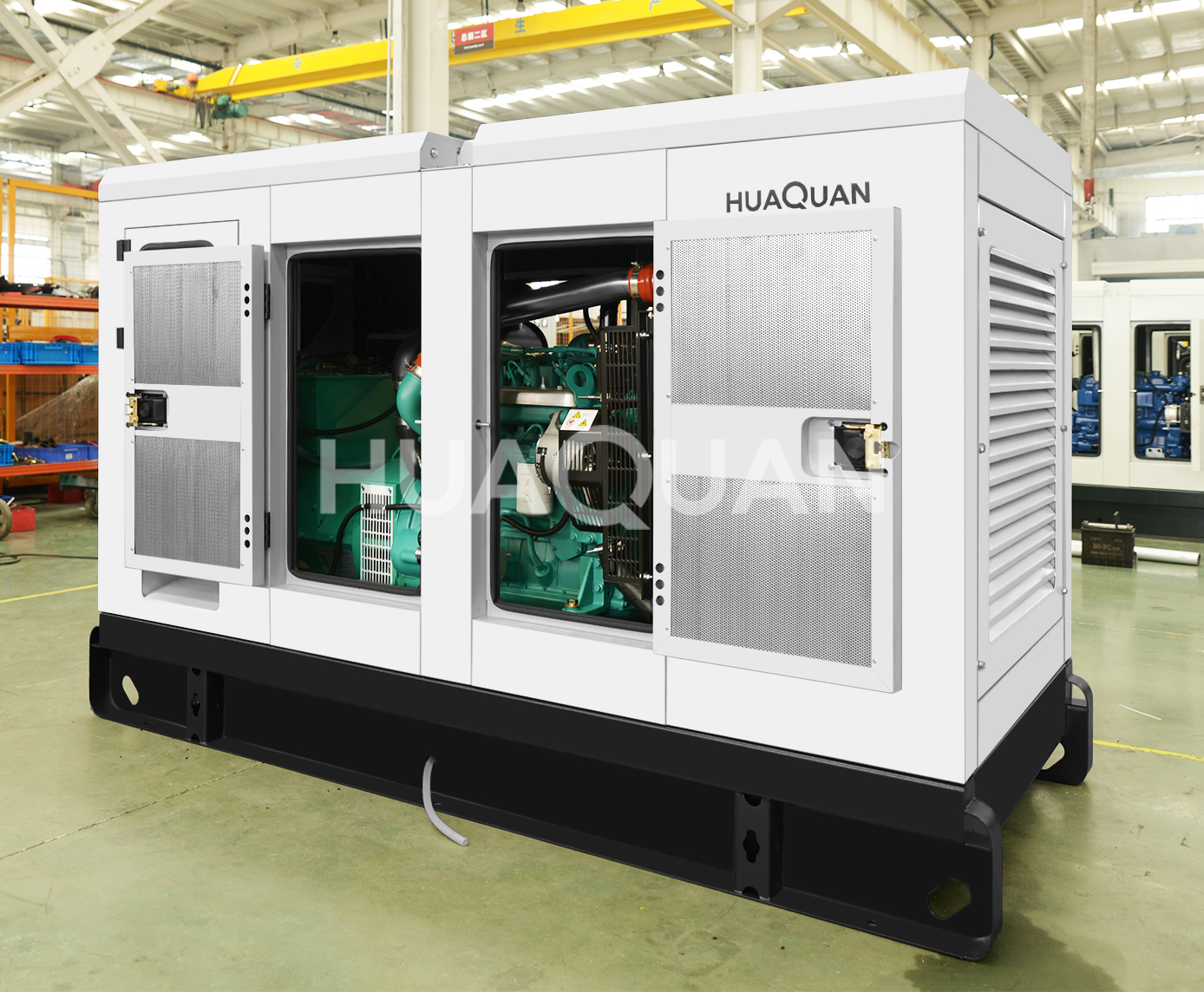
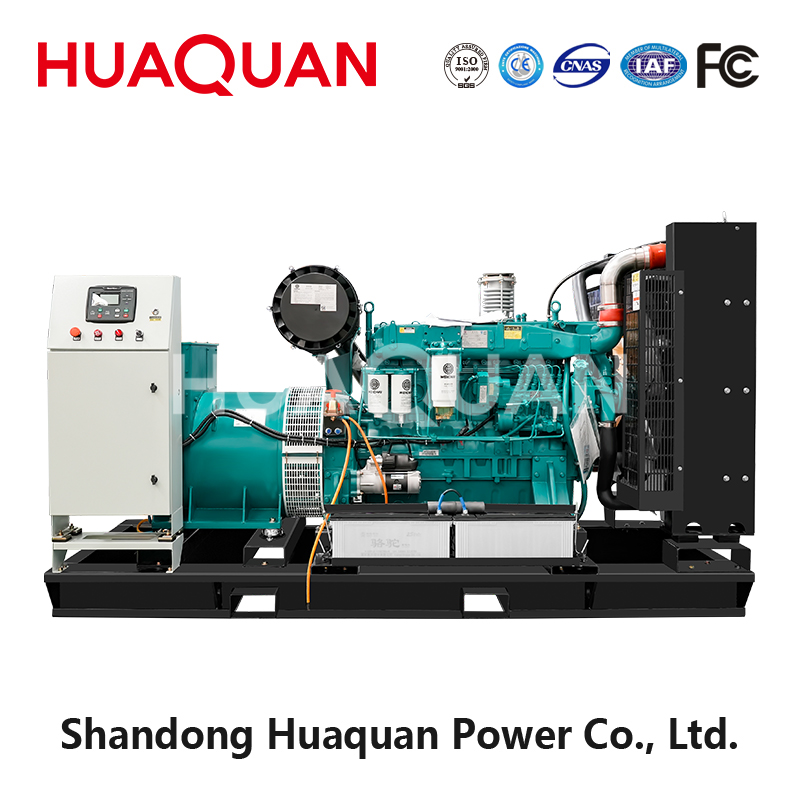
Diesel generator power ratings follow internationally recognized standards that define how much load a unit can sustain under different operating conditions and duty cycles. Especificamente, the three primary rating classes are Emergency Standby Power (PES), Poder Principal (PRP), and Continuous Power (POLICIAL). Each classification assumes different duty cycles, load patterns, and ambient conditions that affect the generator’s ability to deliver power reliably. Huaquan Power labels every generator set with its applicable rating class to help customers select the correct unit for their specific application, and the company provides detailed application guidance to match rating classes with actual operating profiles.
| Rating Class | Designation | Maximum Load | Annual Operating Hours | Capacidade de sobrecarga |
|---|---|---|---|---|
| Emergency Standby | PES | 100% de avaliado (limited) | ≤200 hours/year | 110% para 1 hora |
| Poder Principal | PRP | 100% de avaliado (variável) | Ilimitado | 110% para 1 hora por 12h |
| Potência Contínua | POLICIAL | 100% de avaliado (constante) | Ilimitado | Nenhum permitido |
| Limited Time Running | LTP | 100% de avaliado | ≤500 hours/year | 110% para 1 hora |
| Base Load | ISO 8528 | 100% contínuo | 8760 horas/ano | Nenhum permitido |
| Mission Critical | ISO 8528 | 100% with defined maintenance | Ilimitado | 110% para 1 hour per 24h |
Importante, Prime Power ratings assume a variable load pattern with an average load factor not exceeding 70% of the prime rating over any 24-hour period. Adicionalmente, the generator must not exceed 100% of the prime rating for more than 10% of the total operating hours within that same period. Huaquan Power application engineers carefully analyze customer load profiles to determine whether a Prime or Continuous rating better matches the actual operating conditions at each installation. This analysis prevents both the risk of chronic overloading and the waste of purchasing excessive capacity that operates below its economic efficiency point.
Factors Affecting Continuous Load Capacity
Multiple environmental and installation factors reduce the maximum continuous load that a diesel generator can deliver reliably at any specific site. Especificamente, high ambient temperature, altitude above sea level, humidity extremes, and poor ventilation all contribute to derating the generator output from its nameplate rating. Portanto, engineers must account for all applicable derating factors during the sizing process to ensure the generator meets site requirements under worst-case conditions throughout the year. Huaquan Power provides comprehensive derating calculators that combine all applicable factors to determine the actual available continuous power at each installation location.
| Fator de redução | Doença | Power Reduction | Efeito Cumulativo | Método de Mitigação |
|---|---|---|---|---|
| Temperatura Ambiente | Each °C above 40°C | -1% of rated power | -10% at 50°C | Enhanced cooling system |
| Altitude | Each 100m above 1000m | -1% of rated power | -10% at 2000m | Larger engine displacement |
| Umidade | Abaixo 30% RH | -2% perda de energia | Combined with heat | Intake air treatment |
| Qualidade do Combustível | Cetane number below 45 | -3% perda de energia | Additive treatment | Fuel conditioning system |
| Intake Restriction | Each 25mm H2O | -1% perda de energia | Filter maintenance | Low-restriction air filter |
Além disso, Huaquan Power generators undergo factory testing at standard conditions of 25°C ambient temperature and 100 meters altitude to establish the nameplate ratings. Customers operating in extreme climates receive detailed derating calculations that account for all applicable site-specific factors. This engineering rigor ensures that the generator delivers its promised continuous power at the actual installation site under worst-case ambient conditions, not just under ideal laboratory conditions that may never exist at the real-world installation.
The interaction between multiple derating factors is not always simply additive. Por exemplo, high altitude combined with high ambient temperature creates a compounded effect that reduces engine power more than the sum of individual factors would suggest. Huaquan Power derating models use empirically derived correction curves from extensive engine testing that accurately predict the combined derating effect, ensuring that generators sized using these calculations deliver full rated power at the actual installation site under all weather conditions experienced throughout the year.
Cooling System Effects on Continuous Rating
The cooling system directly determines how much continuous load a diesel generator can sustain without thermal damage to the engine or alternator. Especificamente, the radiator must dissipate all heat generated by the engine combustion process, alternator copper and iron losses, and mechanical friction from bearings and auxiliary components. Consequentemente, any cooling system deficiency immediately reduces the safe continuous operating limit below the nameplate rating. Huaquan Power designs cooling systems with a minimum 10% margin above the maximum expected heat rejection at full continuous load to provide thermal headroom for degraded operating conditions.
| Cooling Component | Função | Failure Impact | Intervalo de manutenção | Huaquan Power Standard |
|---|---|---|---|---|
| Radiator Core | Heat dissipation to air | +5°C coolant per 10% fouling | Annual cleaning | Copper-brass, oversized 15% |
| Coolant Pump | Circulate coolant through engine | Pontos quentes localizados | 5000-hour inspection | Centrifugal, sealed bearing |
| Termostato | Regulate operating temperature | Overcooling or overheating | Substitua cada 2 anos | 192°F (89°C) opening |
| Fan and Clutch | Airflow through radiator | Reduced heat rejection capacity | Verificação dos rolamentos anualmente | Viscous clutch, oversized 10% |
| Coolant Mixture | Heat transfer and corrosion protection | Ebulição, congelando, cavitation | Test every 6 meses | 50/50 glycol-distilled water |
Além disso, Huaquan Power offers optional high-ambient cooling packages for installations in extremely hot climates where standard cooling systems cannot maintain adequate heat rejection. These packages include oversized radiators with 25-30% additional cooling surface area, high-capacity fan assemblies, and sometimes supplemental oil coolers that restore the full continuous rating even at ambient temperatures exceeding 50°C. Além disso, the cooling system design accounts for the reduced air density at high altitude that reduces the heat rejection capacity of the radiator, ensuring that cooling performance remains adequate across all site conditions.
Risks of Exceeding Continuous Load Ratings
Operating a diesel generator above its continuous load rating for extended periods produces multiple degradation mechanisms that permanently reduce equipment life and increase maintenance costs. Especificamente, excessive load causes elevated exhaust gas temperatures, accelerated cylinder bore wear, reduced oil life due to thermal breakdown, and increased thermal stress on alternator windings. Portanto, any sustained overload represents a direct threat to generator reliability and operating costs that far exceeds the apparent benefit of extracting additional power from an undersized unit.
| Overload Level | Maximum Duration | Exhaust Temperature Rise | Oil Life Reduction | Cumulative Engine Life Impact |
|---|---|---|---|---|
| 100% (avaliado) | Ilimitado | Linha de base (550°C) | Padrão 250 horas | Design life achieved |
| 105% | 2 hours maximum | +15°C | -20% oil life | 5% redução |
| 110% | 1 hour maximum | +30°C | -40% oil life | 15% redução |
| 115% | 30 minutes maximum | +50°C | -60% oil life | 30% redução |
| 125% | Somente emergência | +80°C | Critical degradation | Piston damage likely |
Adicionalmente, Huaquan Power monitoring systems include continuous load tracking that alerts operators when the average load factor approaches the rating limit for sustained periods. Importante, these systems also log cumulative overload exposure time, enabling predictive maintenance scheduling based on actual operating stress rather than calendar time alone. This data-driven maintenance approach optimizes maintenance intervals to the actual condition of the engine, reducing unnecessary maintenance during light-duty operation while increasing maintenance frequency when overload conditions have accelerated component wear.
Generator Sizing Methodology
Proper generator sizing requires analyzing the connected load profile, starting requirements of large motors, and acceptable voltage dip during motor starting events simultaneously. Consequentemente, a generator sized solely on steady-state continuous load may fail to start large motors or may produce unacceptable voltage dips that trip sensitive electronic equipment. Huaquan Power sizing methodology evaluates all three factors and selects the smallest generator size that meets all criteria simultaneously, optimizing the balance between capital cost and operating performance.
| Sizing Step | Método de cálculo | Key Parameter | Margem de segurança | Tools Used |
|---|---|---|---|---|
| Continuous Load | Sum all running loads | Total kW demand | ×1.1 minimum | Load schedule analysis |
| Motor Starting | Motor kW × kVA multiplier | Peak kVA demand | Queda de tensão <15% | Motor start analysis software |
| Nonlinear Loads | Harmonic derating factor | kVA derating | ×1.25 for VFD loads | Harmonic spectrum analysis |
| Ambient Derating | Site conditions factor | Effective available kW | Based on actual site | Derating calculator |
| Future Expansion | Growth allowance | Additional capacity | 10-20% typical | Project planning data |
Além disso, Huaquan Power provides free sizing consultation services that analyze customer load profiles using proprietary simulation software. This service ensures that customers purchase the most cost-effective generator size while maintaining adequate capacity margins for reliable operation under all conditions including motor starting, harmonic loads from variable frequency drives, and future load growth that the facility may experience over the 20 para 30 year service life of the generator set.
Perguntas frequentes Seção
1º trimestre: Can a standby-rated generator operate continuously during an extended outage?
Tecnicamente, a standby-rated generator can operate continuously during an extended outage, but only at a significantly reduced load level to prevent thermal damage. Especificamente, the continuous safe operating load for a standby unit equals approximately 70-80% of its standby rating. Operating at full standby rating continuously will overheat the engine, accelerate wear on all major components, and void the manufacturer warranty. Portanto, Huaquan Power recommends sizing standby generators at 120-150% of the actual continuous load requirement to allow safe unlimited operation during extended emergency power outages.
2º trimestre: How does the load factor affect generator maintenance intervals?
Higher load factors increase engine stress and accelerate component wear rates, which requires more frequent maintenance intervals to prevent premature failures. Especificamente, operating at 90-100% load factor doubles the maintenance frequency compared to 60-70% load factor operation for the same engine model. Huaquan Power maintenance schedules include load-factor-adjusted intervals that automatically increase oil changes, substituições de filtros, and valve adjustments proportionally to the actual operating stress experienced by the engine over each maintenance period.
3º trimestre: What is the difference between prime power and continuous power ratings?
The key difference lies in the load pattern assumption inherent in each rating class. Prime Power assumes a variable load with an average of 70% of the prime rating over any 24-hour period, while Continuous Power assumes a constant, non-variable load at exactly 100% of the continuous rating at all times. Consequentemente, a Prime-rated generator can handle load peaks above its average, while a Continuous-rated generator provides full output without any overload reserve margin. Huaquan Power application engineers help customers determine which rating class matches their actual load profile and operating requirements.
4º trimestre: How much can I safely overload a prime-rated generator?
ISO 8528 standards permit a 10% overload for one hour within any 12-hour operating period for prime-rated generators under standard ambient conditions. No entanto, this overload allowance does not extend the continuous operating limit beyond the prime rating. Portanto, if your normal continuous load already approaches 100% of the prime rating, you have essentially no overload margin remaining. Huaquan Power controllers can be programmed to limit overload duration automatically and log each overload event for maintenance tracking purposes.
Q5: Does altitude affect the continuous rating the same way as temperature?
Altitude reduces continuous power output at approximately the same nominal rate as temperature, roughly 1% por 100 meters of elevation above 1000 metros. No entanto, altitude primarily affects engine power due to thinner air reducing the oxygen available for combustion, while high temperature affects both engine power and alternator cooling capacity simultaneously. Portanto, high-altitude installations in hot climates often require combined engine derating plus enhanced cooling packages. Huaquan Power provides combined altitude and temperature derating charts that account for both factors simultaneously.
- Always select the correct power rating class based on your actual load profile and annual operating hours
- Apply all applicable derating factors including temperature, altitude, umidade, and fuel quality during generator sizing
- Never exceed continuous load ratings without understanding the cumulative impact on engine life and maintenance costs
Entre em contato com a Huaquan Power for professional generator sizing analysis, derating calculations, and continuous load rating verification to ensure optimal performance in your specific operating environment.