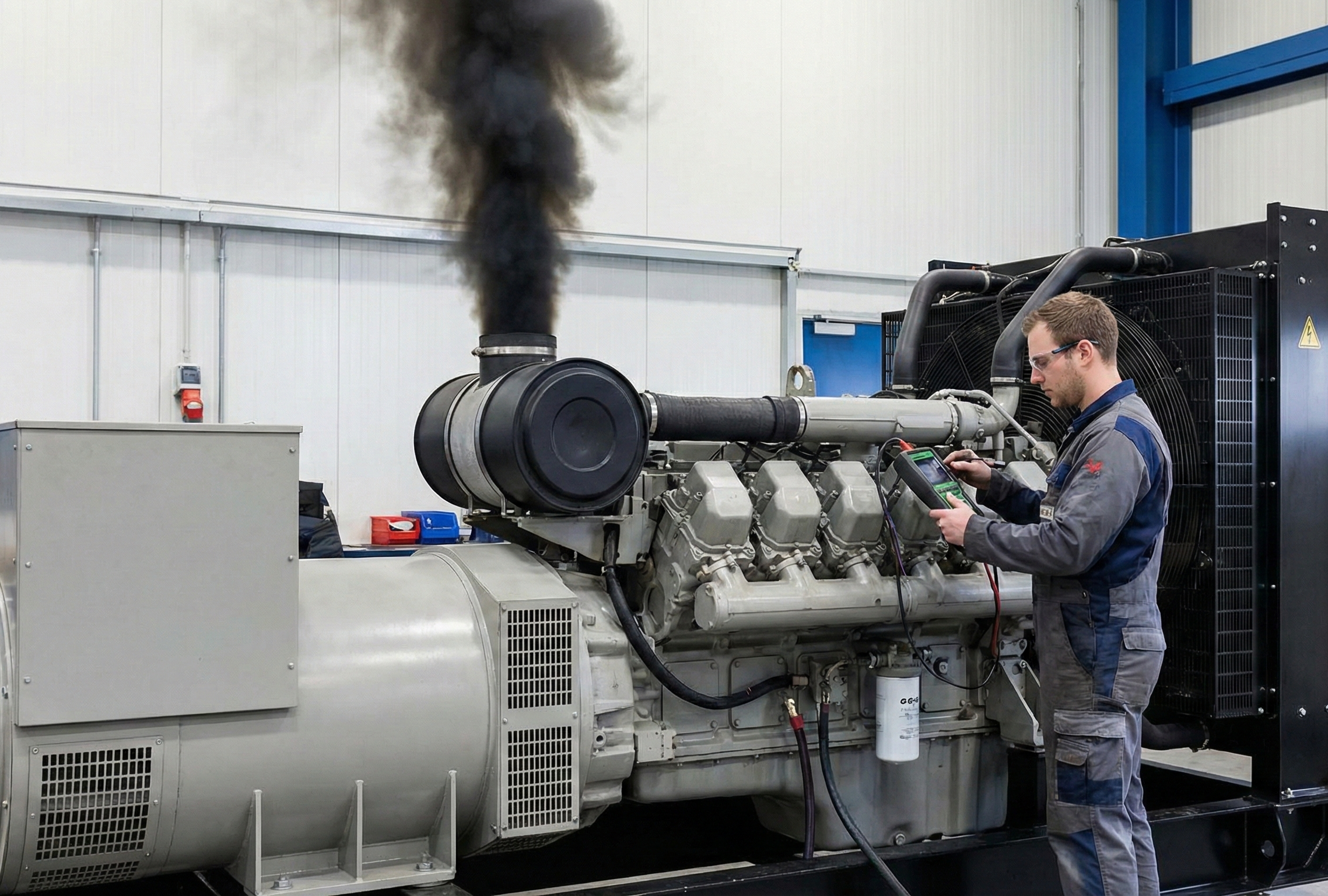
Have you ever seen black smoke in a diesel engine generator exhaust? It is never a good sign! Although diesel engines produce smoke under heavy loads. Usually, jet black smoke refers to incomplete combustion that occurs due to an imbalance between air and fuel.
What if you ignore this issue? Em última análise, it will reduce overall efficiency, increase fuel consumption, and cause long term engine damage. Thus, it’s better if you know the air-to-fuel ratio and how it affects the combustion process. With this strategy, you can easily diagnose and fix the problem quickly.
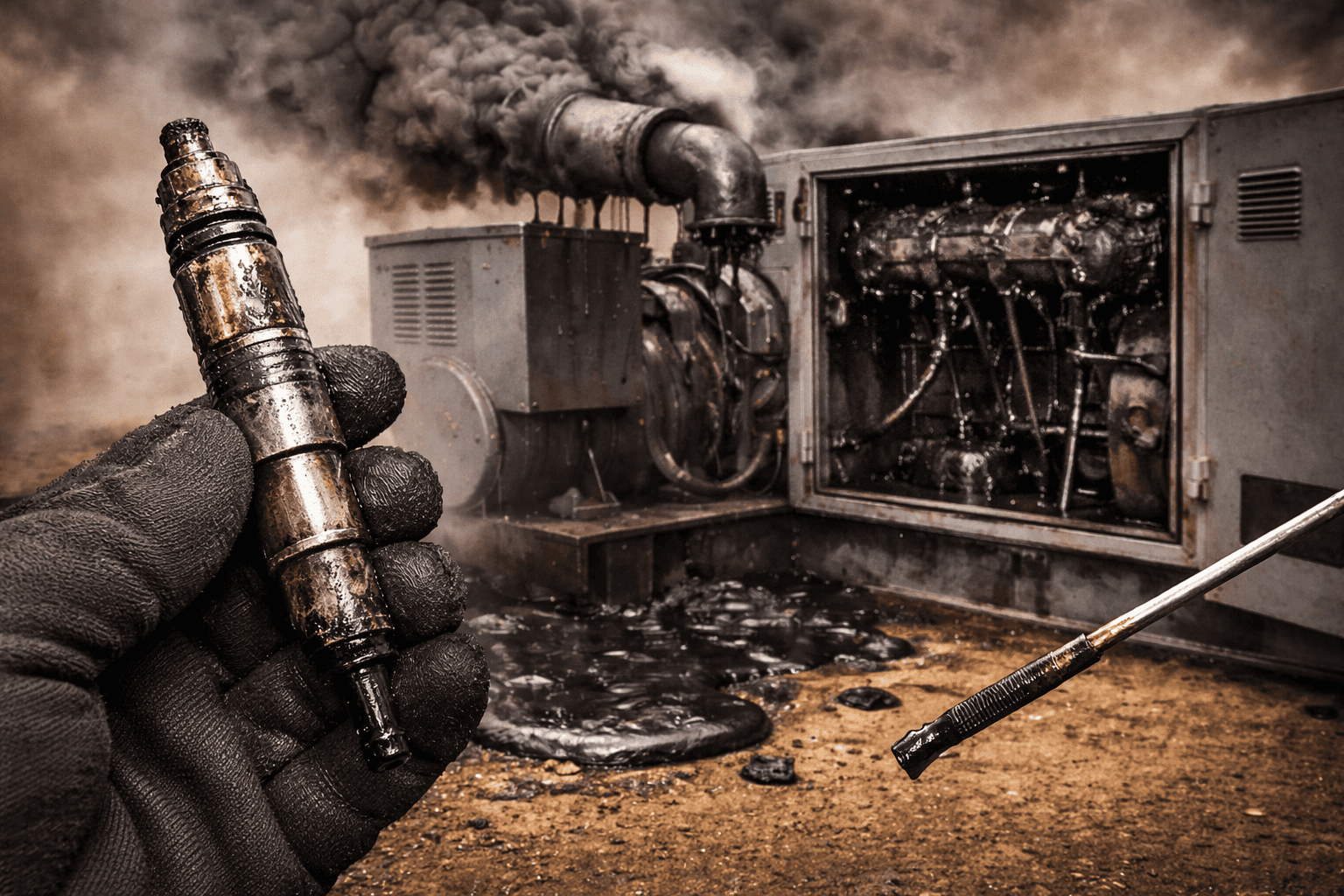
What Does Black Smoke in Diesel Engine Indicate?
Geralmente, black smoke and diesel engine exhaust are related to incomplete fuel combustion.
Manufacturers design diesel engines to easily burn a mixture of injected diesel fuel and compressed air. When new, the process is efficient, and the exhaust is almost invisible. The gases include carbon dioxide, nitrogen, and water vapor.
However, when there is unnecessary, extra fuel available to oxygen, the fuel does not burn completely. The unburned carbon turns into soot, which the engine throws outside the pipe in the form of dark, heavy smoke.
Key Indicators:
- Momentary Smoke: Usually, when the generator starts, there is a short puff of black smoke. This is quite normal under heavy load conditions as the governor adds fuel before the generator turbocharger spins.
- Continuous Smoke: But, when there is continuous black smoke in diesel engines, it indicates improper air restriction or a mechanical fault.
Understanding Air vs. Fuel Ratio in Diesel Geradores
To fix this problem ASAP, make sure you know the perfect balance of air vs fuel ratio.
Unlike gasoline engines available in the market that usually throttle the air to control the engine’s speed, diesel engines are designed for lean burn mechanisms. They consume as much air as possible and automatically control the speed by varying the amount of injected fuel.
- The Ideal Balance: Every engine needs a specific amount of oxygen to burn specific diesel mass droplets.
- The “Rich” Mixture: What if the air supply is restricted due to clogged filters? Or the fuel supply is excessive because of a faulty injector. This ratio is imbalanced. Em última análise, the mixture becomes rich.
- The Result: The extra hydrogen present in the fuel burns first. The leftover carbon atoms cool down and form soot particles. This soot appears as thick black smoke from diesel engines.
Main Causes of Black Smoke in Diesel Engine Generators
Is your generator producing a thick black smoke? The problem certainly is there, as your air-fuel balance is not up to the mark.
1. Dirty or Clogged Air Filter
Clogged air filters are the number one reason; the generator emits black smoke. Usually, whenever the air filter is clogged with dirt, dust, or any debris, the engine gasps for air. The fuel injection consumes more power and diesel than necessary. There is not enough oxygen to burn all the fuel. Em última análise, the engine emits black smoke.
2. Faulty or Worn Fuel Injectors
Make sure to spray diesel on fuel injectors for a microscopic mist atomization.
- Leaking Injectors: If your injector nozzle is leaking. It might dribble the fuel into your cylinder instead of evenly spraying it.
- Poor Atomization: Sometimes, the large fuel droplets take forever to burn. The partial, not fully combustible fuel turns into soot.
- Over-Fueling: If your injector is open for a maximum time, too much diesel quantity enters the engine chamber, immobilizing the available oxygen.
3. Turbocharger Problems
In modern diesel generators, the turbochargers put extra pressure on the air inside the cylinder. If your generator has worn bearings or damaged compressor wheels, the turbocharger will fail soon. Sometimes, there is an unexpected leak inside the intercooler piping, and the engine does not access the compressed air. This creates a massive air or fuel imbalance and thick black smoke in diesel engine emissions.
4. Overloading the Generator
Like every other machine engine, diesel power backup plants have a specific smoke limit. If you push a 100 kW generator to draw 110 kW, the engine will automatically inject the maximum fuel into the cylinders to maintain RPM. However, if for some reason the engine cannot push maximum air to match this fuel quantity. The excessive fuel will turn into black smoke.
5. Incorrect Injection Timing
Sometimes, the fuel injection pump timing is incorrect. Maybe the operator had injected the diesel too late inside the compression stroke. When this occurs, the piston starts moving down and the cylinder pressure drops. Em última análise, the fuel does not have enough time to burn completely before the generators’ exhaust valve opens.
Step-by-Step Diagnosis
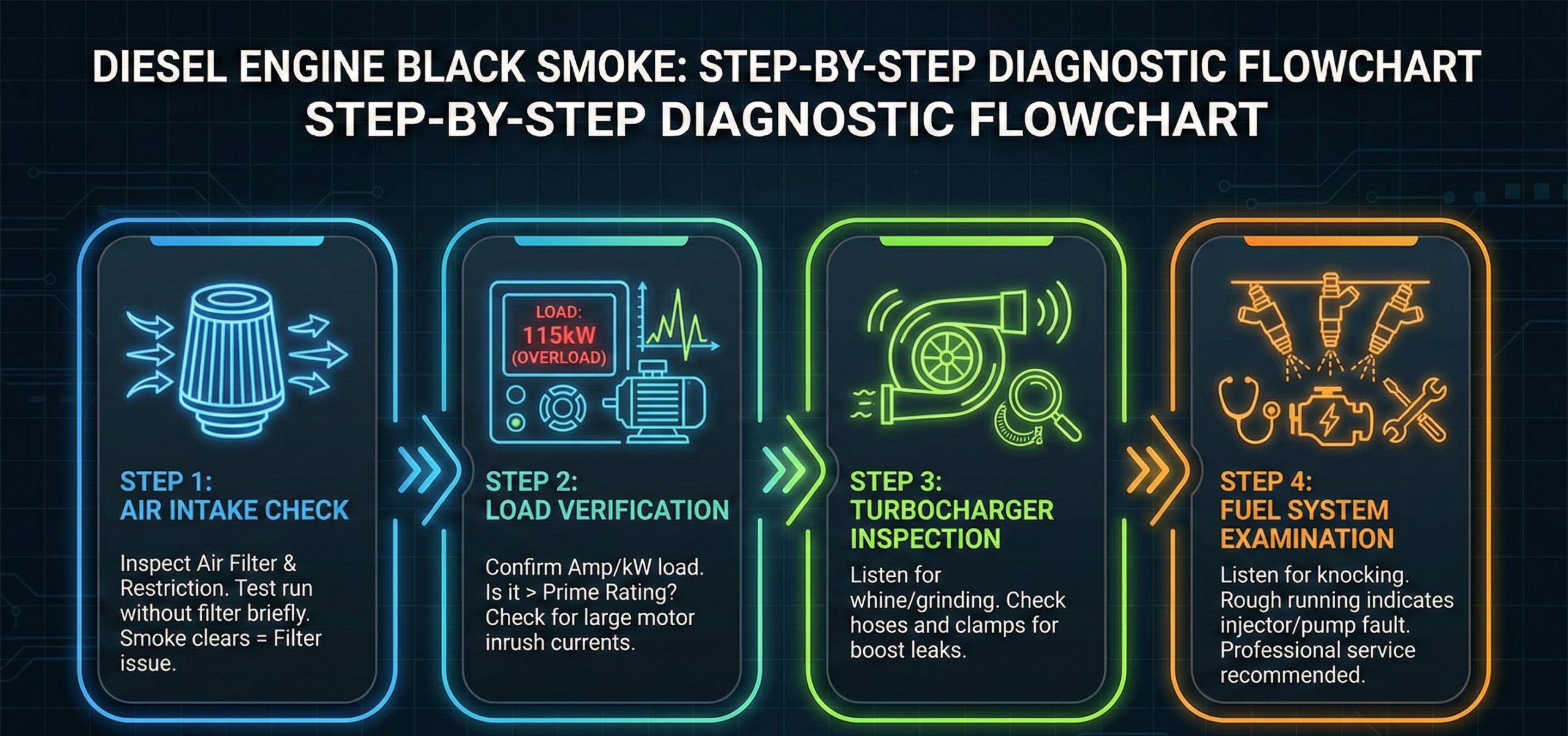
Is your generator not working properly? And the technician has asked you to buy some replacement parts. Follow this diagnostic checklist to find the exact cause of black smoke in the diesel engine.
1: Inspect the Air Intake System
- Always remove the air filter first. Is the air filter grey or black with dust?
- Now, check the air restriction indicator present on the filter housing.
- Run the engine shortly without any filter inside a clean environment. See if the smoke is clear; the filter must be replaced immediately.
2: Verify the Load
- Now, the next step is to check the generators’ amperage and kW output over the control panel.
- Is your generator load exceeding the power prime rating?
- Smoke only emits whenever your large motor starts, or the generator might be undersized according to your power requirements for the specific inrush current.
3: Check the Turbocharger
- Is your engine making any high pitched grinding noises?
- Keep an eye on the rubber hoses connected to the turbo for the maximum intake manifold. If there is a loose clamp or split hose, the pressure will easily slow down as the air from here escapes.
4: Examine Injectors and Pump
- If you want to cross check your injectors or pump, ask a professional to help you out. However, if you hear any knocking sounds, immediately replace the injector.
- If your engine is making rough noises along with smoke, it is likely an injector, fueling or pump issue.
How to Fix Black Smoke Problems
Once you know what is causing black smoke, it’s time to take preventive steps and fix the problem.
| Root Cause | Diagnostic Sign | Solution |
| Clogged Air Filter | Restriction indicator red; dirty element. | Replace the air filter immediately. |
| Overloading | The control panel shows >100% load. | Reduce the connected available electrical load. |
| Turbocharger Leak | Hissing sound. Low boost pressure. | Tighten the engine clamps/replace intercooler hoses. |
| Faulty Injectors | Rough idle. Knocking sounds with heavy smoke. | Service or replace the fuel injectors. |
| Bad Fuel | Smoke starts immediately after the latest refueling. | Drain the tank. Refill it with clean, high cetane diesel. |
| Timing Issue | Low power and the engine overheating. | Adjust fuel pump timing with an expert technician’s help. |
When Black Smoke Is a Serious Warning
Whenever a dirty air filter causes black smoke in diesel engines, it sometimes leads to unimaginable catastrophic damage. Always immediately shut down your generator if you notice any of these listed symptoms.
- Sudden Power Loss: If your engine bogs down or smokes heavily, the turbocharger shaft might be jammed.
- High Exhaust Temperatures: Unburned fuel burning in the exhaust can build up in the turbochargers and the generators’ exhaust valves.
- Oil Consumption: If the smoke color is blue mixed with black shade, the piston rings are broken, which can cause your engine to run away or fail.
Preventing Black Smoke in Diesel Generators
To keep your HuaQuan power generators efficient and clean, follow these maintenance steps.
- Weekly: Check the air filter restriction indicator regularly. Replace the filters before they are completely clogged.
- Monthly: Keep an eye on your generator load at 30 to 50%. And test it on a monthly basis. Do not light the load as it can seal down your piston rings and make the cylinders hot.
- Annually: Annually perform a load bank test. Run your generator at 100% speed to burn off any remaining carbon deposits and avoid wet stacking that accumulated in the engine exhaust system.
- Fuel Care: Use high quality, premium diesel fuel and treat it with biocides to avoid clogging the injectors.
Conclusion: Black Smoke in Diesel Engine
Black smoke and diesel engines are not just an environmental problem. It is a signal that there is an imbalance between the air and fuel, and your generator is going to crash soon.
Whether it’s a simple $20 air filter fix or you are looking for an immediate injector adjustment, save your generator from this black smoke to avoid expensive bills. A clean burning generator is always a reliable one that saves you in the long run.
Need to Replace Your Aging Generator?
If your current generator is constantly emitting black smoke, losing power or asking for expensive repairs frequently, it’s time to upgrade to a better, modern and highly efficient unit.
HuaQuan Power manufactures premium quality industrial diesel generators ranging from 100 kW to 3000 kWh, designed specifically for cleaner, super fast combustion and follow global emissions standards. Contato the Huaquan Team for a Free Quote.
FAQs
Is black smoke from diesel engine generators harmful to people?
Yes! Black smoke refers to incomplete combustion that leads to carbon buildup inside the generator. It reduces system efficiency and causes engine damage if not fixed on time.
Can a dirty air filter cause black smoke in my diesel engine exhaust?
Absolutely, yes. A simple, small, clogged air filter restricts the smooth air flow, reducing the oxygen supply for complete combustion. Resultantly, excess fuel never burns completely.
How can I avoid back smoke emissions from my diesel power generator?
Keep an eye on the air filter and replace it if necessary. Double check your injectors regularly and never overload the system. Stick to proper injection time and always prefer buying clean diesel fuel.