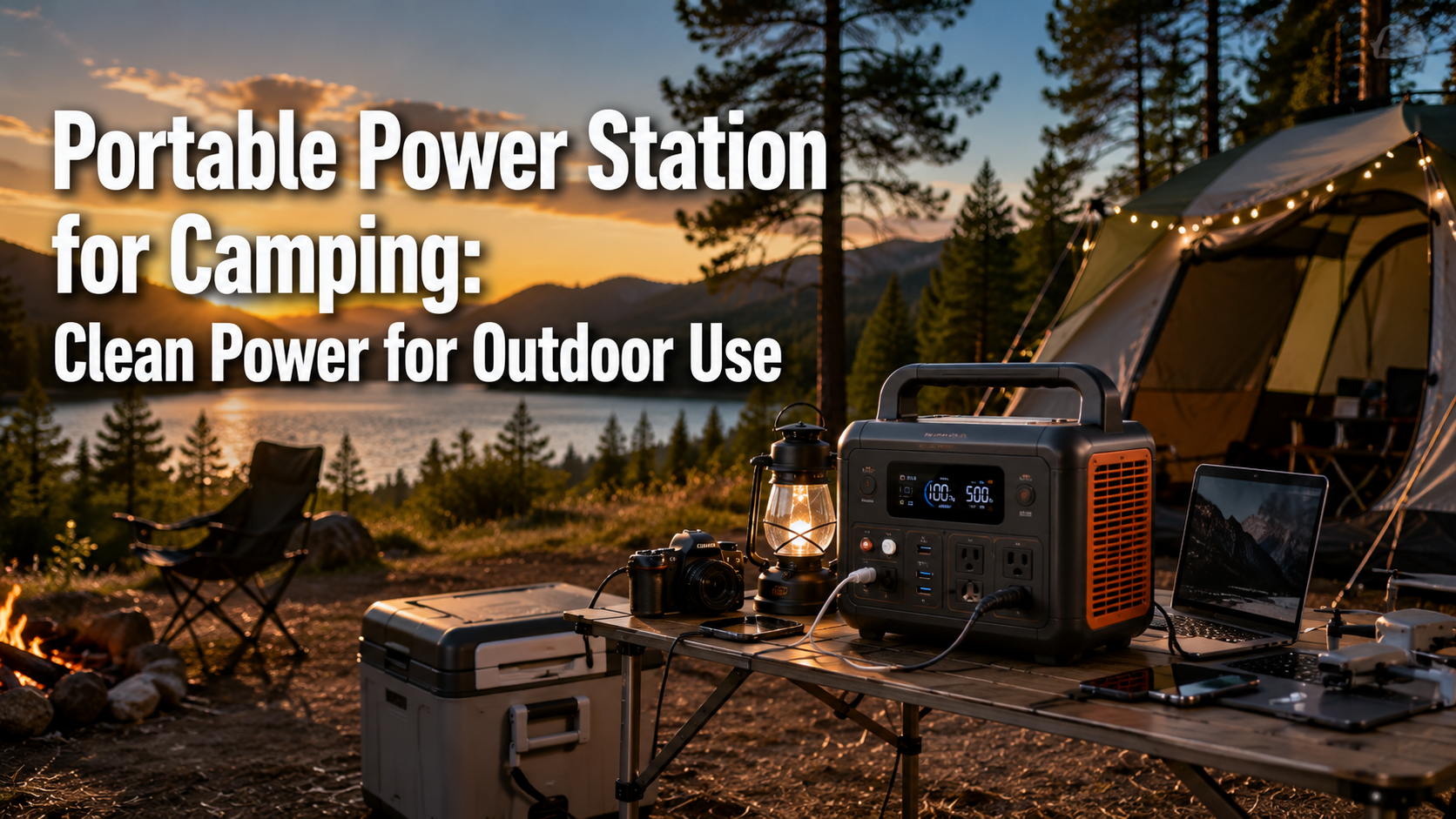
Modern camping no longer means living without basic comforts. What if you want to use Google Maps to go in the right direction and stay connected with your fellow campers, but your phone battery suddenly runs out? You may need power to charge phones for navigation, run lights at the campsite, use fans at night, power small cooking appliances, charge camera batteries, or keep medical devices running. UM Central Elétrica Portátil for camping is an ideal choice for a clean, quieto, and peaceful camping experience. It lets you enjoy the beauty of nature while still keeping your important electronics powered.
Neste artigo de HuaQuan, we will read about what a portable power station for camping is, why campers prefer it, how to choose the right one, and how it supports outdoor power needs.
What Is a Portable Power Station for Camping?
Battery-Based Power Backup for Outdoor Use
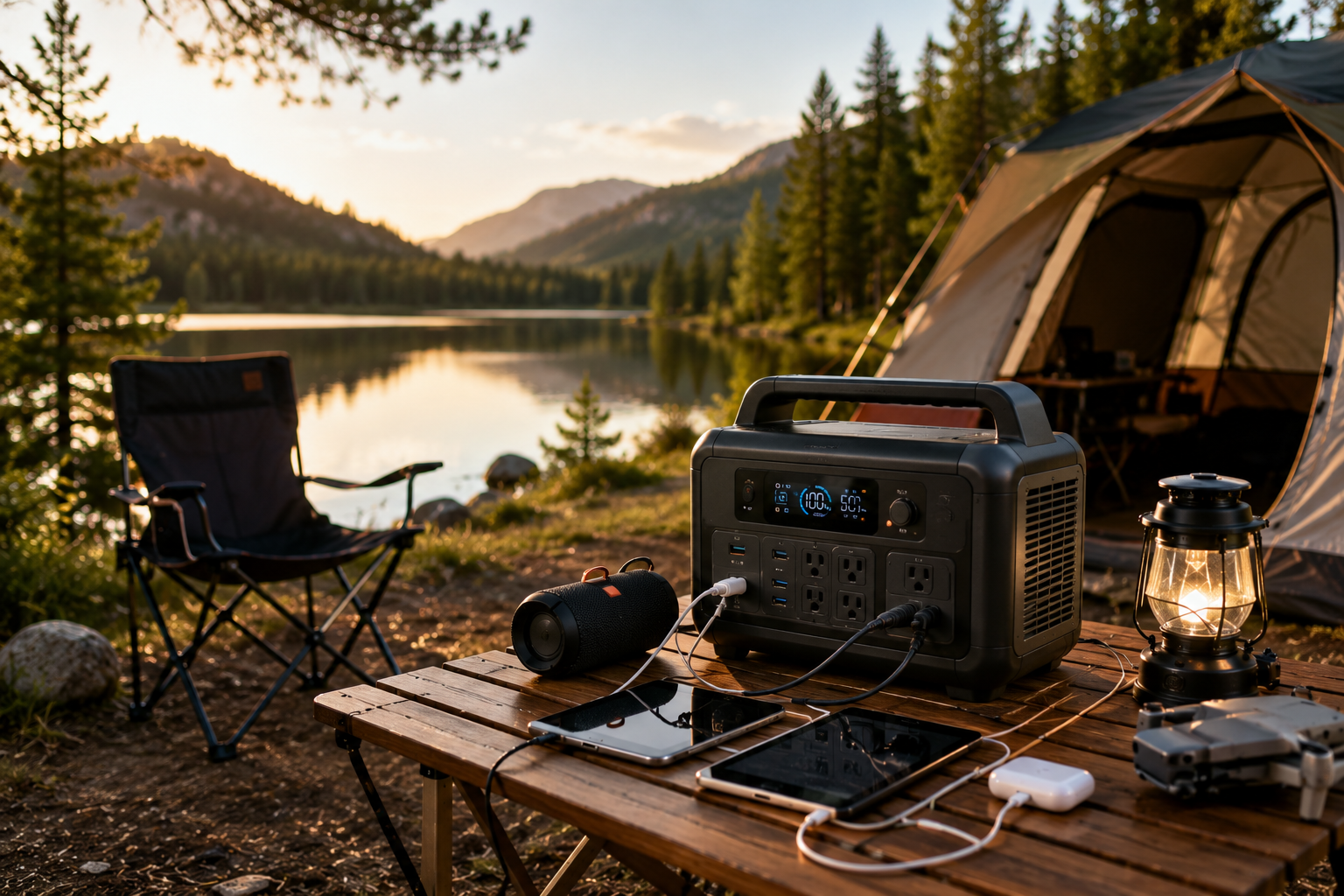
A portable power station for camping is like a giant rechargeable battery, as opposed to a generator that generates electricity through combustion. It stores electricity from your power outlet or solar panels and then safely releases it to your devices when you’re off the grid.
Difference Between Portable Power Stations and Fuel Geradores
Fuel generators use combustion engines, which are noisy, polluting, and require constant upkeep. Portable power stations are basically large lithium-ion battery packs encased in a protective shell that has built-in inverters. They run silently without emissions and have no moving parts.
Common Output Options: AC, CC, USB, and Type-C
An efficient power station is an all-in-one charging solution. It comes with standard AC wall outlets to charge laptops and small appliances, DC ports for mini-fridges, and multiple USB-A and USB Type-C ports for fast-charging phones and tablets.
Solar Charging Compatibility for Off-Grid Camping
The majority of top-quality portable power stations are compatible with portable solar panels. This makes your battery pack an independent solar generator that you can use and recharge forever off the grid.
Why Campers Prefer Portable Power Stations
Quiet Operation for Peaceful Outdoor Stay
The main purpose of an outdoor adventure is to spend some quality time with friends and family. To have a quiet camping experience, a portable power station is a must, as it doesn’t run on an internal combustion engine. It will operate silently so that you won’t disturb the wildlife or your neighboring campers.
No Fuel, Fumaça, or Exhaust Fumes
Portable power stations are ideal for a peaceful camping experience. They do not consume gas or diesel, so you don’t have to worry about toxic exhaust fumes, strong odour, or dirty fuel spills. This makes them much less hazardous to the environment and your family.
Easy to Carry and Use
The majority of models are user-friendly and compact. Heavy generators take two people to lift, but many camping power stations weigh less than 15 libras, making it very easy to fit them in the car trunk.
Safe for Phones, Cameras, Laptops, and Small Devices
Pure Sine Wave inverters are built-in to guarantee that the electricity coming from the power station is the same as the clean electricity coming from your wall outlet at Lar. This helps to prevent damage to the sensitive microchips in laptops, telefones, and aerial photography drones.
Suitable for Tents, RVs, Cabins, and Picnic Spots
Portable power stations are extremely versatile and environmentally friendly as they release no toxic emissions. You can set up these portable stations right inside the camp, on the picnic table, or in the sleeping cabin of an RV.
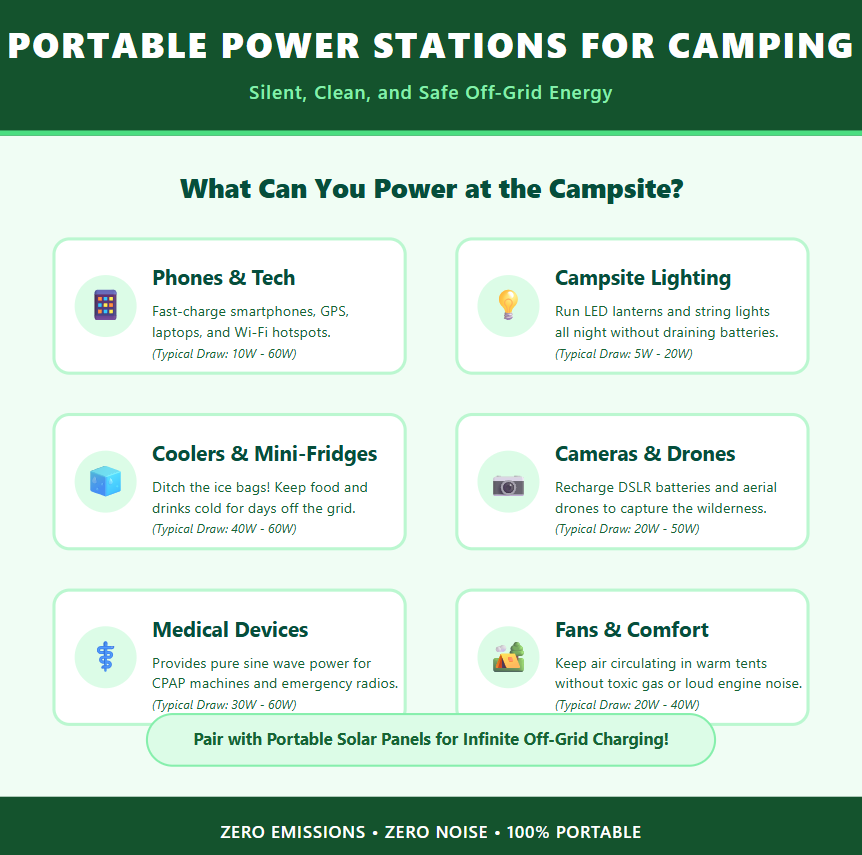
Common Camping Devices You Can Power
Mobile Phones and Tablets
Portable power stations for camping help you stay connected, keep GPS apps running, and charge all entertainment devices for the family. With the use of these portable stations, you can enjoy a stable backup power supply throughout your trip.
LED Camping Lights
Portable power stations keep your campsite lights running and powerful lanterns going through the night without depending on disposable batteries.
Portable Fans
Keep the air circulating inside a congested tent during warm summer camping trips.
Cameras and Drones
With portable power stations, you don’t have to worry about your DSLR batteries and photography drones running out. Desta maneira, you will be able to capture a stunning landscape or wildlife encounter promptly.
Mini-Fridges and Coolers
Say goodbye to the clunky ice bags. UM portable power station for camping can efficiently power a mini fridge to keep your food fresh and drinks cold for many days.
Laptops and Wi-Fi Devices
A portable power station can easily power up laptops and portable Wi-Fi hotspots for remote freelancers or those who must check in on work.
Emergency Radios and Medical Devices
A portable power station is essential for safety and supplies uninterrupted power for CPAP machines, medical refrigerators, and emergency weather radios.
How to Choose the Right Portable Power Station for Camping
Battery Capacity in Watt-Hours
The capacity is measured in watt-hours (Wh) and determines how long your backup power can work. Choosing a portable power station with a higher watt-hour rating is recommended as it will store more energy and can last longer. It will keep your devices running for an extended time before you need to recharge the battery.
Output Wattage
The inverter rating determines the amount of watts that the power station can run at any given time. Make sure the output power of the station is higher than the total running wattage of the devices you want to plug in at the same time.
Number and Type of Ports
Make sure that there are sufficient ports for your requirements. If you’re going to use a camping fridge, make sure there are at least two AC sockets, several high-speed USB/Type-C ports, and a regulated 12V DC car socket.
Weight and Portability
The choice of weight of a portable power station depends on your camping needs. If you are going hiking, the lighter model (sob 5 lbs) will be a better choice to keep in your backpack. For longer camping trips, a larger model (20-50 lbs) with a high capacity for energy storage is suitable.
Solar Charging Support
If you are going to be camping longer than 2 dias, be sure the power station is equipped with a built-in MPPT charge controller, which can work with portable solar panels to power your station during the day.
Portable Power Station vs Generator for Camping
Noise Level Comparison
Generators usually operate at around 50 para 80 dB, producing sound as loud as a lawnmower or busy street traffic. Em contraste, um portable power station for camping operates with much lower noise, producing a low hum from the running of internal cooling fans.
Fuel and Maintenance Difference
Constant gas station visits, mudanças de óleo, and spark plug replacements are necessary maintenance requirements for traditional generators. Power stations just need to be connected to a wall or solar panel to charge.
Indoor and Tent-Side Safety
Generators emit toxic carbon monoxide and should be at least 20 feet from your tent. Portable Power stations are 100% emission-free and can be placed next to your sleeping bag.
Best Choice for Short Trips
The portable power station is the number one choice for weekend trips, tent camping, and powering personal electronics because of its convenience and portability.
Best Choice for Heavy Outdoor Power Needs
A standard high-capacity inverter generator might still be needed if you’re using a full-size, heavy-duty vehicle equipped with two air conditioners, microondas, and large heaters.
How Long Can a Portable Power Station Run Camping Devices?
Backup Time Depends on Battery Capacity
The estimation of backup time is based on the station’s capacity (Wh) divided by the wattage of your device, then multiplied by 0.85 to account for the efficiency loss due to the inverter.
Exemplo: Charging Phones and Lights
A 300Wh small-size power station can charge a smartphone (10C) for more than 25 vezes, or power a string of 5W LED camp lights for more than 50 horas.
Exemplo: Running a Mini-Fridge or Fan
A mid-sized 500Wh station will easily power a 40W portable camping fridge for 10-12 hours or a 20W fan for 20+ horas.
Why High-Watt Devices Drain Battery Faster
Power-hungry devices such as microwave ovens, steam irons, electric skillets, coffee makers, and hair dryers consume a lot of electricity (1,000W to 1,500W). These will drain a standard camping power station in a matter of minutes.
Solar Charging for Camping Power Stations
How Solar Panels Extend Outdoor Runtime
Connecting a foldable solar panel means you have a continuous energy flow. You can power your devices using the battery at night, and let the sun refill the battery throughout the day.
Best Use During Daytime Camping
The best arrangement is called pass-through charging. Your solar panels charge the power station, and your mini-fridge is plugged into the power station to keep your food cold while using solar energy during the day.
Factors That Affect Solar Charging Speed
The charging speed of a solar panel relies heavily on its wattage, how directly it faces the sunlight, the level of cloud cover, and whether nearby trees or objects are casting shadows. Always place panels in the direct sunlight.
Why Solar Backup Is Useful for Remote Locations
Solar power is the only option when you’re in remote, off-grid locations, away from RV hookups and towns, and not sure you’ll have power on the third day of your camping trip.
Safety Tips for Using a Portable Power Station While Camping
Keep It Dry and Away from Rain
Portable power stations are filled with lithium batteries and open ports, unlike some rugged generators. Keep them inside the tent or under a canopy or cover during the rain.
Avoid Overloading the Power Station
Never connect devices with AC output ratings that are higher than the unit’s maximum rating. When the station is overloaded, the internal safety breakers will trip and shut off the station.
Use Compatible Charging Cables
Always use the manufacturer-supplied AC wall charger or solar cables that have been rated appropriately. Low-quality cables can lead to short circuits or damage to the battery.
Store It Away from Direct Heat
Avoid leaving the power station in a locked car or directly in the midday sun, as high temperatures can cause lithium-ion batteries to lose their charge and potentially cause a thermal safety shutdown.
Recharge Before Leaving for the Trip
When stored for long periods of time, lithium batteries gradually lose their power. Plug the power station into the wall the night before your trip so you leave with a 100% charged station.
Conclusão
Portable power stations for camping are a lifesaver for adventure seekers and outdoor lovers. Campers can experience nature safely, comfortably, and while staying connected by switching to clean lithium battery technology. You will not have to compromise by using loud, heavy, and fume-emitting gas generators. With the correct solar panels, an estimated power requirement, and some basic maintenance, a portable power station will keep you powered for all your outdoor adventures in a quiet, reliable way.
Looking to plan your next camping trip? Use a portable power station para o seu camping needs. It will provide clean, quieto, and safe power to your lights, telefones, fãs, coolers, and other important camping gear. Contato us today to discover which power station is perfect for your outdoor requirements.