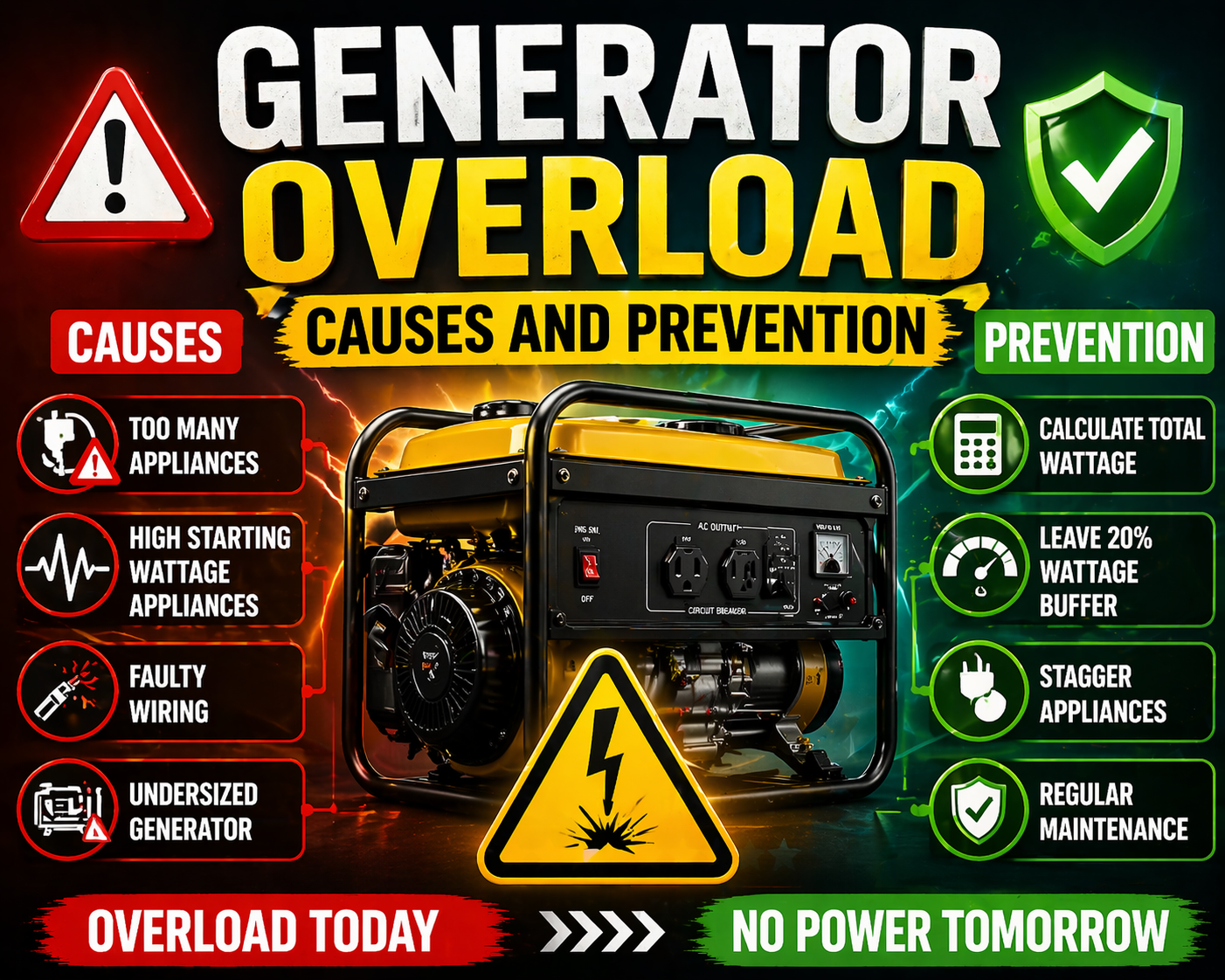
Quando você enfrenta uma falha de energia, um gerador de tamanho preciso economiza e permite realizar as tarefas domésticas e cumprir bem os prazos de trabalho. Mas se você tratar seu gerador como a principal fonte de eletricidade e colocar uma carga extensa nele, isso resultará em sérias consequências. É apenas um sistema de backup de energia. Cada tipo de gerador possui uma capacidade de potência específica. Se esse limite for excedido, resultará em um Sobrecarga do Gerador.
A principal causa da sobrecarga é uma extensa colocação de carga no gerador. Isso danificará o motor e destruirá seus aparelhos e máquinas conectados. Você deve entender como evitar a sobrecarga do gerador e quais medidas tomar caso esta situação ocorra. Neste artigo de Huaquan, você aprenderá sobre todos esses domínios em detalhes.
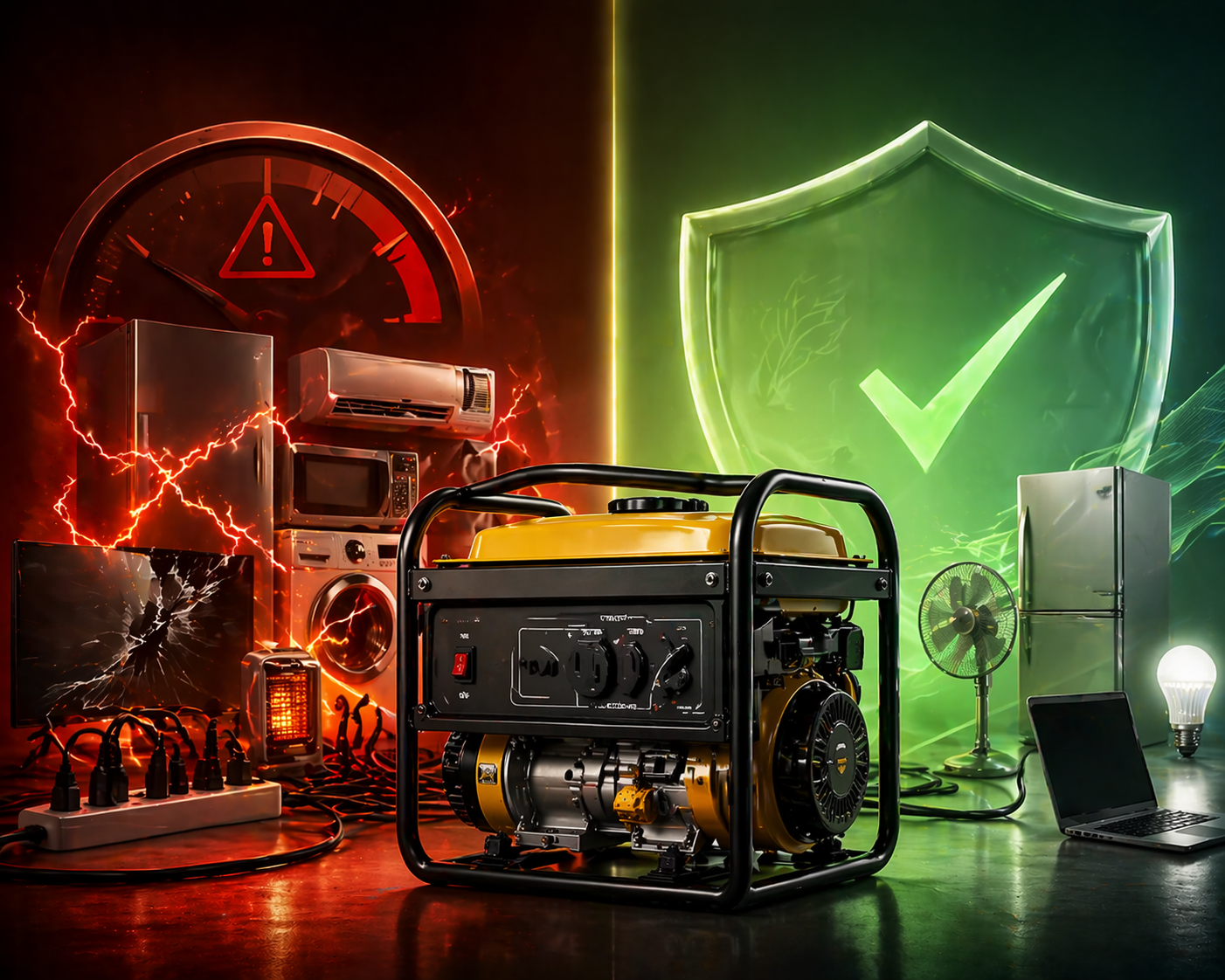
Principais causas de sobrecarga do gerador
Você pode sentir que a sobrecarga é instantânea. Mas honestamente, tem muitos motivos que resultam em sobrecarga.
Superando a capacidade de energia
- Executando vários aparelhos: Quando você liga vários aparelhos ao mesmo tempo, excederá a capacidade do seu gerador. Se você tiver um pequeno gerador de 2.000 watts, não pode operar uma geladeira, AC, forno, e um aquecedor de uma vez.
- Examinando limites de potência: Cada gerador tem uma capacidade de funcionamento e uma capacidade de arranque. Se você continuar ligando o motor e ele ultrapassar seu limite, isso resultará em sobrecarga.
Gerador de tamanho inadequado
- Comprando o tamanho errado do gerador: Vários usuários muitas vezes calculam mal as necessidades de energia simplesmente assumindo os limites. Depois, se um gerador não aguenta sua carga, isso causará sobrecarga.
- How to compensate for Capacidade do Gerador with load: Você precisa determinar o tamanho certo do gerador para atender às suas necessidades de energia. O tamanho preciso será capaz de lidar bem com máquinas pesadas em momentos alternados.
Demandas repentinas de energia
- Máquinas com alta potência inicial: Os motores de CA, geladeiras e bombas de água precisam de uma grande potência de partida para ganhar velocidade. Esta capacidade inicial é quase 3 para 4 vezes mais do que sua capacidade de potência operacional.
- Aumento inesperado no uso de energia: Se você ligar uma geladeira e um aquecedor ao mesmo tempo, seus requisitos de potência aumentarão e sobrecarregarão o gerador.
Manutenção inadequada de equipamentos
- Problemas no sistema de combustível e no motor: Se o motor bloqueou as saídas de ar, combustível velho, e carburadores sujos, não pode funcionar de forma eficiente. Ele não aguentará a carga e desperdiçará combustível para ajustar a rotação necessária.
- Filtros sujos ou entradas de ar bloqueadas: O motor interno que precisa de oxigênio e combustível limpo funcionará com o dobro da pressão em comparação com as condições mantidas do motor. Esta condição é semelhante à situação de sobrecarga.
Sinais de sobrecarga do gerador
Se você notar, você pode ver claramente sinais de que seu gerador está sobrecarregando. Os sinais comuns incluem os seguintes:
- Tensão Instabilidade: Se a sua área tiver luzes fracas constantes com cintilação, isso significa que seu gerador está tentando manter seu valor de frequência constante de 60 Hz. Você deve desconectar alguns dos aparelhos pesados para ajustar a carga.
- Esforço do gerador: Se um gerador estiver sobrecarregado, produzirá uma grande quantidade de calor. Você poderá sentir cheiro de queimado ou fios derretidos. Se continuar, produzirá faíscas.
- Disjuntores desarmados: Tecnologia moderna Geradores possuem disjuntores de segurança embutidos. Se o gerador não suportar carga, mas o motor ainda estiver funcionando, o disjuntor irá desarmar e proteger o alternador e fiação interna contra faíscas.
- Ruídos ou vibrações irritantes: O motor emitirá ruídos incomuns que parecem de pânico. Este som é o resultado da luta do motor para compensar a carga maior.
Como prevenir a sobrecarga do gerador
Se você não quer sobrecarregar o gerador, você deve ter um conhecimento profundo de cálculos matemáticos e hábitos regulares de manutenção.
Verifique suas necessidades de energia
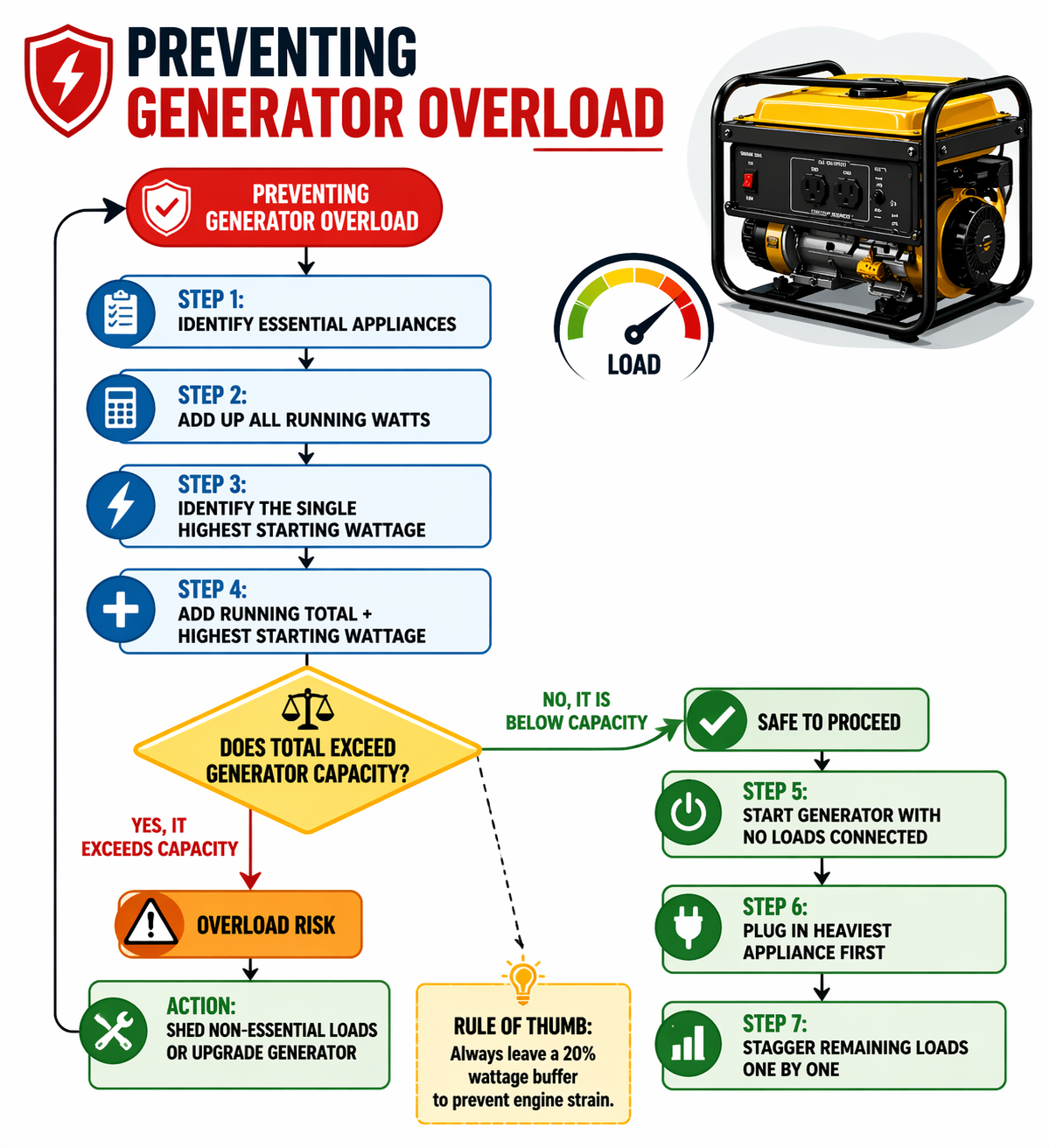
- Calculando a potência total necessária: Faça um tour pelo seu site e liste todos os dispositivos essenciais. Anote suas potências de funcionamento, bem como o impulso inicial necessário para trabalhar em velocidade moderada. Adicione-os e calcule o valor necessário.
- Usando um medidor de potência para medições precisas: Você não deve assumir os cálculos. Instale um medidor digital em todos os seus aparelhos para calcular as necessidades exatas de energia.
Escolha o tamanho exato do gerador
- Fatores consideráveis ao selecionar um gerador: Eles incluem as condições climáticas da sua localidade, se você precisa de isolamento ou ar condicionado. Também, você deve verificar se precisa de dependência de algum equipamento médico, bombas de água, ou máquinas pesadas contínuas.
- Como ajustar carga com capacidade: Invista em um gerador que possa lidar com 20% mais carga do que a potência calculada. Isso evitará a sobrecarga do seu gerador e fornecerá espaço suficiente para conexões adicionais no futuro.
Cargas de energia flutuantes
- Como dispersar o uso de energia durante todo o dia: Você não deve conectar todas as máquinas complexas simultaneamente. Você pode definir horários específicos para diferentes aparelhos. Por exemplo, você pode usar a geladeira de manhã e o forno à noite ou à noite.
- Evite ligar todos os aparelhos ao mesmo tempo: Se o disjuntor da sua geladeira ligar, desligue instantaneamente o forno micro-ondas.
Dicas de manutenção regular
- Alterando filtros, inspecionando óleo, e outras tarefas essenciais: O motor de um gerador potente, com manutenção adequada, pode lidar com uma carga pesada com eficiência. Substitua o óleo e os filtros de óleo, e limpe a poeira e detritos nas válvulas.
- Limpar e verificar os componentes regularmente: Você deve manter os ventiladores de resfriamento e as entradas de ar livres de germes, resíduos, e sai para operar o motor suavemente.
Etapas acionáveis obrigatórias se o seu gerador estiver sobrecarregado
Se o motor desacelerar ou os interruptores continuarem desligando, você deve seguir os seguintes passos para ter cuidado.
- Desligar aparelhos causando sobrecarga: Em primeira mão, remova todos os aparelhos pesados conectados ao gerador. Alternativamente, desligue suas chaves de transferência no painel do gerador.
- Desligar o gerador e deixá-lo esfriar: Você não deve reiniciar o gerador instantaneamente. Depois de desligar, espere por quase 10-15 minutos para permitir que o gerador esfrie e mantenha as condições ideais.
- Redefinindo disjuntores: Quando o gerador esfria, ligue o gerador novamente. Comece com carga zero e conecte gradualmente aparelhos menores. Não conecte aparelhos pesados e mantenha-os desligados.
Impacto da sobrecarga do gerador no desempenho
Se você não prestar atenção aos pequenos sinais e continuar colocando muita carga no gerador, isso causará resultados potenciais.
- Vida útil curta dos componentes: Operar o gerador em sua capacidade total produzirá uma quantidade excessiva de calor. Isso degradará o combustível e danificará os revestimentos internos de cobre do alternador.
- Maior custo de manutenção: Você precisará tratar os disjuntores desarmados, substitua os interruptores queimados e os plugues acesos.
- Probabilidade de grandes danos ao gerador: Se um gerador sobrecarregar com frequência, isso destruirá o motor ou derreterá o estator. Como resultado, você vai desperdiçar seu $2,000 investido em um gerador vitalício.
Medidas Preventivas para Desempenho Durável de Geradores
- Instalação de dispositivos de proteção contra sobrecarga: Quando você está considerando sistemas de backup para unidades residenciais, instale uma mini chave de transferência que possa detectar os padrões de rejeição de carga. Ajudará a desligar os circuitos que não são necessários quando um gerador excede seu limite, como um banhista quente.
- Inspeção frequente da capacidade do gerador: Você deve verificar a capacidade do seu gerador após cada curto período aplicando um banco de carga. Se fornecer a potência designada sem superaquecer, isso significa que funciona bem.
- Evitando tempos de funcionamento simultâneos para aparelhos pesados: Você deve discutir com seus familiares ou com os engenheiros do local para evitar conectar todos os aparelhos de alta potência ao mesmo tempo. Você pode usá-los de maneira alternativa.
Perguntas frequentes
O que acontece quando você enfrenta um problema de sobrecarga do gerador?
Quando um gerador fica sobrecarregado, isso causará vários problemas. Isso inclui superaquecimento, saídas de tensão variável, intensidade de luz desaparecendo continuamente, desacelerando o motor com frequência, e desarmando o disjuntor. O gerador faz tudo isso para evitar faíscas, fogo ou destruição.
Como posso calcular o tamanho apropriado do gerador para ajustar minhas necessidades de energia?
Você deve adicionar todas as potências de otimização de todos os aparelhos e eletrônicos que você conectará ao gerador. Também, add their starting surge points to gain the optimal momentum. Then consider a generator that can run at 20% more capacity than the required requirements.
Quando um gerador sobrecarrega, isso pode danificar meus aparelhos caros?
Sim, it can. When a generator gets too much strain greater than its threshold, it tries its best to maintain the steady frequency of 60Hz. You can also call it a dirty power that causes instant voltage decrease, leading to tripping and fluctuations. Como resultado, it can damage the specialized chips in your TVs, geladeiras, computadores, and other appliances.
Nota Final
UM sobrecarga do gerador is a common problem that you can easily prevent by following some guidelines. You must measure your locality’s power load appropriately, adjust the generator size according to your needs, and maintain the usage of heavy machinery as well as appliances. Desta maneira, you will be able to provide a backup system to your residential area or commercial building for long periods without facing the issue of generator overload.
Além disso, you must follow the routine maintenance schedule tips and maintain the structured load on the generator. It will help you avoid tripping problems. Por isso, it saves your financial loss in terms of constant repairs by professionals.
Do not get worried about your circuit overburdening and breakers tripping! Contato Huaquan, to discuss your area’s power needs. Get an accurately sized generator that can back up your area with full confidence.