Gás Geradores são potências confiáveis para trabalhar em situações imprevisíveis, seja em casa, nas empresas, ou em locais de trabalho ao ar livre. Estas máquinas ajudam a manter o bom funcionamento dos sistemas mesmo durante cortes elétricos. No entanto, mesmo um gerador bem conservado pode causar problemas devido à manutenção irregular, combustível desatualizado, e carga excessiva.
Compreender a sua máquina torna mais fácil lidar com avarias repentinas. Gerador de Gás a solução de problemas facilita a detecção precoce de falhas, resolver pequenos problemas, e economize em custos de reparo. Com conhecimento adequado, você pode garantir o bom funcionamento. Aqui por HuaQuan, você pode encontrar os problemas maiores e menores do gerador, suas possíveis razões, e soluções fáceis.
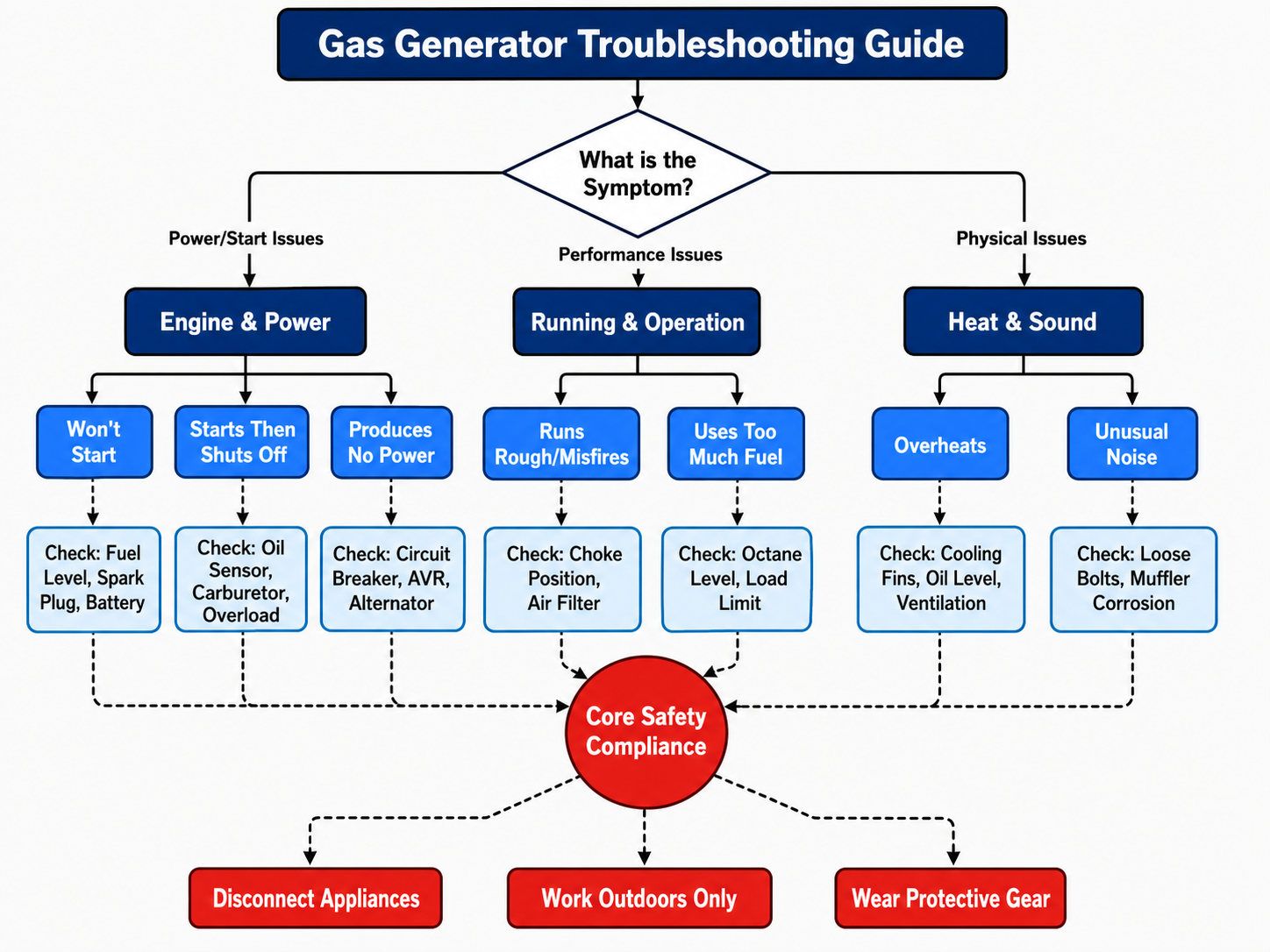
Solução de problemas do gerador de gás; Causas e soluções
1. O gerador não inicia
A inatividade em sua unidade é o problema mais comum que surge durante emergências. Entrega de combustível, entrada de ar, ou vela de ignição precisa ser verificada para combater tais problemas.
Possíveis causas
- Tanque de combustível vazio
- Gasolina degradada ou contaminada
- Baixo nível de óleo do motor
- Filtro de ar sujo ou bloqueado
- Vela de ignição danificada ou queimada
- Bateria com defeito (especificamente em modelos de partida elétrica)
- Desligou a válvula de combustível (por acaso)
Como consertar
- Coloque combustível novo cuidadosamente após verificar o nível atual de combustível.
- Drene o combustível degradado do carburador, então reabasteça.
- Verifique o nível do óleo através da vareta, então reabasteça.
- Limpe completamente ou substitua o filtro de ar.
- Verifique a vela de ignição e substitua-a se necessário.
- Recarregue ou instale uma bateria nova.
- Certifique-se de que a válvula de combustível e a alavanca do afogador estejam ajustadas corretamente.
2. O gerador inicia e depois desliga
É muito irritante quando a unidade sobe repentinamente, mas morre em alguns momentos. O problema surge quando o gerador inicialmente recebe energia. Mas assim que uma restrição repentina ou um mecanismo de desligamento de segurança entrar em ação, seu bom funcionamento cessa.
Possíveis causas
- Desligamento automático do motor devido ao baixo nível de óleo no sensor.
- Uma linha de combustível que foi obstruída ou comprimida.
- Um carburador envernizado que está sujo.
- Um filtro de ar completamente obstruído.
- Ativação de sistema de proteção destinado a sobrecarga.
- Superaquecimento repentino devido a má ventilação.
Como consertar
- Verifique a vareta e reabasteça o óleo do motor até o nível exato.
- Para manter o fluxo adequado, limpe e verifique as linhas de combustível.
- Use sprays feitos especificamente para a limpeza do carburador.
- Antes de começar, desconecte ou desligue os aparelhos para reduzir a alta carga.
- É necessária uma área externa aberta ou boa ventilação para colocar o gerador.
- O filtro de ar deve ser verificado e, quando necessário, mudado.
3. O gerador funciona mal ou falha na ignição
Pulverização, surgindo, ou hesitar é sinal de que o motor não está funcionando corretamente. Ignição inconsistente ou mistura ar-combustível geralmente é a causa deste funcionamento inadequado.
Possíveis causas
Uma vela de ignição contaminada ou extremamente suja.
- Combustível velho, pobre, ou degradado.
- Congestionamento de um carburador parcial.
- Trabalhar na posição de estrangulamento é errado.
- Os filtros de ar estão sendo fortemente restritos.
- Um tanque de combustível confinado por sujeira ou água muito pequena.
Como consertar
- Restaure uma faísca compatível substituindo a vela de ignição.
- Limpe o tanque de gasolina velha.
- Remova o verniz residual do carburador.
- Assim que o motor ligar, mova o afogador para a posição de funcionamento.
A solução oportuna de problemas do gerador de gás evita que pequenos problemas de desempenho se transformem em problemas graves e dispendiosos problemas internos do motor.
4. Gerador não produz energia
Apesar do motor funcionar corretamente, o gerador não produz absolutamente nenhuma eletricidade. Isso é bastante problemático porque o motor está funcionando, mas nenhum dos aparelhos está recebendo energia. Esse é o sinal de um problema elétrico, não é mecânico.
Possíveis causas
- O disjuntor caiu no painel de controle.
- Tomada elétrica danificada.
- A fiação interna precisa ser apertada.
- Falha no capacitor
- Sobrecarga intensa de eletricidade
- Mau funcionamento do alternador
- Falha do Regulador Automático de Tensão (AVR)
Como consertar
- Verifique o disjuntor principal e reinicie-o firmemente.
- Usei diferentes tomadas no painel para conectar aparelhos.
- Reinicie o gerador para reiniciá-lo; antes de fazer isso, desconecte todos os aparelhos.
- Para verificar se há danos, verifique corretamente todos os cabos de alimentação e plugues do aparelho.
- Não exceda a capacidade máxima de potência do gerador.
- Deixe o técnico cuidar dos problemas relacionados ao alternador, capacitor, ou AVR.
Contrate um profissional para cuidar dos reparos elétricos internos. Sem formação profissional, os usuários devem evitar lidar com problemas complexos de fiação, pois é muito perigoso.
5. Superaquecimento do gerador
O calor é normalmente produzido em motores de combustão interna. Mas o superaquecimento excessivo pode encurtar a vida útil da unidade ou causar danos permanentes aos seus componentes..
Possíveis causas
- Nível baixo de óleo do motor.
- Maior tempo de execução sem pausa.
- Aberturas externas bloqueadas
- Carga excessiva
- Condições climáticas extremamente quentes
- Passagem de ar perto do gerador.
Como consertar
- Verifique o óleo e reabasteça-o rapidamente até o nível correto.
- Reduza a carga elétrica com segurança.
- Limpe o aletas de resfriamento e aberturas de ventilação com cuidado para remover qualquer poeira.
- Mantenha o gerador em qualquer área externa, seja aberto ou sombreado.
- Durante uso prolongado, reserve um tempo para descansar e esfriar o gerador. Evite contínuo, operação em velocidade total da máquina.
6. Gerador usa muito combustível
Encher repetidamente o tanque de gasolina não é normal, pois isso simboliza o consumo excessivo de combustível. Isso significa que o gerador está se esforçando para produzir a energia necessária.
Possíveis causas
- A sobrecarga elétrica é contínua.
- Sufocamento do motor devido a filtros de ar sujos
- Combustível de baixa octanagem ou de má qualidade.
- Ajuste errado do motor internamente.
- UM vela de ignição que está extremamente desgastado.
- Usando aparelhos extras ao mesmo tempo.
Como consertar
- Reduza a carga elétrica imediata.
- Limpei ou substituí o filtro de ar.
- Use apenas fresco, combustível recomendado pelo fabricante.
- Melhore a combustão substituindo a vela de ignição gasta.
- Se algum aparelho não estiver em uso ativo, então desligue-o.
- Mantenha o melhor desempenho através de manutenção regular.
Um grande benefício da solução de problemas do gerador de gás é a melhoria da eficiência do combustível, o que economiza custos.
7. Gerador faz barulho incomum
Os geradores normalmente produzem sons altos, mas sons desconhecidos requerem atenção especial para resolver o problema.
Possíveis causas
- Parafusos do corpo que não estão fixos ou painéis que estão fazendo barulho.
- O óleo do motor está perigosamente baixo.
- Silenciador fisicamente danificado ou corroído.
- Peças do motor extremamente desgastadas internamente.
- Superfície irregular causando vibração extrema.
- Estresse severo devido a sobrecarga mecânica.
Como consertar
- Aperte os parafusos, parafusos, e painéis soltos.
- Mantenha a lubrificação adequada verificando imediatamente o nível do óleo.
- Um estábulo, superfície plana é necessária para manter o gerador.
- Observe atentamente se há rachaduras óbvias que aparecem no silenciador de escapamento.
- A carga elétrica deve ser reduzida.
- Se algum som de rangido ou batida continuar, é importante contactar um técnico especializado.
Dicas de segurança antes da solução de problemas
Antes de solucionar você mesmo a solução de problemas da sua máquina, preparar um espaço de trabalho seguro, pois trabalhar com motores e eletricidade acarreta riscos potenciais.
- Antes de iniciar a inspeção, desligue o gerador.
- Deixe os componentes quentes esfriarem completamente.
- Aparelhos conectados e cabos de extensão devem ser desconectados com cuidado.
- Não execute ou teste dentro de casa.
- Não exponha o gerador em funcionamento a janelas e portas abertas.
- Mantenha as chamas longe da gasolina.
- Use óculos de segurança e luvas resistentes.
- Não toque em fios desencapados com as mãos molhadas ou não isoladas.
- Siga as orientações do manual do fabricante.
Conclusão
Para concluir, é necessário um pouco de conhecimento mecânico e cautela para gerenciar uma fonte de energia independente. Muitos problemas do gerador são menores e podem ser resolvidos com uma limpeza adequada, monitoramento de rotina, e manutenção preventiva. A verificação dos níveis de fluidos e a limpeza dos filtros podem evitar muitos problemas antes que eles ocorram.
A solução de problemas do gerador de gás é extremamente importante para manter o gerador eficiente, confiável, e altamente consistente. Tudo que você precisa para fazer a manutenção do gerador é prestar atenção aos pequenos sinais que a máquina está lhe dando. Compreender os problemas e corrigi-los imediatamente irá ajudá-lo a reduzir despesas com reparos e proteger seu gerador. Fazendo isso, você pode aproveitar os benefícios deste poder de backup a qualquer momento. Contate-nos hoje.
⚡ Explore soluções relacionadas
- 🏭 500kW Gerador Diesel
- 🏭 1000kW Gerador Diesel
- 🏭 500Gerador diesel de kW YC
- 🔧 KMS (Cummins/Doosan) Série
- 🔧 Grupos Geradores de Gás
- 🏥 Gerador portátil
💡 Precisa de uma solução customizada? Contate nossa equipe de engenharia para recomendações específicas do projeto.