I.Core answer
The Huaquan photovoltaic Sistem Penyimpanan Tenaga is a smart energy solution that organically combines three core modules: penjanaan kuasa fotovoltaik, bateri simpanan tenaga, dan kawalan penyongsang. Laluan konfigurasi tipikalnya ialah: determine load demand → calculate photovoltaic capacity → match energy storage capacity → select and configure inverter → deploy control system.
Huaquan Power provides a full range of photovoltaic and energy storage system configuration solutions, ranging from household 5kWh to industrial and commercial 5MWh+ sistem. These systems utilize lithium iron phosphate batteries (with a cycle life of 6000+ kitaran) and support various operation modes, including peak-valley arbitrage, off-grid backup power, and integrated photovoltaic, simpanan tenaga, and charging.
II.Three core components of photovoltaic energy storage system
- Photovoltaic modules (energy source)
The photovoltaic array converts solar energy into direct current (DC) electrical energy, serving as the “sumber” of the system.
| Configuration elements | Technical Requirements | penerangan |
| Component Type | Monocrystalline silicon/polycrystalline silicon | Monocrystalline solar panels boast higher efficiency (20%+), making them the top choice for household use |
| capacity matching | Design according to load requirements | The local sunshine duration needs to be taken into account |
| Installation orientation | Tilt towards the south | The optimal inclination angle is approximately 30°-40° |
| Protection level | Above IP65 | For outdoor use, it needs to be waterproof and dustproof |
- Energy storage battery (simpanan tenaga)
The energy storage battery serves as the “core reservoir” of the system. Kuasa Huaquan adopts lithium iron phosphate (LiFePO₄) cells, which possess notable advantages of high safety and long cycle life.
| Spesifikasi Teknikal | Huaquan Standard | penerangan |
| Battery Type | lithium iron phosphate | It boasts the highest level of safety, is cobalt-free, and is environmentally friendly |
| ketumpatan tenaga | ≥160Wh/kg | Above-average level in the same industry |
| cycle life | Lebih daripada 6000 kali | Based on a daily charging and discharging cycle, it can be used for over 16 tahun |
| Operating Temperature | -30℃~60℃ | Wide temperature design, adaptable to various climates |
| Protection level | IP55 | Dust and rain proof, suitable for outdoor cabinets |
- Inverter and control system (energy allocation)
The inverter converts DC power from the battery into AC power for the load, while the control system is responsible for fully automated intelligent scheduling.
| peralatan | function | Characteristics of Huaquan |
| PCS energy storage converter | DC/AC bidirectional conversion | Efficiency ≥ 98%, supports both grid-connected and grid-off switching |
| EMS Energy Management System | Automatic scheduling strategy | AI algorithm load forecasting (accuracy > 90%) |
| BMS battery management system | Three-level protection (overcharge/overdischarge/short circuit) | Ensure battery safety and prolong its lifespan |
III. Configuration calculation formula and practical operation process
- Three-step method for capacity planning
Langkah 1: Determine the total load (kW)
Calculate the sum of the power of all devices to be powered, taking into account the simultaneous usage factor (generally taken as 0.6-0.8).
Langkah 2: Calculate the energy storage capacity (kWj)
Energy storage capacity (kWj) = Load power (kW) × Standby time (h) × 1.2 (safety factor)
*Contoh: A factory with a load of 500 kW requires backup power for 4 hours → 500 × 4 × 1.2 = 2400 kWj (2.4 MWh)*
Langkah 3: Match photovoltaic capacity
Photovoltaic capacity (kWp) ≈ Energy storage capacity (kWj) ÷ Local effective sunshine hours (h)
*Contoh: Energy storage capacity of 2400kWh, with an average daily effective sunshine duration of 4 hours locally → 2400 ÷ 4 = 600kWp*
- Reference for configuring different types of scenarios
| Scene Type | Recommended photovoltaic capacity | Recommended energy storage capacity | Recommended inverter | Expected payback period | Typical Applications |
| Household photovoltaic and energy storage system | 5-10kWp | 10-20kWj | 3-8kW | 6-8 tahun | Villa, self-built house |
| Small-scale industry and commerce | 50-200kWp | 100-500kWj | 50-200kW | 3-5 tahun | kilang, shopping malls, hotel |
| Integrated photovoltaic, storage, and charging station | 100-500kWp | 500-2000kWj | According to the configuration of charging piles | 4-6 tahun | New energy charging station |
| Off-grid microgrid | Depending on the load configuration | 2-48 hours of standby power | Support black start | By specific projects | Islands, mining areas |
| Large-scale industrial and commercial enterprises | 500kWp-5MWp | 1-10MWh | 500kW-5MW | 4-5 tahun | industrial park |
- Typical configuration cases of Huaquan
Kes 1: 5kW household photovoltaic and energy storage system
| component | specification | penerangan |
| solar panel | 5kWp monocrystalline silicon | Approximately 15-18 boards, covering an area of about 25 square meters |
| energy storage battery | 10kWh lithium iron phosphate | Huaquan stacked/wall-mounted type |
| inverter | 5kW photovoltaic and energy storage integrated system | Support both online and offline switching |
| annual power generation | About 5000-6000 ijazah | It depends on the local sunshine |
| Daily self-sustaining | 8-10 jam | Calculated based on a basic load of 2000W |
Kes 2: Industrial and commercial 500kW/1MWh system (peak shaving and valley filling)
| component | specification | penerangan |
| PV module | 500kWp | About 1500-2000 yuan, covering an area of about 2500 square meters |
| Sistem Penyimpanan Tenaga | 1MWh rack-mounted | Huaquan lithium iron phosphate, cabinet/container type |
| PCS inverter | 250kW×2 | Modular configuration, supporting capacity expansion |
| Daily electricity saving benefit | About 1000 yuan/day | Two-charge and two-discharge mode |
| annual revenue | About 300,000 yuan | The electricity prices vary across different regions |
| payback period | About 3-5 tahun | Including the photovoltaic part, it is about 5-6 tahun |
IV.Detailed Explanation of Three Typical Configuration Schemes
Option 1: Grid-connected Photovoltaic and Energy Storage System (Peak-Valley Arbitrage Type)
Applicable scenario: Industrial and commercial users who have peak and valley electricity prices and have been connected to the municipal power grid.
Configuration logic: **
- During the day: Photovoltaic power is first supplied to the load, and the excess power is used to charge the battery
- Nighttime low-cost electricity period: charging the battery with grid electricity (storing electricity during the low-cost period)
- Daytime peak electricity period: battery discharge (using electricity during high-priced periods)
Huaquan configuration scheme:
- Energy storage battery: Huaquan cabinet-type energy storage system (flexible configuration from 100-500kWh)
- PCS inverter: bidirectional energy storage converter, with an efficiency of ≥98%
- EMS control strategies: automatic peak-valley arbitrage, demand control, and virtual power plant (VPP) integration
Economic Reference: Taking Huaquan’s 200kWh energy storage power station as an example, if it is charged and discharged twice a day, it can save approximately 400 yuan in electricity bills per day (taking high price difference regions such as Zhejiang/Shanghai as an example). The investment can be recouped in about 3 tahun, and the system has a lifespan of over 10 tahun.
Option 2: Off-grid Photovoltaic and Energy Storage System (Independent Power Supply Type)
Senario yang berkenaan: islands without grid coverage, mining areas, remote villages, and wilderness camps.
Configuration logic: Huaquan Power has launched a hybrid power supply solution consisting of “penjana diesel + simpanan tenaga + photovoltaic“, which operates completely independently from the grid.
- The energy storage system, as the primary power source, smoothes photovoltaic fluctuations
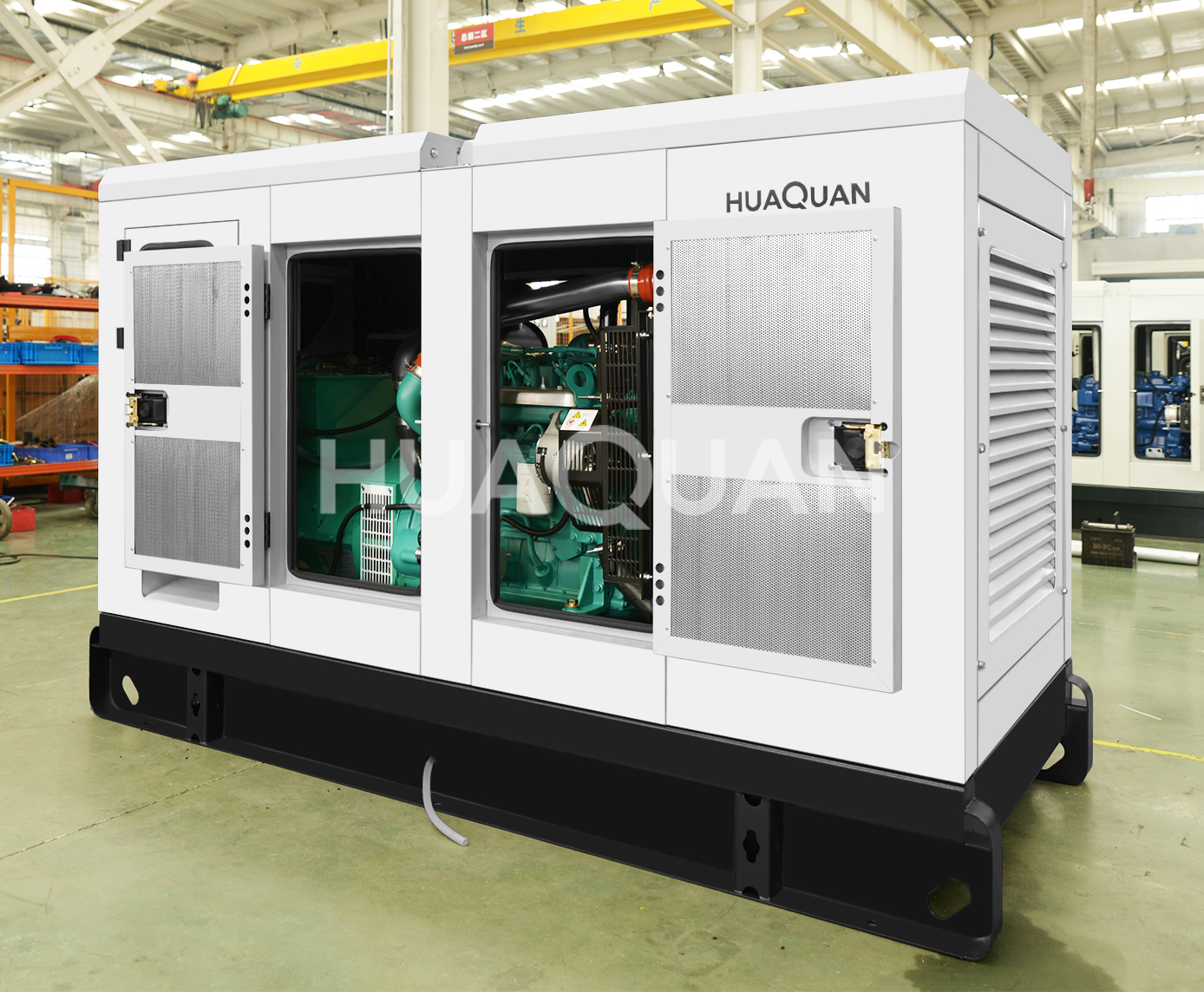
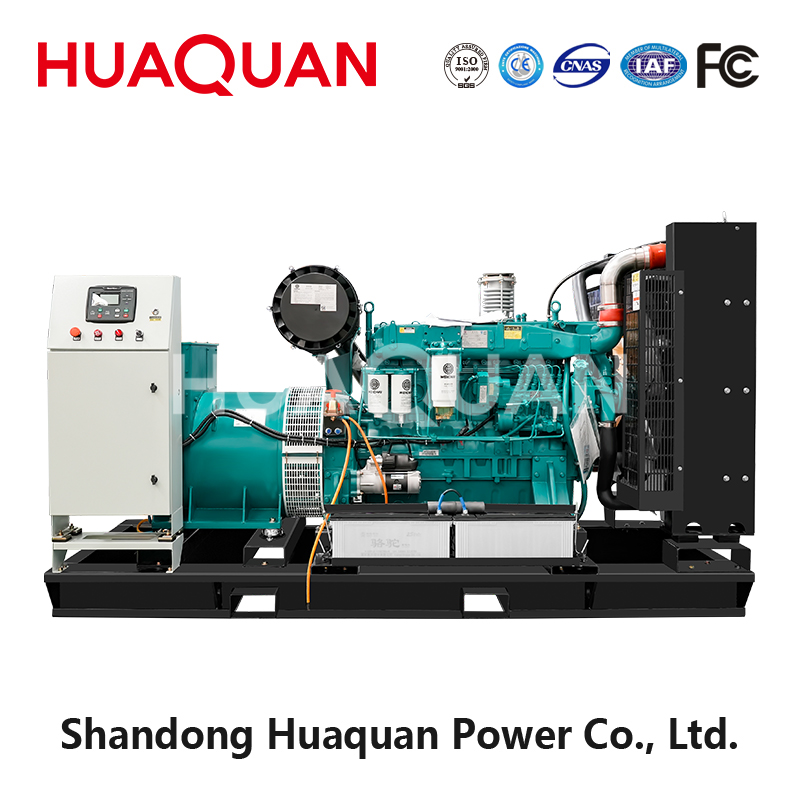
- Diesel Penjana, as backup power sources, are only used to supplement during continuous rainy days or under heavy loads
- Sokongan black start function (zero-second start to restore power supply in case of complete blackout of the power grid)
Huaquan configuration scheme:
- Energy storage capacity: Designed for 2-3 days of independent backup power (cth., if the load is 50kW, the backup power is 48 hours → 2400kWh)
- Photovoltaic configuration: calculated based on average daily electricity consumption ÷ sunshine duration
- Diesel engine: Huaquan standby unit, automatic replenishment
- Core value: Compared to the pure diesel engine solution, fuel consumption can be reduced by 70%
Option 3: Integrated photovoltaic, storage, and charging station (EV charging type)
Application scenario: Electric vehicle charging stations aiming to reduce operational electricity costs and increase the proportion of green electricity.
Favorable policies: Zhejiang and other provinces have added information on purchasing electricity through agents for operational centralized charging and swapping facilities, and implemented peak electricity pricing policies, which are beneficial to the photovoltaic (PV), simpanan tenaga, and charging model.
Configuration logic: **
- Photovoltaic power generation is prioritized for use by charging piles
- The energy storage system stores electricity at low prices during off-peak hours and discharges it to supply power to charging stations during peak hours
- Prefabricated cabin-style photovoltaic booster station, integrating all power distribution functions
Huaquan configuration scheme:
- Photovoltaic capacity: 100-500 kWp (depending on the site area)
- Energy storage capacity: 500-2000kWj
- Charging pile configuration: Conventional AC pile or DC fast-charging pile
- Photovoltaic prefabricated cabin: fully integrated, fireproof and dustproof, quick delivery
V.Huaquan Smart Energy Management System (EMS)
The “otak” of Huaquan photovoltaic energy storage system is Huaquan EMS energy management system, which possesses the following core functions:
- Peak-valley arbitrage automatic strategy: Automatically charge and discharge based on local electricity price time slots, without manual intervention
- AI load forecasting: Forecast accuracy >90%, optimize charging and discharging strategies
- Multi-mode operation: Supports automatic switching between grid-connected, luar grid, and hybrid modes
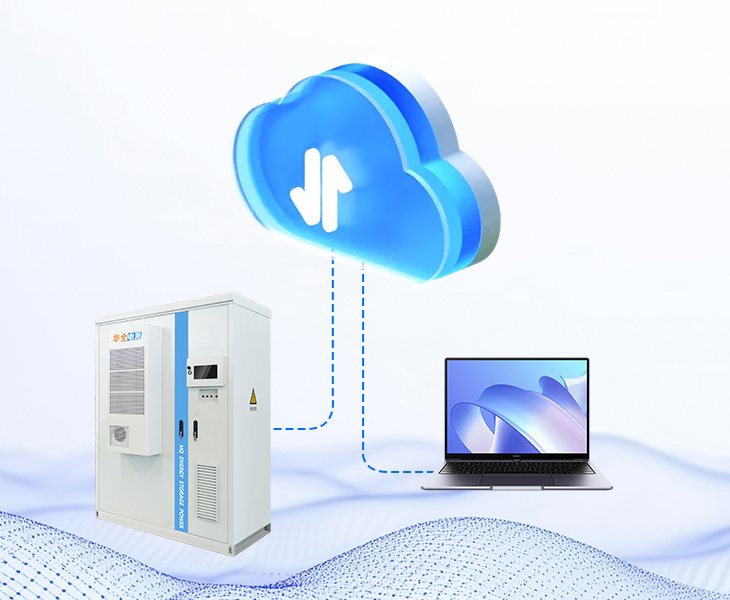
- Remote monitoring: Real-time viewing of power generation, simpanan tenaga, and electricity consumption data through mobile APP and computer terminal
- Virtual Power Plant (VPP) integration: capable of participating in peak shaving and frequency regulation ancillary services in the electricity market to obtain additional revenue
VI.Investment return calculation
Taking Huaquan’s 200kWh industrial and commercial energy storage system as an example
| project | data | penerangan |
| equipment cost | About 200,000 yuan | 200kWh configuration |
| Daily income (two charges and two discharges) | About 400 yuan | Based on the price difference between peak and off-peak periods of 1.2-1.6 yuan |
| annual revenue | About 100,000-120,000 yuan | Based on 330 hari bekerja |
| Static payback period | About 1.5-2 tahun | Theoretical optimal scenario |
| Actual payback period | About 3 years or so | Taking into account factors such as losses and photovoltaic fluctuations |
| system lifespan | Berakhir 10 tahun | Lithium iron phosphate has a cycle life of 8000 kitaran |
| Total profit period | more than 7 tahun | Generate continuous income after recouping costs |
Untuk pure photovoltaic + sistem penyimpanan tenaga (including photovoltaic modules):
- Investment cost: approximately 12 million yuan per 2MWh sistem (including photovoltaic)
- Annual income: approximately 2-2.4 million yuan (green electricity premium + electricity cost savings + subsidies)
- Payback period: kira-kira 5-6 tahun
VII. Common Issues
S1: Can photovoltaic energy storage systems completely replace grid electricity?
A: For off-grid scenarios, Huaquan’s off-grid microgrid solution can achieve 24-hour uninterrupted power supply through a combination of “solar + storage + diesel”. The system automatically switches to zero seconds in the event of a black start, with the diesel engine serving as the final backup, ensuring a power supply availability of over 99.99%.
S2: What should I do on a rainy day? Will the system power off?
A: Tidak. The Huaquan energy storage system is powered by bateri during rainy days. If the battery charge is too low, the system supports the following operating modes:
- Grid-connected type: automatically switches to mains power supply
- Off-grid type: automatically start the standby diesel generator for supplement
The energy storage capacity can be designed based on 2-3 days of independent power backup, which is sufficient to cope with continuous rainy days.
S3: How is the fire resistance of photovoltaic energy storage power stations?
A: Huaquan Photovoltaic prefabricated cabin pays special attention to fireproof design:
- It adopts a double-layer steel plate structure, with fire-resistant materials filled inside, thus boasting a high fire resistance rating
- The interior is equipped with a comprehensive fire protection system, including smoke alarms, temperature and smoke sensing modules, and aerosol automatic fire extinguishing devices
- It can automatically detect and extinguish fires, ensuring the safety of personnel and equipment
Q4: Does the battery become useless after reaching its maximum number of charge and discharge cycles?
A: The lithium iron phosphate battery used in Huaquan Energy Storage Power Station has a cycle life of up to 8,000 kitaran (with a capacity retention rate of 80%). Based on a daily charging and discharging frequency of 1-2 kali, it can be used for more than 10-15 tahun, far exceeding the investment recovery period. Even if the capacity decays to 80%, the battery can still be used, but the available capacity will decrease.
Q5: Can the system be configured in stages?
A: ya, Huaquan’s energy storage system adopts a modular design, supporting flexible capacity expansion. Users can initially configure the energy storage part (to achieve peak-valley arbitrage) and subsequently add the photovoltaic part to form a complete photovoltaic and energy storage system; or they can initially configure a small capacity and later add energy storage cabinets in parallel as needed.
📌 Summary: Huaquan Photovoltaic Energy Storage – Customizable on Demand, Plug and Play
The core configuration process of Huaquan Power’s photovoltaic energy storage system is: load calculation → energy storage capacity determination → photovoltaic matching → inverter control.
| scene | Recommended Configuration | payback period |
| household electricity | 5-10kW photovoltaic + 10-20kWh energy storage | 6-8 tahun |
| Industrial and commercial peak-valley arbitrage | 100-500kWh energy storage (without photovoltaic) | 2-4 tahun |
| Integrated photovoltaic, simpanan tenaga, and charging station | 100-500kW photovoltaic + 500-2000kWh energy storage | 4-6 tahun |
| Large-scale industrial and commercial enterprises | 500kW-5MW photovoltaic + 1-10MWh energy storage | 3-5 tahun |
| Off-grid islands/mining areas | Photovoltaic + Penyimpanan Tenaga + Biomass Hybrid System | Reduce fuel costs by 70% |
Advantages of Huaquan Power:
- High degree of prefabrication: Production and assembly are completed in a digital factory, and the product can be put into use with simple on-site connections
- Strong fire resistance: double-layer steel plates + automatic fire fighting system, safe and reliable
- Customizable on demand: Engineers tailor optimization solutions based on actual situations
- Lithium iron phosphate battery cell: 8000 cycles of lifespan, with a service life of over 10 tahun
- EMS intelligent management: AI load forecasting + peak-valley strategy + black start + virtual power plant integration
For more configuration details or to obtain a tailored photovoltaic and energy storage solution, please contact Huaquan Power’s customer service.