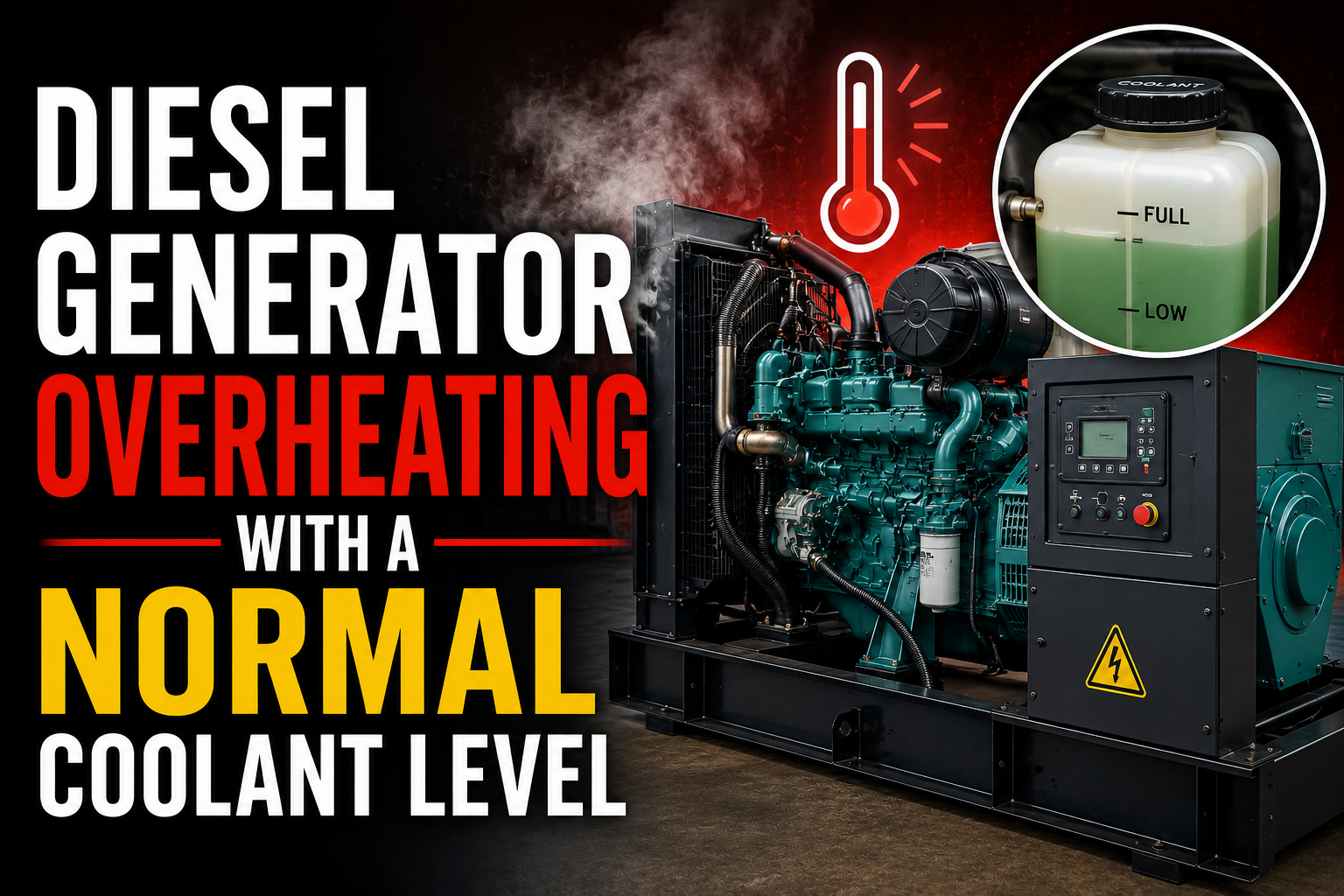
One of the worst fault messages to receive as a facility manager is a high-temp alarm with an immediate engine shutdown. In such a situation, the first thing that springs to mind is to examine the coolant. If the reservoir is full, though, what should you do?
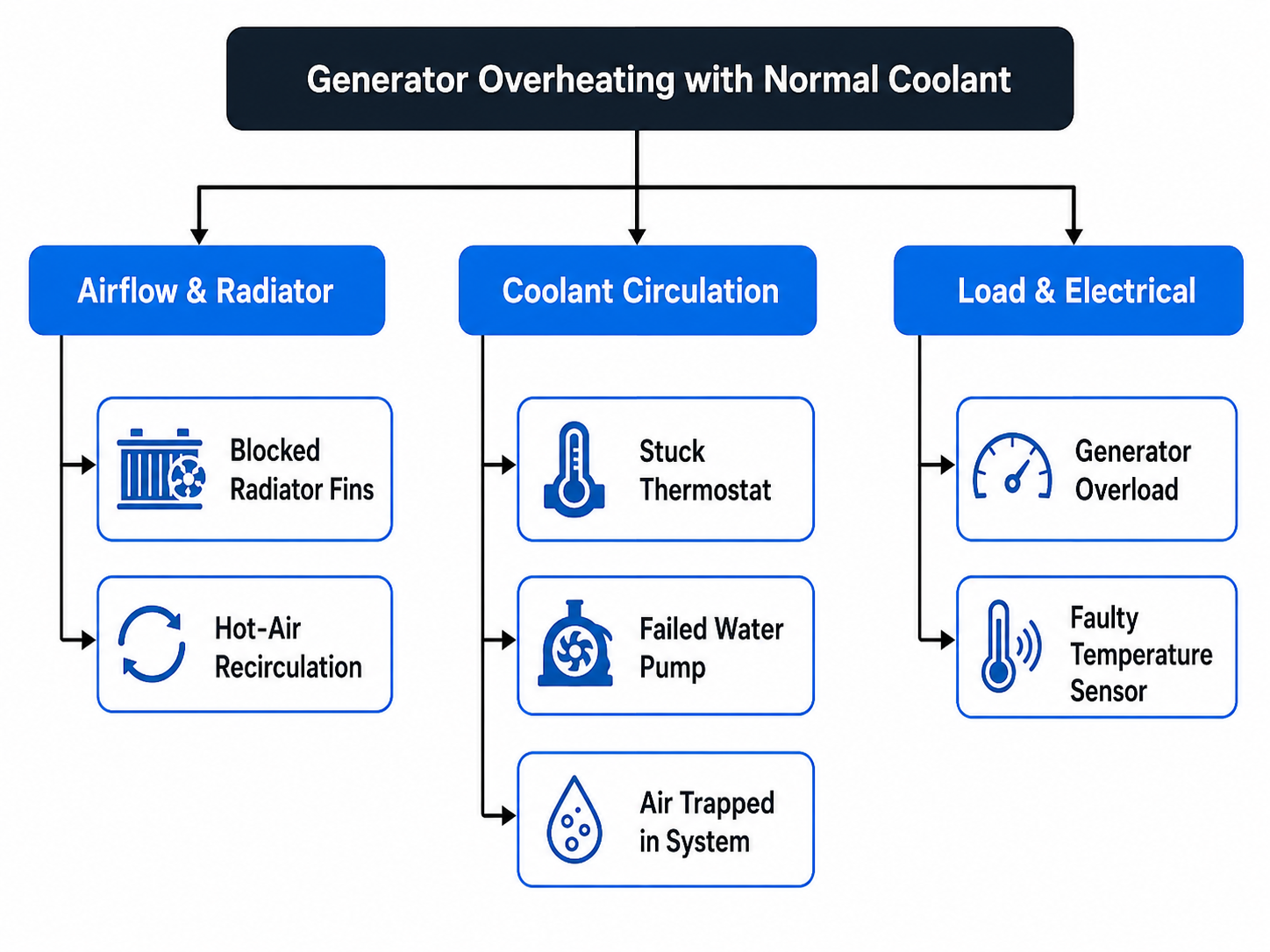
The normal coolant level only indicates that there is coolant in the machine. It does not indicate normal cooling system operation or a proper radiator cooling system. Overheating of the Diesel Generator, when it is running with a full fuel tank, is more prevalent than you may think and typically is indicative of mechanical problems such as being short of air, the thermostat may have failed, the water pump may have broken, the radiator may have clogged, there is air in the system, or the electrical load is too great.
In this article by Huaquan, you will learn how to accurately diagnose the root cause of a generator overheating even when the coolant reservoir appears perfectly full, saving you from unnecessary engine damage.
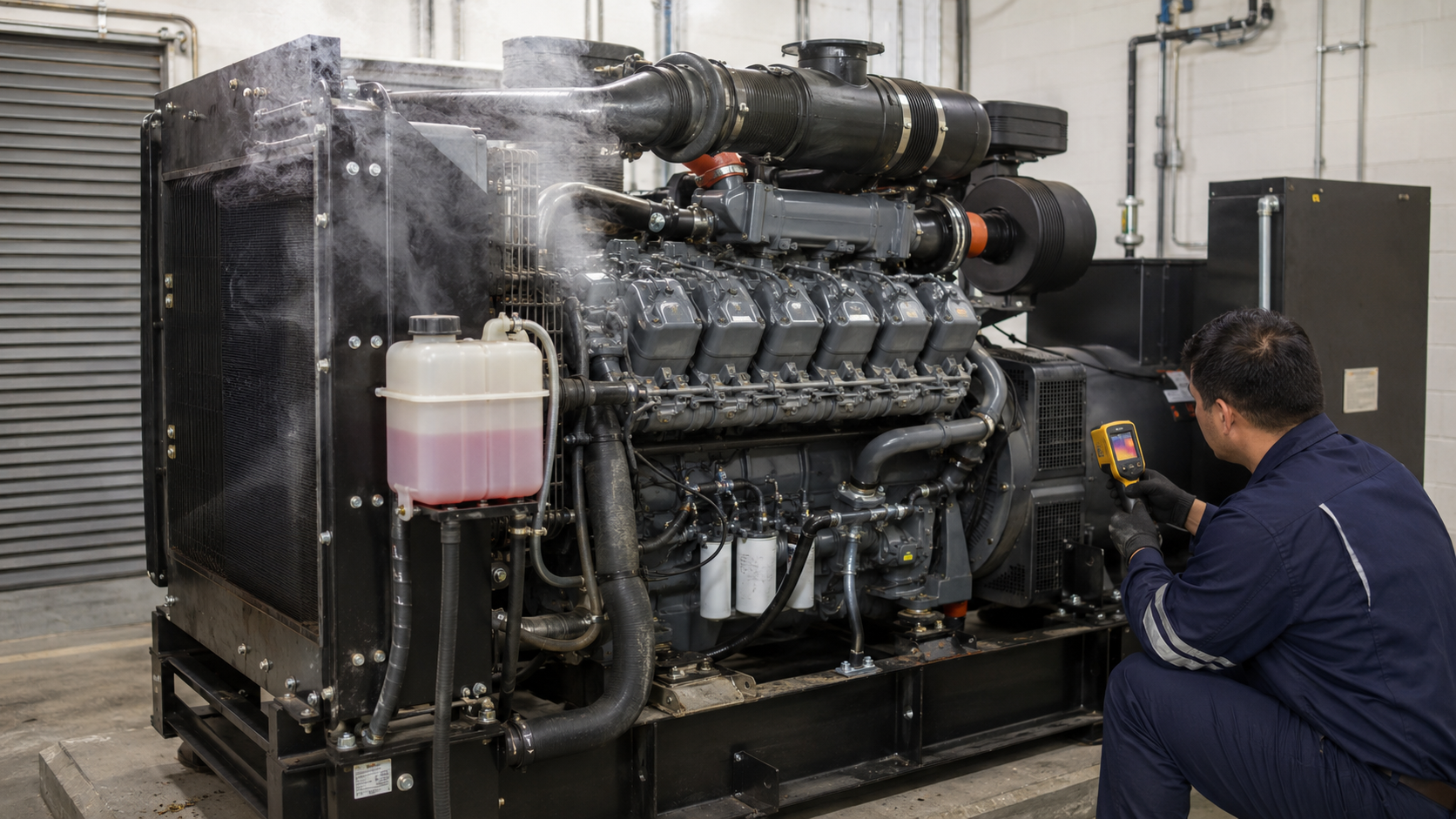 diesel generator overheating" width="1672" height="941" />
What to Do Immediately When a Diesel Generator Overheats
You must secure the equipment before trying to make a diagnosis, since this fault can otherwise cause catastrophic damage to the engine or serious personal injury.
- Minimize or eliminate the electrical facility load, if safe to do so.
- Let the generator cool down naturally following the auto-control method programmed into the generator.
- Avoid repeatedly resetting a high-temp shutdown code in order to get the machine to run.
- Never take the radiator or pressure cap off the hot engine. Opening a hot pressurized cooling system can release scalding, explosion-prone steam.
- Let the cooling system cool down completely; this may take several hours.
- Write down the exact alarm code and peak temp reading on the digital controller.
- Visually check for rising steam, weeping leaks, abnormal sounds and broken drive belts.
- Turn off Auto-Start function before physically inspecting the unit.
Can a Generator Overheat When the Coolant Level Is Normal?
Yes, absolutely. An engine can have the coolant up to the correct level and still become severely overheated as long as:
- Coolant is in a trapped condition and not flowing.
- The radiator fins do not allow air to actually flow through them.
- The hot exhaust air is drawn back into the inlet to the radiator.
- Rust plugs the internal coolant passages.
- The thermostat stays stuck closed.
- The radiator cap can’t maintain pressure in the system.
- The engine is electrically overloaded, producing more heat than the cooling system can remove.
- The temperature sensor is damaged and reads an incorrect, artificially high temperature.
Most Common Causes of Diesel Generator Overheating With Normal Coolant
1. Radiator Exterior Blockage
You could have coolant, but if not enough air flows through the radiator fins, the heat will be unable to escape. Dust, heavy mud, oil spray, fallen leaves, plastic bags or construction waste may block the airflow.
Inspection points: Use a strong flashlight to peer inside of the radiator core. Check whether small oil leaks have trapped thick dust on the fins, which acts as a blanket to insulate the fins. Always clean the core in accordance with the manufacturer’s instructions. Try not to put too much high-pressure water or compressed air into the radiator and upset the delicate fins.
2. Internal Radiator Restriction
Hard scale, rust, corrosion, mixed incompatible coolants, stop-leak coolant chemicals or sediment can build up in the inner tubes.
Symptoms: the upper radiator hose will run very hot and the lower hose will stay very cold, indicating the stoppage. You may also observe unequal temperatures on the radiator’s face and overheating that occurs only under heavy load.
3. Thermostat Stuck Closed or Partially Closed
The thermostat is a gate that regulates the flow of coolant in and out of the radiator. The thermostat could become defective and not completely close or only partially close. A defective thermostat can cause an engine to overheat and seize very quickly because it physically traps boiling coolant inside the engine block, as the service literature from Perkins says.
Symptoms: The temperature increases very rapidly shortly after starting up. The engine block starts to get very hot, while the radiator stays too cool to the touch.
4. Water-Pump Failure
Pressure drives the water pump to circulate coolant. Even with a full cooling system, the pump will cause water to boil over when a broken impeller, loose impeller shaft, worn bearing, broken drive gear, slipping belt or cavitation damage prevents it from circulating water through the system.
Symptoms: When you check the radiator neck for coolant, it does not seem to be moving. The pump makes a loud grinding or whining sound. Coolant keeps dripping from the bottom of the pulley at the weep hole of the pump.
5. Loose, Slipping or Broken Fan Belt
Heavy rubber drive belts control the speed of the cooling fan and water pump. Inspection points: Check belt tension, check for deep cracks, shiny glazing, missing ribbed sections or oil contamination. It is important to remember that an old and taut belt may appear to be in perfect condition when the engine isn’t running, but loosen a lot once the engine drives them hard.
6. Cooling Fan Problems
Look for shredded fan blades, a broken fan clutch (freewheeling), an improperly mounted replacement fan or a missing fan shroud. It DOES matter here as the shroud will force the air through the radiator. Without a shroud, the fan simply circulates useless air around the sides of the radiator.
7. Hot-Air Recirculation
A poorly designed generator room can pull hot exhaust air directly back into the radiator inlet, creating a problem. Some of the more common causes are lack of room ventilation, a leaky discharge duct, intake and discharge louvers set too close together or the generator positioned too close to a blank wall.
Possible indications: Generator runs fine when the doors to the room stand open but overheats quickly once the doors close.
8. High Ambient Temperature
Manufacturers design the coolers and other cooling systems for a specific ambient temperature. High outdoor summer temperatures, direct sunlight and acoustically enclosed conditions with little airflow significantly reduce the radiator’s rejection capability. You may have to derate the generator’s output at extreme temperatures or altitudes.
9. Air Trapped in the Cooling System
Large air pockets can occur following a coolant flush or after having had a hose or water pump service. Although the plastic reservoir shows the Full mark, trapped air does not allow the liquid to circulate and forms hot spots in the localized area.
How to Prevent Diesel Generator Overheating
- Regularly clean the exterior of the radiator.
- Maintain free room intake and discharge openings 100% of the time.
- Regularly check fan belts and tensioners.
- Keep the correct concentration of coolant and change it every calendar period as specified.
- If any thermostat or radiator cap doesn’t seem to be working, test them.
- Steer clear of continuous and aggressive electrical overloading.
- Thoroughly bleed the cooling system after all fluid services.
- Carefully adhere to the manufacturer’s maintenance program.
Conclusion
If it’s just a normal level, then it does not mean the cooling system is operating normally; it simply means the cooling system is not leaking. If your generator is overheating, you’ll need to think about more than just the amount of fluid.
Diagnosing the problem in four key segments, coolant circulation, radiator airflow, load and proper temperature sensing can help you avoid needless engine disassembly. Follow a systematic and patient strategy for diagnosis, not just substituting out costly parts at random. When you approach the issue of Diesel Generator Overheating systematically, you can find out in no time what the actual problem is and resume reliable backup power to your facility.
Contact the Huaquan team today for expert diagnostic support, professional cooling system inspections, and emergency repair services to keep your facility powered.
FAQs
Why is my diesel generator overheating when the coolant is full?
Coolant may not be flowing properly, an obstruction may be blocking the airflow, an excessive load may be overloading the generator or the temperature sensor may be faulty.
Can a bad thermostat cause Diesel Generator Overheating?
Yes. If the thermostat sticks or doesn’t open all the way, it will not allow any hot coolant to flow into the radiator.
Can a water pump fail without leaking coolant?
Yes. The internal impeller or shaft can fail without showing any external leakage.