A diesel generator converts only 35–40% of fuel energy into electricity. The remaining 60–65% becomes heat. Without a properly sized and maintained cooling system, that heat destroys the engine within minutes. The cooling system is arguably the most safety-critical subsystem on any diesel generator. This guide covers every generator cooling technology—open ventilated, radiator-cooled, heat exchanger, remote radiator, and cooling tower systems—with selection criteria, maintenance procedures, troubleshooting, and coolant chemistry for engines from 10 KW to 3000 KW.
Key Takeaways
- ✔ 60–65% of diesel fuel energy becomes heat; the cooling system must reject all of it
- ✔ For every 10°C above design coolant temperature, engine life is roughly halved
- ✔ Open skid Generators (10–50 KW) use simple radiator + fan; above 500 KW, remote radiator or cooling tower becomes cost-effective
- ✔ Coolant is not just water: it requires 50/50 ethylene glycol, SCA additives for wet-sleeve engines, and pH 8.0–10.5
- ✔ The #1 cause of cooling system failure is neglected coolant testing—test pH and SCA every 500 hours
- ✔ Always size the cooling system for worst-case ambient temperature at the installation site
- ✔ Heat exchanger systems enable engine room ventilation to be decoupled from engine cooling—critical for enclosed installations
Generator Cooling System Types: Complete Comparison
| Cooling Type | How It Works | Best For | KW Range | Pros | Cons |
|---|---|---|---|---|---|
| Air-Cooled (Direct) | Fins on cylinder/head + fan blowing air directly over engine | Portable, small standby | 5–20 KW | Simple, no coolant, no freezing risk | Noisy, limited cooling capacity, hot surface hazard |
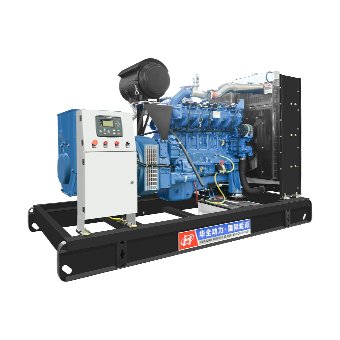
| Radiator-Cooled (Mounted) | Engine-driven fan pulls air through radiator mounted on skid | Standard open generator sets | 20–800 KW | Self-contained, factory-tested, simple install | Requires large room ventilation; fan consumes ~5% engine power |
| Heat Exchanger (Shell & Tube) | Engine coolant loop → heat exchanger → raw water loop (tower/river/ocean) | Marine, confined rooms, multi-engine plants | 100–3000 KW | Separates engine room from heat rejection; compact engine room | Raw water side needs filtration & corrosion protection; more complex |
| Remote Radiator | Radiator mounted outside (roof/yard); electric pump circulates coolant through insulated pipes | Enclosed generator rooms, basements | 200–3000 KW | No engine room ventilation for cooling; quiet room; no hot air recirculation | Piping cost; pump power; coolant volume large; freeze protection needed |
| Cooling Tower (Evaporative) | Water sprayed over fill media; evaporation removes heat from engine loop via heat exchanger | Very large plants, hot/dry climates, multi-engine | 800–5000 KW | Highest efficiency; lowest water temperature achievable; scales to any size | Water consumption; chemical treatment; Legionella risk; freeze protection; maintenance-intensive |
Cooling System Sizing: How Much Heat Must Be Rejected?
As a rule of thumb, a diesel generator rejects approximately 2.5–3.5 KW of heat per KW of electrical output. This varies by engine efficiency and whether the heat includes the alternator and exhaust system.
| Component | Heat Rejection (% of Fuel Energy) | 1000 KW Generator Example |
|---|---|---|
| Engine coolant circuit (jacket water, oil cooler, aftercooler) | 25–30% | ~625–750 KW thermal |
| Exhaust gas (before silencer) | 25–30% | ~625–750 KW thermal |
| Alternator losses | 4–6% | ~50–75 KW thermal |
| Radiation from engine surfaces | 3–5% | ~25–50 KW thermal |
| Total heat rejection to room/environment | 32–41% | ~700–875 KW thermal |
Coolant Chemistry: The Science of Engine Protection
Coolant Selection Guide
| Coolant Type | Base | Service Life | Best For | Limitations |
|---|---|---|---|---|
| Conventional (IAT – Inorganic Acid Technology) | Ethylene Glycol + silicates/phosphates | 2 years / 2000 hours | Older engines, cost-sensitive applications | Frequent SCA testing required; silicates can drop out and form gel |
| OAT (Organic Acid Technology) | Ethylene Glycol + carboxylates | 5–6 years / 6000 hours | Modern heavy-duty diesels | Not compatible with IAT; do not mix |
| HOAT (Hybrid OAT) | Ethylene Glycol + OAT + silicates | 5 years / 6000 hours | Cummins, MTU engines | Mid-range cost |
| SCA Pre-Charged | Ethylene Glycol + OAT + SCA | 6 years / 8000 hours | Wet-sleeve engines (Perkins, older Cummins) | Requires periodic SCA top-up |
| Waterless Coolant | Propylene Glycol (no water) | Lifetime | Classic/antique engines, extreme freeze risk | Lower heat capacity; 3× cost; reduced cooling efficiency at high load |
Coolant Test Values: What to Measure
| Parameter | Target Range | Test Method | Action if Out of Range |
|---|---|---|---|
| pH | 8.0–10.5 | pH test strip or meter | Below 8.0: acidic, corrosion risk → flush and replace. Above 10.5: too alkaline, aluminum corrosion → dilute or replace |
| Freeze Point | -37°C (50/50 mix) | Refractometer or hydrometer | Above -30°C: top up with concentrate glycol |
| SCA (Supplemental Coolant Additive) | 1.5–3.0 units (test strip) | SCA test strip (Fleetguard CC2602 or similar) | Below 1.5: add SCA liquid or filter. Above 3.0: do nothing (overdose risk is low) |
| Nitrite (NO₂) | 800–2400 ppm | Test strip or lab analysis | Below 800: liner pitting risk → add SCA. Above 2400: solder corrosion risk → dilute |
| Total Dissolved Solids (TDS) | <500 ppm | Conductivity meter | Above 500: scaling risk → use demineralized water for top-up |
| Chlorides | <40 ppm | Lab analysis | Above 40: pitting corrosion risk → flush and use pure water for refill |
Cooling System Maintenance Guide
Daily / Weekly (Operator Level)
- Visually inspect coolant level in expansion tank (engine cold)
- Check for coolant leaks under engine, at hose connections, and at radiator seams
- Inspect radiator fins for debris, leaves, dirt blocking airflow
- Check fan belt tension and condition—a slipping belt reduces airflow by 20–40%
- Verify radiator cap is securely tightened and pressure seal is intact
- Listen for unusual fan noise (bearing failure or blade contact)
Every 500 Hours / Monthly
- Test coolant pH with test strip; record value in maintenance log
- Test SCA concentration with Fleetguard or equivalent test strip
- Test freeze point with refractometer
- Clean radiator external fins with compressed air (blow from engine side out)
- Inspect all coolant hoses for swelling, cracking, or soft spots
- Check hose clamps for tightness—loose clamps cause slow leaks and air ingestion
Every 2000 Hours / Annually
- Send coolant sample to lab for full analysis (TDS, chlorides, metals, glycol %)
- Replace coolant filter (if equipped with SCA filter)
- Pressure-test radiator cap (should hold rated pressure, typically 7–15 PSI)
- Pressure-test cooling system for leaks (pump to 15 PSI, hold for 15 minutes)
- Inspect thermostat operation: remove and test in hot water with thermometer
- Flush and replace coolant if beyond service life or lab results indicate
Coolant Replacement Procedure (9 Steps)
- Run engine to operating temperature (80–90°C), then shut down and allow to cool to 50°C
- Open radiator drain valve and engine block drain plug(s); collect used coolant for proper disposal
- Flush system with clean demineralized water; run engine 10 minutes at idle with water only
- Drain flush water completely; repeat if significant discoloration remains
- Close all drains; refill with pre-mixed 50/50 ethylene glycol + demineralized water coolant
- If using SCA coolant: add SCA pre-charge dose per engine manual; install new SCA filter
- Run engine 15 minutes at 50% load with radiator cap off to purge trapped air; top up
- Install radiator cap; run to full temperature; check for leaks at all connections
- After 24 hours (cold engine), recheck coolant level and top up as needed
Cooling System Troubleshooting
| Symptom | Likely Cause | Diagnosis | Fix |
|---|---|---|---|
| Engine overheating under load | Clogged radiator fins (external) | Check airflow through radiator; look for debris | Clean fins with compressed air or pressure washer (low pressure) |
| Engine overheating; radiator cool | Thermostat stuck closed | Feel upper radiator hose—should be hot when engine warm | Replace thermostat; always use OEM temperature rating |
| Slow overheat over 5–10 minutes | Low coolant level / air in system | Check expansion tank; look for white exhaust smoke (head gasket) | Top up coolant; bleed air from system; pressure test for head gasket leak |
| Coolant loss, no visible leak | Internal leak (head gasket, EGR cooler, oil cooler, liner o-rings) | Check oil for milky appearance; test coolant for combustion gases | Pressure test each circuit; repair identified leak |
| Fan running constantly at high speed | Fan clutch failure (viscous or electromagnetic clutch stuck engaged) | Fan should freewheel when engine is cold; excessive fan noise | Replace fan clutch; this costs 3–5% fuel penalty if stuck engaged |
| Coolant in engine oil (milky oil) | Oil cooler failure or head gasket leak | Immediate oil analysis; pressure test oil cooler | Do not run engine; replace oil cooler or head gasket; flush oil system thoroughly |
| Rapid coolant temperature fluctuation | Faulty temperature sensor or air pocket at sensor location | Verify with infrared thermometer at thermostat housing | Replace sensor or bleed system |
| Corrosion visible in radiator neck | Depleted coolant additives; incorrect water used for mixing | Test pH and SCA; check maintenance log for last coolant change | Flush system; refill with correct coolant; use demineralized water |
Cooling System Installation Best Practices
- Radiator face area: Allow 1.5–2× radiator core area for intake louvers to avoid air velocity restriction
- Hot air discharge: Discharge duct must extend at least 300mm beyond building wall to prevent recirculation
- Remote radiator piping: Use Schedule 40 steel or PEX; insulate all pipes; include expansion tank at highest point
- Ventilation air: Engine room air inlet = radiator airflow + combustion air (0.1 m³/min per KW) × 1.25
- Freeze protection: Remote systems in freezing climates need electric heat trace on pipes and coolant heater in radiator
- Air bleed: Every high point in the cooling circuit needs an automatic air bleed valve—trapped air causes localized overheating
FAQ
What happens if a generator cooling system fails?
Without cooling, a diesel engine reaches destructive temperatures in 2–5 minutes under load. Initial symptoms: loss of power, steam from radiator, coolant temperature alarm. If unaddressed: cylinder head warping, head gasket failure, piston seizure, cracked cylinder liners, and potential catastrophic engine failure requiring complete rebuild or replacement.
How often should generator coolant be changed?
Conventional IAT coolant: every 2 years or 2000 hours. OAT/HOAT coolant: every 5–6 years or 6000 hours. Extended-life coolant with SCA: 6 years or 8000 hours. These are maximums; always follow lab analysis results—change coolant immediately if pH falls below 8.0 or TDS exceeds 500 ppm regardless of time.
Can I use automotive coolant in my diesel generator?
Not recommended. Heavy-duty diesel engines operate at higher combustion pressures and temperatures, requiring cavitation protection (SCA additives) not present in automotive coolant. Wet-sleeve diesel engines are particularly vulnerable to liner pitting without proper SCA. Always use heavy-duty diesel coolant meeting ASTM D6210 or the engine manufacturer’s specification.
What is the best coolant mixture ratio?
50% ethylene glycol + 50% demineralized water provides freeze protection to -37°C and boil-over protection to 129°C (with a 15 PSI pressure cap). In Arctic conditions, 60/40 provides -52°C protection. Never exceed 60% glycol—above this, heat transfer capacity decreases significantly and the engine may overheat under full load.
Why does my generator overheat even though coolant level is normal?
Common causes beyond low coolant: (1) thermostat stuck closed—most common; (2) radiator fins clogged externally with dust/debris; (3) fan belt slipping—reduced airflow; (4) internal radiator blockage (scale buildup from hard water); (5) combustion gas leaking into coolant (head gasket failure)—test with chemical block tester; (6) incorrect ignition timing causing excess heat generation.
How much ventilation does a generator room need?
A 500 KW generator in an enclosed room requires approximately 25,000–35,000 m³/hour of ventilation airflow—this is not optional. The room must have separate inlet and outlet openings sized for the radiator fan airflow plus combustion air. Inadequate ventilation is the #1 cause of generator overheating in enclosed installations.
What is a heat exchanger cooling system, and when do I need one?
A heat exchanger system separates the engine coolant loop from the heat rejection loop using a shell-and-tube or plate heat exchanger. The secondary loop can use cooling tower water, river water, seawater, or a remote radiator. This is essential when the engine room cannot accommodate the radiator airflow (basement installations, marine vessels) or when multiple engines share a central cooling system.
How do I prevent liner pitting in wet-sleeve diesel engines?
Liner pitting (cavitation erosion) is caused by microscopic vapor bubbles imploding against the cylinder liner outer surface at 20,000+ PSI. Prevention requires: (1) maintaining SCA concentration at 1.5–3.0 units; (2) maintaining nitrite levels at 800–2400 ppm; (3) using the correct coolant pressure cap (7–15 PSI raises boiling point and reduces bubble formation); (4) never using plain water, even temporarily.
Can I mix different coolant types?
Generally no. Mixing IAT (green) with OAT (orange/red/pink) can cause chemical reactions that form sludge, reduce corrosion protection, and clog radiators. In an emergency, it’s better to top up with demineralized water than to mix incompatible coolant types. If you must mix, schedule a complete flush and refill as soon as possible.
What are the signs of a failing water pump?
Weep hole leakage (small coolant drip from pump housing), bearing noise (growling/squealing), coolant temperature creeping up at idle (pump not circulating adequately at low RPM), visible shaft play when belt is removed. A water pump bearing failure can be catastrophic—the shaft can break, sending the fan into the radiator.
Why is demineralized water important for coolant mixing?
Tap water contains dissolved minerals (calcium, magnesium, chlorides) that cause scale buildup on hot engine surfaces, reduce heat transfer, and accelerate corrosion. Scale acts as an insulator—a 1mm scale layer on cylinder liners can increase metal temperature by 50–100°C. Always use demineralized, deionized, or distilled water for coolant mixing.
Do air-cooled generators need cooling system maintenance?
Yes—air-cooled generators need regular cleaning of cooling fins and air passages (dust, oil, and debris accumulate and insulate), verification of fan operation, and ensuring adequate clearance around the generator for airflow. The absence of liquid coolant doesn’t eliminate the need for thermal management maintenance.
Related Articles
- Diesel Generator Derating Guide (Altitude & Temperature)
- How to Calculate Diesel Generator Power
- Diesel Generator Fuel Consumption Guide
- Generator Room Ventilation Design Guide
- Diesel Generator Maintenance Checklist
- Diesel Generator Engine Parts Guide
- Open Type vs Silent Generator Comparison
- Genset Engine Overhaul Guide
- Diesel Generator Troubleshooting Guide
- Generator Selection for Data Centers
- Hospital Backup Generator Requirements
Recommended Products
Huaquan Power supplies diesel generators 10–3000 KW with factory-engineered cooling systems: mounted radiator, remote radiator, and heat exchanger configurations. All generators include coolant pre-fill with OEM-specified heavy-duty diesel coolant and SCA protection.
- Perkins Generators with Radiator Cooling — 10–2500 KW
- Cummins Generators with Remote Radiator Option — 50–3000 KW
- Volvo Penta Generators with Heat Exchanger — 100–700 KW
- MTU Generators with Cooling Tower System Design — 500–3000 KW
- Weichai Cost-Effective Generators — 20–800 KW