Introduction
High environmental pollution and carbon footprints have caused diesel fuels to be less likely to be used for energy production. Even more people are moving toward eco-friendly sources, such as solar energy or hydropower systems. In such cases, there is another sustainable fuel system— biodiesel in Generators.
It has similar combustion properties but features a carbon-free energy source. Today we will discuss the key challenges and benefits of biodiesel fuel.
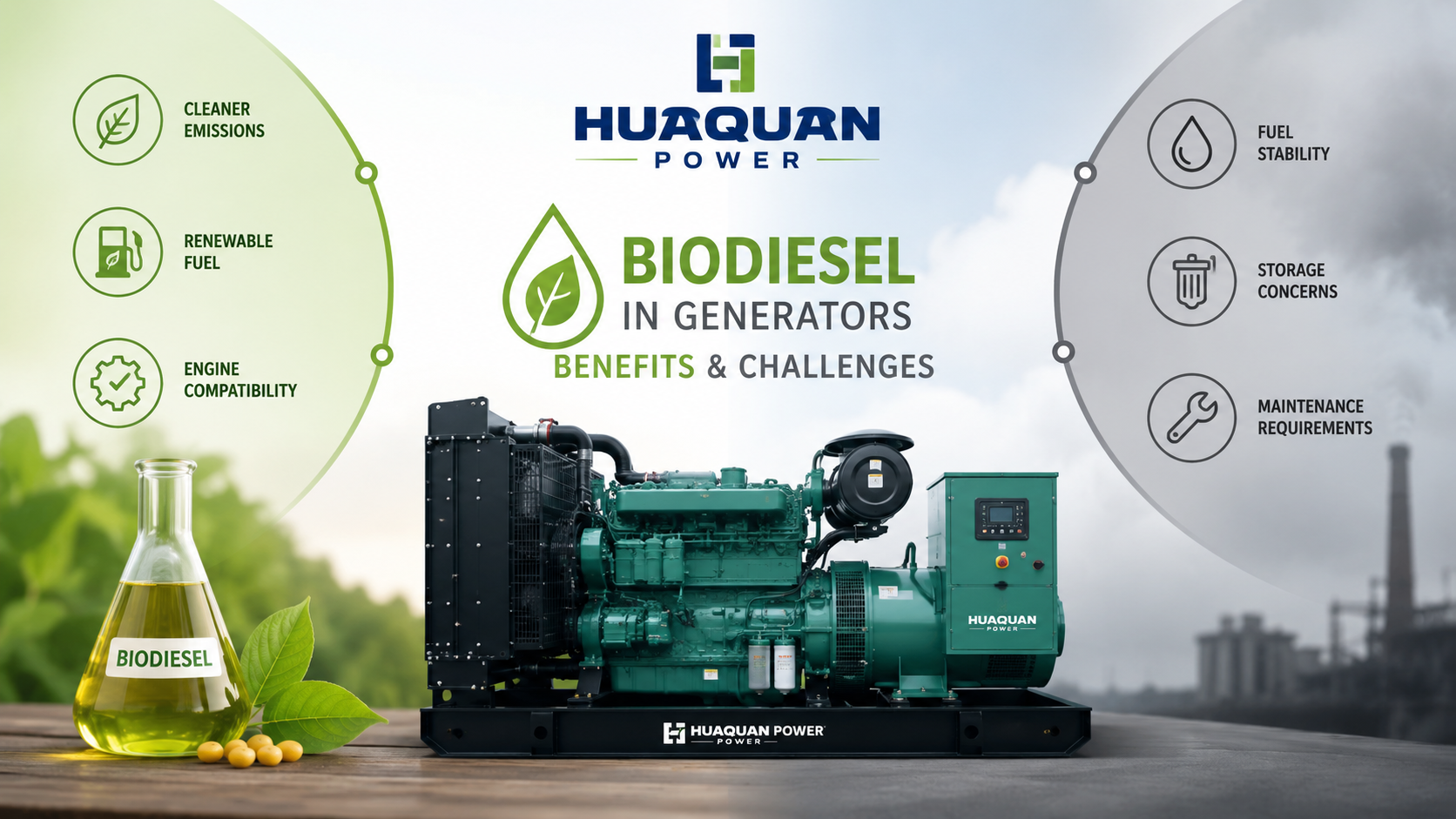
What is Biodiesel?
Biodiesel is a new revolutionary fuel for generator systems. Just like diesel fuel, biodiesel also provides the same combustion properties, but there are a few differences from traditional fuel systems.
For example, biodiesel is formed through the transesterification process of natural oils and fats. It comprises fatty acid methyl esters (FAME) that have fuel combustion properties like diesel fuel and other options.
Here are a few key sources of biodiesel.
- Soybean oil
- Canola oil
- Palm oil
- Sunflower oil
- Waste cooking oil
- Animal fats
- Algae oil
- Camelina oil
- Jatropha oil
- Used restaurant grease
| Blend | Biodiesel Content | Petroleum Diesel | Common Applications |
| B5 | 5% | 95% | Most generators without modification |
| B10 | 10% | 90% | Commercial standby generators |
| B20 | 20% | 80% | Most widely used commercial blend |
| B50 | 50% | 50% | Selected industrial fleets |
| B100 | 100% | None | Special applications with approved engines |
Benefits of Biodiesel in Generators
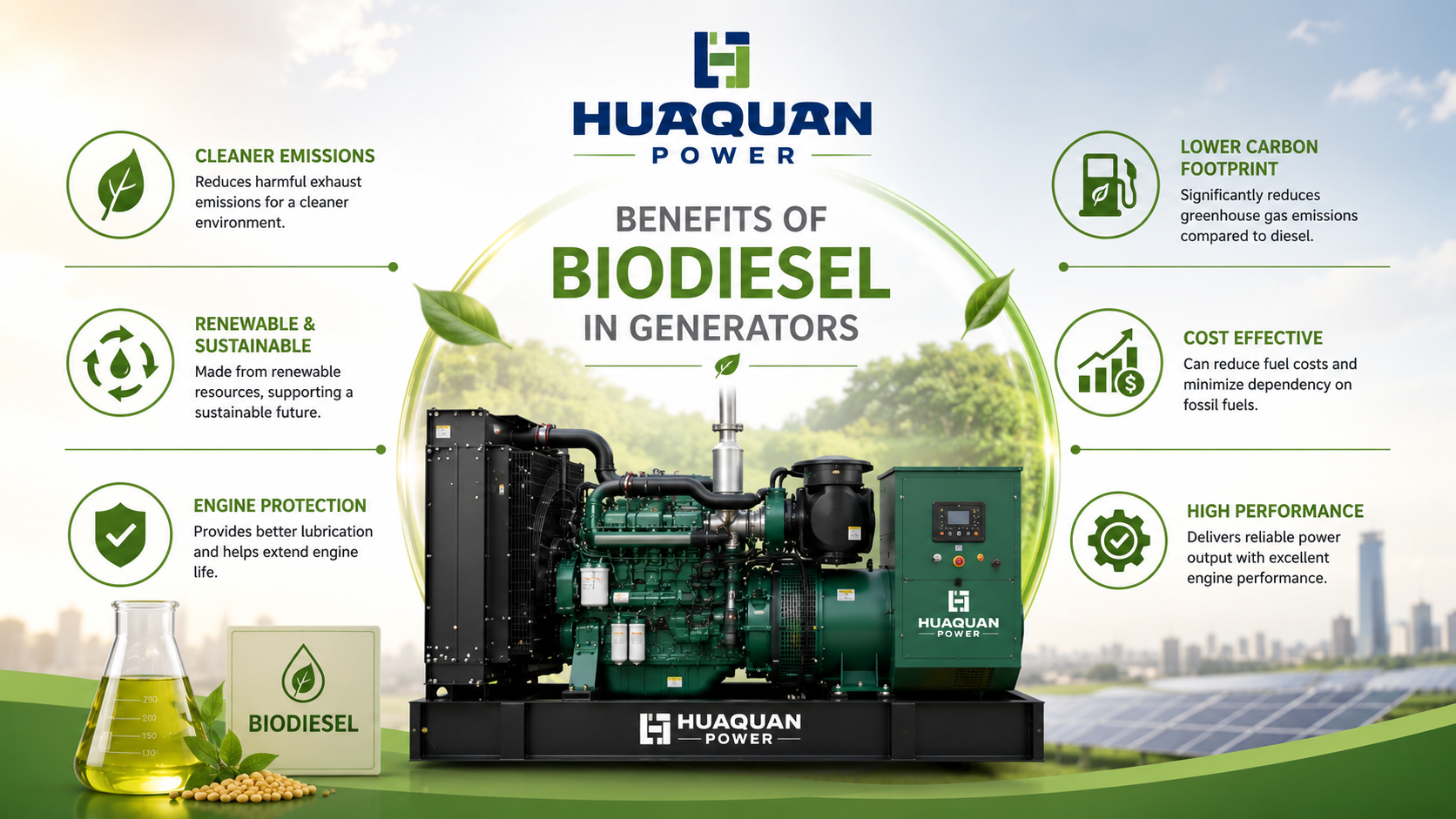
Biodiesel in generators is pretty effective. Let’s discuss a few key benefits and understand the process.
Benefit #1: Lower Greenhouse Gas Emissions
One of the biggest benefits of biodiesel in generators is the lower carbon emissions. When you use diesel generators, they produce carbon emissions and cause extensive environmental pollution. In biodiesel, the carbon is absorbed, and there are very low emissions. It leads to better environmental conditions and offers the following benefits for eco-friendly operations.
- Reduced lifecycle carbon dioxide (CO₂) emissions
- Lower particulate matter (PM)
- Reduced carbon monoxide (CO)
- Lower hydrocarbon (HC) emissions
- Less visible black smoke
- Improved local air quality
- Reduced environmental impact
Here is a typical comparison of the carbon emissions between the different types of fuels and systems.
Benefit #2: Renewable Energy Source
If you rely on diesel as a fuel for your generator, there is one key problem— it is limited. Fossil fuels help produce the diesel, but they are available in finite quantities.
Compared to it, biodiesel comes from vegetables. Their production is always top-notch and delivers consistent quality as long as you keep producing them. Therefore, there is no concept of fuel ending.
Here is the summary of benefits related to the nature of renewable energy sources.
- Reduces reliance on fossil fuels
- Supports renewable energy initiatives
- Encourages recycling of waste cooking oil
- Promotes domestic fuel production
- Improves long-term energy security
- Supports agricultural industries
- Contributes to circular economy practices
Benefit #3: Excellent Fuel Lubricity
Nowadays, ultra-low sulfur diesel fuel is being used in the generators to reduce toxic gases. But it has several issues. For example, it doesn’t feature good lubrication and might cause dangerous friction among the components.
On the other hand, biodiesel offers good lubrication and reduces the friction between the moving components. It is easier to use and maintain the following components.
- Fuel injection pumps
- Fuel injectors
- Injection plungers
- High-pressure fuel systems
- Fuel distributors
Due to High lubricity and quality fuels, it is super easy to maintain and provide a balanced fuel system. Here is the summary of benefits.
- Reduced component wear
- Longer injector life
- Lower fuel pump wear
- Smoother engine operation
- Reduced maintenance costs
- Improved fuel system durability
Benefit #4: Cleaner Combustion
One of the key benefits is cleaner combustion. Thanks to the oxygen content in the biodiesel, which offers high-efficiency combustion and reduces sooting and byproducts.
This cleaner combustion provides longevity to the system and reduces environmental pollution. Here is the list of benefits.
- Less black exhaust smoke
- Reduced soot formation
- Cleaner combustion chambers
- Lower carbon deposits
- Reduced exhaust odor
- Cleaner tailpipe emissions
Benefit #5: Higher Flash Point Improves Safety
Flash point is the burning temperature. It means you need a higher temperature to burn the fuel. In the case of biodiesel, you get a higher flash point, making it easier to store the fuel without any risks of ignition and combustion in normal storage conditions.
Here is how it benefits the systems.
- Lower fire risk
- Reduced ignition hazards
- Safer transportation
- Improved fuel storage safety
- Better workplace safety
- Lower accident risk during refueling
Benefit #6: Wide Compatibility
Which generator systems do you have? Whether it is new or old technology, biodiesel is compatible with various generator systems. Its blends offer good value and higher safety for your generators.
Moreover, there is no need for extra tools to operate the generators on biodiesel. Here are a few benefits of the generator systems.
- Lower transition costs
- Existing fuel infrastructure can often be retained
- No major engine redesign required for approved blends
- Easier implementation than alternative fuels
- Reduced capital investment
- Faster adoption of renewable fuel
Benefit #7: Reduced Sulfur Emissions
Diesel generators often combust fuel and produce the sulfur dioxide that causes acid rain and affects air quality. If you have to follow strict emission regulations, biodiesel is the best option in such a case.
It doesn’t produce sulfur and provides clean air. There are reduced risks of environmental pollution and the following benefits.
- Reduced sulfur oxide emissions
- Improved air quality
- Lower environmental pollution
- Better compatibility with modern emission control systems
- Cleaner exhaust gases
Benefit #8: Biodegradable
Diesel Fuel is not biodegradable, causing long-term effects on environmental conditions. On the other hand, biodiesel in generators is highly biodegradable and can be instantly degraded once spilled on the grounds.
Here is the list of benefits to know.
- Faster natural decomposition
- Lower soil contamination
- Reduced groundwater pollution
- Lower aquatic toxicity
- Safer environmental handling
Benefit #9: Supports Corporate Sustainability Goals
Many organizations and companies have goals to reduce environmental impacts and optimize the system for sustainable productivity. This is what happens with this system.
Biodegradable and low-carbon emissions features achieve the sustainability goals of biodiesel. Here is the list of benefits.
- Carbon reduction
- Renewable energy adoption
- ESG reporting
- Corporate environmental responsibility
- Sustainable operations
- Green procurement programs
| Benefit | Why It Matters | Operational Impact |
| Lower emissions | Cleaner environment | Reduced pollution |
| Renewable fuel | Sustainable energy | Less fossil fuel dependence |
| Better lubricity | Less component wear | Longer fuel system life |
| Cleaner combustion | Reduced soot | Cleaner engine operation |
| Higher flash point | Improved safety | Safer storage and handling |
| Generator compatibility | Easy adoption | Lower upgrade costs |
| Low sulfur | Cleaner exhaust | Better environmental performance |
| Biodegradable | Lower environmental risk | Safer spill management |
| Supports ESG goals | Sustainability compliance | Improved corporate image |
Challenges of Biodiesel in Generators
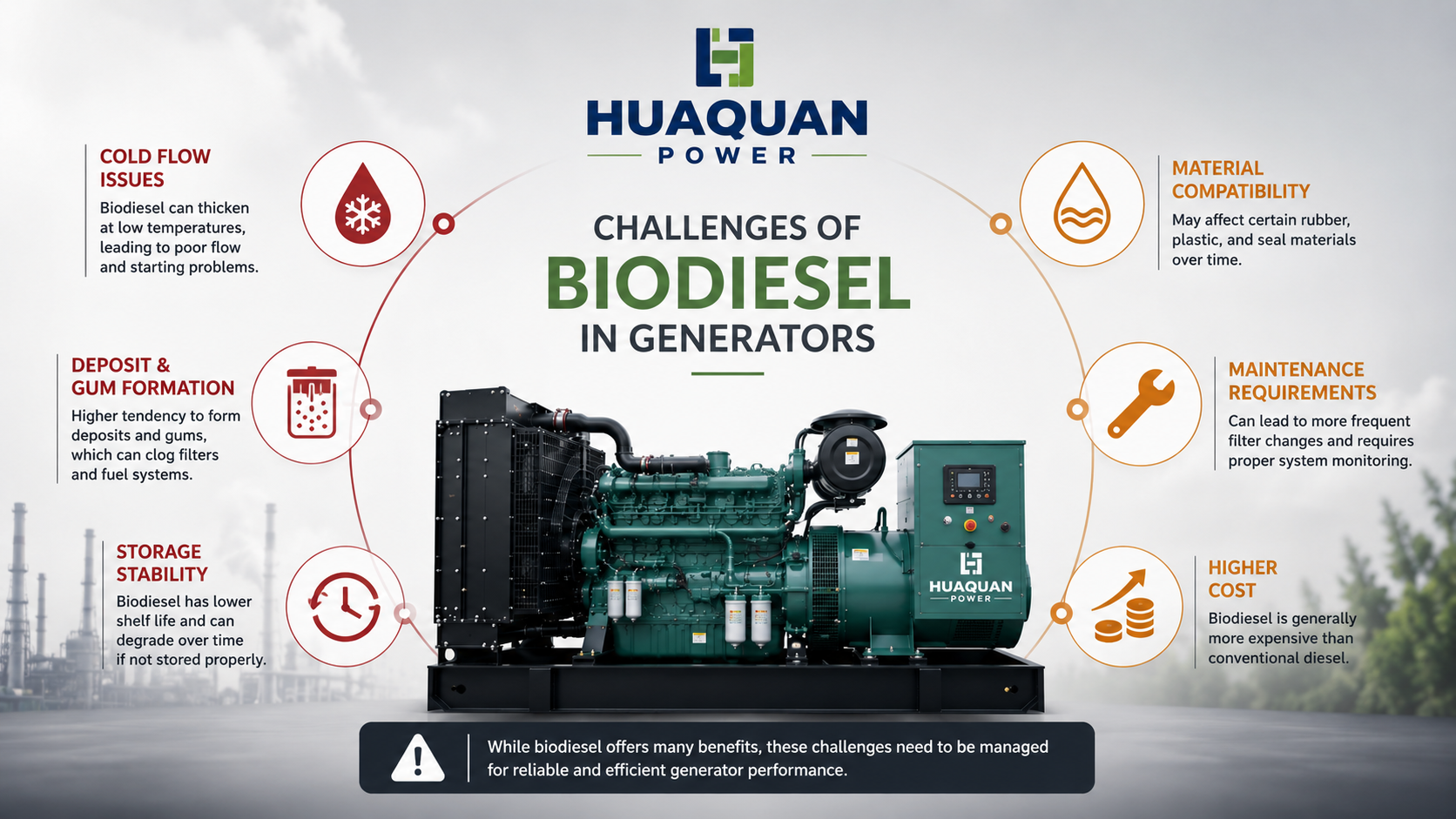
It is not just the benefits that help choose the right biodiesel. Instead, you should focus on the challenges and decide whether you should use biodiesel in generators or not.
Here are a few challenges listed.
Challenge #1: Poor Cold Weather Performance
One of the key issues of biodiesel compared to conventional diesel fuels is the poor cold weather performance. In lower temperature conditions, it starts to thicken and clogs the fuel filters and restricts the fuel flow.
Therefore, here are a few prominent issues at such a point.
- Difficult engine starting
- Fuel gelling
- Blocked fuel filters
- Restricted fuel flow
- Reduced engine power
- Unexpected generator shutdowns
Best Practice
Do you want to avoid it? Here are a few tips.
- Use lower biodiesel blends during winter.
- Install fuel heaters in cold regions.
- Store fuel in temperature-controlled tanks.
- Use winter-grade biodiesel where available.
| Factor | Conventional Diesel | Biodiesel |
| Cold starting | Excellent | Can be difficult in low temperatures |
| Fuel gelling | Lower risk | Higher risk |
| Filter plugging | Less common | More common in cold weather |
| Winter performance | Better | Depends on blend and additives |
Challenge #2: Limited Storage Stability
Diesel generators are often ready to provide the backup supply. Sometimes, they are not used for a few days. In other cases, there is a storage of fuel required for extended periods up to 6 months or more.
Unfortunately, biodiesel has a quick degradation, especially when exposed to oxygen. Overall, it has a shorter storage life and can be a major issue if you are storing it for extended periods.
Here are a few possible issues.
- Fuel degradation
- Sediment formation
- Injector deposits
- Fuel discoloration
- Reduced combustion quality
- Increased maintenance
Best Practice
If you want to prevent such cases, follow the tips below.
- Keep storage tanks full to reduce air exposure.
- Store fuel away from direct sunlight.
- Use approved fuel stabilizers when necessary.
- Periodically test stored fuel quality.
Challenge #3: Water Absorption and Microbial Growth
Another major challenge during storage or consumption is exposure to water. If you expose the biodiesel to water, it provides a perfect environment for bacterial and fungal growth. As a result, fuel degradation and issues commonly arise in such cases.
Here is the list of common effects.
- Sludge formation
- Plugged fuel filters
- Corroded fuel tanks
- Injector contamination
- Reduced engine performance
- Fuel degradation
Best Practice
The best practices to avoid such cases include:
- Drain water from storage tanks regularly.
- Keep tanks tightly sealed.
- Inspect tanks for condensation.
- Clean storage tanks periodically.
Challenge #4: Fuel Filter Clogging
When users move from petroleum diesel to biodiesel as their main fuel, fuel filter clogging occurs. It often occurs due to the solvent properties of the biodiesel that attempt to clear the deposits, but fuel filters trap them, and clogging occurs.
The common issues are:
- Reduced engine power
- Hard starting
- Engine hesitation
- Increased fuel restriction
- Unexpected shutdowns
Best Practice
If you want to avoid such cases, follow our tips.
- Replace filters more frequently during the first few months.
- Inspect fuel lines regularly.
- Keep spare filters available.
- Monitor fuel pressure during operation.
Challenge #5: Low Energy Content
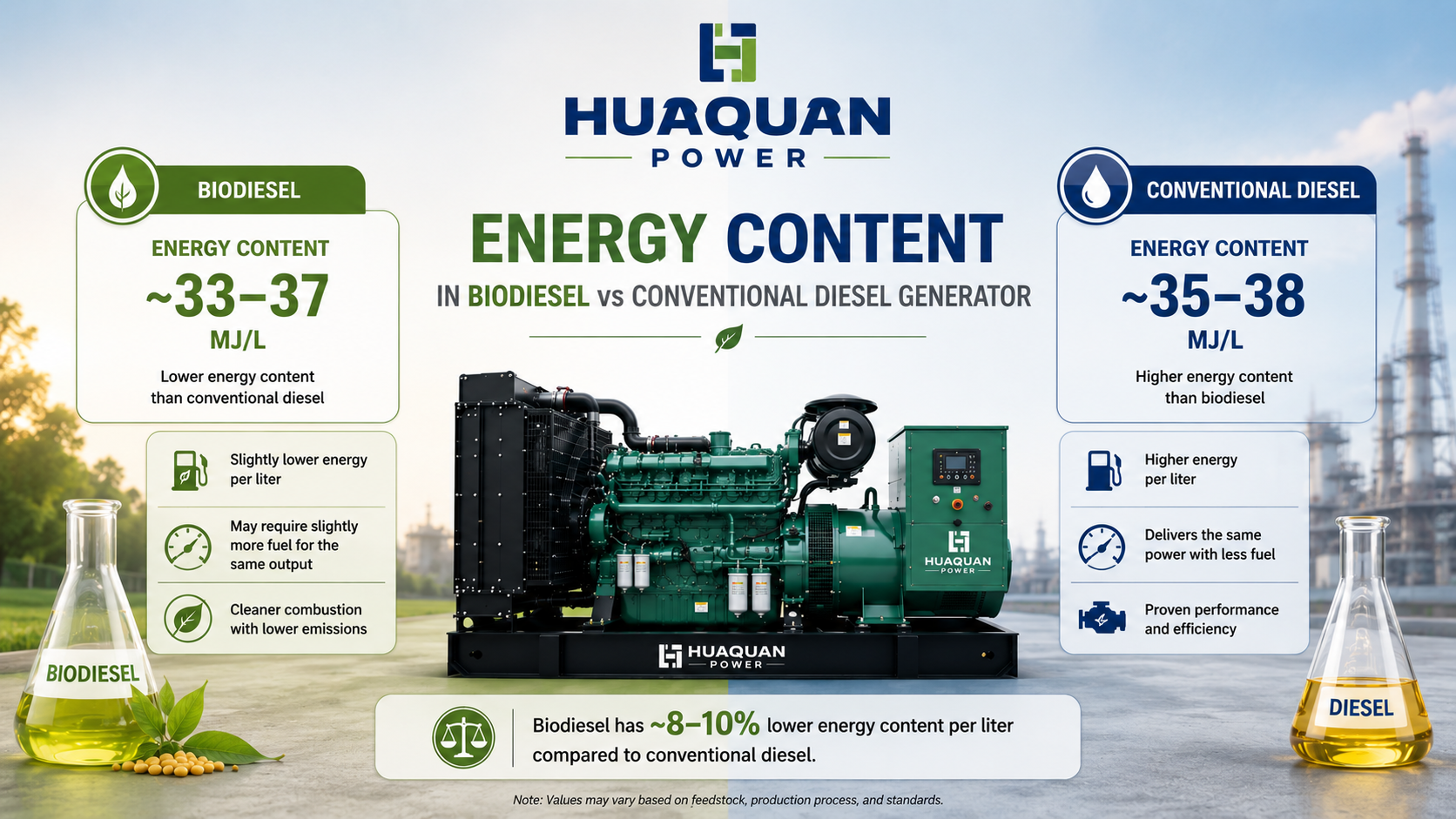
Since the biodiesel is a blend, it doesn’t feature the same energy content as conventional diesel fuels. As a result, the engine consumes more fuel compared to diesel and causes shorter runtime.
| Property | Conventional Diesel | Biodiesel |
| Energy content | Higher | Slightly lower |
| Fuel consumption | Lower | Slightly higher |
| Runtime per tank | Longer | Slightly shorter |
Here is the list of common effects.
- Slightly higher fuel usage
- Marginally shorter runtime per tank
- Small reduction in fuel economy
- Minor decrease in overall efficiency
| Challenge | Impact on Generator | Recommended Solution |
| Cold weather performance | Fuel gelling and hard starts | Use winter blends, fuel heaters, or lower biodiesel blends |
| Storage stability | Fuel oxidation and degradation | Rotate fuel, use stabilizers, and store properly |
| Water absorption | Microbial growth and sludge | Remove water and inspect tanks regularly |
| Filter clogging | Reduced fuel flow | Replace filters during transition period |
| Material compatibility | Seal and hose deterioration | Upgrade incompatible components |
| Lower energy content | Slightly higher fuel consumption | Account for increased fuel usage |
FAQs
- Is biodiesel suitable for long-term fuel storage?
Yes. Biodiesel can be stored for the long term, but it features short-term storage plans compared to conventional diesel fuels. However, Proper storage conditions, fuel stabilizers, and regular fuel quality testing can extend its lifespan.
- Why does biodiesel clog fuel filters after switching?
Biodiesel offers excellent lubricity and acts as a cleaning agent. It dissolves the deposits left by petroleum diesel that may clog the fuel filters and sometimes require replacements.
- Does biodiesel reduce generator performance?
Not necessarily. However, to some extent, it can increase fuel consumption and provide better performance.
- Which biodiesel blend is best for generators?
B5 and B20 are often the most recommended biodiesel blends. They offer good efficiency and compatibility with different types and technologies of diesel generators.
- Can all diesel generators run on biodiesel?
Not all diesel generators can run on biodiesel unless they are rated for it. You should check and confirm the compatibility of the diesel generators with the biodiesel blends.
- Is biodiesel environmentally friendly?
Yes. Biodiesel uses a mixture of vegetable oils and produces sustainable fuel with a lower carbon footprint and minimal sulfur dioxide emissions.
- Does biodiesel require more generator maintenance?
It depends on the situation. But in most cases, biodiesel might require more attention, especially to fuel storage, filter replacement, water removal, and fuel quality monitoring.
- How does biodiesel perform in cold weather?
In cold weather, biodiesel experiences more challenges, such as thickening and crystal formation. Therefore, you should use winter-grade blends, fuel heaters, or lower biodiesel blends.
Conclusion
Biodiesel in Generators can be an excellent source of energy. It produces clean energy and is no longer as expensive as diesel fuel systems. You should buy compatible generator systems and enjoy the benefits of biodiesel.
If you want to purchase high-quality generators for your energy independence, contact Huaquan Power. We have a wide range of generator systems and provide a seamless energy source. You’ll explore different types of generators with us. Contact Us right away!