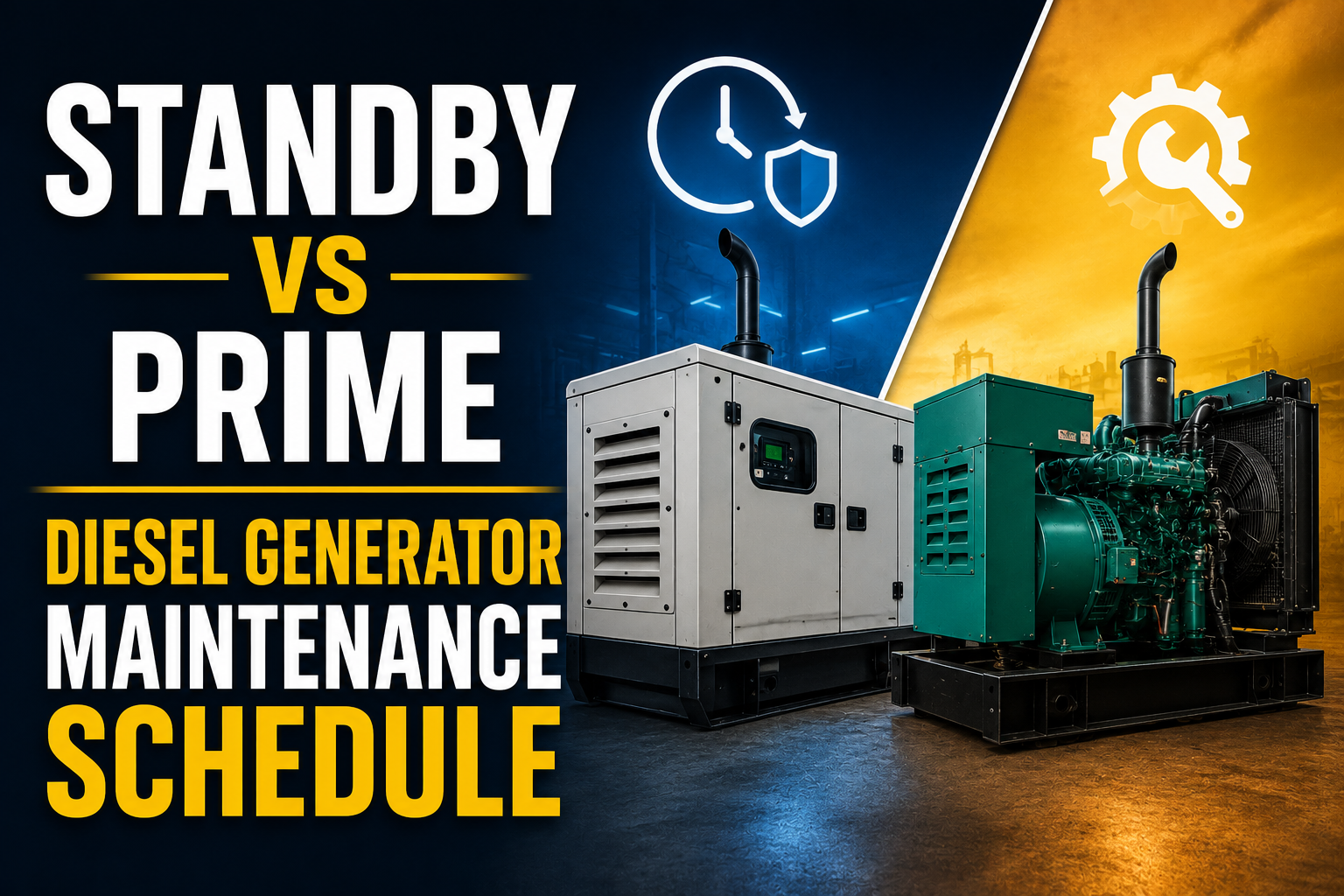
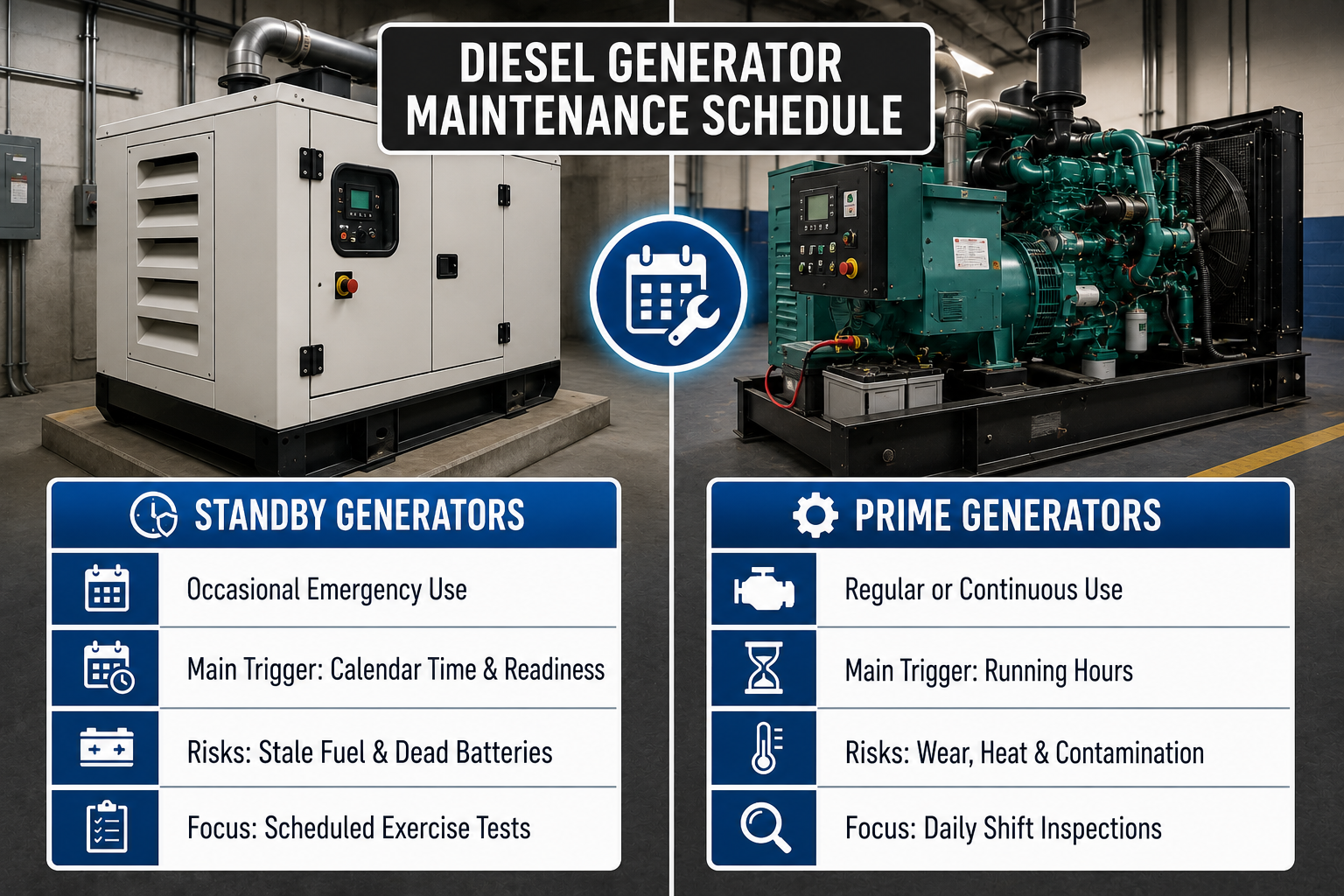
Purchasing the appropriate generator is just the first step when you’re locking down an industrial power supply. It takes a strict and consistent Diesel Generator Maintenance Schedule to be sure it is ready to go when needed. Not all Generators are, however, maintained the same way. In the real world, standby and prime generators may be made with the same engine models and alternators, but are required to run under different conditions.
The distinction is basically on how they are used:
- Standby generators are used only occasionally, in times of power outages.
- The prime generators are activated periodically or continuously as a facility’s primary power source.
Maintenance of standby generators is primarily conducted around calendar time, system readiness and scheduled testing, due to various responsibilities. The same applies to prime generators which accumulate wear and must be more heavily maintained as a function of actual running hours, operating loads and harsh site conditions. Note that this is a general industry guideline, but the operation and maintenance manual provided by your generator’s manufacturer always takes priority over generic intervals.
In this article by Huaquan, you will learn the fundamental differences between standby and prime operation, and how to structure a bulletproof diesel generator maintenance schedule based on running hours and calendar time.
What is a Standby Diesel Generator?
A standby generator is an emergency backup. When the power goes down, it comes to the rescue and when power comes back on, it turns off.
- Usually operates for a short time annually.
- It may be left unused for weeks or months at a time.
- It must be ready to start up automatically as soon as an outage occurs.
- It is usually used in hospitals, data centers, factories, offices, banks and commercial retail buildings.
What Is a Prime Diesel Generator?
A prime generator is the heart of an operation. The grid is the prime generator, rather than waiting for a grid failure.
- Used as the main power source for a facility.
- It could be for an hour or all day, every day.
- Typically provides a very fluctuating electrical demand.
- It is also utilized extensively at active construction sites, remote mining camps, agricultural farms, oilfields and other places where a steady supply of a municipal utility is not available.
- Aids in racking up running hours faster than a standby unit.
It is also important to know the difference between prime and continuous power. Prime power supplies switch between different loads over unlimited hours, and continuous-rated power supplies provide a steady load at 100 percent capacity. This is subject to the generator’s rating and manufacturer’s instructions.
Why Standby and Prime Generators Need Different Maintenance Schedules
For an immediate comparison of the differences between service strategies, check out this comparison table:
| Maintenance Factor | Standby Generator | Prime Generator |
| Main maintenance trigger | Calendar time and readiness | Running hours and operating conditions |
| Typical operation | Occasional emergency use | Normal or long-term use |
| Main risks | Failure to operate due to battery going flat, fuel that has gone bad, corrosion and undetected problems | Oil degradation, filter blockage, component wear and overheating |
| Inspection frequency | Use regularly (weekly or monthly) even if not in use | Daily or before every single operating shift |
| Oil changes | Time (e.g. every year) or the number of hours, whichever comes first | Primarily operating-hour based |
| Testing | Exercise/load testing is an essential component | Performance is witnessed during normal operation |
| Fuel management | One of the primary concerns is long-term deterioration of fuel storage | Fuel turnover and dynamic contamination control are big issues |
| Records | Exercise logs, alarms and readiness status | Hours, load profile, fuel use, temperatures and heavy service history |
A standby generator doesn’t need less maintenance just because it’s used occasionally. Sitting idle is very hard on machinery. While the engine is idle, batteries go dead, diesel splits, rubber hoses crack, seals dry, coolant particles sink and electrical contacts rust.
Standby Diesel Generator Maintenance Schedule
This is a planning outline to make sure your backup system is in place and ready in case of emergency, in addition to your manufacturer’s manual.
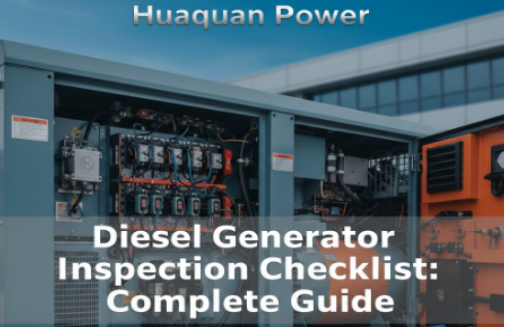
Weekly Standby Generator Checks
- Check the generator enclosure and the surrounding immediate area.
- Inspect the unit for oil, diesel and coolant leaks under the unit.
- Check to see if the control is in Automatic mode.
- Verify any active alarms and/or stored fault codes on the panel display.
- Check the starting battery charger to ensure it is providing voltage.
- Check the primary fuel-tank level.
- Check the exhaust system for blockages.
- Check that air louver/ventilation openings are free of debris/snow.
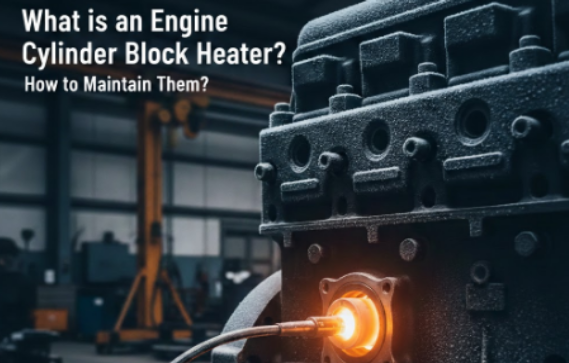
- If the engine block heater is used, ensure jacket water is kept warm.
- Check for any water entry or surface corrosion, pest nests and rodents.
Weekly or Manufacturer-Specified Exercise Test
An exercise test can be used to confirm mechanical and electrical integrity of the system. It verifies:
- Automatic starting mechanisms
- Stable engine speed
- Properly regulated voltage and frequency
- Battery and starter motor performance
- Proper lubrication circulation
- Control-panel operational logic
- No abnormal smoke, excessive vibration or grinding noise
There are several key distinctions between a no-load exercise (idle), a building-load exercise (conveying the actual power of the facility) and load-bank testing (with an external artificial load). Do not presume that the same exercise level is suitable for all installations. There are many specific testing requirements outlined in local life-safety codes (e.g., NFPA 110 in hospitals) and in facility procedures and manufacturer instructions.
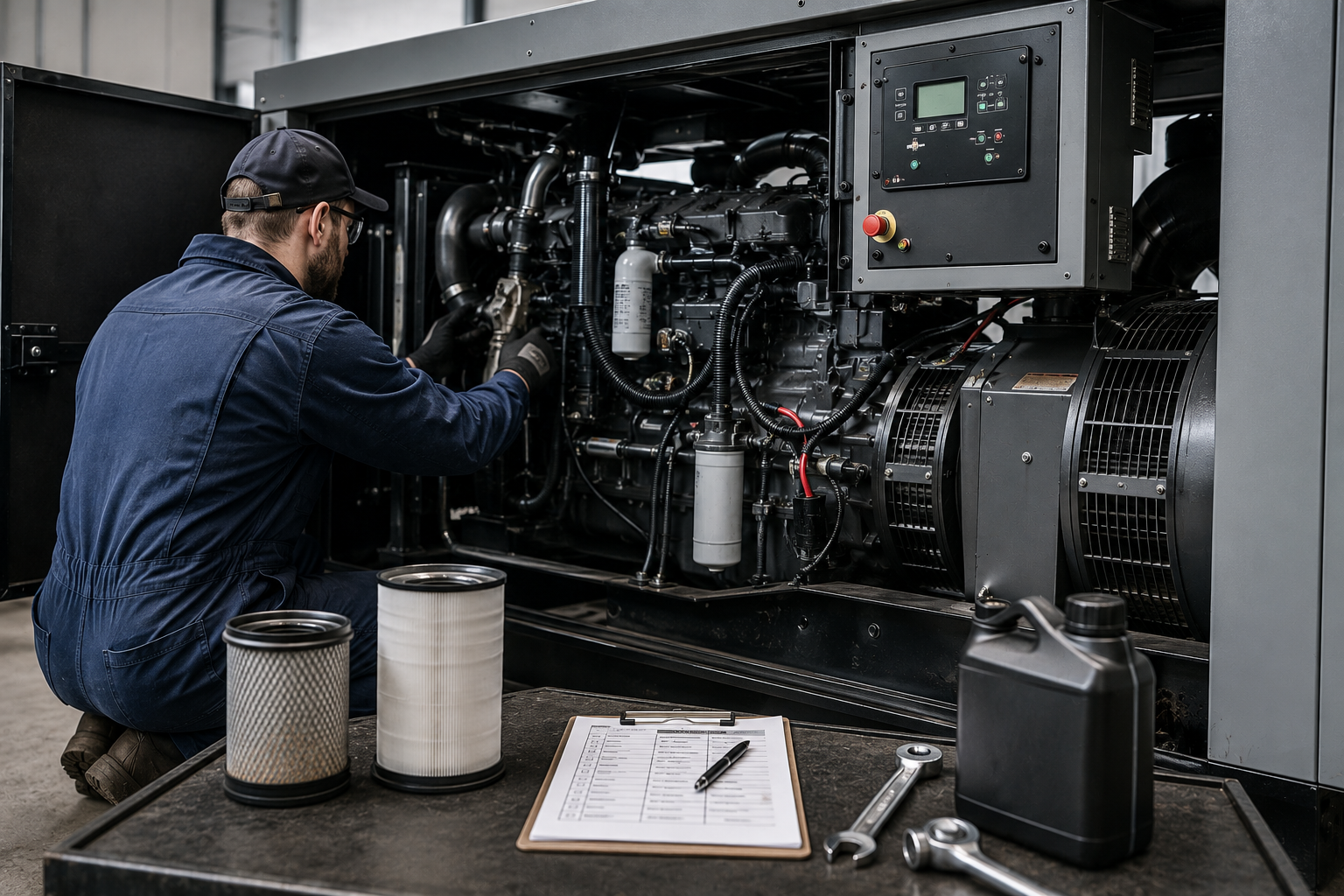
Monthly Standby Generator Inspection
- Use the oil level dipstick to inspect the engine-oil level.
- Inspect coolant level when the engine is cold.
- Check all coolant hoses and clamp tightness.
- Check drive belts for cracking or looseness.
- Drain fuel-water separator to remove fuel water.
- Check the air-filter restriction indicator.
- Look for corrosion at the battery terminals.
- Measure the exact voltage of the battery and the voltage output of the charger.
- Clear ventilating areas and inspect surfaces of fins on radiators.
- Test fuel samples for water content, sediment or microbial algae content.
- Record generator running hours in the official logbook.
- Check the results from the exercise tests and the history of the alarms.
Every Six Months or at the Specified Hour Interval
- Test the starting batteries under heavy loading.
- Check the internal connections of alternators.
- Check automatic transfer switch (ATS) mechanisms.
- Test the coolant concentration (antifreeze to water ratio) and condition.
- Inspect fuel hoses, rubber seals and metal fittings.
- Inspect exhaust flex joint for soot leaks.
- Wash the inside of the enclosure and air inlet screens.
- Test Emergency Stop (E-stop) Controls.
- Check correct voltage, frequency and oil pressure by using a technician’s gauge.
- Check all grounding/bonding wire connections.
- Follow local code for loaded operational tests, if applicable.
Annual Standby Generator Service
- Replace oil and oil filter if needed (by calendar time or hours).
- Change the main and auxiliary fuel filters.
- Check and/or change engine air filters.
- Use strip test or refractometer to test the condition of coolant.
- Check the operation of the radiator, water pump and thermostat.
- Perform and record a full battery load/conductance test; replace battery if failed.
- Check alternators and do a visual check of electrical windings.
- Inspect rubber vibration isolators and mounting bolts.
- Check critical shutdown devices (e.g., test low oil pressure simulated trips).
- Test transfer switch when in use.
- Test remote SCADA monitoring and alarming systems.
- Check the fuel tank and arrange fuel polishing for stored diesel if required.
- Carry out an industry load bank test as necessary.
- Review and sign off annual maintenance records.
Prime Diesel Generator Maintenance Schedule
Prime generators don’t wait around for the right time to run; they are the workhorses of the industry! Mechanical wear is their predominant maintenance concern.
Before Every Start or Operating Shift
- Check engine-oil level.
- Check coolant level.
- Check fuel level.
- Drain fuel-water separator.
- Check the unit for any fluid leaks under and around the unit.
- Visually inspect belts and hoses.
- Check the radiator core and air intake for dust or dirt.
- Check the air-filter restriction indicator.
- Inspect battery and connections.
- Look for any uncleared alarms on the control panel.
- Check the exhaust system for any leaks.
- Carry out a basic, all-round inspection.
During Generator Operation
A prime generator is a data provider that delivers data consistently. Operators should record:
- Oil pressure
- Coolant temperature
- Voltage and frequency
- The amperage of each phase (amps)
- Real power output in kW
- Load percentage
- Fuel consumption rate
- Exhaust smoke color
- Abnormal noise and vibration
- Ambient site temperature
- Accumulated running hours
Major mechanical issues can be identified long before a critical alarm or hard shutdown occurs by changes that are occurring from the unit’s normal historical operating trend.
Every 250 Operating Hours
Engine manuals vary and may have very different tasks listed at this point:
- Change/inspect oil filter and oil.
- Check battery electrolyte levels (if applicable).
- Take belts out for inspection and belt tension check.
- Wash the exterior of the radiator fins.
- Check the high-pressure fuel lines.
- Check engine and alternator mounting bolts.
- Check the exhaust system for cracks.
- Review digital operating trends.
- With a laboratory oil-analysis program, take an oil sample.
See note: 250 hours is a typical oil change interval, but not mandatory. Other modern synthetic setups can allow for longer intervals.
Every 500 Operating Hours
- Replace oil and oil filter (if required by the manufacturer).
- Change primary/secondary fuel filters.
- Check/replace the air filter.
- Check the coolant condition and SCA (Supplemental Coolant Additive) level.
- Check the air intake piping system and turbocharger.
- Make visual checks of high-voltage electrical connections.
- Inspect the general condition of the alternator.
- Check the engine water pump for weeping seals.
- Inspect all hoses, clamps and belts.
- Physically test safety shutdowns.
- Check the fuel consumption pattern as per output kW.
Some Cat and Cummins generator models call for oil changes every 500 hours, while others use a different interval, especially in extreme service environments. This explains why it’s essential to follow the schedule prescribed in the engine manual.
Every 1,000 Operating Hours
- Check and accurately adjust valve clearances.
- Inspect fuel injectors.
- Check the bearing play of the turbocharger.
- Check the cooling fan/drive pulley system.
- Test the thermostat to see if it works.
- Check the crankcase breather tube.
- Check the insulation resistance of the alternator.
- Inspect heavy rubber engine mounts.
- Check the charging alternator and starter motor.
- Run comprehensive vibration/harmonic performance testing.
Every 2,000 Operating Hours or Manufacturer-Specified Major Interval
- Complete chemical flush of the cooling system and replacement of the coolant.
- Inspect/replace the thermostat.
- Adjustment of the major valves.
- Flow testing/rebuild of injectors.
- High-pressure fuel-pump checks.
- Inspection of the charge-air cooler’s internal components.
- Inspection of internal flow of the radiator.
- Inspect and regrease alternator bearings.
- Comprehensive electrical and breaker testing.
- Laboratory testing of the oil and coolants.
- Review partial in-frame engine overhaul requirements.
Please do not use this as a blanket list of overhaul periods. Major service timing is influenced by several factors like engine displacement size, duty cycle, fuel quality, oil analysis results and manufacturer’s specifications.
Conclusion
Making sure there’s a backup power supply you can count on is a commitment. The key to standby maintenance must be to ready the system and combat its hidden deterioration, which occurs over time when a machine is not running. The maintenance of a prime generator has to emphasize operating hours, fight against the fast mechanical wear, heat and friction caused by the daily running of the generator.
Whatever your facility does with its power, keep in mind that no general checklist is to take the place of your equipment manual. Following a strict Diesel Generator Maintenance Schedule, per site, will help keep your electrical investment safe, reduce operating costs throughout the life of the generator and ensure that your lights are on during power outages.
Contact the Huaquan team today for expert site evaluations, customized maintenance schedules, and reliable backup power equipment you can count on.