Introduction
Generators are crucial backup supply systems. Prime generators offer a constant supply, but standby generators are set aside to provide power during the outage. If you don’t manage your generators and test them on time, they might fail to perform during emergency cases. Therefore, we have developed a generator preventive maintenance program.
Today, we will discuss the benefits of this program and understand how you can develop this program successfully.
What is a Generator Preventive Maintenance Program?
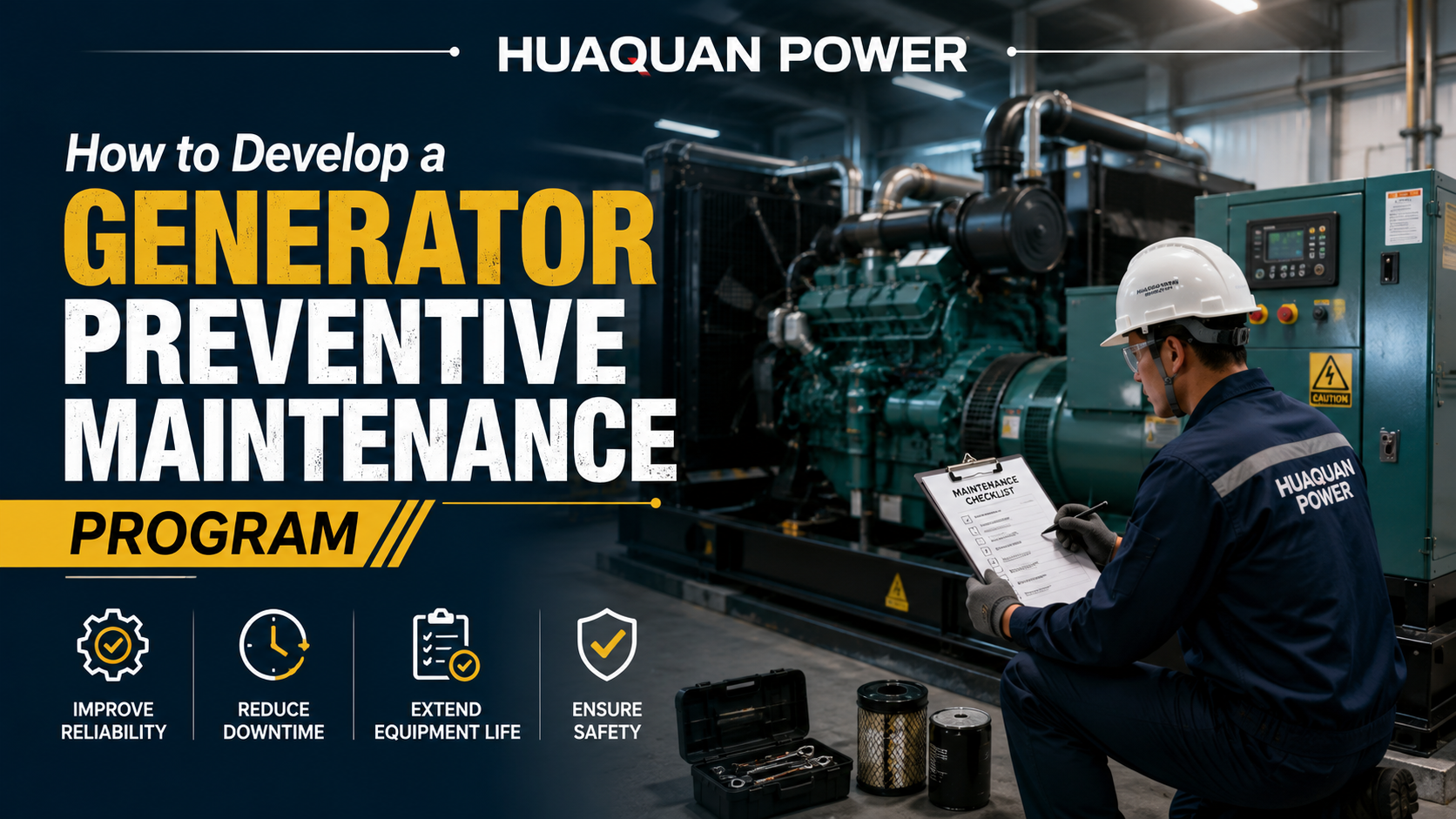
A generator preventive maintenance program is a comprehensive strategy to maintain your generators for extended periods. Before the generator fails, the predictive maintenance plans can avoid its early failures and keep it running for long-term performance.
Therefore, generator preventive programs are very helpful in the maintenance of the standby generators.
The typical maintenance jobs are:
- Engine maintenance
- Alternator inspections
- Fuel system maintenance
- Cooling system servicing
- Lubrication schedule
- Battery maintenance
- Electrical testing
- Automatic Transfer Switch (ATS) inspections
- Load bank testing
- Documentation and maintenance records
This maintenance schedule is never random and varies from one system to another. However, it should be based on:
- Operating hours
- Calendar intervals
- Manufacturer recommendations
- Environmental conditions
- Criticality of the application
Benefits of Generator Preventive Maintenance Program
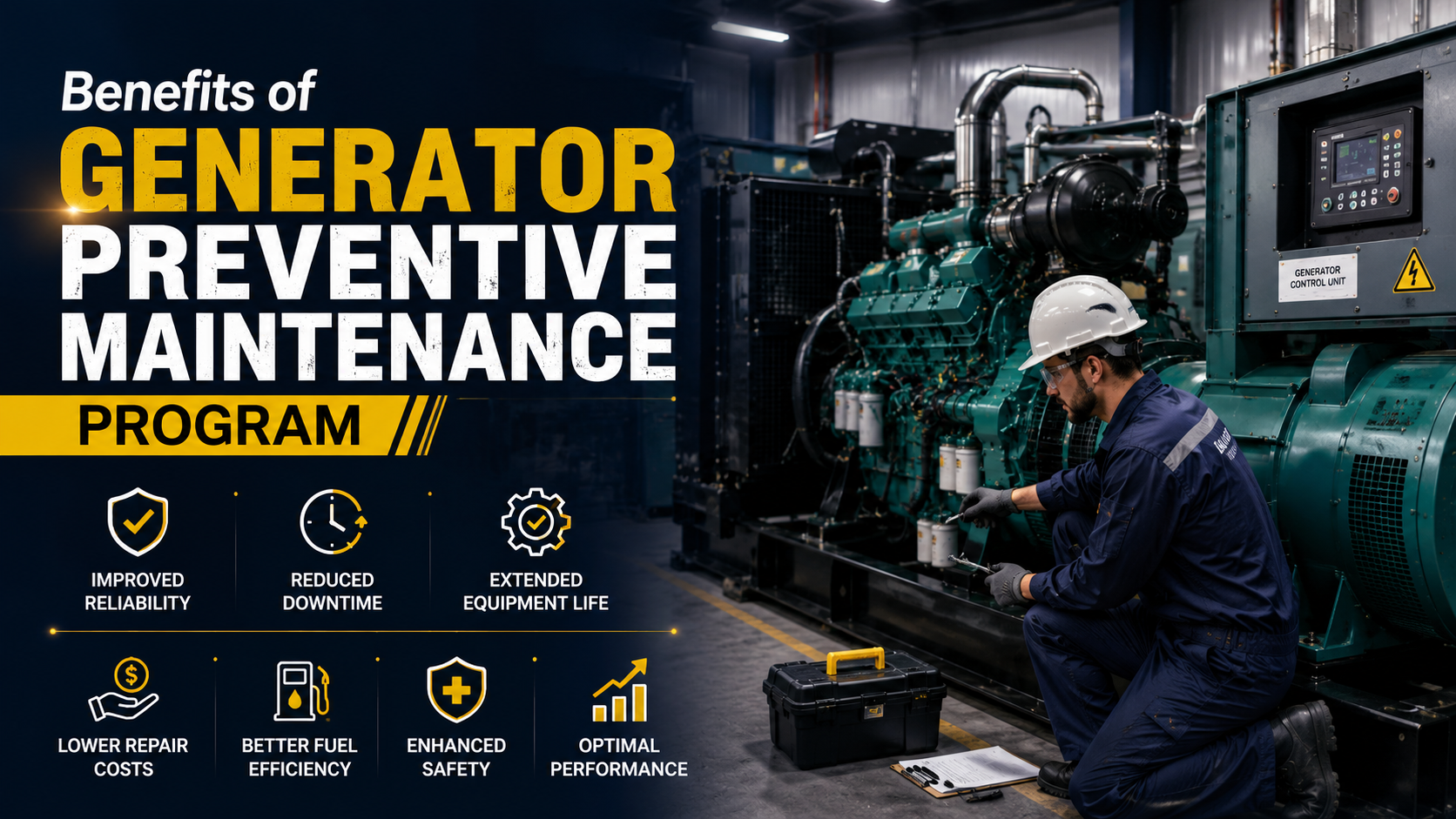
The generator preventive maintenance program has several benefits, which have led to its implementation in the systems. Here are a few benefits.
Improves Generator Reliability
Do you want your generator systems to perform seamlessly? That is possible when your generators are ready to perform.
Preventive maintenance makes them ready by inspection and repair of the smaller issues. For example:
- Replacement of weak batteries before they fail.
- Early detection of fuel contamination.
- Repair of coolant leaks.
- Belts are replaced before breaking.
Extends Equipment Life
Since you are regularly inspecting and testing all the generator components and tools, they expect lower failure rates. Sometimes, rates drop by 20-30%.
It extends the equipment life and provides a seamless experience.
Reduces Unexpected Downtime
Unexpected downtime often occurs due to the failure of components. Emergency repairs are often costly and interrupt the whole system.
Preventive maintenance avoids:
- Emergency shutdowns
- Production losses
- Business interruptions
- Repair costs
Lowers Maintenance Costs
The bigger problems in the engine or generator components start from a smaller issue. If you don’t treat it on time, it snowballs.
Preventive maintenance locates all such smaller issues and helps avoid costs on:
- Engine rebuilds
- Turbocharger replacement
- Alternator failures
- Cooling system damage
Improves Fuel Efficiency
If you have purchased high-quality generators but they are still draining more fuel, it can be due to several reasons. For example:
- Dirty filters
- Worn injectors
- Incorrect oil viscosity
- Poor combustion
During preventive maintenance, you check all the aspects, repair, or replace them to avoid long-term effects. Therefore, fuel efficiency is improved significantly.
Increases Safety
Generators are extensive components with crucial risk factors. For example, their failures can cause the following risks.
- Fuel leaks
- Exhaust leaks
- Fire hazards
- Electrical faults
- Carbon monoxide risks
Preventive maintenance avoids such issues and keeps the generator’s reliability high. It improves the overall safety of the workplace.
Step-by-Step Guide to Develop a Generator Preventive Maintenance Program
Development of the generator preventive maintenance program is straightforward. We have added a step-by-step guide on how you can maintain the generator preventive maintenance programs.
Step 1: Identify Generator Information
Which generator have you installed or kept on standby? Keeping detailed information about your generator systems is ideal for long-term maintenance.
| Information | Example |
| Manufacturer | Huaquan |
| Model Number | HQ500 |
| Serial Number | XXXXX |
| Power Rating | 500 kVA |
| Voltage | 400 V |
| Frequency | 50 Hz |
| Engine Model | Cummins |
| Fuel Type | Diesel |
| Installation Date | 2025 |
| Operating Hours | 1,250 Hours |
The benefits of identifying generator information are:
- It helps to understand the key specs of generators.
- You plan your preventive maintenance program accordingly.
- It is easier to manage the maintenance process.
Step 2: Determine Generator Operating Conditions
Operating conditions always determine the maintenance. For example, prime power generators require more maintenance compared to the standby generators.
Let’s know the various operating conditions of each generator type.
Continuous Generator
They are the most used generators. Continuous generators are often operated 24/7 and require frequent maintenance due to early wear out of their components.
Prime Power Generators
Prime Power generators also operate daily, but their maintenance depends on the local conditions. However, here is how you should maintain these generators:
- Every 250 hours
- Every 500 hours
- Every 1,000 hours
- Every 2,000 hours
Standby Generators
Standby generators are kept offline until an emergency occurs. Their maintenance is essential to keep the emergency supply on.
They operate during:
- Utility failures
- Monthly testing
- Emergency situations
You must maintain them before and after use.
Step 3: Classify Generator Criticality
Maintenance priorities vary depending on where and how critical your facility is. For example, you are installing the generators for the hospitals.
| Criticality Level | Example Applications | Maintenance Priority |
| Critical | Hospitals | Very High |
| High | Data Centers | High |
| Medium | Manufacturing | Moderate |
| Low | Warehouses | Standard |
It is a critical space with high maintenance and lower latency requirements. For critical spaces, you should prepare proper plans for:
- Weekly inspections
- Monthly load testing
- Frequent battery testing
- Fuel quality analysis
Step 4: Follow Manufacturer Recommendations
Manufacturers are a crucial part of a generator preventive maintenance program. They help specify the recommended changes for:
- Oil change intervals
- Coolant replacement schedules
- Valve adjustments
- Filter replacement
- Battery inspection procedures
- Torque specifications
- Belt tension
- Testing procedures
If you ignore the manufacturer’s recommendations, your warranties may be voided. You have to pay for the repairs on your own.
Step 5: Develop Maintenance Intervals
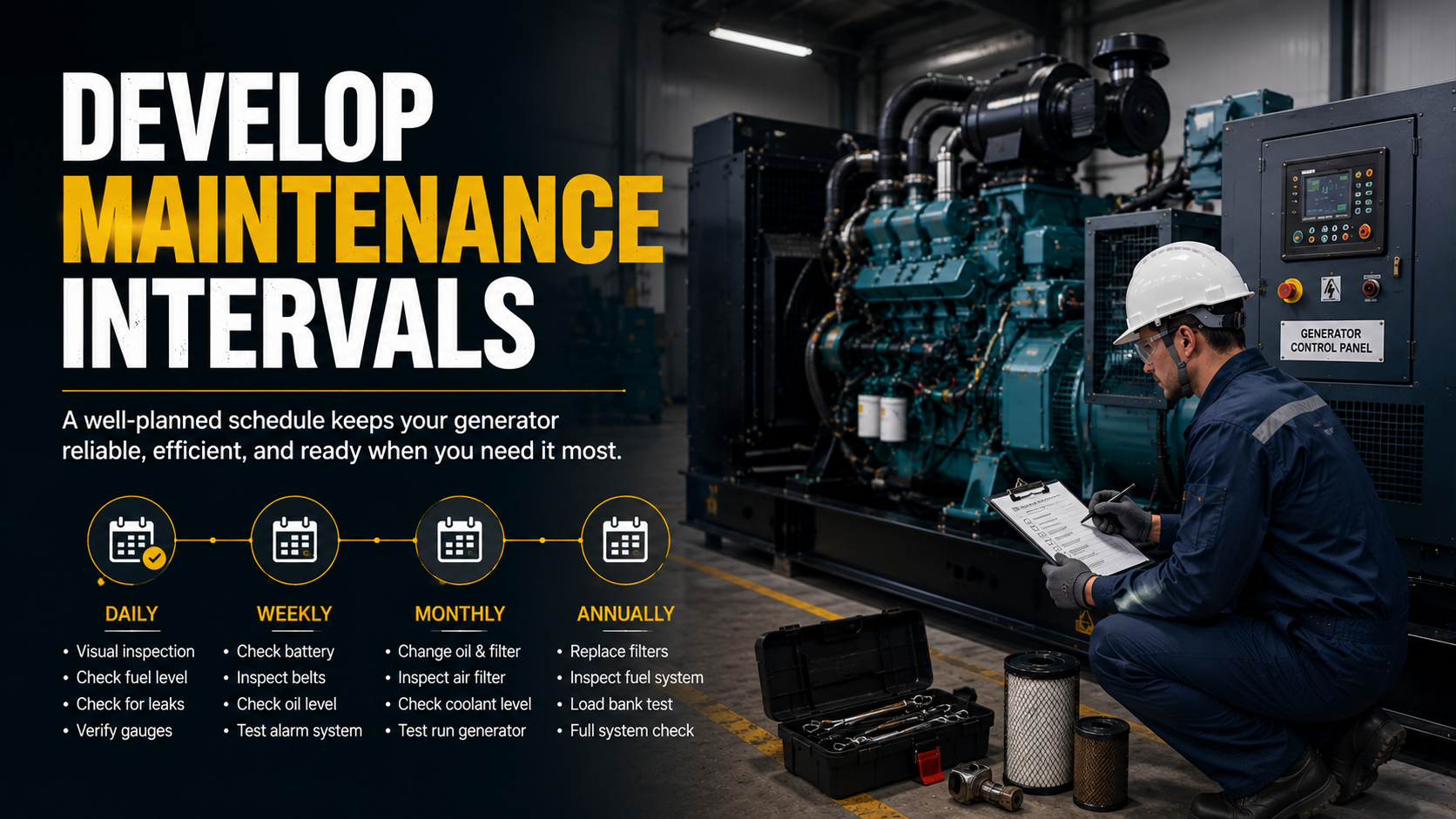
One of the key components of the maintenance program is the development of maintenance intervals. It includes daily, weekly, and many more plans discussed below.
Daily
You should manage your generator systems daily. Here are a few maintenance recommendations for the daily operations.
- Check fuel level
- Inspect oil level
- Verify coolant level
- Look for leaks
- Check control panel alarms
- Inspect the exhaust system
- Monitor operating temperature
- Check battery charger status
Weekly
Weekly inspection is more than what is checked during the daily inspection. Here is what you should check during the weekly maintenance.
- Inspect belts
- Check hoses
- Inspect wiring
- Verify battery voltage
- Drain fuel-water separator
- Check the air intake
- Inspect vibration isolators
- Clean generator enclosure
Monthly
Every month, you should have a detailed look at your generators. You should inspect and manage the following aspects.
- Exercise generator under load
- Inspect ATS operation
- Record operating data
- Check engine starting performance
- Test emergency shutdowns
- Inspect the grounding system
- Verify voltage output
- Measure frequency stability
Quarterly
Every three months, there is a time for filter replacements and inspection of the internal systems. You should have the following plans when managing every three months.
- Replace filters if necessary
- Inspect fuel system
- Inspect the cooling fan
- Test battery capacity
- Clean alternator
- Check the insulation condition
- Verify engine mounts
- Inspect electrical terminals
Semi-Annual
Every six months, you must cover all the maintenance aspects. Here is the list of tasks to do.
- Change engine oil (if required)
- Replace the oil filter
- Replace fuel filters
- Clean radiator
- Flush fuel water separator
- Inspect injector performance
- Check exhaust flexibility
- Inspect vibration levels
Annual
Annual inspection is the most comprehensive and involves a comprehensive testing process.
Here is the list of annual tasks to do.
- Complete engine inspection
- Cooling system flush
- Coolant replacement
- Valve clearance adjustment
- Alternator testing
- Load bank testing
- Fuel quality testing
- Electrical insulation testing
- ATS preventive maintenance
- Complete performance evaluation
| Interval | Maintenance Activities |
| Daily | Visual inspection, fluid levels, leaks |
| Weekly | Battery, belts, hoses, charger inspection |
| Monthly | Generator exercise, ATS test |
| Quarterly | Fuel system inspection, battery capacity test |
| Semi-Annual | Oil change, filter replacement |
| Annual | Full inspection, load bank testing, coolant replacement |
Step 6: Create Standard Inspection Checklists
A standard inspection checklist keeps a record of all the maintenance hassles you have performed.
The purpose and benefits of the checklists are:
- You have a proper record of all the tasks you have done.
- There is no chance of missing the schedule.
- Inspection tasks become easier.
Engine Inspection Checklist
The engine is the heart of the whole generator system. If the engine fails, the whole generator fails. Therefore, you should maintain your engine on a priority basis. For the engine inspection, you should check the following aspects.
- Engine oil level
- Oil pressure
- Oil leaks
- Engine vibration
- Engine noise
- Belt condition
- Belt tension
- Hose condition
- Fuel leaks
- Coolant leaks
- Exhaust smoke color
- Mounting bolts
- Air intake restrictions
- Turbocharger condition (if applicable)
Cooling System Checklist
The cooling system prevents overheating and provides a seamless functionality of the generators for 24-72 hours non-stop. Here is the checklist for cooling systems.
- Radiator cleanliness
- Coolant level
- Coolant concentration
- Radiator cap
- Cooling fan
- Water pump
- Thermostat
- Fan belts
- Hoses
- Hose clamps
- Coolant leaks
Step 7: Battery Maintenance Program
Backup Power systems include the batteries along with the generators. You should also consider the battery maintenance either weekly or monthly. Here are a few things to inspect during the battery maintenance program.
- Battery voltage measurement
- Electrolyte level inspection (for flooded batteries)
- Terminal cleaning
- Corrosion removal
- Charger operation verification
- Cable inspection
- Load testing
- Battery temperature check
- Specific gravity testing
| Task | Weekly | Monthly | Quarterly | Annual |
| Visual inspection | ✓ | |||
| Voltage measurement | ✓ | |||
| Clean terminals | ✓ | |||
| Load test | ✓ | |||
| Capacity test | ✓ |
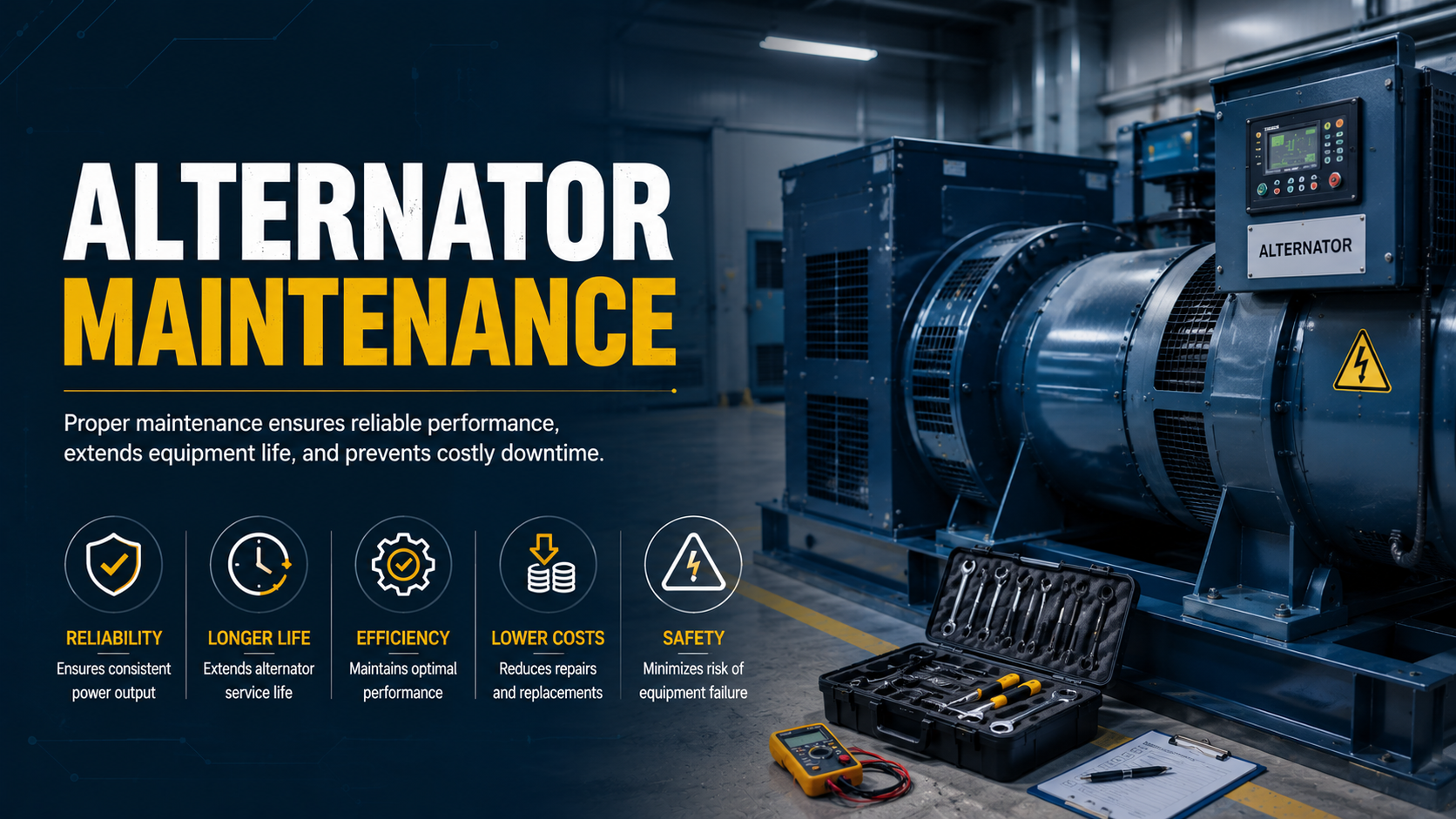
Step 8: Alternator Maintenance
The alternator requires less maintenance than the engine. However, you should maintain the following components.
- Output voltage
- Output frequency
- Bearing condition
- Cooling air passages
- Windings
- Insulation resistance
- Brush condition (if applicable)
- Slip rings
- Mounting bolts
- Coupling alignment
Step 9: Automatic Transfer Switch Maintenance
ATS is essential for the seamless power transmission. It helps maintain the switches very well. The typical maintenance tasks are:
- Cleaning the enclosure
- Checking mechanical operation
- Verifying contact condition
- Tightening electrical connections
- Functional transfer testing
- Return-to-utility testing
- Timer verification
| Inspection Item | Verify |
| Mechanical movement | ✓ |
| Electrical contacts | ✓ |
| Wiring tightness | ✓ |
| Transfer timing | ✓ |
| Return timing | ✓ |
| Control circuitry | ✓ |
| Alarm indicators | ✓ |
| Manual operation | ✓ |
Step 10: Maintain Maintenance Records
The purpose of the maintenance records is to keep the servicing according to the schedule. You will avoid mismanagement when you already have the schedule.
Here is what you should have:
- Generator identification
- Service date
- Operating hours
- Technician name
- Maintenance tasks completed
- Parts replaced
- Fluids added or changed
- Inspection findings
- Test results
- Corrective actions taken
- Next scheduled service date
FAQs
- What records should be kept during preventive maintenance?
There are a few key things you should have. These include service dates, operating hours, completed tasks, inspection results, parts replaced, technician details, test results, corrective actions, and the next scheduled maintenance date.
- How long can diesel fuel be stored in a generator tank?
You can store the diesel fuel for 6-12 months. During this period, fuel remains usable and provides seamless energy.
- What are the most common causes of generator failure?
There can be several reasons behind the generator failures. These include battery failure, contaminated fuel, low engine oil, clogged filters, coolant leaks, poor electrical connections, and neglected preventive maintenance.
- Why is load bank testing important?
There are a few benefits related to the Generator Load Bank Testing. For example:
- It tells the performance of the generator at its rated power under controlled conditions.
- Identification of hidden performance issues
- Prevents wet stacking in diesel engines
Generator type, operating hours, and manufacturer recommendations affect servicing processes. However, a daily or weekly schedule is good for the prime and continuous generators. You can test and maintain standby generators before every use.
- Should standby generators be exercised even if they are rarely used?
Yes. It is because standby generators help keep engine components lubricated, charge the batteries, circulate fluids, and ensure the generator is available when the real power outage occurs.
- Can preventive maintenance reduce generator operating costs?
Yes, 100%, it can reduce the operating costs in multiple ways. For example, it helps repair the issues in the early stages. It even prevents the major issues, reducing overall maintenance costs.
- Which generator components require the most frequent inspection?
There are several generator components that require frequent maintenance. For example, engine oil, coolant, fuel system, batteries, filters, belts, hoses, electrical connections, and control panel.
Conclusion
Generator maintenance can avoid the long-term hassles and prevent sudden failures. It offers consistent performance, especially during the outage hours. Generally, you should test and manage all your standby generator systems to make them ready for energy supply.
Are you looking for high-end standby generators that require low maintenance and are ready 24/7? Huaquan Power has all types of generator systems with low latency, high reliability, and expected results. You’ll enjoy a seamless performance with your generator systems. Contact our experts right away!