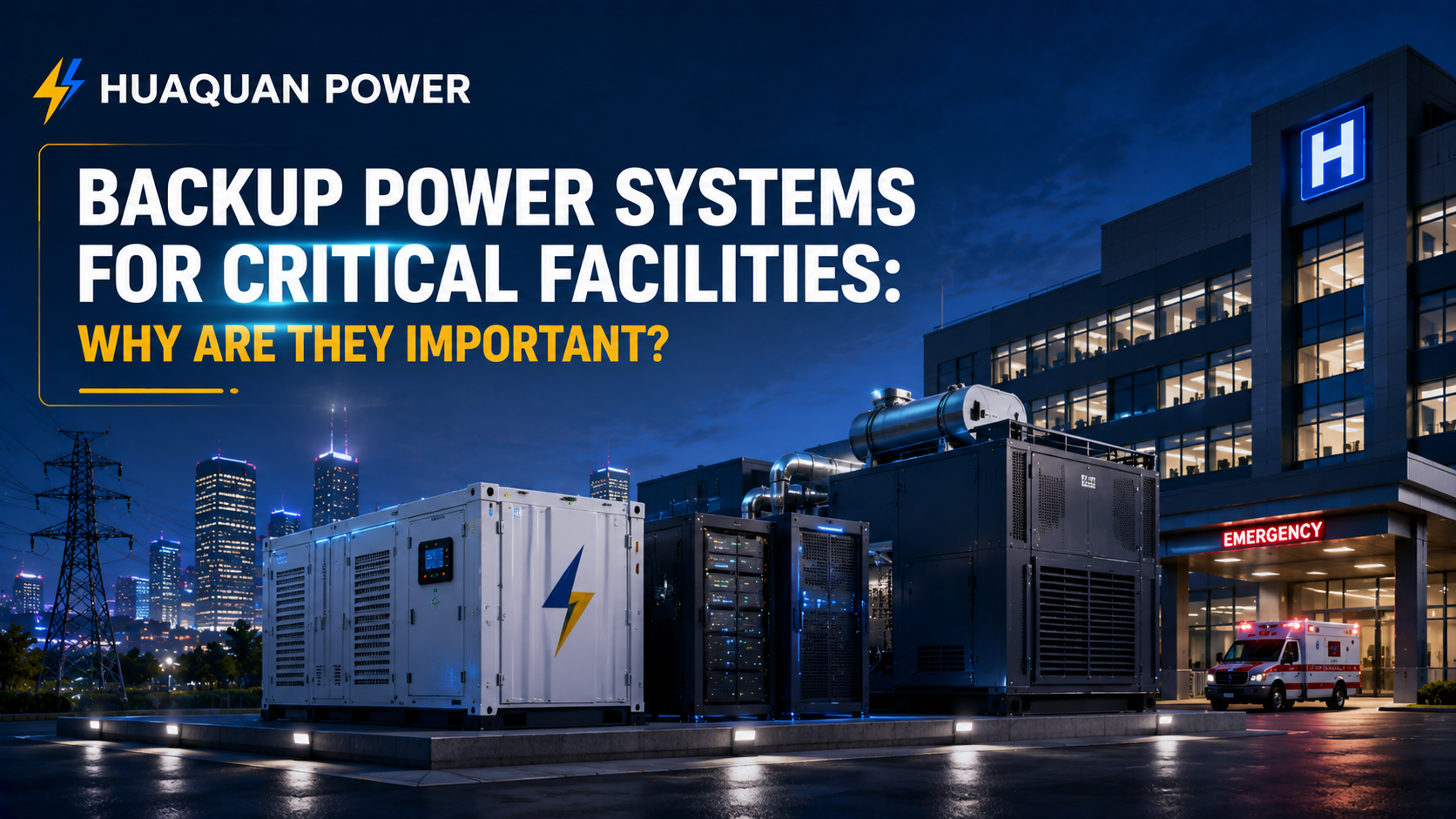
If you have been to construction, hospitals, or mining industries, the constant energy supply is essential to maintain their work. A power outage blocks the whole work and causes losses. Backup Power Systems are the ultimate solutions in such cases.
They offer a proper source of energy and provide excellent support. Do you want to know what they are? Today, we will discuss backup power systems and understand how they help.
What are Backup Power Systems?
Backup Power Systems is a comprehensive power solution that combines multiple tools and energy storage setups for the backup supply during an outage. Unlike Generators or solar panels, it combines all these tools to make a comprehensive approach to the energy supply.
There can be different components that act one after another as a chain to supply energy. Here is the list of key components of the backup power systems.
- Standby diesel or natural gas generators
- Uninterruptible Power Supply (UPS)
- Battery banks
- Automatic Transfer Switches (ATS)
- Switchgear
- Distribution panels
- Fuel storage systems
- Monitoring and control systems
What are Critical Facilities?
Critical facilities refer to the infrastructure or buildings where the energy supply is crucial for the operations. Consider an example of a hospital. It has operating theaters, emergency facilities, and radiology machines. Without a power supply, it causes chaos and risks the lives of the people.
Here is an example of various facilities.
- Hospitals
- Data centers
- Airports
- Emergency response centers
- Water treatment plants
- Telecommunications facilities
- Manufacturing plants
- Military installations
- Financial institutions
- Government facilities
Step 1: Divide Loads Based on Priorities
If you are purchasing backup power systems for the critical facilities, you have to go based on the priorities. High to low priorities can help decide on the right types and backup supply systems. Depending on the loads, you can decide how much power you need with your backup system.
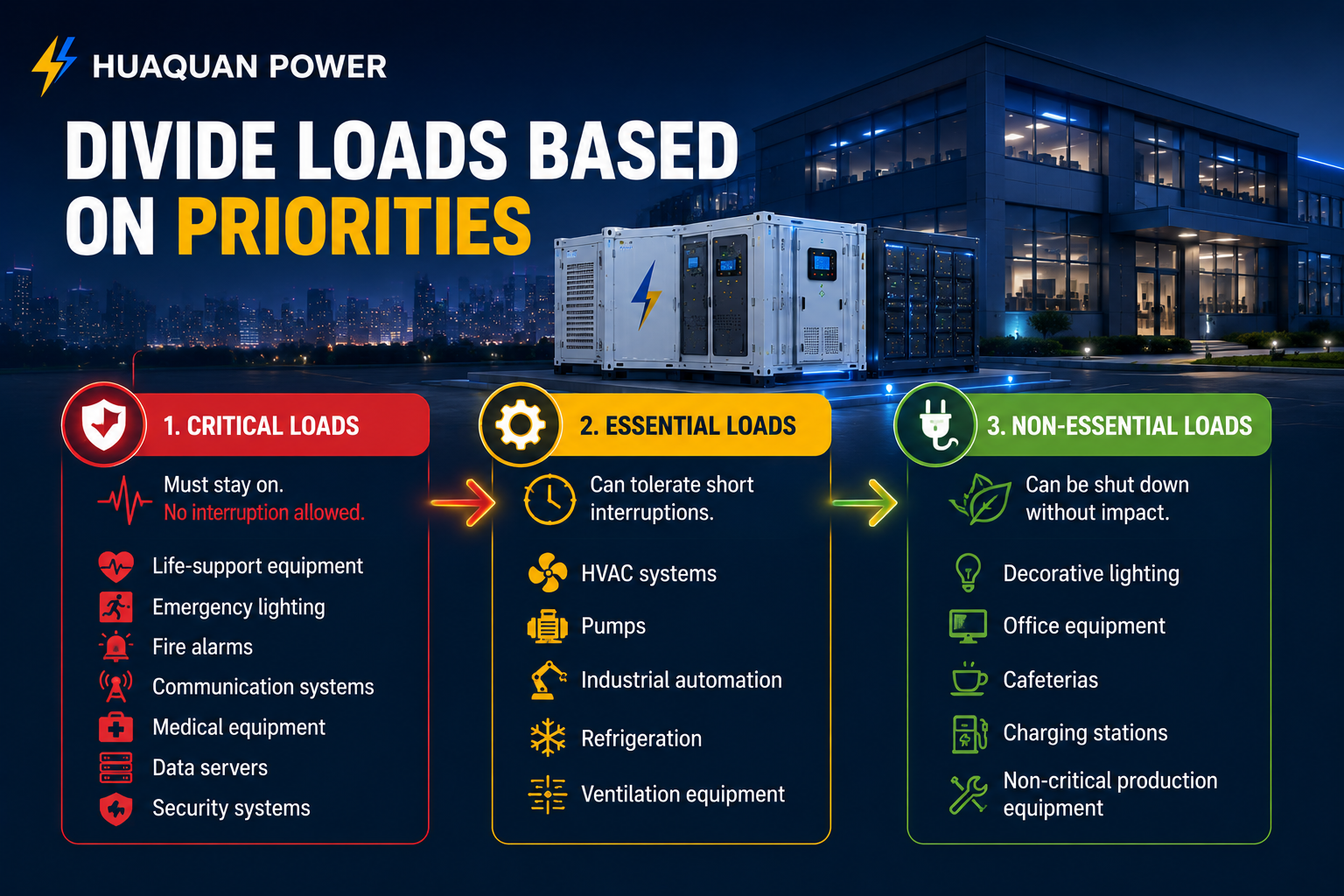
There are three main categories.
Critical Loads
Critical devices can’t afford a single-minute shutdown. You have to power these devices at any cost. So, when powering the systems, backup power systems offer priority to these critical loads.
The examples of the critical loads are:
- Life-support equipment
- Emergency lighting
- Fire alarms
- Communication systems
- Medical equipment
- Data servers
- Security systems
Essential Loads
Essential loads are also from the necessary devices, but they can bear short-term interruptions. Once the backup power systems have supplied the critical loads, they supply energy to the essential loads as a second priority.
The examples are:
- HVAC systems
- Pumps
- Industrial automation
- Refrigeration
- Ventilation equipment
Non-essential Loads
Non-essential Loads are not that critical. The system can work without such devices. Therefore, they are classified as non-essential loads.
The examples are:
- Decorative lighting
- Office equipment
- Cafeterias
- Charging stations
- Non-critical Production Equipment
Step 2: Calculate Total Electrical Load
Once you have identified the necessary electrical load needs, you must know and calculate the total power requirements. It depends on several factors.
- Running load
- Starting load
- Peak demand
- Future expansion
- Power factor
- Voltage requirements
Remember, starting loads can be double the running load. Therefore, you should choose those backup power systems that handle the starting and continuous loads of your vehicles.
Here is the list of the starting and running loads of different essential and critical tools.
| Equipment | Running Load (kW) | Starting Load (kW) |
| HVAC System | 120 | 220 |
| Medical Equipment | 90 | 90 |
| Lighting | 45 | 45 |
| Servers | 110 | 110 |
| Water Pumps | 80 | 170 |
| Security Systems | 15 | 15 |
Step 3: Select the Appropriate Backup Power Source
What type of source do you want to use in your backup power systems? You should consider the several types discussed below.
Diesel Generators
Diesel generators are a famous source of energy. However, they can act as a backup source because:
- There is no outage of the generators until you run out of fuel supply.
- They are ideal for long operating hours.
- With a high output, they can support your major equipment.
Gas Generators
Gas Generators are the ultimate replacements for diesel generators. The only difference is the fuel consumption. Gas Generators use gas, while diesel generators use diesel as a backup source.
Here are a few benefits of gas generators.
- Lower carbon emissions and more eco-friendly sources
- Continuous fuel supply is available in an abundant gas supply.
- Silent operations compared to the diesel generators.
Battery Energy Storage
Battery energy storage setups have become famous in the past few years due to increased solar adoption and energy storage.
Lithium-ion batteries are the best option here. They store energy when an abundant supply is available and utilize it during the outage hours. The benefits are:
- Zero startup delay
- Silent operation
- Reduced generator runtime
- Improved power quality
Renewable Energy Integration
This is a new trend to integrate renewable energy generation systems. The two most famous options are:
- Solar energy
- Wind Turbines
Solar energy is more feasible, available in residential sectors, and provides the maximum energy supply during sunlight. It can help store the excess energy in the battery storage systems for later availability.
Step 4: Determine Generator Capacity
Generator capacity is a critical decision. It is because undersized generators fail to support and run the critical appliances. At the same time, an oversized generator can continuously run at lower loads, leading to lower efficiency and more fuel consumption.
Therefore, you must choose a generator with a suitable capacity. The common things to consider are:
- Continuous electrical demand
- Motor starting currents
- Future load growth
- Ambient temperature
- Altitude
- Fuel type
- Operating hours
Tip: For future expansion, you should keep a 25% extra capacity of your generators.
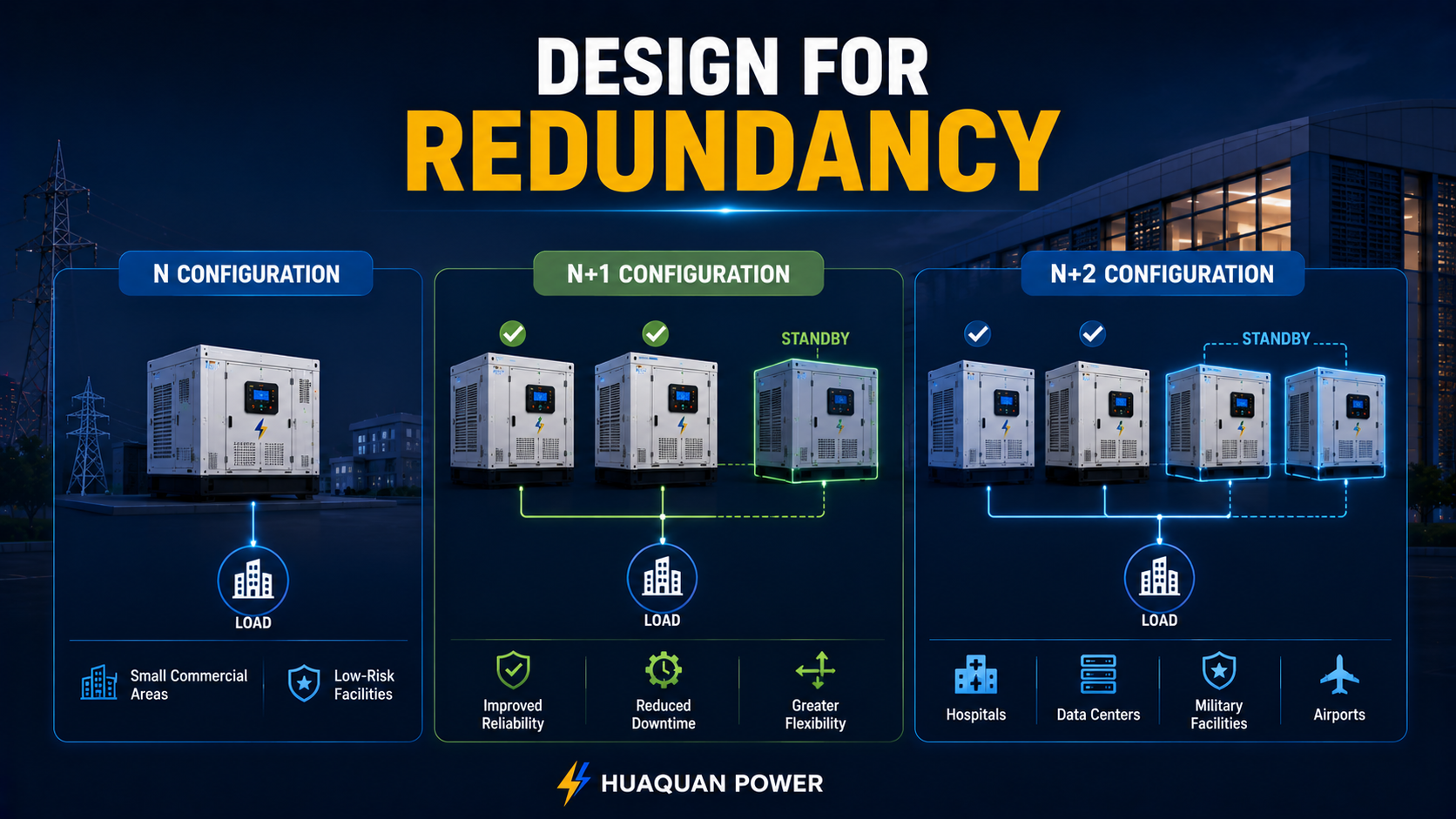
Step 5: Design for Redundancy
Critical Facilities can’t afford the power interruptions even if one component fails. Normal systems shut down the whole process when a tool fails. With the introduction of redundancy, there are no interruptions, and the supply is streamlined.
Here are the three most common redundancy strategies to know.
N Configuration
In these settings, only the minimum necessary system is installed. For example, you have installed one generator as a backup supply with no extra generator systems.
Such a system is suitable for small commercial areas and low-risk facilities.
N+1 Configuration
In addition to the minimum requirements, there is an additional system installed. For example, you required two generators and installed three. The third generator acts as a standby and helps in emergency cases.
Benefits of this setting include:
- Improved reliability
- Reduced maintenance downtime
- Greater operational flexibility
N+2 Configuration
Instead of one, you have two spare components. For example, two additional standby generators to power your appliances.
Such a setting is ideal for:
- Large hospitals
- Data centers
- Military facilities
- Airports
Step 6: Add an Uninterrupted Power Supply(UPS)
Do you know the biggest issue with the generator? It takes several seconds to start and can affect the appliances due to the starting and fluctuations in the voltage and power conditions.
A UPS is the intermediate system that provides an instant supply to the critical facilities without waiting for the generator to run.
The common appliances that require UPS are:
- Data servers
- Medical devices
- Communication systems
- Industrial control systems
- Network infrastructure
- Security equipment
Step 7: Design the Automatic Transfer Switch
Do you want automation in your system? Design and install an automatic transfer switch. What it does is:
- Detects the failure or power outage of the utility grid.
- Transfers the power source from the utility grid to the generator.
- Helps start the standby generators and power the system.
An automated switch decreases hassles and offers the following benefits.
- Fully automatic operation
- Faster power restoration
- Improved operational safety
- Reduced human error
Step 8: Plan Fuel Storage and Runtime
When you have a power outage, the standby generators help streamline the energy supply and turn on your devices.
Since generators run as long as you have plenty of fuel available, suppose you want to operate your generators for 72 hours; fuel storage becomes essential.
How much fuel should you store? Here are a few tips.
- Generator size
- Expected electrical load
- Fuel consumption rate
- Required operating hours
- Fuel delivery availability
- Local regulations
Fuel Storage Considerations
Fuel Storage is also a critical issue and can risk the fuel quality when stored. Therefore, you should optimize the fuel storage with the following considerations.
- Fuel tank capacity
- Indoor or outdoor installation
- Double-wall fuel tanks for environmental protection
- Fuel transfer pumps
- Fuel filtration systems
- Spill containment measures
- Fuel quality monitoring
Step 9: Design the Electrical Distribution System
Distribution of power is as essential as the generation of the backup supply. The distribution should also occur efficiently and must reach each component equally.
There are a few components of this electrical distribution system.
- Main switchgear
- Distribution boards
- Circuit breakers
- Protective relays
- Busbars
- Power cables
- Critical load panels
The electrical distribution system segregates the devices and loads into three main types.
High Priority
These devices and systems get the electrical distribution as a priority. The common examples of the high-priority loads are:
- Operating rooms
- Fire alarms
- Emergency lighting
- Communication equipment
Medium Priority
Once you have provided the energy to high-priority tools and systems, the distribution network offers the energy to medium-priority tools and systems. Examples of medium priority systems include:
- HVAC equipment
- Water pumps
- Elevators for emergency use
- Industrial process controls
Low Priority
When there is no outage and power supply available, the last to get power are the low-priority loads. The examples are:
- Office lighting
- Cafeterias
- Decorative lighting
- General office equipment
Step 10: Integrate Monitoring and Control System
Monitoring and Control System offers real-time data about several components, such as:
- Generator status
- Fuel levels
- Battery condition
- Generator temperature
- Oil pressure
- Voltage
- Frequency
- Power consumption
- ATS operation
- Alarm conditions
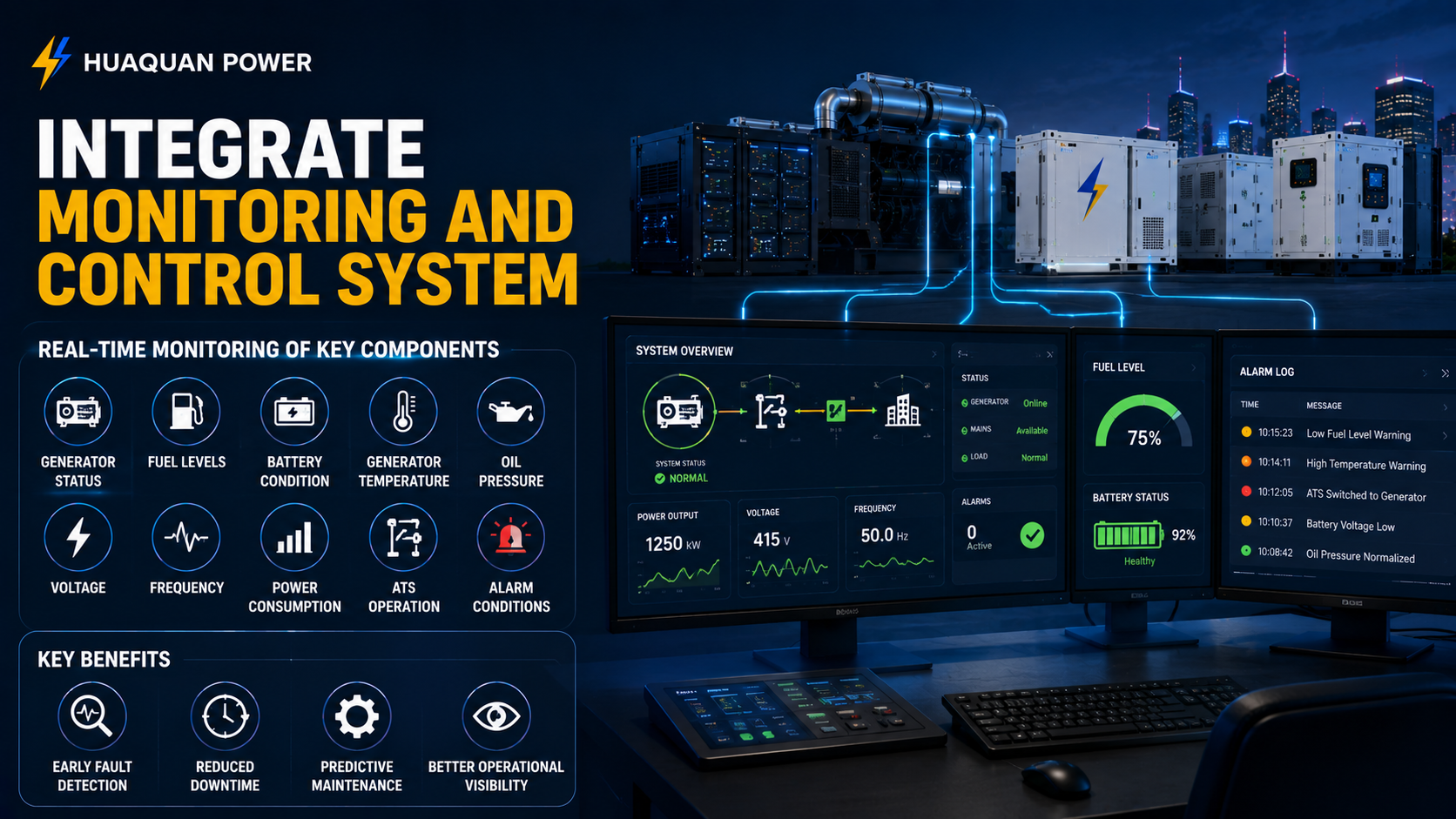
Do you know why we should implement the monitoring and control system?
Here are a few benefits that are crucial in such a case.
- Early fault detection
- Reduced downtime
- Predictive maintenance
- Better operational visibility
FAQs
- Why is redundancy important?
Redundancy helps provide the energy if one or more components fail. It has additional components to streamline the power supply.
- What is an Automatic Transfer Switch?
An automatic transfer switch helps automate the energy transfer. For example, it automatically transfers the load from batteries to generators in emergency cases.
- How is generator size determined?
Generator size depends on the running loads, peak loads, starting loads, and critical load requirements. There are several factors discussed above to determine.
- Why are UPS systems used with generators?
Generators take time to start and interrupt the power for a few seconds, which is essential for critical loads. UPS provides instant power until the generator runs.
- What is the purpose of a backup power system?
The backup power system has only one goal. It is to provide power to the devices and ensure seamless operations. For critical situations, it plays a crucial role.
- How often should backup power systems be tested?
The Backup Power System is critical and should be tested regularly. You should inspect it for generator operation, ATS functionality, UPS performance, battery condition, and load testing according to maintenance schedules and applicable standards.
- Which industries require backup power systems?
Several facilities require non-stop energy and use backup power systems. For example, healthcare, data centers, telecommunications, manufacturing, airports, financial institutions, emergency services, and water treatment facilities.
- How long can backup generators operate?
Generators can operate for long hours with an estimated running time of 24-72 hours. However, they can run until the whole fuel is consumed. A constant fuel supply can make it run for several hours.
Conclusion
Backup Power Systems meet the essential power supply needs of the critical machines and equipment. Whenever choosing the backup power systems, you must know how to divide loads, calculate them, and choose them based on the needs. Install high-quality generators to optimize your backup supply.
If you are looking for a premium range of diesel and gas generators, look no further, as Huaquan Power is here. We have a wide range of tools and provide a seamless power supply system. Contact our experts to get a quote for your backup power systems.