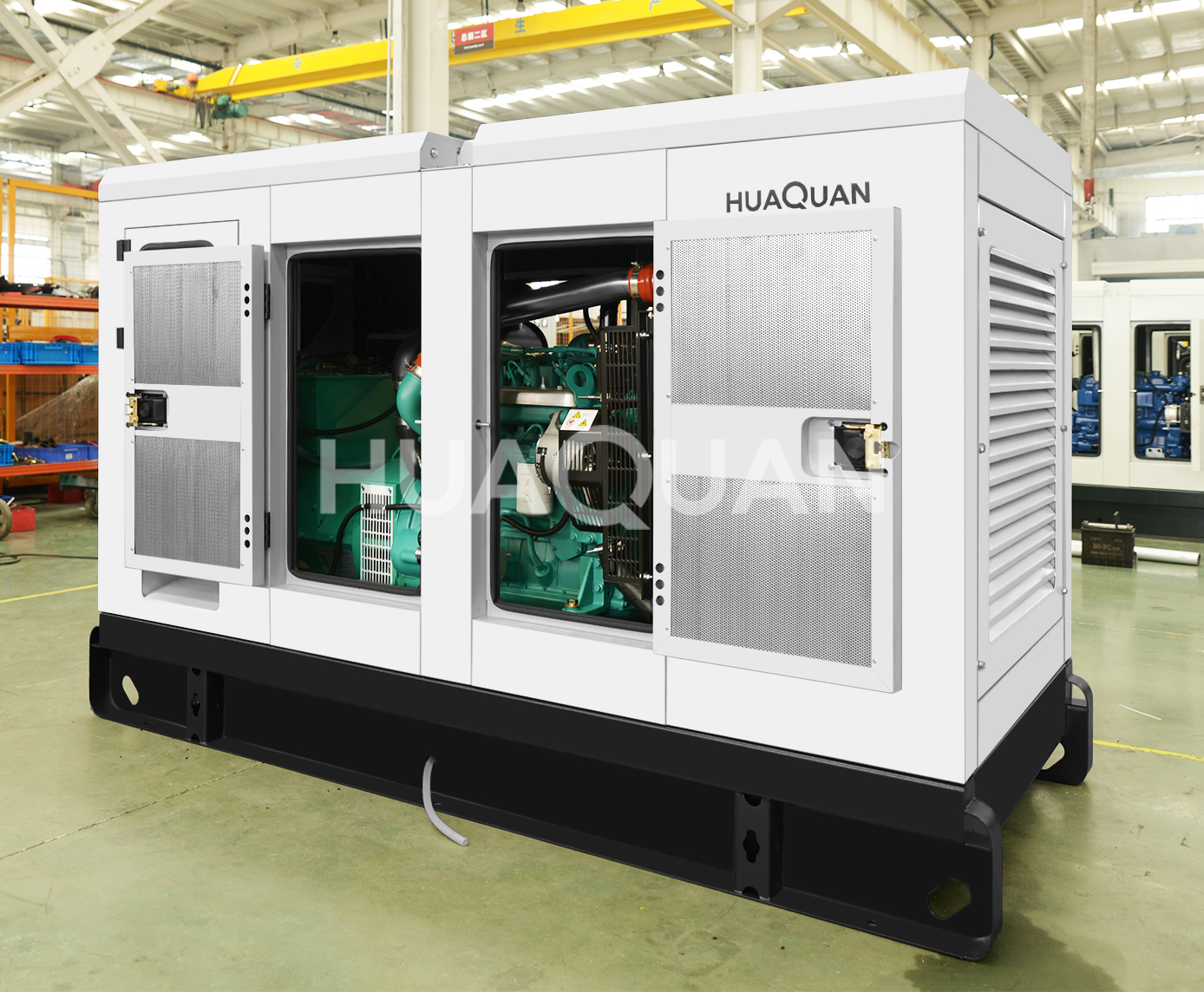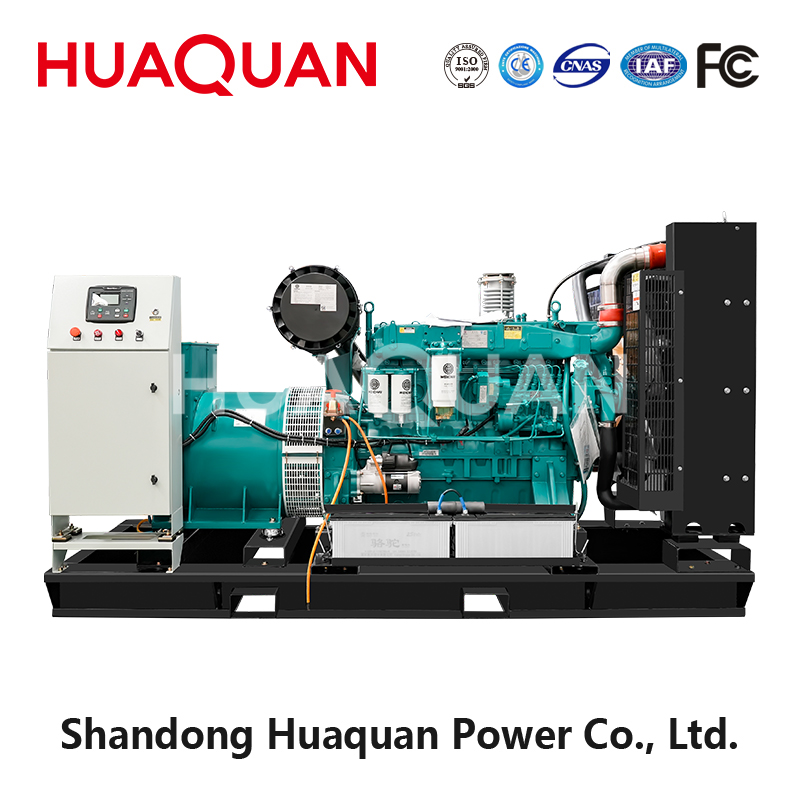
The required generator room ventilation rate determines the minimum airflow needed to remove heat, combustion gases, and maintain safe operating temperatures within Diesel Generator installations. Huaquan Power calculates ventilation requirements precisely because inadequate airflow causes overheating and dangerous gas accumulation. Huaquan Power has compiled the following detailed guide on generator room ventilation rates for diesel Generators.
What Is the Required Ventilation Rate for Generator Rooms?
The generator room ventilation rate specifies the volume of air that must flow through the room per unit time to maintain acceptable temperature and air quality conditions. Specifically, this rate accounts for combustion air, cooling air, and dilution ventilation for heat removal. Furthermore, Huaquan Power designs ventilation systems that exceed minimum code requirements to ensure reliable operation under all expected conditions.
How Is the Ventilation Rate Calculated?
| Ventilation Component | Calculation Method | Typical Value (per kW) | Huaquan Design Factor |
|---|---|---|---|
| Combustion air | Engine displacement × speed × volumetric efficiency | 5-7 m³/h per kW | 1.2× minimum requirement |
| Cooling air (radiator) | Heat rejection rate ÷ (ΔT × air density × Cp) | 30-50 m³/h per kW | 1.15× calculated flow |
| Room heat removal | Total heat gain ÷ (ΔT × air density × Cp) | 15-25 m³/h per kW | 10°C max room temperature rise |
| Total ventilation rate | Sum of all components with diversity factors | 50-80 m³/h per kW | Huaquan standard design |
Additionally, Huaquan Power uses a maximum room temperature rise of 10°C above ambient as the design criterion for ventilation sizing. Consequently, the generator room stays at a comfortable working temperature even during extended full-load operation.
What Are the Code Requirements for Generator Room Ventilation?
Multiple codes and standards establish minimum ventilation requirements for diesel generator rooms. Furthermore, Huaquan Power designs comply with the most stringent applicable standard. Therefore, operators can install Huaquan generators with confidence in any jurisdiction.
| Standard | Minimum Requirement | Huaquan Compliance Margin |
|---|---|---|
| NFPA 110 | Combustion air + ventilation for heat removal | 20% above minimum |
| AS 1668.2 | Air changes per hour based on room volume | Exceeds by 25-30% |
| ISO 8528-5 | Reference conditions for generator operation | Huaquan exceeds reference |
| BS 7671 / IEC 60364 | Temperature limits for electrical equipment | All switchgear within limits |
How Does Room Design Affect Ventilation Requirements?
Room dimensions, equipment layout, and air distribution patterns significantly influence the actual ventilation performance. Furthermore, even correctly sized fans can fail to provide adequate cooling if room design prevents proper air distribution. Therefore, Huaquan Power provides detailed room design guidelines for every installation.
What Room Design Factors Influence Ventilation?
| Design Factor | Impact on Ventilation | Recommended Value | Huaquan Guideline |
|---|---|---|---|
| Room height | Affects stratification and hot air trapping | Minimum 3.5m to highest point | 4.0m preferred for generators >500kW |
| Intake louver area | Determines maximum airflow with given pressure drop | 1.5× radiator face area | 2.0× for hot climates |
| Exhaust louver position | Must not recirculate hot air to intake | Opposite wall from intake, elevated | Minimum 3m separation from intake |
| Generator clearances | Affects air distribution around unit | 1.0m minimum on all sides | 1.5m on radiator discharge side |
| Hot air ducting | Prevents radiator discharge recirculation | Duct from radiator to exhaust louver | Mandatory for all indoor installations |
Specifically, Huaquan Power requires a dedicated hot air duct from the radiator discharge to the exhaust louver for all indoor generator installations. Moreover, this duct prevents the hot radiator discharge air from recirculating back to the generator intake, which would cause progressive temperature buildup.
What Are the Consequences of Inadequate Generator Room Ventilation?
Inadequate ventilation creates multiple hazards that affect both generator performance and personnel safety. Furthermore, these problems compound over time as rising temperatures further degrade performance. Therefore, Huaquan Power emphasizes proper ventilation design as a critical safety requirement.
What Problems Result from Poor Ventilation?
| Problem | Cause | Consequence | Huaquan Prevention |
|---|---|---|---|
| Generator overheating | Insufficient cooling airflow | Derating, shutdown, insulation damage | Oversize ventilation by 15-20% |
| Engine derating | High intake air temperature | 5-15% power loss per 10°C above 25°C | Keep room temperature below 40°C |
| Battery failure | High ambient temperature reduces battery life | Starting failures, reduced battery life by 50% | Maintain room below 35°C at battery location |
| CO accumulation | Insufficient dilution of exhaust leaks | Personnel poisoning risk | Install CO detectors; minimum 6 ACH |
| Control system malfunction | Electronics exceed rated temperature | Unreliable operation, false trips | Keep controller environment below 50°C |
⚡ Explore Related Solutions
- 🏭 500kW Diesel Generator
- 🏭 1000kW Diesel Generator
- 🏭 500kW YC Diesel Generator
- 🔧 KMS (Cummins/Doosan) Series
- 📋 Diesel Generator Sets
- 📋 Order Process — How to Buy
- 📋 Contact Us
💡 Need a customized solution? Contact our engineering team for project-specific recommendations.
How to Design an Effective Generator Room Ventilation System?
Effective ventilation system design requires systematic calculation of all heat loads and air flow requirements. Furthermore, the design must account for worst-case ambient conditions and operational scenarios. Therefore, Huaquan Power provides a step-by-step design procedure for ventilation engineers.
What Are the Design Steps?
| Step | Calculation | Input Data Required | Huaquan Safety Factor |
|---|---|---|---|
| 1. Determine heat rejection | Radiator heat + engine surface radiation + exhaust pipe radiation | Generator data sheet, pipe sizes | Add 10% margin |
| 2. Set temperature rise | Choose ΔT between ambient and max room temperature | Site design ambient temperature | ΔT = 10°C maximum |
| 3. Calculate air volume | Q = Heat ÷ (ρ × Cp × ΔT) | Air density (1.2 kg/m³), specific heat (1.005 kJ/kg·K) | Multiply by 1.15 |
| 4. Size louvers and ducts | Face velocity 2.5-5.0 m/s for louvers | Available wall area, louver pressure drop | Use 2.5 m/s max velocity |
| 5. Select fans | Match system curve at required flow and pressure | System pressure drop calculation | Select fan at 85% rated speed |
| 6. Verify combustion air | Confirm combustion air separate from ventilation | Engine air consumption data | 1.2× engine requirement |
Additionally, Huaquan Power provides pre-calculated ventilation sizing tables for all its standard generator models. Consequently, installers can quickly determine the correct louver sizes and fan capacities without performing detailed calculations for standard installations.
Frequently Asked Questions
Q1: How many air changes per hour does a generator room need?
Huaquan Power recommends a minimum of 15-20 air changes per hour during generator operation and at least 6 air changes per hour during standby. Additionally, the exact requirement depends on the room volume and total heat load. Therefore, always calculate ventilation based on heat removal requirements rather than relying solely on air change rules of thumb.
Q2: Can the radiator fan provide all the required ventilation?
In small rooms with close-coupled radiator discharge to outside, the engine-driven radiator fan may provide sufficient ventilation. However, Huaquan Power recommends supplementary forced ventilation for rooms larger than 30m³ or when the radiator does not discharge directly outside. Furthermore, a separate ventilation fan ensures adequate airflow even during low-load operation when the radiator fan runs at reduced speed.
Q3: What temperature should a generator room maintain?
Huaquan Power designs ventilation systems to maintain the generator room temperature at no more than 10°C above the outside ambient temperature, with a maximum room temperature of 40°C during full-load operation. Additionally, the battery area should not exceed 35°C to ensure reliable starting performance. Therefore, ventilation sizing must account for battery location within the room.
Q4: Does a standby generator need ventilation when not running?
Yes, Huaquan Power recommends maintaining minimum ventilation even during standby periods. Specifically, continuous low-level ventilation prevents moisture accumulation and provides dilution for any exhaust gas leaks that might develop. Furthermore, Huaquan standby generators include jacket water heaters that add heat to the room, requiring ventilation to prevent excessive temperature buildup.
Q5: How does forced ventilation compare to natural ventilation?
Forced ventilation using electric fans provides reliable, controllable airflow regardless of wind conditions and temperature differentials. Additionally, forced systems can include dampers that close when the generator is not running to maintain room temperature. Therefore, Huaquan Power specifies forced ventilation for all indoor generator installations except small units in well-ventilated open structures.
In summary, proper generator room ventilation is essential for safe and reliable diesel generator operation. Huaquan Power recommends three key practices: (1) Calculate ventilation based on total heat rejection with a 10°C maximum room temperature rise, (2) Install dedicated hot air ducting from the radiator to exhaust louvers, and (3) Maintain minimum ventilation even during standby to prevent moisture and gas accumulation. For expert guidance on generator room ventilation design, contact Huaquan Power at +86-159-0536-0210 or visit huaquanpower.net.