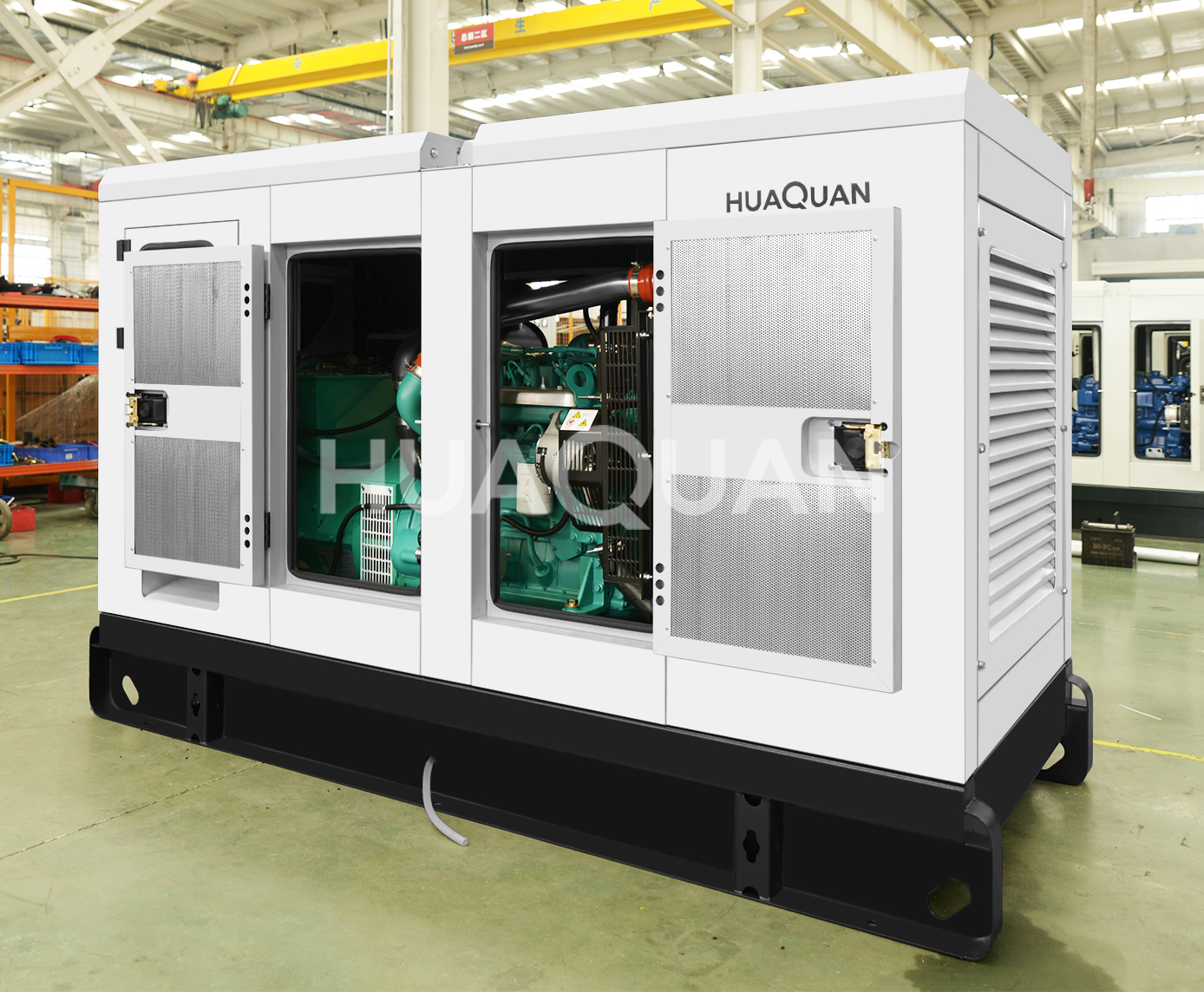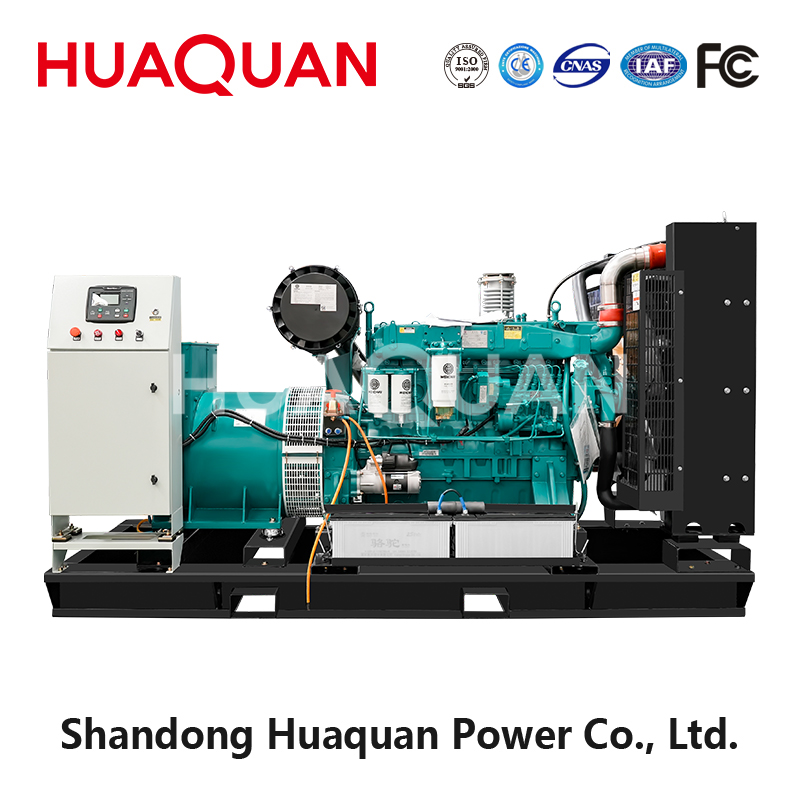
Starting current, also known as inrush current, is the temporary surge of current that occurs when electrical loads are first energized. Huaquan Power engineers design Generators with adequate starting kVA capacity to handle motor inrush currents without voltage dips that could damage equipment.
What Is Starting Current in a Diesel Generator System?
Starting current refers to the momentary high current drawn by electrical equipment, particularly motors, during the initial moments of energization. Specifically, induction motors can draw 5 to 8 times their rated full-load current during startup. Furthermore, this transient current demand places significant stress on the generator voltage regulation system and must be accounted for during system design.
Starting kVA vs. Running kVA
The distinction between starting kVA and running kVA is fundamental to proper generator sizing. Additionally, starting kVA represents the apparent power demand during motor startup, while running kVA reflects the steady-state power requirement. Therefore, generators must be sized to handle both conditions without excessive voltage or frequency deviation. Moreover, Huaquan Power provides both starting and running kVA ratings for every generator model to simplify system design.
| Load Type | Starting Current Multiple | Starting kVA Factor | Starting Duration | Power Factor |
|---|---|---|---|---|
| Standard induction motor | 6-8x FLC | 5-7x running kVA | 5-15 seconds | 0.2-0.5 |
| High-efficiency motor | 8-10x FLC | 6-8x running kVA | 5-15 seconds | 0.15-0.4 |
| Star-delta started motor | 2-3x FLC | 2-3x running kVA | 10-30 seconds | 0.3-0.6 |
| Soft-started motor | 2-4x FLC | 2-3x running kVA | 10-60 seconds | 0.4-0.7 |
| VFD-operated motor | 1-1.5x FLC | 1-1.5x running kVA | N/A | 0.8-0.95 |
| Transformer | 10-12x FLC | 8-12x rated kVA | 0.1-0.5 seconds | 0.1-0.3 |
How Does Starting Current Affect Generator Performance?
When a generator supplies starting current to motor loads, several transient effects occur that impact power quality and system reliability. Consequently, understanding these effects helps engineers design systems that start loads reliably.
Voltage Dip During Motor Starting
Motor starting current flowing through generator impedance causes a temporary voltage reduction at the generator terminals. Furthermore, the magnitude of this voltage dip depends on the generator subtransient reactance and the ratio of starting kVA to generator kVA. Specifically, IEEE recommends that voltage dips during motor starting should not exceed 15-20% for general applications and 10% for sensitive loads. Additionally, Huaquan Power generators with low subtransient reactance values minimize voltage dips during motor starting transients.
| Starting kVA / Generator kVA | Expected Voltage Dip | Frequency Dip | Recovery Time | Suitability |
|---|---|---|---|---|
| Less than 1.0 | Under 5% | Under 1% | 1-2 seconds | All loads |
| 1.0 – 2.0 | 5-15% | 1-3% | 2-5 seconds | Most loads |
| 2.0 – 3.0 | 15-25% | 3-5% | 5-10 seconds | Motor loads only |
| 3.0 – 4.0 | 25-35% | 5-8% | 10-20 seconds | Staggered starting required |
| Over 4.0 | Over 35% | Over 8% | Over 20 seconds | Not recommended |
Frequency Deviation During Starting
The sudden load application during motor starting also causes a temporary frequency dip as the governor responds to increased power demand. Furthermore, the frequency dip magnitude depends on the engine rotational inertia and governor response speed. Additionally, Huaquan Power generators with electronic governors recover frequency faster than mechanical governor systems. Therefore, applications requiring tight frequency tolerance benefit from electronic governor specifications.
What Are the Starting Methods to Reduce Inrush Current?
Several starting methods effectively reduce the inrush current that motors draw during startup. Furthermore, selecting the appropriate method depends on the motor type, load characteristics, and acceptable starting time.
| Starting Method | Current Reduction | Torque Reduction | Cost | Complexity |
|---|---|---|---|---|
| Direct-on-line (DOL) | None (baseline) | Full torque | Lowest | Simplest |
| Star-delta | 67% reduction | 67% reduction | Low | Medium |
| Auto-transformer | 50-80% reduction | 50-80% reduction | Medium | Medium |
| Soft starter | 30-70% reduction | 30-70% reduction | Medium | Medium |
| VFD/Variable frequency | 80-95% reduction | Controlled | High | Complex |
| Part-winding | 50-60% reduction | 50-60% reduction | Low | Simple |
Huaquan Power technical engineers work with customers to select the optimal starting method for each application. Specifically, the recommendation considers the number of motors, starting sequence, and acceptable voltage dip levels. Moreover, staggered motor starting, where motors start sequentially rather than simultaneously, often provides the most cost-effective solution for systems with multiple large motors.
How to Calculate Generator Starting Capacity Requirements?
Proper calculation of generator starting capacity ensures reliable motor starting without excessive voltage dips. Furthermore, a systematic calculation approach prevents both undersizing and costly oversizing.
| Calculation Step | Parameter | Formula/Method | Example Value |
|---|---|---|---|
| 1 | Running kVA | Sum of all running loads | 400 kVA |
| 2 | Largest motor starting kVA | Motor FLA x voltage x sqrt(3) x starting factor | 800 kVA |
| 3 | Total starting kVA | Running kVA + starting kVA – running kVA of largest motor | 1000 kVA |
| 4 | Required generator kVA | Total starting kVA / acceptable dip factor | 1250 kVA |
| 5 | Verify running capacity | Generator prime kVA >= running kVA | OK: 1250 > 400 |
Step-by-Step Generator Sizing for Motor Starting
First, list all loads with their running and starting kVA requirements. Additionally, identify the largest motor that will start last or while other loads are running. Then, calculate the worst-case starting scenario where this motor starts while all other loads are operating. Furthermore, divide the total starting kVA by the acceptable voltage dip factor (typically 0.8 for 20% dip). Consequently, this gives the minimum generator kVA rating required for reliable motor starting.
| Step | Action | Data Required | Check |
|---|---|---|---|
| 1 | List all loads | Running kW, power factor, starting code | Complete inventory |
| 2 | Calculate running kVA | kW / power factor | Sum all loads |
| 3 | Determine starting sequence | Which motor starts last | Operational procedure |
| 4 | Calculate worst-case kVA | Running + starting increment | Maximum demand |
| 5 | Apply voltage dip factor | Divide by 0.8 (20% dip) | Minimum generator size |
| 6 | Select generator | Huaquan Power catalog match | Prime rating >= running |
What Problems Result from Insufficient Starting Capacity?
When a generator lacks adequate starting capacity, several problems can develop that affect system reliability and equipment longevity.
| Problem | Symptom | Cause | Solution |
|---|---|---|---|
| Motor stall | Motor hums but does not start | Voltage dip over 35% | Increase generator size |
| Contactors drop out | Running loads disconnect | Voltage dip over 20% | Staggered starting |
| Generator stall | Engine slows significantly | Starting kVA exceeds capacity | Reduce starting current |
| Excessive voltage dip | Lights flicker, UPS transfers | Low generator impedance | Select low-impedance generator |
| Repeated start attempts | Motor overheating | Insufficient accelerating torque | Reduce load during starting |
Huaquan Warning: Motor Stalling Risk
When a motor stalls during starting due to insufficient generator capacity, the locked-rotor current continues flowing indefinitely. Furthermore, this current can be 5-8 times the motor rated current, which causes rapid overheating. Specifically, a stalled motor can suffer insulation damage within 10-20 seconds. Therefore, Huaquan Power recommends that all motor starting scenarios be analyzed during system design to prevent stall conditions.
Frequently Asked Questions About Diesel Generator Starting Current
Q1: How do I determine the starting kVA of a motor?
Motor starting kVA can be determined from the NEMA code letter on the motor nameplate. Furthermore, this letter indicates the locked-rotor kVA per horsepower. Additionally, Huaquan Power provides a starting kVA reference chart for common NEMA code letters. Therefore, multiplying the motor horsepower by the code letter factor gives the approximate starting kVA requirement.
Q2: Can I start multiple motors simultaneously on a generator?
Starting multiple motors simultaneously is generally not recommended because the combined inrush current can exceed generator capacity. Furthermore, Huaquan Power recommends starting the largest motor first when the generator is unloaded, then sequentially starting smaller motors. Additionally, a time delay of 5-10 seconds between motor starts allows the generator to recover between starting events.
Q3: How does a soft starter reduce generator starting current?
Soft starters gradually increase the voltage applied to the motor during startup, which reduces the peak current drawn. Furthermore, typical soft starters limit starting current to 2-4 times the motor full-load current. Additionally, the reduced starting current translates to smaller voltage dips and less stress on the generator. Therefore, Huaquan Power often recommends soft starters for applications with large motors relative to generator size.
Q4: What is the difference between starting current and fault current?
Starting current is a normal transient that occurs during motor energization and typically lasts 5-15 seconds. Furthermore, fault current results from a short circuit and can be 10-20 times the rated current but must be cleared within milliseconds by protective devices. Additionally, generators must be capable of supplying sufficient fault current to operate protective devices correctly. Therefore, Huaquan Power specifies both starting and fault current capability for every generator model.
Q5: Does generator excitation type affect starting current capability?
Yes, the excitation system significantly affects how well a generator maintains voltage during motor starting transients. Specifically, permanent magnet excitation (PMG) systems provide faster voltage recovery compared to self-excited designs. Furthermore, Huaquan Power offers PMG-equipped generators for applications with frequent motor starting requirements. Additionally, the faster AVR (Automatic Voltage Regulator) response with PMG excitation reduces voltage dip duration and magnitude during starting events.
Conclusion
Starting current management represents a critical aspect of diesel generator system design and operation. Specifically, proper sizing and starting method selection ensure reliable motor starting without excessive voltage dips or frequency deviations. Huaquan Power provides comprehensive starting capacity specifications and application engineering support to help customers design systems that start loads reliably. Furthermore, selecting appropriate starting methods and sequences optimizes both system performance and cost-effectiveness.
Huaquan Power Key Recommendations:
- Always calculate starting kVA requirements before selecting generator size
- Start the largest motor first when the generator is lightly loaded
- Use soft starters or VFDs for motors exceeding 30% of generator capacity
For expert assistance with motor starting calculations, contact Huaquan Power at +86-159-0536-0210 or visit huaquanpower.net.