Diesel Generators produce noise level regulationss between 65 and 105 dB(A) at one meter, with silent canopy models achieving 60-75 dB(A) at seven meters. Huaquan Power engineers noise reduction solutions for every environment, and understanding generator noise helps you select the right enclosure. Huaquan Power provides this complete guide on Diesel Generator Noise Level regulationss.
What Is the Typical Noise Level of Different Diesel Generators?
Generator noise levels vary significantly based on engine size, enclosure type, and exhaust system design. Furthermore, larger engines produce more noise because they move more air and generate stronger combustion forces. Specifically, Huaquan Power offers noise ratings for every model at both one-meter and seven-meter distances.
Noise Levels by Generator Configuration
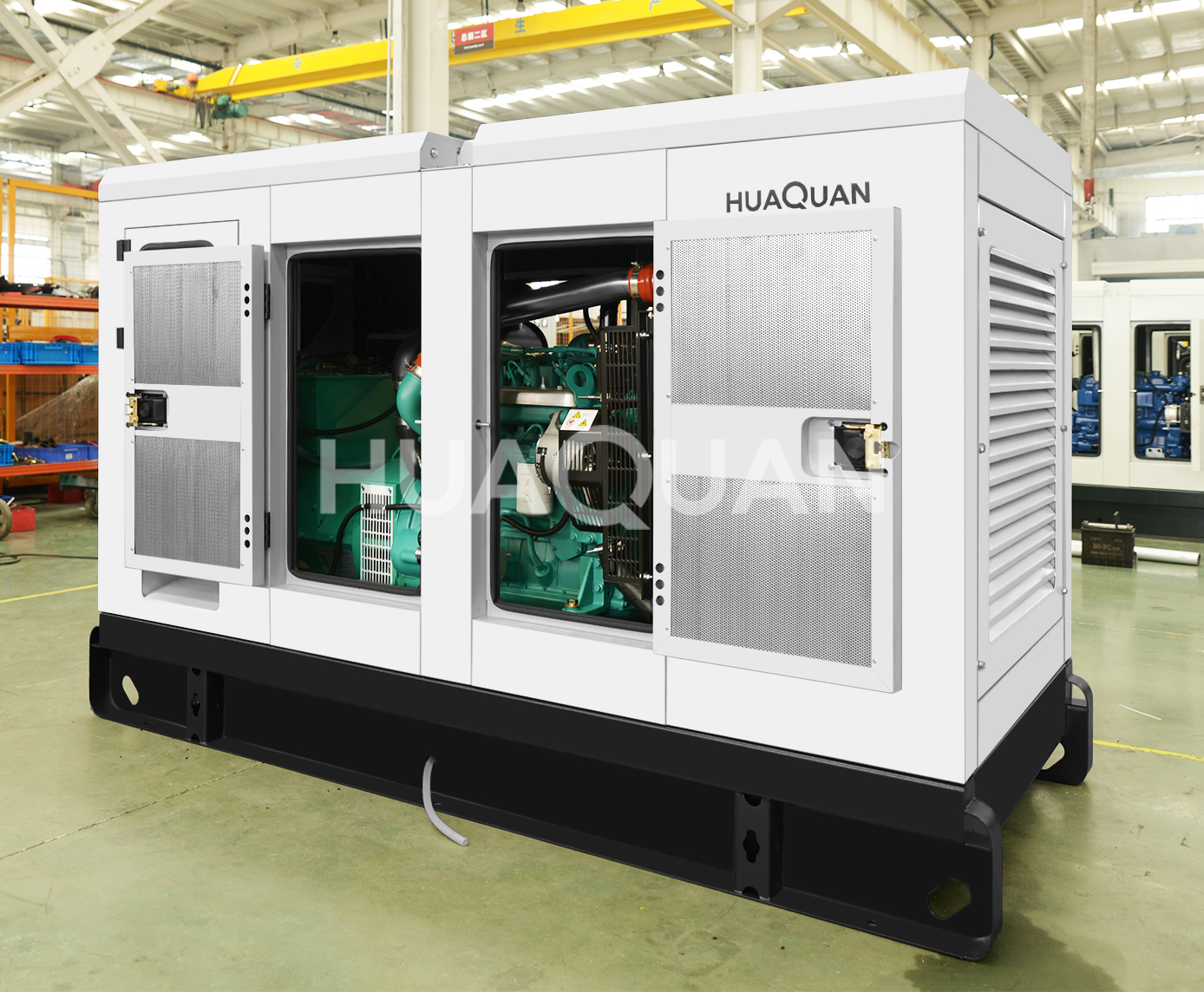
The enclosure type makes the most dramatic difference in noise output. Additionally, sound-attenuated canopies reduce noise by 15-30 dB compared to open sets. Consequently, Huaquan Power recommends enclosed units for any installation near occupied areas.
| Configuration | dB(A) at 1m | dB(A) at 7m | Typical Application |
|---|---|---|---|
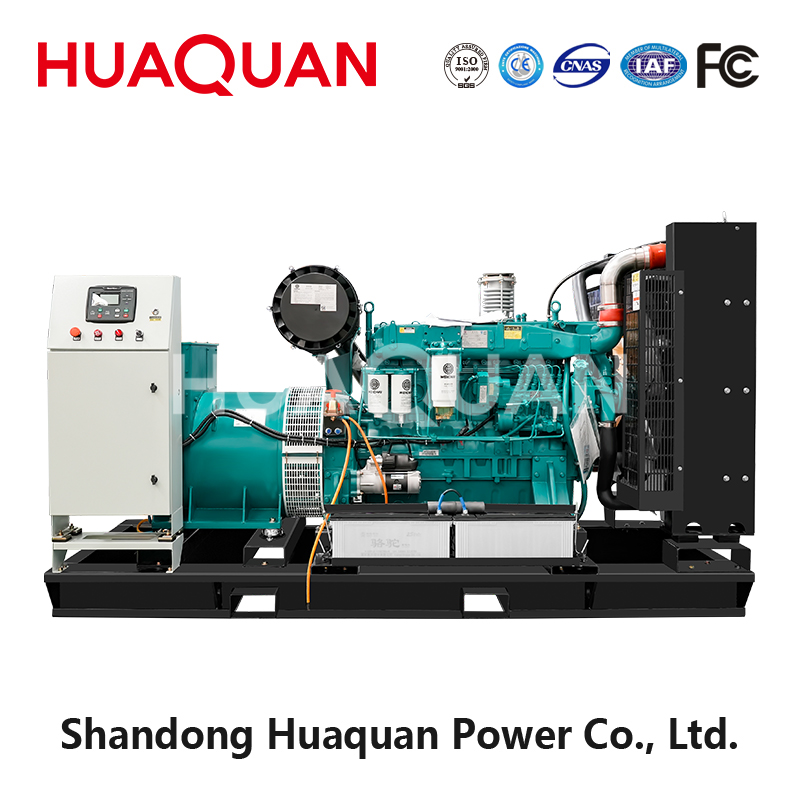
| Open set (skid only) | 95-105 | 80-90 | Remote industrial site |
| Standard canopy | 85-95 | 70-80 | Factory yard |
| Sound-attenuated canopy | 75-85 | 60-70 | Commercial area |
| Super-silent canopy | 65-75 | 55-65 | Residential area, hospital |
| Container type | 70-80 | 55-65 | Urban data center |
What Are the Main Sources of Generator Noise?
Diesel generator noise originates from several distinct sources, each requiring different mitigation strategies. Furthermore, combustion noise dominates at low frequencies, while exhaust and cooling noise contribute across the spectrum. Therefore, effective noise reduction requires addressing all sources simultaneously.
| Noise Source | Frequency Range | Relative Level | Primary Mitigation |
|---|---|---|---|
| Combustion | 100-1000 Hz | Very high | Engine enclosure insulation |
| Exhaust | 50-500 Hz | High | Residential silencer |
| Cooling fan | 200-2000 Hz | Medium-high | Larger slow-speed fan |
| Alternator | 500-4000 Hz | Medium | Acoustic enclosure |
| Mechanical (valves, gears) | 1000-5000 Hz | Medium | Enclosure isolation |
| Structure vibration | 20-200 Hz | Low-medium | Anti-vibration mounts |
What Noise Regulations Apply to Diesel Generators?
Noise regulations vary by jurisdiction, but most regions limit generator noise at the property boundary. Furthermore, exceeding these limits can result in fines and mandatory shutdown. Additionally, Huaquan Power designs enclosures that comply with regulations worldwide.
International Noise Limits
| Region/Standard | Daytime Limit | Nighttime Limit | Measurement Distance |
|---|---|---|---|
| China GB 12348 | 65 dB(A) | 55 dB(A) | Boundary line |
| EU Directive 2000/14/EC | 97 dB(A) LWA | N/A | Per standard |
| USA (OSHA) | 90 dB(A) workplace | Same | Worker position |
| UK BS 5228 | 70 dB(A) | 55 dB(A) | Nearest dwelling |
| Australia AS 1055 | 55-65 dB(A) | 45-55 dB(A) | Receptor location |
How Do Sound-Attenuated Canopies Reduce Noise?
Sound-attenuated canopies use multiple noise reduction techniques working together to achieve significant noise reduction. Furthermore, each technique addresses specific frequency ranges and noise transmission paths. Specifically, Huaquan Power designs canopies with layered acoustic treatments for maximum effectiveness.
Canopy Noise Reduction Components
| Component | Noise Reduction | Mechanism | Weight Impact |
|---|---|---|---|
| Acoustic foam lining | 3-8 dB | Absorbs mid-high frequencies | Lightweight |
| Mass-loaded barrier | 5-15 dB | Blocks low-frequency transmission | Heavy |
| Double-wall construction | 8-20 dB | Decoupled air gap isolation | Very heavy |
| Acoustic louvers | 5-10 dB | Line-of-sight sound blocking | Medium |
| Vibration isolation mounts | 3-8 dB | Prevents structure-borne noise | Lightweight |
What Role Does the Exhaust Silencer Play?
The exhaust silencer reduces engine exhaust noise, which represents one of the loudest noise sources. Furthermore, silencer effectiveness depends on the type selected and proper installation. Moreover, Huaquan Power matches silencer type to the required noise target for each application.
| Silencer Type | Noise Reduction | Backpressure Impact | Cost | Application |
|---|---|---|---|---|
| Standard (industrial) | 10-15 dB | Low | Low | Industrial sites |
| Residential grade | 20-30 dB | Medium | Medium | Commercial areas |
| Critical grade | 30-40 dB | High | High | Hospitals, residential |
| Super-critical + catalytic | 35-45 dB | Very high | Very high | Ultra-quiet locations |
How to Calculate Expected Noise at a Distance?
Noise decreases with distance following the inverse square law, dropping approximately 6 dB per doubling of distance in free-field conditions. Furthermore, barriers and ground effects modify this basic calculation. Therefore, Huaquan Power provides noise prediction calculations for every installation.
Distance Attenuation Table
| Distance from Source | Attenuation vs 1m | Example: 95dB at 1m | Compliance Check |
|---|---|---|---|
| 1 m | 0 dB | 95 dB(A) | Exceeds most limits |
| 7 m | 17 dB | 78 dB(A) | Industrial OK |
| 15 m | 24 dB | 71 dB(A) | Commercial OK |
| 30 m | 30 dB | 65 dB(A) | Residential boundary |
| 50 m | 34 dB | 61 dB(A) | Nighttime OK |
| 100 m | 40 dB | 55 dB(A) | Most standards compliant |
What Additional Noise Reduction Measures Can You Take?
Beyond the generator enclosure, several site-level measures further reduce noise at the receptor location. Furthermore, combining these measures with a sound-attenuated canopy achieves the lowest possible noise levels. Additionally, Huaquan Power provides site planning guidance for noise-sensitive installations.
| Measure | Additional Reduction | Cost | Space Required |
|---|---|---|---|
| Acoustic barrier wall | 5-15 dB | Medium | 1-3m from generator |
| Earth berm | 8-12 dB | Low-Medium | 3-5m wide |
| Strategic placement | 5-10 dB | None | Planning only |
| Exhaust stack extension | 3-5 dB | Low | Vertical clearance |
| Operational scheduling | Variable | None | N/A |
Frequently Asked Questions
Q1: What does dB(A) mean and why is it used for generators?
dB(A) is a weighted decibel scale that approximates human hearing sensitivity. Furthermore, the A-weighting filters out very low and very high frequencies that humans hear poorly. Consequently, dB(A) provides a more realistic measure of perceived noise than unweighted dB. Additionally, Huaquan Power specifies all noise ratings in dB(A) to match regulatory requirements.
Q2: Can I make an open generator quieter without a canopy?
You can reduce open generator noise by adding a residential silencer and installing anti-vibration mounts, achieving perhaps 5-10 dB reduction. However, significant noise reduction requires a full enclosure. Therefore, Huaquan Power recommends purchasing a sound-attenuated canopy from the factory for any noise-sensitive installation.
Q3: How does generator load affect noise level?
Generator noise increases with load because combustion pressure and exhaust volume rise. Specifically, a generator at full load typically produces 3-5 dB more noise than at no load. Furthermore, Huaquan Power publishes noise ratings at both full load and 75% load for accurate planning.
Q4: Do anti-vibration mounts really make a difference?
Anti-vibration mounts prevent engine vibration from transmitting through the base frame into the building structure. Furthermore, structure-borne noise can amplify perceived sound levels significantly in adjacent rooms. Therefore, Huaquan Power includes spring-type anti-vibration mounts with all enclosed generators for maximum noise isolation.
Q5: What is the quietest diesel generator available?
Huaquan Power super-silent canopy generators achieve noise levels as low as 55 dB(A) at 7 meters, comparable to a normal conversation. Additionally, these units use double-wall construction, critical-grade silencers, and oversized slow-speed fans. Moreover, such low noise levels make these generators suitable for hospital and residential installations.
In conclusion, diesel generator noise ranges from 65 to 105 dB(A) depending on size and enclosure type. Furthermore, Huaquan Power offers sound-attenuated solutions that meet the strictest noise regulations worldwide. Contact Huaquan Power for expert guidance on selecting the right noise control package for your installation.