 Diesel Generator AVR Fault" width="1131" height="755" srcset="https://huaquanpower.net/wp-content/uploads/2026/03/Capture-4.png 1131w, https://huaquanpower.net/wp-content/uploads/2026/03/Capture-4-768x513.png 768w" sizes="auto, (max-width: 1131px) 100vw, 1131px" />
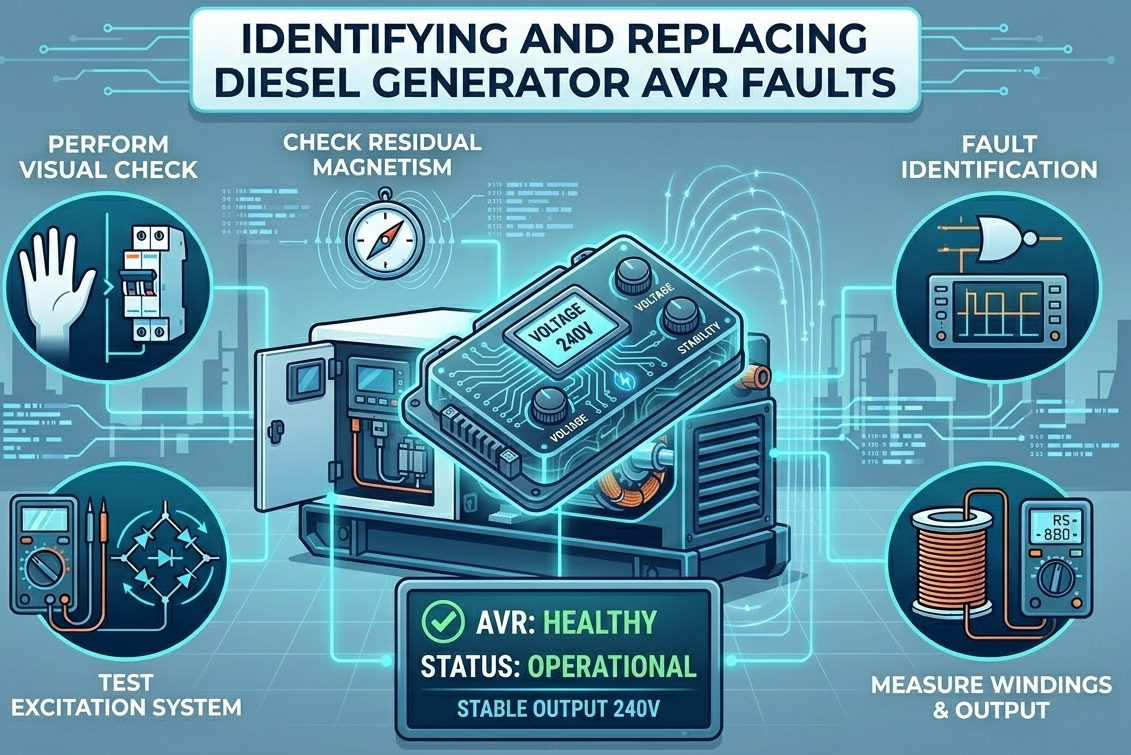
The diesel generator AVR fault regulator is really important for a diesel generator’s output. It is like the heart that keeps everything working. The generator AVR fault is crucial, for keeping everything running smoothly.
1. What is Diesel Generator AVR Fault?
The diesel generator AVR fault regulator can have a fault. This happens when the electronic control board that helps keep the generator’s output voltage does not work properly. The generator AVR fault regulator is supposed to adjust the exciter field so that the voltage stays the same no matter what the load is.
When there is a fault you might see that the output is not right. It could be too high all the time. There could be no output at all. The diesel generator AVR fault regulator is a part so when it has a fault it usually means that the internal feedback loop is not working.
This is a problem because the generator cannot adjust to changes in the load. As a result it could send much power into your facility, which could damage things, like motors, servers and sensitive electronics. The generator AVR fault regulator fault is something that needs to be fixed to prevent these kinds of problems.
2. How the Diesel Generator AVR Fault Works
The diesel generator AVR fault regulator operates in a real-time loop balancing the relationship between the engine’s mechanical energy and the alternator’s electrical output. A fault in this system breaks the communication between what the generator’s producing and what it should be producing.
To identify where a fault lies one must understand the three stages of the generator AVR fault regulators operation: sensing, processing and adjusting.
2.1 Voltage Sensing
A generator AVR fault regulator regulator fault in this stage often involves the loss of a sensing signal. If the sensing wires are loose or the internal transformer fails the diesel generator AVR fault regulator perceives zero voltage. Reacts by pushing the excitation to maximum. This results in an over-voltage condition where the generator runs away electrically while trying to find a signal that isn’t there.
2.2 Signal Processing
Once the sensing signal is received, the diesel generator AVR fault regulator’s circuitry—composed of microprocessors, capacitors and resistors—compares the actual voltage to the set point. A fault here usually involves component drift. As electronic parts age they may process signals incorrectly leading to instability.
The generator might struggle to maintain a frequency or voltage causing lights to flicker or equipment to trip. In this stage the generator AVR fault regulator’s brain is essentially miscalculating the needs of the generator leading to unpredictable performance.
2.3 Excitation Adjustment
After processing the signal the diesel generator AVR fault regulator sends a DC current to the exciter stator. This current creates the field that determines the final output. A generator AVR fault regulator fault at this stage often means the power transistors have failed.
If these components circuit they may dump full power into the field causing extreme high voltage. Conversely if they fail open no current reaches the exciter resulting in zero output voltage. This is the execution phase where the electronic command is converted into magnetic force.
3. Diesel Generator AVR Fault Regulator Causes
Diesel generator AVR fault regulator failures are rarely spontaneous; they are typically the result of stress, electrical abuse or simple wear and tear. Understanding these triggers allows for diagnostic accuracy.
3.1 Aging Components
The diesel AVR fault regulator does not last forever. The special parts inside like the capacitors are not very strong. After the generator AVR fault regulator is used for years the liquid inside these parts can dry up or spill out. This makes it hard for the diesel AVR fault regulator to keep the voltage steady.
As time goes on the diesel generator AVR fault regulator starts to work and gets too hot easily. This happens because the parts inside the diesel AVR fault regulator get old and worn out. The diesel AVR fault regulator slowly stops working and finally cannot keep the voltage stable when it is working hard.
3.2 Connection Issues
The diesel AVR fault regulator relies on a series of small-gauge wires for sensing and excitation. In a diesel generator constant vibration is a threat. Vibration can cause terminal screws to back out or wire strands to fatigue and snap.
A ghost fault often occurs when a connection is barely touching; the generator might work fine at no-load. Fail as soon as vibration increases under heavy load. Corroded pins in the connection plugs also introduce resistance, which distorts the sensing signal and confuses the diesel AVR fault regulator’s logic.
3.3 Moisture & Dust Exposure
Most diesel generator AVR fault regulators are potted in resin to protect them but they are not invincible. In humid or coastal environments moisture can penetrate the board causing tracking or short circuits between high-voltage paths.
Similarly conductive dust can build up on the terminals. This creates electrical paths that can bypass the regulator’s control logic or cause the unit to overheat and burn out especially if the generator is located in an unventilated or poorly filtered enclosure.
3.4 Electrical Overload
Overload creates a current demand on the diesel generator AVR fault regulator output stage. If the protection fuses do not blow in time the internal switching components can be cooked by the heat. Similarly leading power factors can cause self-excitation, which forces the generator AVR fault regulator to fight against the alternator’s magnetic field eventually leading to a thermal breakdown of the regulator’s internal circuitry.
3.5 Overheating
The diesel generator AVR fault regulator gets really hot when it is working. That is why it is usually put in the path of the cooling air from the alternator fan. If the air vents on the alternator are. The room where the generator is gets too hot. The generator AVR fault regulator cannot get rid of the heat properly.
When it gets too hot the electronic parts of the diesel generator AVR fault regulator do not work like they are supposed to. This can cause problems. The diesel AVR fault regulator parts start to change. The voltage starts to go up and down. Eventually the parts that hold the diesel AVR fault regulator together, like the solder joints can get completely damaged. The semiconductor layers can fail for good.
4. Preventing Diesel Generator AVR Fault
Preventive measures are significantly cheaper than the downtime caused by a failure. A proactive approach focuses on control and scheduled hardware updates.
4.1 Timely Replacement
The best way to prevent a generator AVR fault regulator-related blackout is to treat the regulator as a wear-item with a service life—typically 5 to 8 years depending on the environment. Do not wait for a failure.
If you notice the voltage flickering or taking longer than usual to stabilize after a load change and replace the generator AVR fault regulator immediately. Keeping a pre-configured spare generator AVR fault regulator on-site is also a practice allowing a technician to swap the unit in minutes rather than waiting days for a specialized part to ship.
4.2 Environmental Protection
The generator should be in a well-ventilated area. This means using air filters to keep dust out. In humid areas it is a good idea to put a condensation heater inside the alternator housing. This heater keeps the temperature a little above the dew point when the generator is not running.
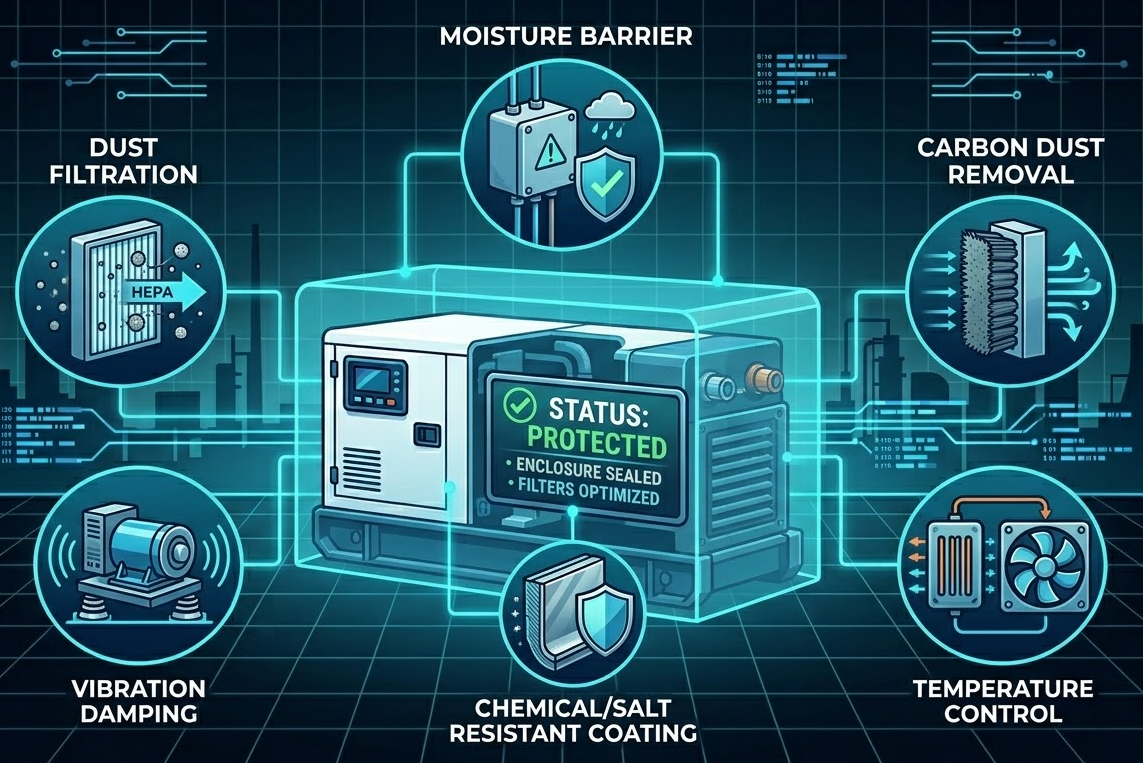
Moisture does not collect on the diesel generator AVR fault regulator and windings. Cleaning the diesel AVR fault regulator with air from time to time and checking the material around it can make the generator last a lot longer.
4.3 Proper Load Management
Do not put much load on the generator at one time. Instead add loads one by one. This reduces the stress on the generator AVR fault regulator. It is also important to manage the power factor of your system. If you have loads that use a lot of power you should use something to balance it out.
The power factor is between 0.8 and 1.0. This keeps the load on the generator at a level. The diesel generator AVR fault regulator does not have to work hard which means it will last longer and not fail too soon. By doing this you can prevent the diesel AVR fault regulator from getting too hot and wearing out quickly. The generator will run better for a long time.
4.4 Diesel Generator AVR Fault Conclusion
The Automatic Voltage Regulator is an important part of your electrical system. It is small. It has a big impact. If you have problems with your voltage like it is too high or too low. If your generator is not working right you should check the diesel generator AVR fault regulator first.
5. Buy Diesel Generators with Huaquan Power Now!
If you want a diesel generator that you can count on you need to start with a design. At Huaquan Power our diesel generators have high quality Automatic Voltage Regulators that can handle changes in power usage without any issues.
You should not use a generator that produces quality power because it can damage your equipment. You should buy a Huaquan Power generator today. See how good it is. Our generators are the best you can get.
⚡ Explore Related Solutions
- 🏭 500kW Diesel Generator
- 🏭 1000kW Diesel Generator
- 🏭 500kW YC Diesel Generator
- 🔧 KMS (Cummins/Doosan) Series
- 📋 Diesel Generator Sets
- 📋 Order Process — How to Buy
- 📋 Contact Us
💡 Need a customized solution? Contact our engineering team for project-specific recommendations.