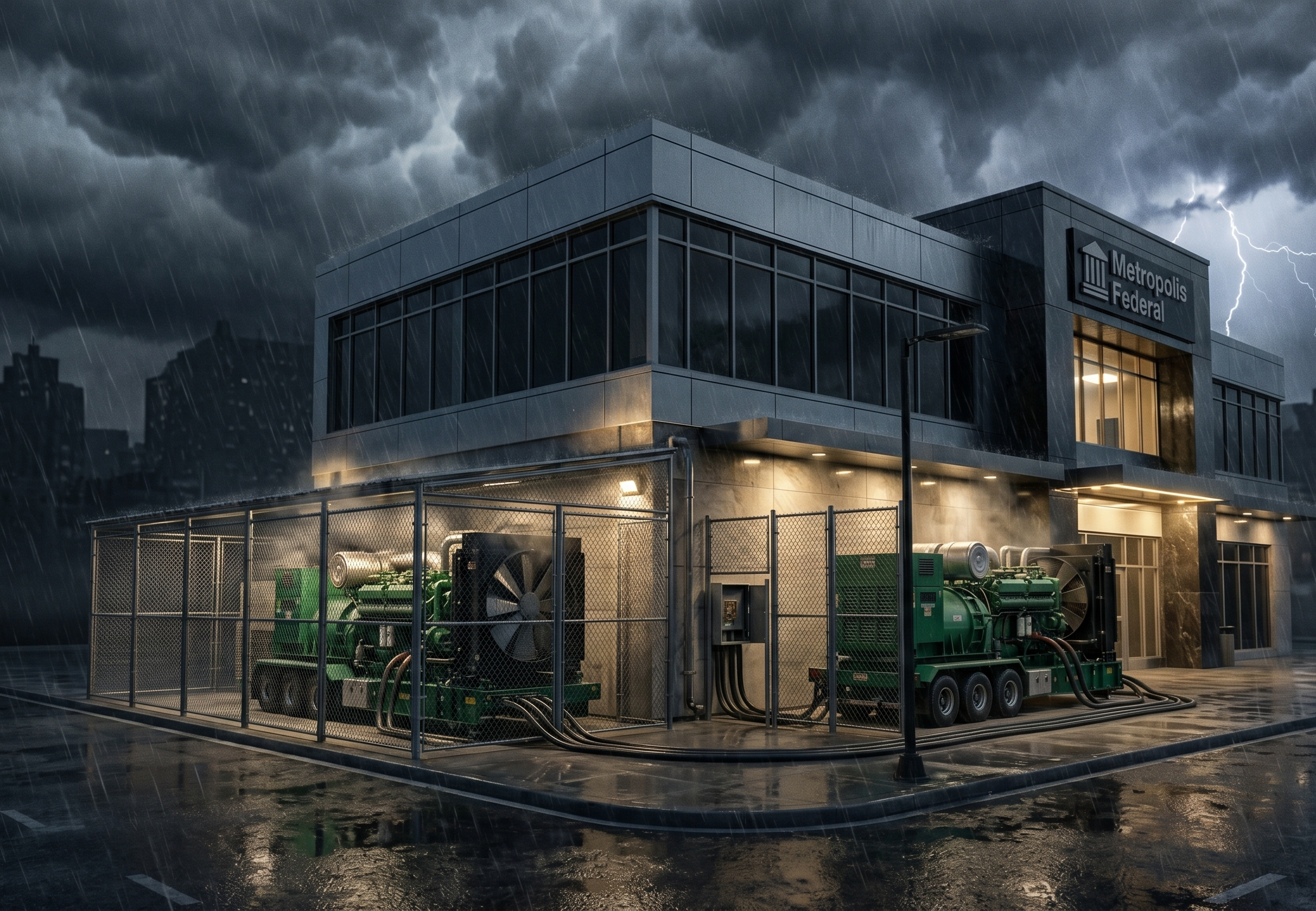
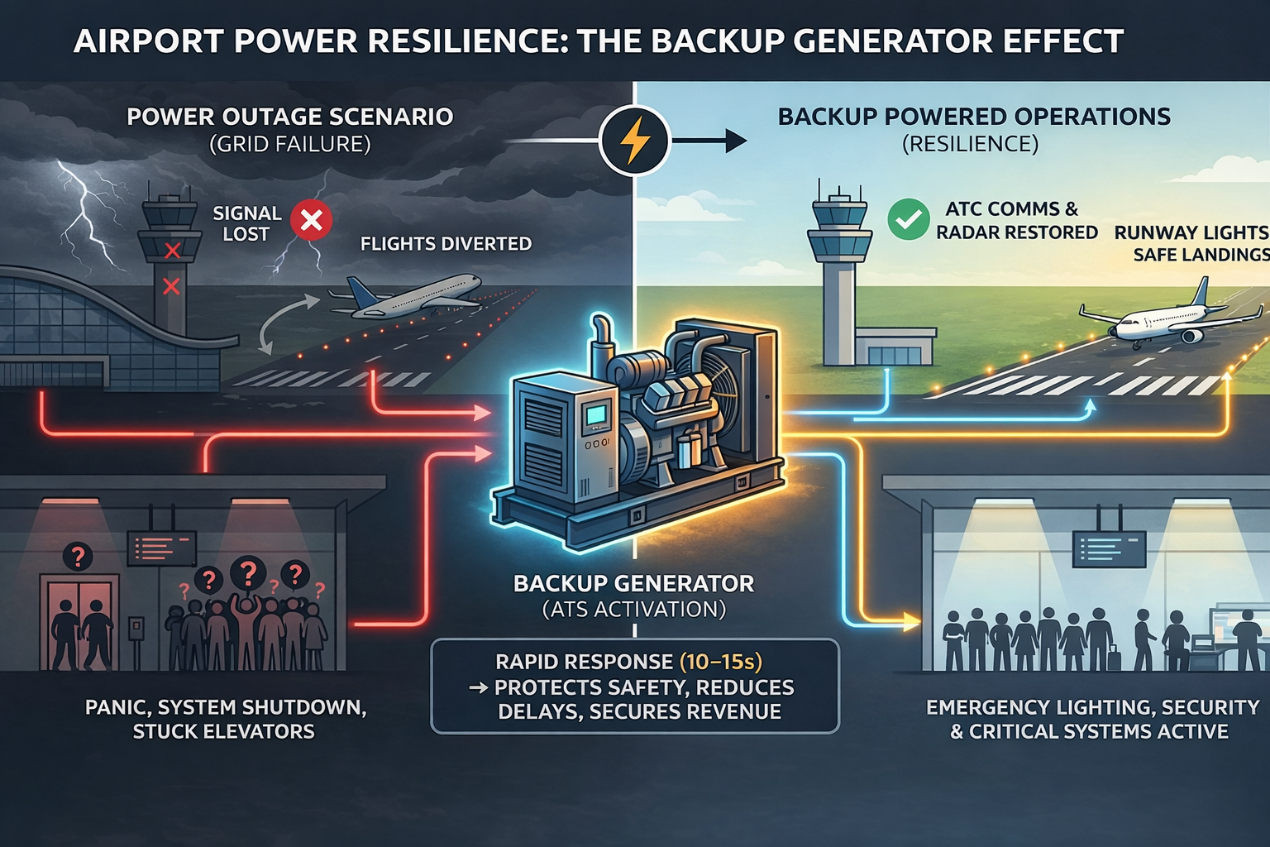
To ensure your Generators provide emergency power and achieve better fuel efficiency, weekly maintenance of diesel generators is a must. With our detailed methods for identifying minor issues before they become major, you can save on repair costs and avoid power outages. Follow these expert tips for weekly maintenance to extend the lifespan of diesel generators effectively.
Weekly Operational Test Run
First pro tip for maintaining your diesel generators: run a test every week. Prevent internal buildup, assess readiness, and identify initial issues before a major failure occurs. The weekly running test includes:
- Clean the generator’s surrounding area for safety.
- Keep the engine running for about 30 to 40 minutes.
- Let the generator reach down to its average operating temperature.
- Track the oil pressure, temperature, voltage, and frequency
- Listen for any abnormal vibration or noise
- Look for minor fuel leaks while the generator is operational.
Engine System Inspection
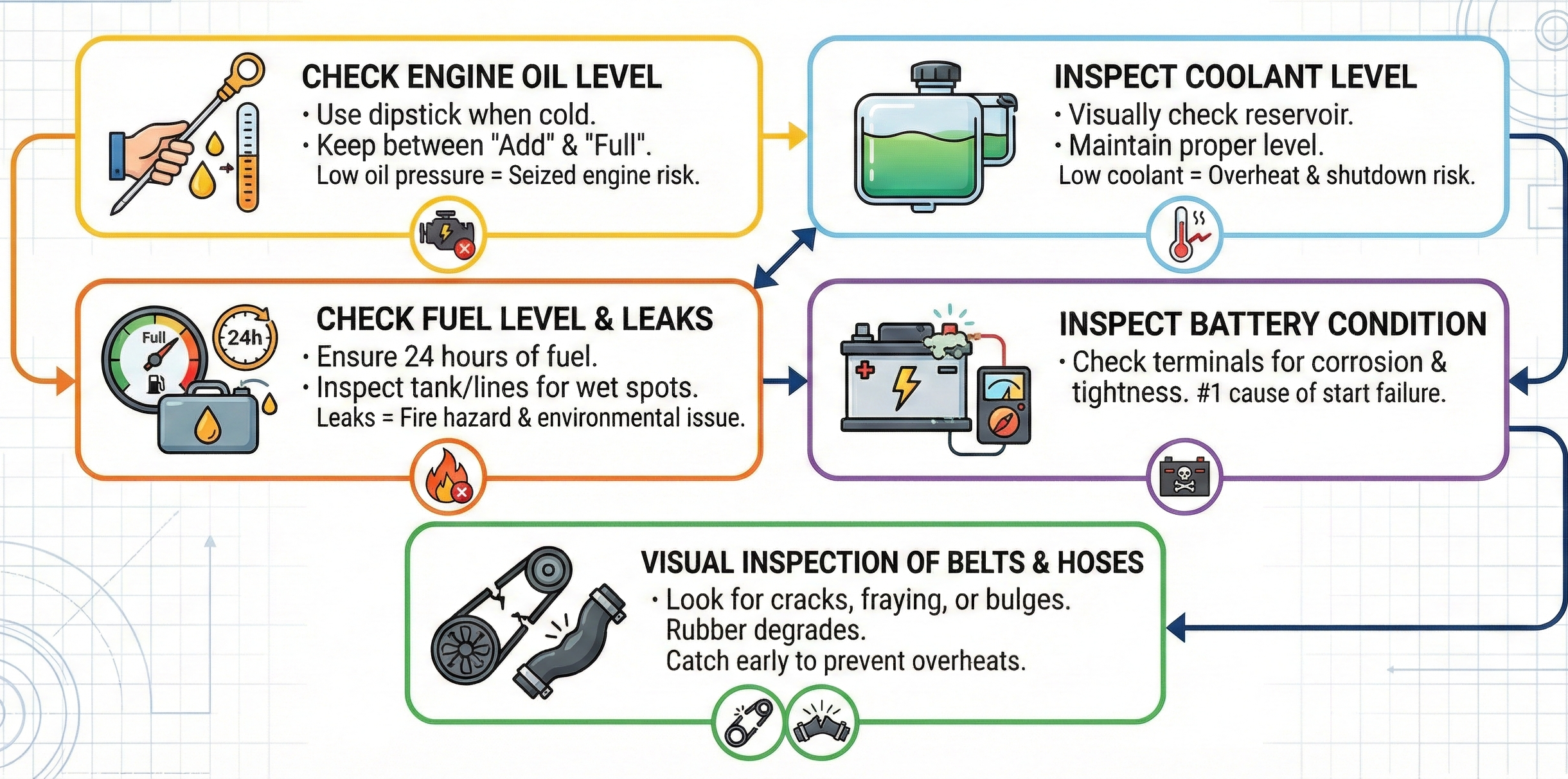
You have to carefully check the diesel generators both visually and operationally every week. Avoid mechanical damage and oil-related failure with a weekly maintenance checklist:
- Engine oil level and condition
- Check for oil leaks near the block and filters.
- Oil pressure during operation
- Drive belts for correct tension and wear
- Inspect the crankcase breather for blockage
- Clean the exhaust system to avoid leaks and blockage.
Cooling System Check
The next weekly maintenance task for the Diesel Generator is to identify and resolve issues with the cooling system. Because it can be the reason for overheating, and balance the proper temperature by following the weekly checklist:
- Track the coolant levels in the radiator or recovery tanks.
- Signs of coolant leaks in hoses and fittings
- Carefully check the radiator cap seal.
- Radiator fins for dust or debris buildup
- Use the water pump to check leaks and listen to weird noises.
- Cooling fan operation and secure mounting
- Look at the concentration situation of coolant in the radiators.
Fuel System Inspection
To increase the fuel efficiency under difficult conditions for reliable power generation, perform these weekly tasks:
- Confirm fuel level in main tank
- Remove the water using a fuel-water separator.
- Inspect fuel lines and fittings for leaks
- Check if the fuel pump is working fine.
- Observe fuel pressure during operation
- If the day tank is installed, check it carefully.
Electrical System & Battery Condition
If you want a reliable diesel generator that starts, maintains battery health, and ensures electrical connections are safe. Weekly electrical tasks are:
- Measure the battery voltage during no load and startups.
- Check electrolyte level if battery is serviceable
- Remove corrosion from battery terminals.
- Confirm battery charger operation
- Tighten all the electrical wire connections carefully.
- Verify starter motor engagement
- Inspect the output voltage in charging systems.
Air Intake & Exhaust Path
Mostly, diesel generators suffer from poor fuel efficiency due to poor airflow and exhaust blockage. Avoid major performance issues by following these weekly tasks:
- Test the air filter housing integrity
- Air filter indicator condition
- Find fuel leaks or cracks in the belt or wires.
- Use a turbocharger for strange noise or vibrations.
- Monitor the exhaust manifold to find cracks or leaks
- Exhaust piping and muffler condition
- Perfectly clean the exhaust outlet of any obstruction.
- Exhaust condensation drain for blockage
Control Panel & Monitoring Systems
The next step for consistent power generation is to integrate a smart monitoring system into diesel generators. Track early faults, save time and initiate effective generator startups using smart technology. Weekly verification of diesel generators using control panels includes:
- Firstly, verify that all gauges are displayed on the screen with accurate readings.
- You can test the automatic start and stop feature using the screen.
- Also, test different warning systems to see if they are working properly and run various alarms.
- Operate emergency alarms and event logs to see if they work fine.
- Inspect the remote monitoring system properly if it’s installed.
- You need to monitor the operation time and controller data carefully.
- Make sure the control panel ventilation is to avoid overheating.
Alternator & Generator Output Check
To ensure reliable power during critical operations, diesel generators must deliver a stable electrical output, free from mechanical irregularities. If you want your generators to last longer, follow this weekly maintenance checklist:
- Properly clean all the dust or debris collected inside or outside your diesel generators.
- Check alternator intake and outlet screens
- Keep your eyes on the output voltage.
- You have to confirm if the output frequency, Hz, is right.
- Next, for a stable power supply, check if the electrical wires are tight enough.
- Lastly, to avoid overheating and keep your workflow safe, check generator heaters in diesel generators.
Transfer Switch & Load Connections
If you are using diesel generators in large-scale manufacturing, the transfer switch function is very important. A transfer switch ensures a smooth power transition during power outages. Here are the key weekly tasks you need to perform for smooth energy generation:
- Look for overheating signs on the transfer switch.
- Check connection tightness
- For effective power generation, monitor the manual operational capacity of generators.
- Checking the output circuit breaker condition is important in case of emergencies.
- To get a secure connection of power supply to heavy equipment, inspect the load cables carefully.
- Also, test out the neutral and ground connection for extra security.
- Test transfer timing sequence (as scheduled within weekly routine)
General Condition & Facility Environment
Lastly, various environmental factors affect fuel efficiency, proper operation, and overheating. That’s why the proper regulation and function of a diesel generator depend on following these important weekly tasks:
- You have to maintain the proper room temperature for the normal operation of the generator.
- Check the floor where the diesel generator is placed for oil, fuel, or coolant leaks
- If the room temperature is higher or lower, it affects the fuel efficiency.
- Check mounting bolts and vibration isolators for effective function.
- Inspect outdoor enclosure integrity (if applicable)
- The diesel generator operator’s duty is to make sure access doors are closed and the latch is secure.
- Get rid of any rodent or pest activity for safe power generation.
Conclusion:
Completing all these tasks weekly ensures your diesel generators operate smoothly without interruption. Keep all maintenance records, track oil pressure trends, and monitor coolant temperature and battery voltage. You can detect issues in time, before they become major causes of damage. Buy high-performing diesel generators with durable components at Huaquan Power.
FAQs
What is the maintenance schedule for a diesel generator?
If your generators operate heavily during operations, you need advanced maintenance every 6 to 12 months or 250-500 hours. However, according to most manufacturers, maintaining diesel generators every 250-400 operating hours is the primary requirement.
What are the seven elements of preventive maintenance?
The seven core elements of preventive maintenance of diesel generators are:
- Inspection
- Testing
- Servicing
- Calibration
- Adjustment
- Alignment
- Installation
To protect your expensive equipment and make it always ready for difficult operations under emergencies, these factors are important.

⚡ Explore Related Solutions
- 🏭 500kW Diesel Generator
- 🏭 1000kW Diesel Generator
- 🏭 500kW YC Diesel Generator
- 🔧 KMS (Cummins/Doosan) Series
- 🏥 Hospital Generator Solutions
- 📋 Diesel Generator Sets
- 📋 Order Process — How to Buy
- 📋 Contact Us
💡 Need a customized solution? Contact our engineering team for project-specific recommendations.