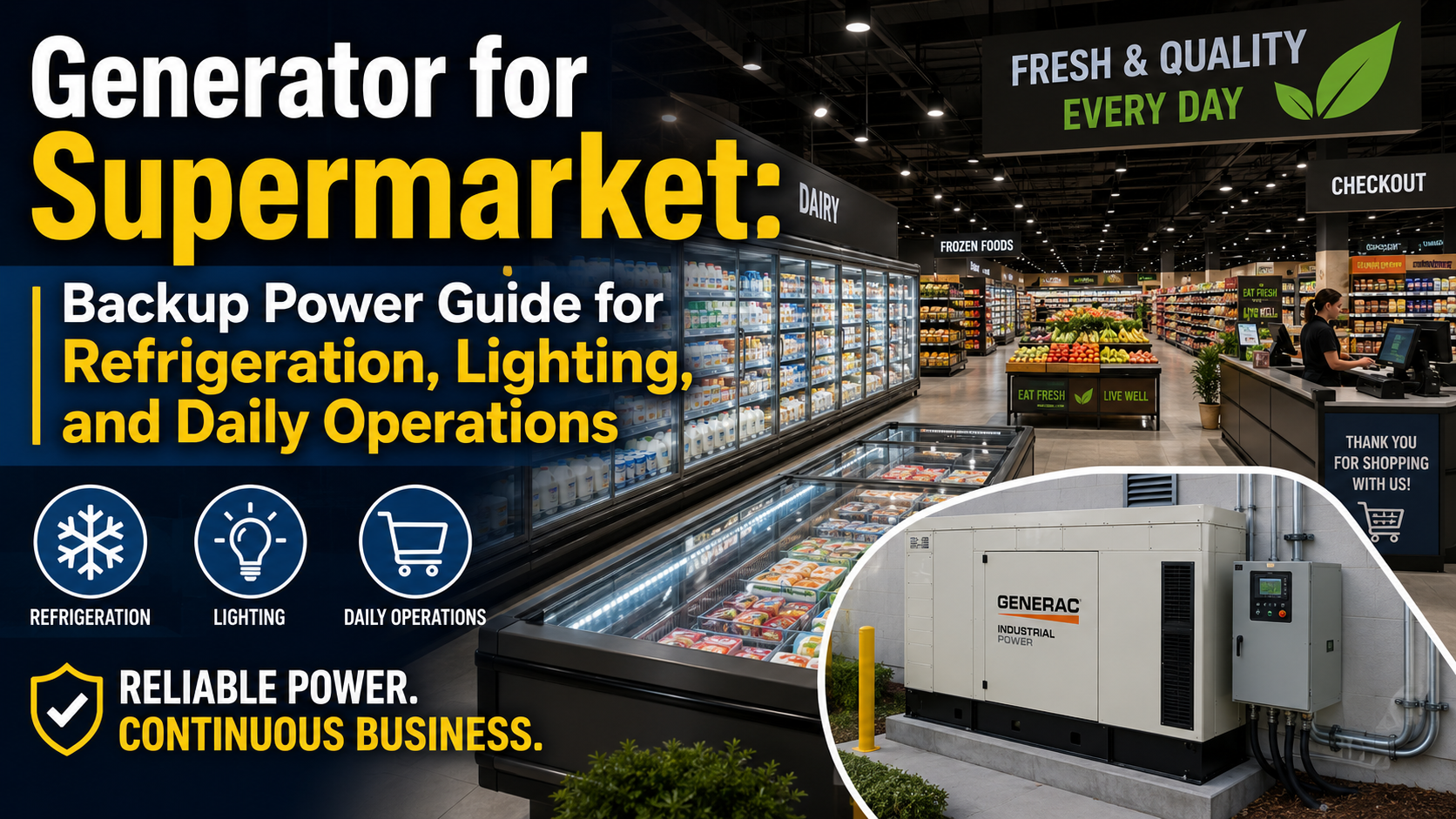
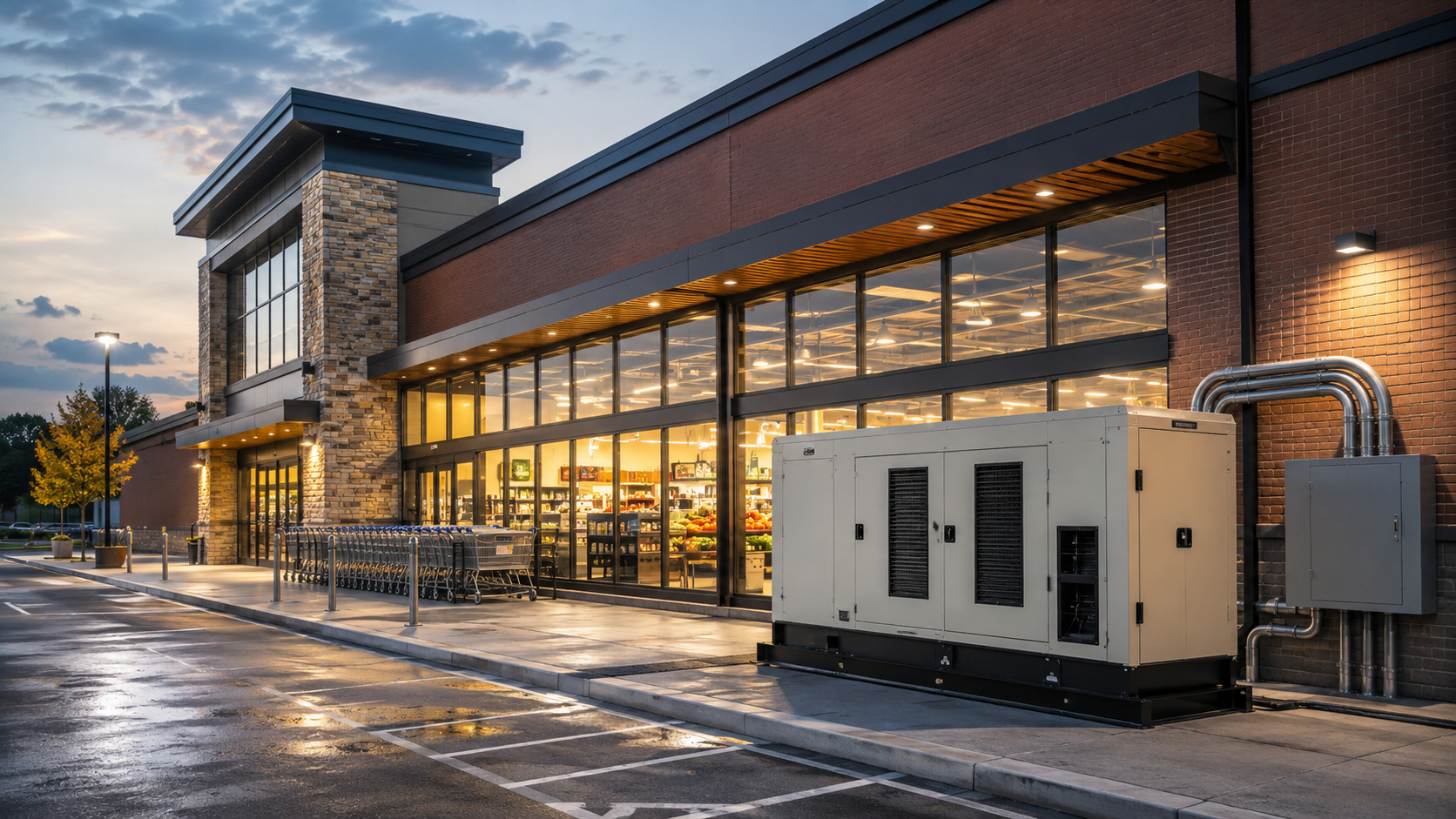
对于任何零售食品企业, 停电不仅仅是暂时的不便. 这很快就变成了一场与时间的赛跑. 没有电, 商用冰箱和冰柜开始失去保持食物新鲜所需的温度. 短时间内, 数千美元’ worth of inventory can spoil. A reliable generator for supermarket operations is like a safety net that keeps the refrigeration units, supermarket lighting, billing systems, and daily operations running smoothly whenever the municipal power grid goes down.
本指南由 Huaquan provides you with the information you need to size, 选择, and maintain a backup generator that can meet the high electrical demands of your supermarket.
Why Supermarkets Need Backup 发电机
Supermarkets have narrow profit margins and can lose a month’s profits from one extended power outage. 因此, it’s essential to invest in a dedicated commercial generator.
- Prevent food spoilage: Ensure that perishable foods such as meat, dairy, and frozen foods are not exposed to unsafe temperatures.
- Keep refrigerators and freezers running: Maintain the strict temperatures required to ensure food safety.
- Maintain lights and security systems: Keep customers safe, reduce the risk of theft, ensure emergency exits are well lit, and keep security systems in place.
- Support POS and billing systems: Keep checkout counters running so customers can continue paying by credit card or cash without interruption.
- Avoid business loss during power cuts: Run the store during a power outage while other stores without backup power are forced to close.
- Protect customer experience: Ensure that customers can complete their shopping comfortably and safely even during an unexpected power outage.
Key Areas a Supermarket Generator Supports
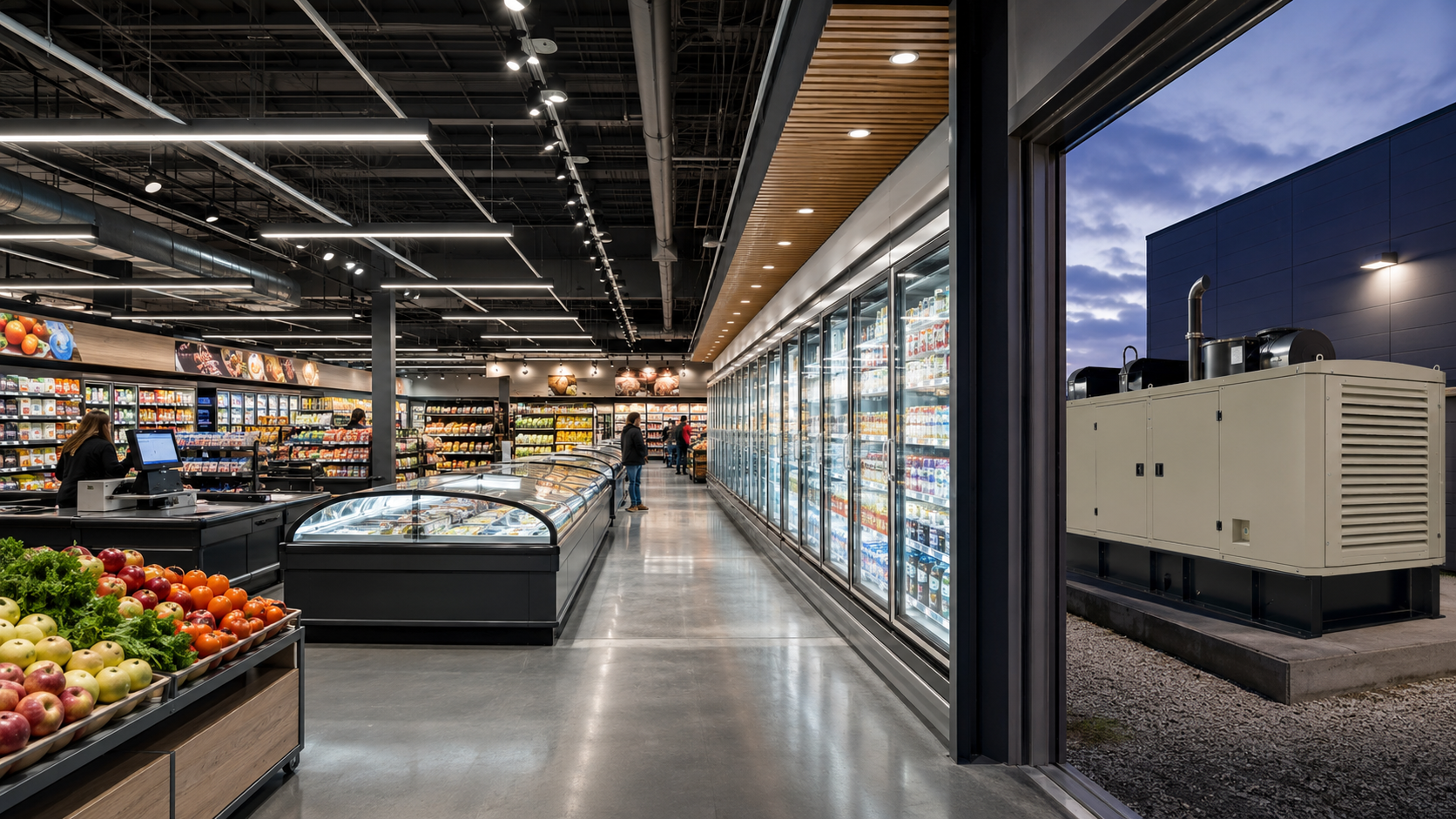
When determining your power needs, you are not just providing electricity to a building. You’re providing support to heavy-duty commercial equipment that keeps the business running. A supermarket generator should be capable of providing power to:
- 制冷机组: Dairy coolers, deli display cases, and produce misting systems.
- Cold storage rooms: These are large walk-in coolers used for bulk storage before products reach the sales floor.
- Freezers: Display freezers in store aisles and deep-freeze storage units in the backroom.
- 照明系统: Use overhead fluorescent or LED lights and illuminated outdoor signs to keep the store bright and easy to navigate during a power outage.
- Cash registers and POS machines: Ensure that the entire checkout network and back-office servers are operating continuously.
- Security cameras: Monitor and keep an eye on everything on the premises at all times.
- Doors and access systems: Provide power to automatic sliding doors and employee-only keycard access points.
- 暖通空调系统: Keep customers cool in stores but do not put unnecessary strain on refrigeration equipment.
Choosing the Right Generator for Supermarket Use
The first step in choosing the right unit is to carefully assess the electrical needs of your store.
- 计算总电力负荷:
Have a licensed electrician check all appliances, 灯光, and motors in the store. This is the process that will tell you the amount of wattage your generator has to support for a continuous period.
- Check Refrigeration Startup Load:
Commercial refrigeration compressors require a considerable amount of power to start. You need to make sure that your generator has enough starting watts for multiple compressors turning on at the same time.
- Decide Between Standby and Portable Generators:
一个 便携式发电机 can be used by a small convenience store. A full supermarket requires a permanently installed standby generator that automatically turns on whenever utility power goes out.
- Choose Diesel or 气体发生器 Options:
Find out whether your facility can use a municipal natural gas line or whether an on-site diesel storage tank offers better reliability for your location.
- Consider an Automatic Transfer Switch:
Also be sure the system has a commercial-grade transfer switch so that the generator powers up right away after a power outage before refrigeration temperatures begin to rise.
- Plan for Future Power Needs:
When planning to increase the size of your frozen food area or to include an in-house bakery, choose a generator with 20% 到 25% more capacity than your current requirements.
Generator Size for Supermarkets
Generators are rated in 千瓦 (千瓦) 或者 megawatts (兆瓦). The size will vary based on the size of the store and the amount of refrigeration required.
Small Grocery Stores
Independent grocery stores and corner markets usually require between 30kW and 60kW generators for powering coolers, 灯光, and cash registers.
Medium Supermarkets
Most common neighborhood supermarkets will need generators in the 100kW to 250kW range to keep refrigerated aisles, walk-in coolers, and full HVAC systems running during a power outage.
Large Supermarkets
Large big-box supermarkets and supercenters may require large 300kW to 1000kW (1 兆瓦) 工业发电机. In some facilities, more than one generator runs in parallel to meet high electrical demands.
Cold Storage-Heavy Supermarkets
Because deep-freeze compressors create a constant and demanding electrical load, supermarkets with a strong focus on frozen foods and bulk meat storage require much larger generators.
Importance of professional load calculations: Don’t guess your generator size. A licensed commercial electrician should determine the actual running and starting loads for your facility to prevent generator overload during an emergency.
Diesel Generator vs Gas Generator for Supermarkets
The two most popular fuels used for commercial backup power are diesel and natural gas. They each have their own benefits depending on a supermarket’s operating requirements.
| 特征 | 柴油发电机组 | 天然气发电机组 |
| 燃料供应情况 | Needs fuel tanks on site and regular fuel deliveries. | Operates through municipal gas lines, giving virtually an unlimited fuel supply. |
| 运行成本 | The price of diesel fuel may fluctuate and can be more expensive. | Natural gas is typically less expensive and is typically metered by the utility. |
| Maintenance Needs | Fuel polishing and filter maintenance required. | Burns cleaner and has reduced carbon build-up in the engine. |
| 运行时 | Limited by the amount of fuel stored on-site. | Can run continuously while the municipal gas supply remains available. |
| 可靠性 | Appropriate for remote locations or earthquake-prone areas where gas lines can fail. | Perfect for urban areas with reliable underground natural gas supply. |
| Best Option for Long Outages | Diesel is best suited with a reliable fuel contract. | Natural gas performs best when utility service remains available. |
Importance of Automatic Transfer Switch
自动转换开关 (苯丙胺类兴奋剂) is the “脑” of your backup power system. It’s as crucial as the generator itself for a supermarket.
- Quick power switching: The ATS will sense the power failure and switch the electrical load to the generator within seconds.
- 减少停机时间: Ends the blackout and darkening period between outages and restoration.
- Preserves refrigeration systems: Avoids compressor motor stalling and minimizes harmful voltage drops with fast power transfer.
- Avoids manual operation: During a blackout, the employees are not required to leave the customers to look for the breaker panels.
- Keeps business running smoothly: Most customers do not notice the outage and can shop without unnecessary disruption.
Generator Maintenance for Supermarkets
A generator will only run efficiently if it is well maintained. Adopt a regular service program to ensure that it begins when severe weather or unforeseen outages occur.
- Oil and filter changes: Change engine oil, air and fuel filters regularly to ensure efficient performance.
- Monthly battery checks: Check all starting batteries every month, and clean battery terminals of any corrosion.
- 燃油系统检查: Check diesel fuel tanks for water buildup and/or microbial growth that could cause fuel injector blockage.
- Load bank testing: Hold annual tests to ensure the generator is able to safely operate at its full rated capacity.
- Inspect coolant levels, check radiator hoses for cracks or wear.
- Test runs weekly or monthly: Program the ATS to run the generator and allow it to idle for approximately 15 minutes each week to keep the generator’s seals lubricated.
- Emergency service planning: Have a priority service agreement with a local generator repair company to provide quicker response during widespread power outages.
Safety Tips for Supermarket Generators
Care must be taken at all times when installing and operating a generator in the supermarket, as the supermarket experiences heavy traffic.
- Proper ventilation: Do not house or run the generator in a structure or in an enclosed alley. Carbon monoxide is very poisonous and should always vent safely away from occupied areas.
- Safe fuel storage: The fuel tanks for diesel fuel must be double walled and comply with all local fire regulations and EPA requirements.
- Don’t overload: Do not install additional refrigeration units until you are sure the generator can handle the extra electrical load.
- Keep generator away from customers: Place the generator in a protected fenced area close to the loading dock or back lot to prevent unauthorized access or tampering.
- Hardwire the entire system professionally: Ensure that the entire system is professionally wired.
- Install the generator in compliance with local electrical codes: Make sure that all necessary municipal noise, zoning, electrical and fire inspections have been completed before placing the generator into service.
成本因素
When planning a budget for a supermarket generator, there are far more factors to consider than just the cost of the generator. Some of the key cost considerations are:
- Generator size: The larger the size of the generator, 成本越高.
- 初始成本: Diesel generators tend to be more expensive, while a natural gas model may necessitate high investment costs in gas line upgrades.
- Installation cost: The installation on concrete foundations and the use of heavy-duty copper wiring on large commercial properties can make installation even more costly.
- 转换开关: A commercial quality, high-amperage automatic transfer switch is a high dollar investment.
- Maintenance plan: A service agreement is an annual requirement for maintaining and complying with the warranty.
- Run time requirements: The larger the fuel tanks, the higher the installation cost.
- Enclosure or soundproofing: If a store is situated in a residential neighborhood, it may require a high quality soundproofing enclosure to meet local noise ordinance requirements.
结论
A dependable generator for supermarket operations is crucial for ensuring the safety of the food in its refrigerated storage units, as well as keeping the lights on. They are also vital for keeping the point-of-sale systems operational and for minimizing losses when power goes out unexpectedly. By choosing the correct generator size, installing it correctly, and having a regular maintenance schedule, supermarkets can stay open during harsh weather conditions and prolonged power outages without major interruptions.
Looking for the right generator for your supermarket? Call our technicians today for expert generator sizing, professional advice on commercial installation and 24/7 maintenance support to ensure the safe and secure storage of your valuable inventory.