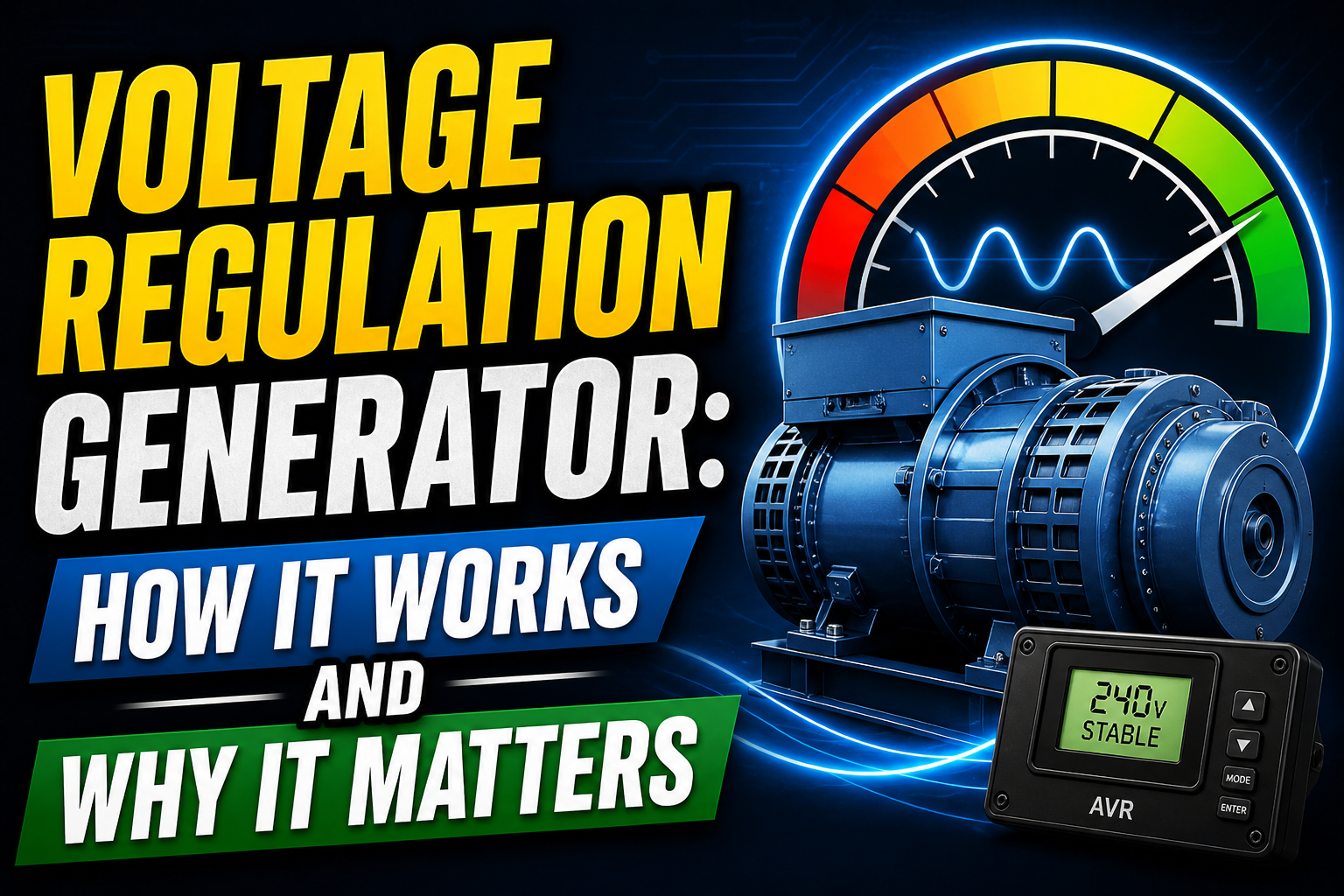
Một máy phát điện đáng tin cậy và có chất lượng cao khi nó tạo ra nguồn điện hiệu quả và tốt nhất. Độ tin cậy của nó phụ thuộc chủ yếu vào hệ thống điều chỉnh điện áp. Nó được thiết kế để duy trì sản lượng điện của bạn bất kể tải dao động. Nếu hệ thống quy định của bạn không được duy trì, nó sẽ dẫn đến sự thay đổi tải nguy hiểm. Kết quả là, nó sẽ phá hủy các thiết bị nhạy cảm và thiết bị quan trọng của bạn. Trong hướng dẫn này, bạn sẽ đọc về cơ chế điều chỉnh điện áp và nguyên lý làm việc chi tiết của nó. Bạn cũng sẽ đọc về tầm quan trọng của nó trong việc bảo vệ máy móc đắt tiền của bạn.. Ở cuối hướng dẫn này bởi Hoa Quân, bạn sẽ có thể quyết định hệ thống hoàn hảo cho Máy phát điện điều chỉnh điện áp.
Điều chỉnh điện áp trong máy phát điện là gì?
Tìm hiểu điều chỉnh điện áp trong máy phát điện là gì, bạn phải liên kết nó với nguồn điện. Thiết lập cơ sở máy phát điện điều tiết được thiết kế để duy trì kết quả điện áp tại các cực của máy phát điện. Nó hoạt động độc lập mà không chịu ảnh hưởng từ tải điện, nhiệt độ, hoặc tốc độ chạy.
Nếu bạn không điều chỉnh và kết nối một thiết bị có công suất cao, nó sẽ làm giảm điện áp của máy phát điện ngay lập tức. Nó sẽ hình thành một tình huống gọi là mất điện. Tương tự, nếu bạn bật thiết bị đó, nó sẽ gây ra sự đột biến về điện áp tải.
Theo truyền thống, người dùng đã từng xử lý tình huống này một cách thủ công. Nó cần một kỹ thuật viên con người để theo dõi vôn kế và điều chỉnh điện áp bằng cách đặt lại các biến trở trên vôn kế. Điều chỉnh điện áp bằng phương pháp thủ công không còn được sử dụng trong các hoạt động công nghiệp và thương mại quy mô lớn. Nó cần nhiều lao động của con người và có nhiều khả năng xảy ra lỗi của con người.
Trong thế giới hiện đại, các ngành công nghiệp được công nhận trên toàn cầu thường xuyên hóa Quy định điện áp tự động (AVR). AVR là một thiết bị điện duy trì kết quả điện áp và ngắt từ trường bên trong của máy phát điện. Nó sẽ giữ điện áp đầu ra trong phạm vi chấp nhận được (trong khoảng ±1% đến ±2% điện áp yêu cầu). Các hệ thống phổ biến được xây dựng trong hiện đại Máy phát điện để duy trì điện áp bao gồm các AVR điều khiển bằng Shunt, Máy phát điện nam châm vĩnh cửu riêng lẻ (PMG) hệ thống, và cuộn dây phụ trợ (ĐẾN) hệ thống. Mỗi hệ thống này có các tính năng cụ thể về thời gian và hiệu suất.
Máy phát điện điều chỉnh điện áp hoạt động như thế nào
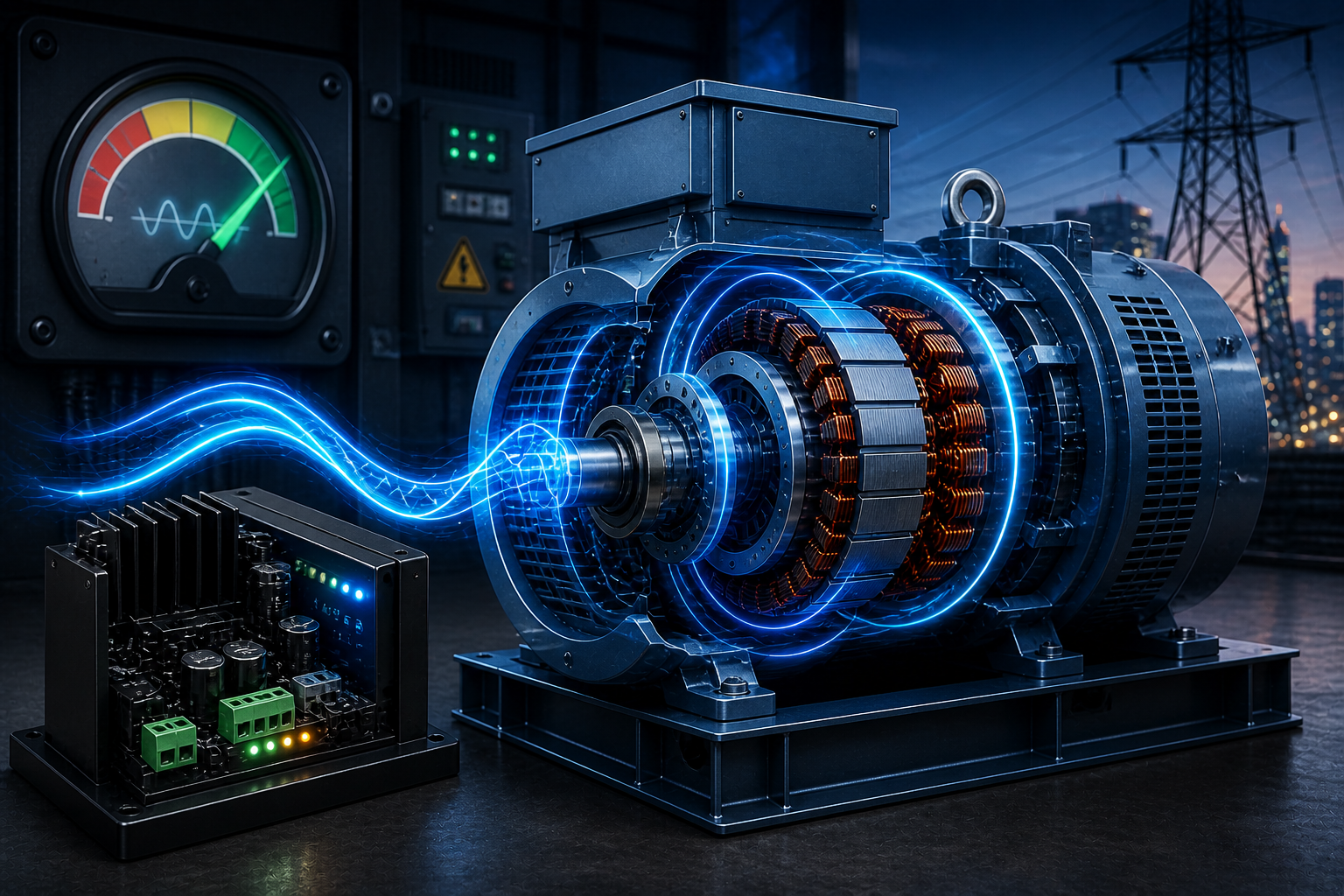
Nếu bạn muốn biết nguyên lý hoạt động chi tiết của việc điều chỉnh điện áp trong máy phát điện, bạn cần biết các bộ phận bên trong của máy phát điện hoạt động như thế nào. Chúng bao gồm stato (dây cuộn không di chuyển được), cánh quạt (một nam châm điện quay với tốc độ không đổi), và máy kích thích. Việc phát điện xảy ra khi có từ trường quay bên trong cuộn dây đứng yên. Quá trình này tạo ra dòng điện. Sức mạnh của nó phụ thuộc vào cường độ từ trường được tạo ra trong rôto.
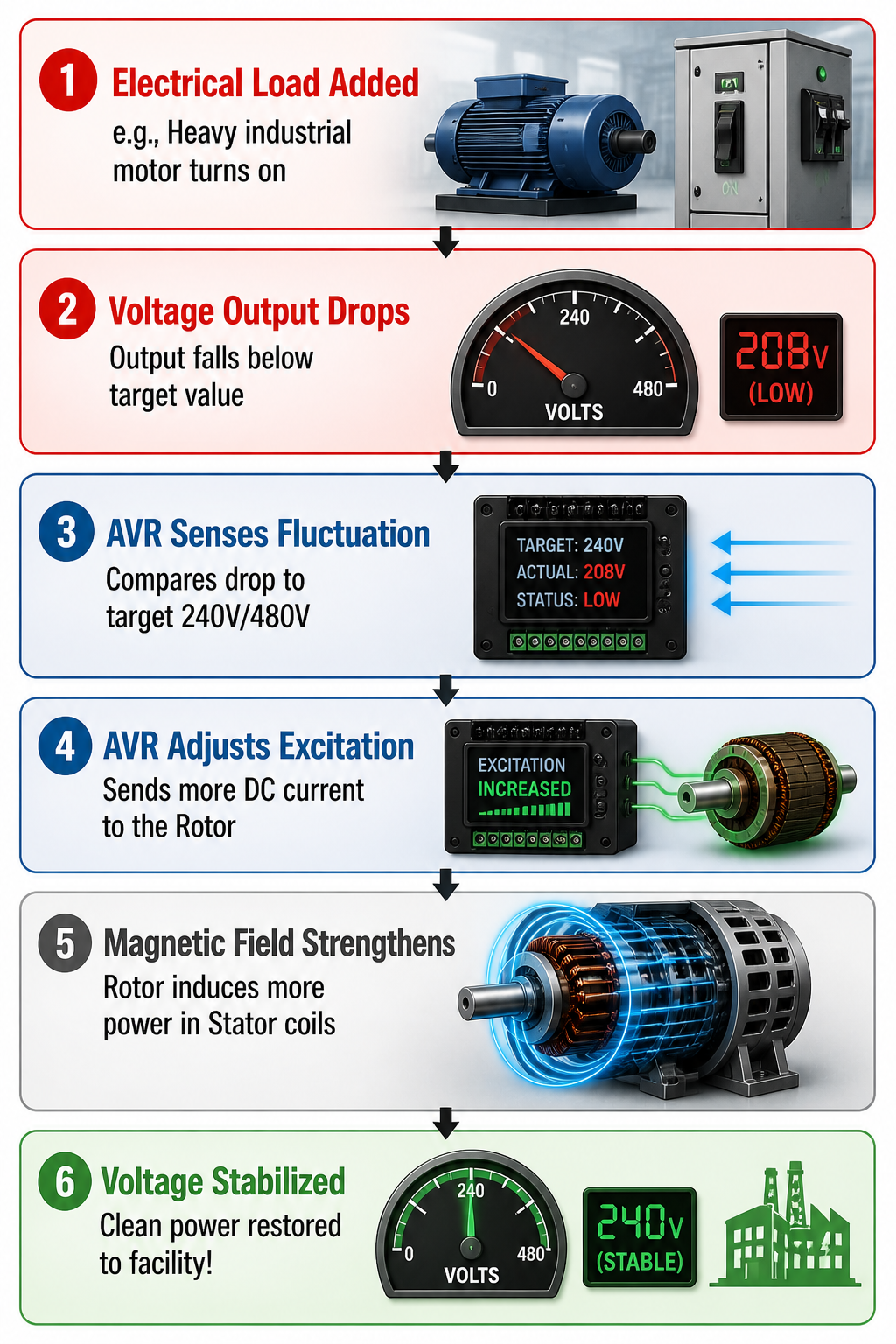
Trong tình huống này, Bộ điều chỉnh điện áp tự động (AVR) đóng vai trò trung tâm của nó là bộ não. Nó hoạt động trên một hệ thống phản hồi. Đầu tiên, nó cảm nhận các dây cuộn được kết nối với các cực của stato để đánh giá lượng điện áp được sử dụng để hỗ trợ trang web của bạn. Kế tiếp, nó so sánh điện áp được tính toán này với giá trị mục tiêu. Ví dụ, giá trị mục tiêu cho một đơn vị dân cư là 240V hoặc 480V cho mục đích thương mại.
Nếu bạn kết nối một thiết bị công nghiệp lớn, máy phát điện phải đối mặt với tải nặng. Kết quả điện áp của máy phát điện sẽ giảm. AVR phát hiện sự sụt giảm điện áp này. Nó bù đắp cho tình trạng này và tăng cường kích thích cho dòng điện một chiều. kết quả là, nó sẽ tối ưu hóa từ trường của rôto. Khi một từ trường mạnh được hình thành, nó vượt qua các dây cuộn và tăng điện áp trở lại giá trị mục tiêu.
Mặt khác, khi bạn tắt nguồn động cơ công nghiệp, sẽ có sự gia tăng lớn về tải điện. AVR sẽ phát hiện tình trạng này và giảm sự kích thích của dòng điện một chiều tới rôto đang quay. Kết quả là, nó tạo thành từ trường yếu và đưa điện áp về giá trị yêu cầu. Quá trình phát hiện và điều chỉnh diễn ra chưa đầy một giây. Nó dẫn đến một sự sắp xếp hợp lý, đồ thị điện áp ổn định.
Tại sao máy phát điện điều chỉnh điện áp lại quan trọng
Bạn không thể bỏ qua hoặc phủ nhận tầm quan trọng của hệ thống điều tiết được bảo trì tốt trong máy phát điện. Các nhà sản xuất thiết kế các thiết bị hiện đại để hoạt động trong phạm vi điện áp nghiêm ngặt.
Sự dao động điện áp có tác động tiêu cực đến các máy móc đắt tiền. Khi điện áp tải giảm xuống dưới mức yêu cầu, động cơ điện phải tiêu thụ nhiều dòng điện hơn để hỗ trợ cùng một khối lượng công việc. Tình trạng thiếu điện áp này ảnh hưởng đến máy nén HVAC cũng như băng tải được lắp đặt ở các cơ sở khác nhau.
Lượng dòng điện lớn này sinh ra dẫn đến nhiệt sinh ra quá mức làm nóng chảy dây cách điện. Kết quả là, động cơ cháy hoàn toàn. Trong hoàn cảnh hoàn toàn trái ngược, khi có sự đột biến điện áp ngẫu nhiên, nó hoạt động giống như một dạng sóng điện đột ngột. Tình trạng quá điện áp này thường ảnh hưởng đến mạch silicon, đèn LED, máy tính, và bảng kỹ thuật số.
Khi bạn duy trì và giám sát tải điện áp thích hợp cũng như đầu ra, nó sẽ cho phép bạn ngăn chặn những tình huống phá hoại. Bạn phải quản lý các hoạt động này khi làm việc với các bệnh viện liên quan đến thiết bị y tế. Trong bệnh viện, máy thở và MRI cần nguồn điện liên tục và tải của chúng phải được điều chỉnh để tránh thảm họa. Tương tự, trong các trung tâm dữ liệu, bạn không thể cho phép điện áp dao động dù chỉ trong chốc lát. Nó sẽ làm hỏng tất cả các hệ thống và lãng phí khoản đầu tư lớn của bạn. AVR bảo vệ cơ sở hạ tầng của bạn bằng cách cung cấp khả năng điều chỉnh điện áp.
Các phương pháp điều chỉnh điện áp phổ biến trong máy phát điện
Các hệ thống điều chỉnh điện áp trong máy phát điện là khác nhau. Chúng thay đổi tùy theo mô hình, kích cỡ, cân nặng, và ứng dụng của thiết bị.
Theo truyền thống, bộ điều chỉnh cơ học đã được sử dụng để đạt được sự điều chỉnh trong máy phát điện. Họ đã sử dụng các bộ phận có thể di chuyển được (chẳng hạn như các tiếp điểm lò xo và các cuộn dây điện từ) để bật và tắt các điện trở của mạch kích thích. Mặc dù họ có tốc độ nhanh, họ đã phát hiện và khắc phục sự cố muộn. Cũng, họ yêu cầu một kỹ thuật viên con người hiệu chỉnh các giá trị của họ để đạt được độ chính xác.
Máy phát điện hiện đại phụ thuộc vào Bộ điều chỉnh điện áp tự động (AVR) hệ thống. Các thiết bị điện này sử dụng các thành phần làm bằng chất bán dẫn. Chúng bao gồm thyristor và bóng bán dẫn. Chúng điều chỉnh dòng điện kích thích mà không cần sử dụng các bộ phận chuyển động. Hệ thống AVR có một số phương pháp khác nhau.
- Kích thích dựa trên Shunt: Trích xuất năng lượng hoạt động từ đầu ra cơ bản của máy phát điện. Trong thời gian ngắn mạch lớn, điện áp đầu ra dao động khiến AVR mất nguồn điện ban đầu và ngừng tạo ra từ trường.
- Máy phát điện nam châm vĩnh cửu (PMG): Hoàn hảo cho các ứng dụng dành riêng cho nhiệm vụ. PMG là một công ty riêng biệt, máy phát điện từ có kích thước nhỏ được thêm vào trục để duy trì nguồn điện được cung cấp cho AVR. AVR cho phép làm sạch, cung cấp điện ổn định. Tuy nhiên, nó thêm một mức giá đáng kể cho máy phát điện.
- cuộn dây phụ trợ (ĐẾN): Thực hiện vai trò của người trung gian. Đó là một sự cô lập, cuộn dây có mục đích được kết nối với bộ phận cố định để hỗ trợ AVR. Nó được chứng minh là có khả năng ngắn mạch tốt hơn hệ thống dựa trên shunt. Nó cũng có giá cả phải chăng so với hệ thống PMG.
Khắc phục sự cố về máy phát điện điều chỉnh điện áp
Hệ thống điều chỉnh điện áp chất lượng cao có thể gặp lỗi. Các vấn đề phổ biến nhất mà người vận hành phải đối mặt bao gồm điện áp thấp, quá điện áp, hoặc tình trạng săn điện áp lên xuống liên tục. Bạn có thể phát hiện AVR có vấn đề bằng cách nhận thấy các dấu hiệu khác nhau. Chúng bao gồm sự nhấp nháy của ánh sáng, hệ thống UPS bị gián đoạn hoạt động, hoặc kích hoạt báo động trên bảng kỹ thuật số. Khi bạn quyết định vấn đề, bạn phải hết sức cẩn thận.
Một chuyên gia sẽ bắt đầu chẩn đoán vấn đề bằng cách đánh giá tốc độ của động cơ. Điện áp và tần số có mối liên hệ gần gũi nhất. Nếu động cơ hoạt động ở tốc độ chậm, nó sẽ tạo ra điện áp thấp. Nếu tốc độ động cơ được duy trì ở mức RPM tối ưu, AVR đạt được sự tập trung. Các chuyên gia kiểm tra dây dẫn xem có bị lỏng các mối nối không, thiệt hại do rung động, hoặc ăn mòn do hoạt động liên tục. Nếu hệ thống dây điện có vẻ hoàn hảo, thiết bị AVR có thể phải đối mặt với các bộ phận bên trong bị nổ. Thường xuyên, AVR khó thay thế và sửa chữa tại cơ sở. Nếu kết quả kiểm tra cho thấy có lỗi trong AVR, bạn phải thay thế nó khẩn cấp.
Lưu ý cuối cùng!
Một hệ thống tự động được quản lý tốt máy phát điện điều chỉnh điện áp hệ thống là người bảo vệ ẩn bảo vệ toàn bộ hệ thống điện của bạn. Khi bạn duy trì tải điện và từ trường bên trong, AVR chuyển đổi năng lượng thô thành năng lượng an toàn, cung cấp điện được bảo vệ.
Cho dù bạn yêu cầu một AVR điều khiển shunt chính cho một Trang chủ-đơn vị dựa trên hoặc một đơn vị hoàn toàn riêng lẻ, tức là, Hệ thống PMG cho trung tâm thông tin dữ liệu, bạn phải lựa chọn và duy trì công nghệ điều chỉnh điện áp chính xác. Nó sẽ giữ cho động cơ của bạn an toàn khi lưới điện bị hỏng.
Bảo vệ thiết bị của bạn với nguồn điện ổn định và được điều chỉnh
Đừng để sự dao động điện áp phá hủy các thiết bị điện tử nhạy cảm và thiết bị quan trọng của bạn. Cho dù bạn yêu cầu một chương trình khắc phục sự cố cho hệ thống hiện tại của mình hay đầu tư vào một máy phát điện mới có khả năng điều chỉnh điện áp đầy đủ, đội ngũ chuyên gia của chúng tôi tại Hoa Tuyền có sẵn tại dịch vụ của bạn. Liên hệ với chúng tôi Hôm nay.
⚡ Khám phá các giải pháp liên quan
- 🏭 500Máy phát điện diesel kW
- 🏭 1000Máy phát điện diesel kW
- 🏭 500Máy phát điện Diesel kW YC
- 🔧 KMS (Cummins/Doosan) Loạt
- 📋 Bộ máy phát điện Diesel
- 📋 Quy trình đặt hàng — Cách mua hàng
- 📋 Liên hệ với chúng tôi
💡 Cần một giải pháp tùy chỉnh? Liên hệ với nhóm kỹ thuật của chúng tôi để có khuyến nghị dành riêng cho dự án.