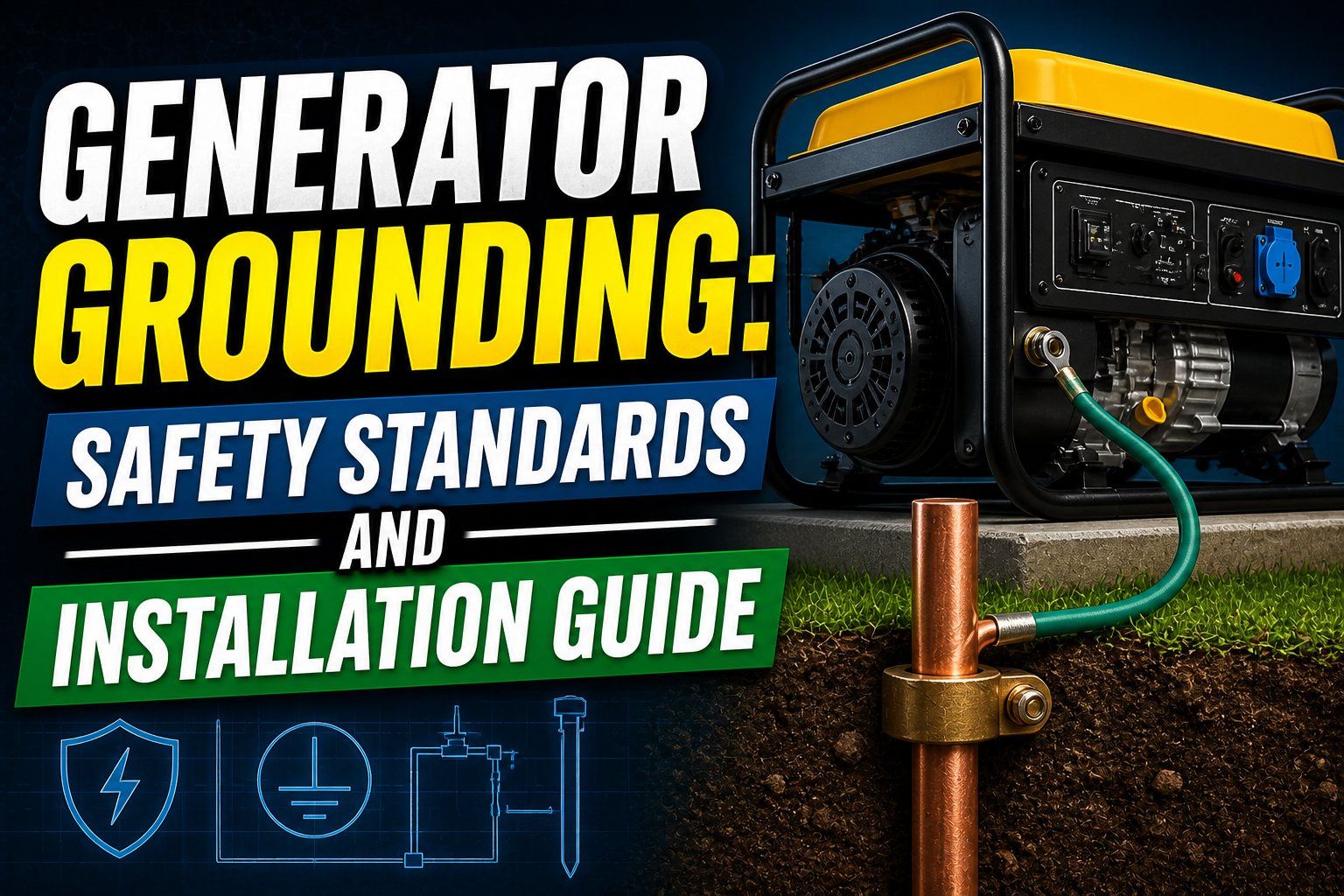
Quando você está lidando com um sistema de substituição de energia, a eletricidade é seu ativo e também uma ameaça potencial. Você pode proteger seu local contra riscos elétricos graves executando Aterramento do Gerador. O aterramento atua como uma medida secreta de segurança para evitar eletrocussão. Protege seus aparelhos e equipamentos contra curtos-circuitos. Como resultado, garante que seu sistema elétrico funcione sem problemas.
Com um poderoso aterramento de fios, você pode recusar um choque elétrico letal. A maioria dos usuários, bem como os fabricantes, subestimar a importância de aterrar sistemas de backup. Neste artigo de HuaQuan, você lerá sobre os regulamentos de segurança que determinam o aterramento e vários tipos de aterramento do gerador. Você também explorará as práticas de instalação passo a passo para proteger seu Geradores para o longo prazo.
O que é aterramento do gerador?
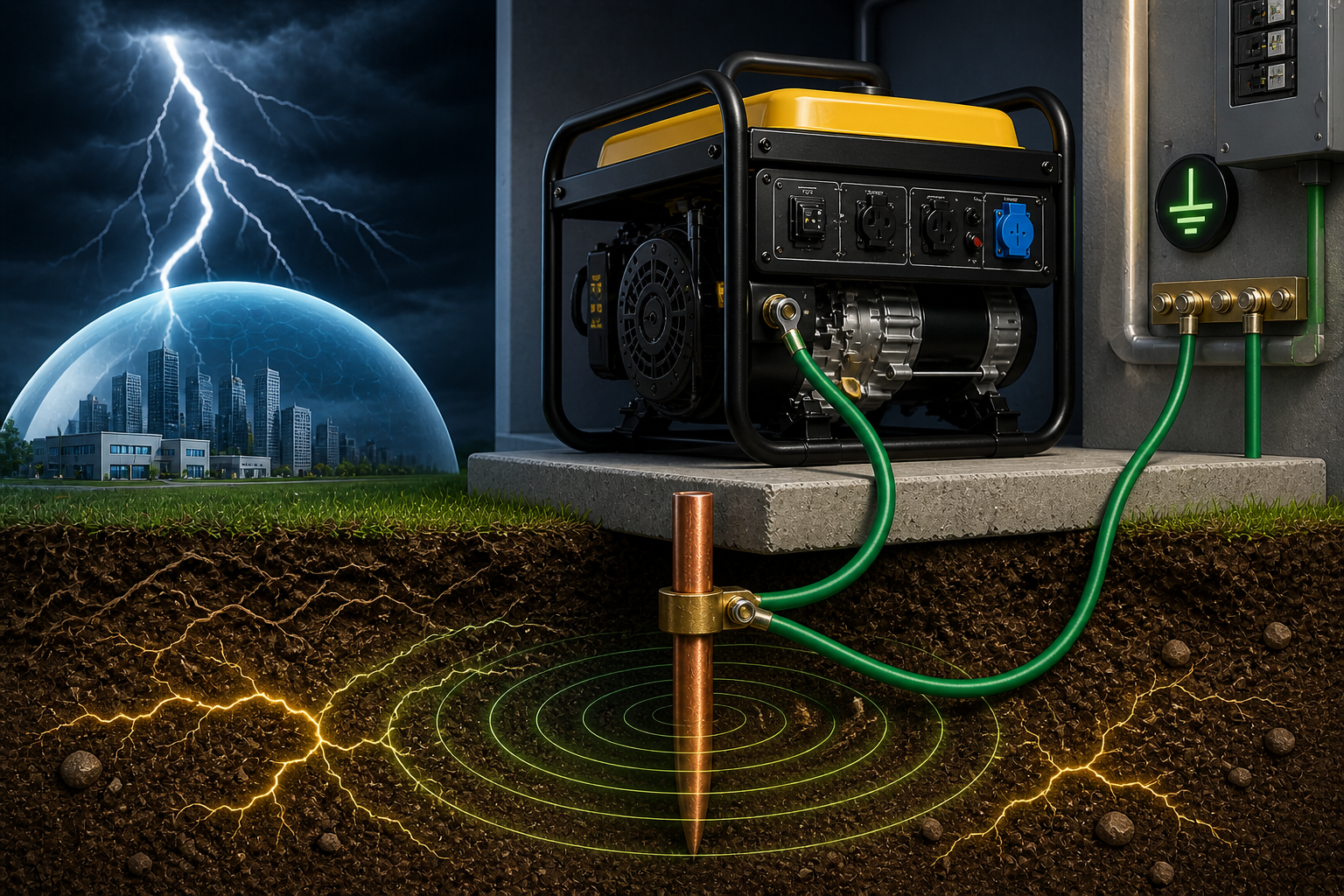
O aterramento do gerador refere-se à fiação física pré-decidida entre o circuito elétrico de um gerador (ou cobertura externa do aparelho) e a terra. Você pode construir essa conexão cravando uma haste de metal bom condutor no solo e conectando-a à estrutura do gerador com a ajuda de um fio de cobre resistente.. A Terra tem potencial elétrico zero. Ele pode facilmente absorver e espalhar a energia elétrica recebida.
O objetivo básico do aterramento é fornecer um caminho alternativo para a eletricidade. Este caminho tem a menor resistência, atrai eletricidade na condição de perigo, e manda para o chão. Quando um fio isolado interno apenas toca o corpo metálico do gerador, a unidade subterrânea obtém todo o potencial energético. Se alguém tocar por acaso, ele vai pegar a morte.
Se você fizer o aterramento apropriado, muda a direção da corrente e a envia para o solo. Além disso, desarma os disjuntores e cancela o efeito dos perigos. Você pode facilmente manter sua corrente de tensão através do aterramento.
Tipos de aterramento do gerador
Existem dois tipos principais através dos quais você pode realizar o aterramento do gerador:
- Aterramento do Equipamento: Conecta as peças metálicas (não carregue corrente) do gerador (incluindo moldura externa, recinto, e painel digital) ao solo para evitar curto-circuitos elétricos.
- Aterramento do Sistema: Conecta o fio neutro (carrega corrente) ao solo para manter o potencial de tensão em todo o sistema e cancelar o efeito de perigos.
Normas de segurança para aterramento de geradores
O aterramento pode salvar vidas e também causar morte (se não for feito adequadamente) dentro de um segundo. As normas regulatórias nacionais e internacionais supervisionam essas atividades de aterramento. Você deve seguir estes protocolos de segurança em todos os casos. De outra forma, você enfrentará graves consequências legais. Por isso, é uma prova da segurança de sua propriedade cara.
Nos Estados Unidos, os padrões de aterramento são mencionados no Artigo 250 do Código Elétrico Nacional (NEC). Se você não é residente nos EUA, você pode consultar as diretrizes regulatórias globais para atividades de aterramento mencionadas no Comissão Eletrotécnica Internacional (CEI) padrão 60364.
Os regulamentos ajudam você a categorizar seu sistema como um sistema derivado separado ou não separado. O sistema separado exige sua haste de aterramento individual. Considerando que o sistema não separado funciona no eletrodo de aterramento já existente no local. Você deve entrar em contato com a autoridade com jurisdição da sua área (AHJ) para saber o tipo do seu sistema.
Os padrões destacam essas preocupações, especialmente:
- Resistência de aterramento: O NEC exige uma resistência máxima de 25 ohms para um eletrodo para a terra. Se esta impedância ultrapassar o limite, você terá que instalar um segundo eletrodo 6 pés de distância e conectado ao inicial. A resistência mais baixa garante que as altas tensões de corrente não atinjam uma pessoa, mas vá para o chão.
- Dimensionamento de condutores: O tamanho do fio que conecta o gerador ao terra deve ser apropriado. Deve estar alinhado com os watts em funcionamento do gerador e a saída resultante. Se você tiver um gerador de reserva de grande capacidade, você deve instalar um resistente, fio revestido de cobre para evitar seu derretimento em caso de superaquecimento.
- Locais de ligação: De acordo com os padrões, ambos os fios (neutro e o terra) deve ser conectado apenas em uma área do sistema. Isso permitirá que os disjuntores desarmem em caso de acidente e evite perigos.
Como aterrar um gerador: Guia de instalação passo a passo
Para aterramento, você deve garantir a precisão, luta, e os materiais apropriados. Embora você chame um técnico para fazer tudo isso, você deve conhecer o procedimento detalhado para supervisionar o trabalho. Aqui, você se aprofundará no procedimento para um sistema derivado separado.
Principais componentes necessários
- Um eletrodo de aterramento de aço feito de cobre ou revestido de cobre (conhecido como bastão), geralmente 8 pés de comprimento e 5/8 polegada de diâmetro.
- Um fio de aterramento feito de cobre resistente (um condutor).
- Uma braçadeira de latão ou cobre para aterramento perfeito na Terra
- Uma chave de perfuração ou uma marreta com uma haste de aterramento forte.
Processo de instalação passo a passo
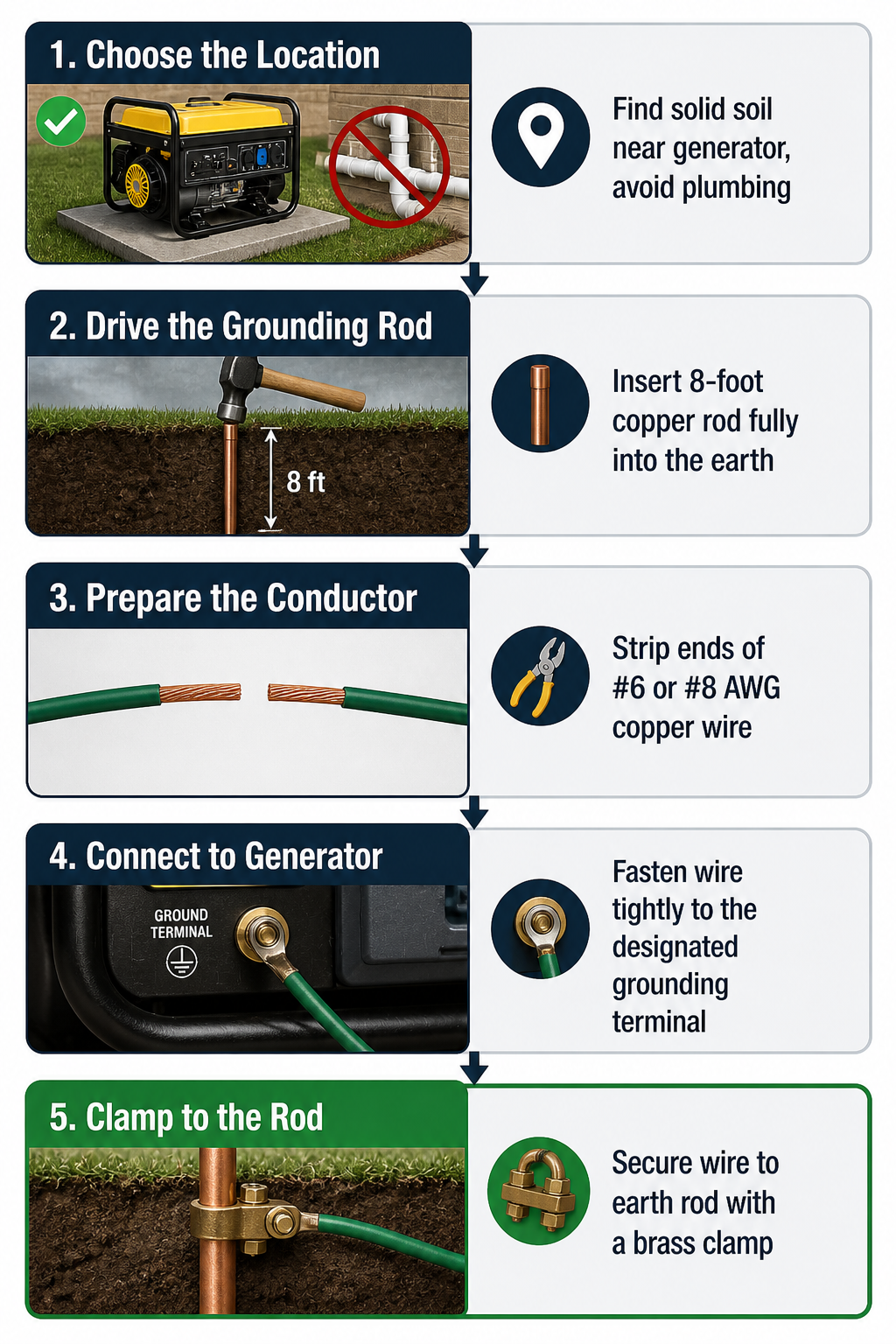
- Choose the Location: Select a soiled spot that is near the generator. It will help you shorten the copper gauge. Do not choose an area with already done plumbing, municipal lines, and rocky bedrock.
- Drive the Grounding Rod: Use a specialized driver to insert the 8-foot grounding rod into the ground. According to the NEC, the rod should be inserted perfectly. Its top surface should be below the soil bed. It will allow the rod to reach the Earth at its core.
- Prepare the Conductor: Trim the ends of your copper wire. It should be thick and resistant to withstand the generator’s large output. The wire should be a #6 ou #8 AWG that is suitable for mid-scale commercial activities.
- Connect to the Generator: Set the generator’s outer frame on the decided terminal for grounding. Connect one end of the wire to that spot. The connection should be tight.
- Clamp to the Rod: Secure by running the other end of the wire to the rod in the earth. Clamp using a brass-made rod to make the connection unbreakable. Avoid accumulation of dirt, pó, or debris in this connection.
Erros comuns de aterramento do gerador
Às vezes, the experts make mistakes when grounding the generator system. The small mistakes pose a great threat to the whole backup system.
Erros comuns de instalação
- Bonding the Neutral Wire Twice: The biggest mistake is connecting the neutral wire to the generator as well as to the main grid station. It creates a loop that sends the returned current to flow through your equipment’s metal coverings. It leads to the production of electrical shocks and disruption of breaker systems.
- Inadequate Grounding Rod Depth: Às vezes, the experts dig into the Earth only 3-4 feet due to the hardness of the soil. They break the standard rules and can face severe consequences. The rods, which do not go into the depth of the earth, are not able to provide an alternative path to the current due to less moisture on the earth’s surface. Nesse caso, grounding will not perform its due role.
- Using Improper or Low-Quality Materials: If you use aluminium wire and connect it directly to the earth, it will corrode and rust immediately. If you use a thin grounding wire, it will not resist the output and melt early.
Consequências e solução de problemas
If a problem occurs in the system and the ground path is unresponsive, the generator’s outer part will gain the highest amount of potential. One who touches it at that time might get electrocuted. Além disso, the circuit breakers will be unable to diagnose the fault that leads to constantly occurring fires.
You must have a deep knowledge of the grounding issues. Whenever a technician feels a vibration when touching your generator, it has a grounding issue. It is also proven when the Ground Fault Interrupter gets tripped unknowingly.
Nesse caso, you have to follow the troubleshooting steps to manage the situation. The first step is checking the clamp to see if there is any corrosion or loosening. Próximo, you must call an expert to get the situation inspected carefully. He must check that the connection of the neutral wire is only at a single place.
Manutenção e Testes de Sistemas de Aterramento
Naturalmente, grounding systems are prone to harsh weather conditions and outdoor activities. These include soil erosion, corrosão, and physical destruction nearby. Your grounding system can break down over time if you do not maintain it properly.
Importância das verificações regulares
You must inspect the connections regularly. Make sure they are tight and secured. They should conduct electricity with a higher potential. Copper wires, used in grounding, can corrode with time. The frequent vibrations from an operating generator can loosen the clamp’s nut. Por isso, routine evaluation is necessary.
Métodos para testar a eficácia do aterramento
Todos os anos, an expert technician must perform a ground resistance test, called the Fall-of-Potential test. He sends small testing probes into the earth at specific distances from the actual grounding rod. It will help measure the present resistance of the Earth. It will allow you to meet the standard regulations.
If testing measures indicate that the resistance of the earth is too much, you will be required to upgrade your system at once. You can do this by digging extra grounding-related rods and connecting them together. It will increase the surface area that is in contact with the generator.
Nota Final
Appropriate generator grounding confirms the safety of electrical systems. When you create an extra path to the ground that has a low resistance, it will protect your workers and residents from electrical shocks. Além disso, it maintains the stable electrical voltage and protects the circuit breakers.
If you want to install a grounding system in an excellent way, you must go through the NEC and IEC regulations, use the mandatory components appropriately, and avoid common errors. You can’t ignore it after installing the system and You have to maintain it regularly by checking the resistance of the earth and the loosened connections. You must contact an expert to get your system evaluated. It will keep you and your power backup system safe.
Do not compromise on the safety of generators. Make sure that you are done with the grounding of the generator. Get it done by consulting an expert inspection team at Huaquan! Contate-nos hoje.
⚡ Explore soluções relacionadas
- 🏭 500kW Gerador Diesel
- 🏭 1000kW Gerador Diesel
- 🏭 500Gerador diesel de kW YC
- 🔧 KMS (Cummins/Doosan) Série
- 🏥 Soluções de geradores de data center
- 📋 Grupos Geradores Diesel
- 📋 Processo de pedido – Como comprar
- 📋 Contate-nos
💡 Precisa de uma solução customizada? Contate nossa equipe de engenharia para recomendações específicas do projeto.