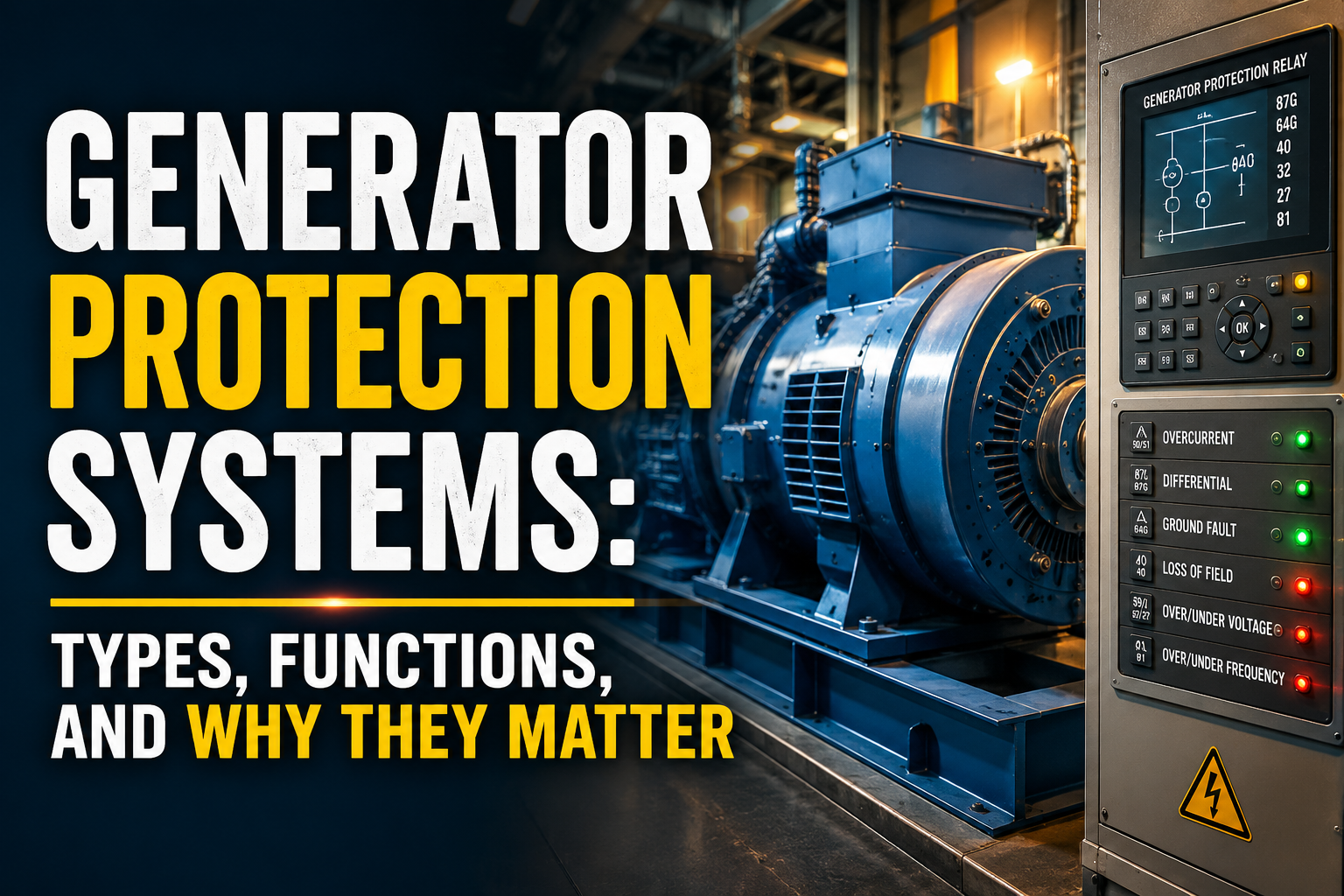
An industrial power generator is a major investment that operates under constant mechanical and electrical pressure. Safe operation depends on reliable internal protection. Generator Protection Systems serve to protect the generator, connected equipment, and operators from Kerosakan elektrik and abnormal operating conditions.
The IEEE generator protection guide helps electrical engineers use advanced relays to detect internal generator faults, major system failures, and abnormal grid conditions before they cause serious damage.
Dalam panduan ini oleh Huaquan, learn how Generator Protection Systems prevent failures, melindungi peralatan, improve safety, mengurangkan masa henti, and ensure reliable generator performance in every application.
What Are Generator Protection Systems?
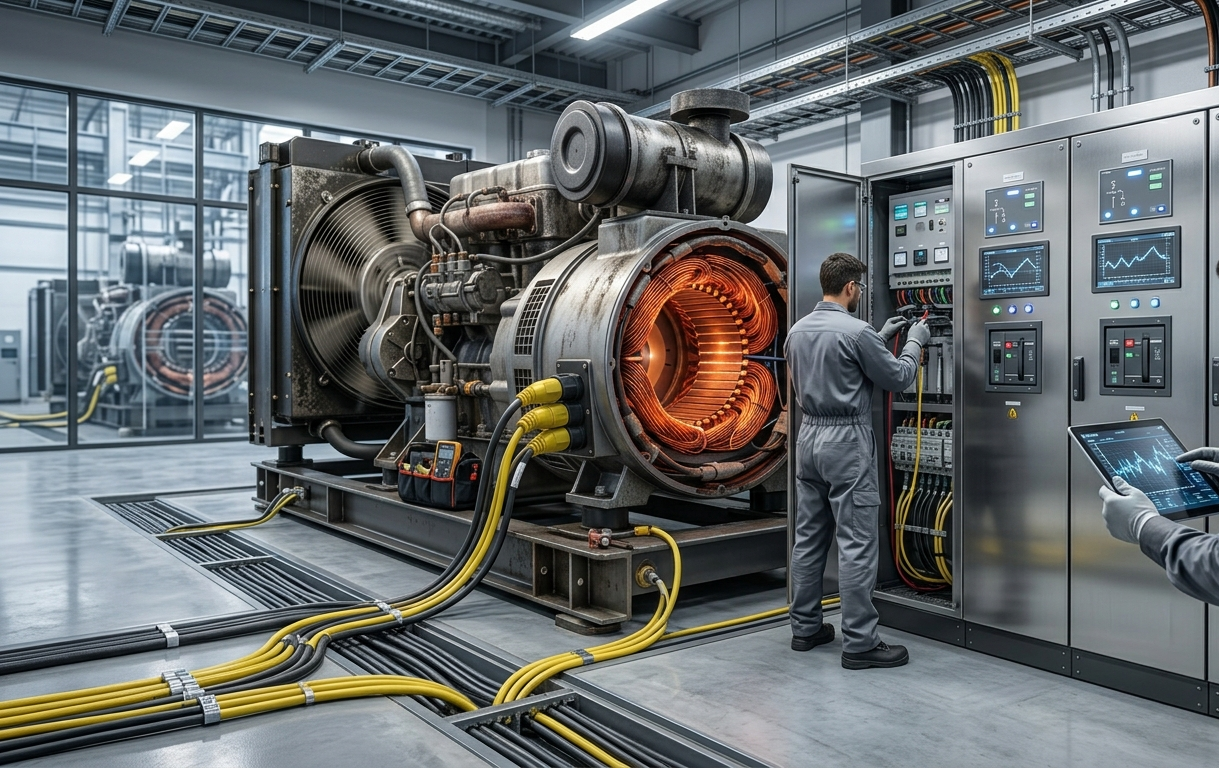
Pada dasarnya, Generator Protection Systems are a coordinated safety package of physical sensors, electrical relays, pemutus litar, digital controllers, visual alarms, and automatic shutdown devices.
These components constantly monitor the mechanical condition and electrical output of the generator. The system responds whenever unsafe operating conditions appear, helping prevent equipment damage or operational failure.
Why Generator Protection Systems Matter
Running a heavy-duty engine with a high-voltage alternator demands continuous monitoring. These protection systems have various important roles.
They Protect the Engine
If mechanical limits are exceeded, a diesel or gas engine can be severely damaged in a matter of minutes. Tekanan minyak, suhu penyejuk, overspeed conditions, and fuel delivery are constantly monitored to protect against catastrophic engine seizure.
They Protect the Alternator
The alternator generates power and is subjected to high heat and electrical stress. These systems track output voltage, electrical current, short circuit events, and internal winding temperatures to help avoid expensive copper meltdowns.
They Protect Connected Equipment
Sensitive equipment can be damaged by unstable voltage and frequency. Protection systems isolate unsafe power before it reaches facility computers, jentera, or household appliances.
They Reduce Downtime
By detecting and alerting operators to small issues such as clogged filters or minor coolant leaks, early warning alarms reduce unexpected downtime, avoid costly repairs, and allow facility managers to take action early.
They Improve Operator Safety
Electrical short circuits and runaway engines are instantly isolated and shut down by protection systems before they become more dangerous. This quick response significantly reduces the risk of arc flash fires, fatal electric shock, and mechanical explosion hazards for workers close to the generator.
Main Types of Generator Protection Systems
baru Penjana feature a wide variety of specialized protection elements that monitor every stage of operation and respond quickly whenever unsafe conditions arise.
Overload Protection
Limits the amount of electrical power the generator can produce. If the current remains too high for a long time, the protection system trips the main breaker and prevents the alternator from overheating and melting.
Short Circuit Protection
Protects the generator from very high fault currents. When a short circuit occurs in the facility wiring, the breaker switches off the power immediately, reducing the risk of an electrical fire.
Overvoltage Protection
Trips the breaker or activates an alarm whenever the output voltage exceeds safe operating limits. This protection helps prevent electrical damage to sensitive connected appliances.
Undervoltage Protection
Protects heavy motor loads such as HVAC chillers from burning out. When voltage drops below acceptable levels, electric motors draw excessive current and begin overheating, so the protection system disconnects power before damage occurs.
Overfrequency Protection
Detects excessively high electrical frequency caused by excessive engine RPM.
Underfrequency Protection
Detects low electrical frequency, which indicates the engine is struggling, slowing down, or operating under severe overload conditions.
Reverse Power Protection
When two or more generators operate in parallel, this protection is particularly important. It prevents the generator from acting like a motor and drawing power from the utility grid or another generator if the engine stops.
Earth Fault / Ground Fault Protection
Detects dangerous electrical leakage or fault current flowing into the ground and automatically shuts the system down to reduce the risk of electric shock.
Low Oil Pressure Shutdown
Helps prevent excessive wear and damage to the engine’s internal components and bearings caused by poor lubrication.
High Coolant Temperature Shutdown
Prevents the engine block from warping or even melting because of excessive heat caused by a failing fan belt, tahap penyejuk rendah, or extremely hot conditions.
Perlindungan Kelajuan Terlampau
Immediately shuts off the engine’s fuel supply if the RPM climbs beyond safe operating limits. This quick response prevents the engine’s internal parts from tearing themselves apart and causing catastrophic mechanical damage.
Battery and Charging Protection
Checks the battery’s resting voltage and the charger’s active output to ensure enough starting power is available when the next power outage occurs.
Emergency Stop System
The operator can use a manually operated emergency stop button (also called an E-stop) to completely shut down the generator whenever an emergency situation develops.
Generator Engine Protection vs Electrical Protection
Generator protection systems are generally divided into two primary categories: engine protection and electrical protection.
Engine Protection Examples
These safeguards keep track of the generator’s mechanical prime mover:
- Tekanan minyak rendah
- High coolant temperature
- Low fuel level
- Engine overspeed
- Crank failure
Electrical Protection Examples
These protections keep a check on the electrical power generated by the alternator:
- Over and under voltage
- Overcurrent (Lebihan beban)
- Over and under frequency
- Short circuit
- Earth and ground fault
Generator Protection Devices and Components
The entire protection system relies on multiple hardware pieces that are required to observe the conditions, identify any faults and take action before any major damage is done.
Panel Kawalan
Works as a digital control center for the generator. It receives data from all sensors, acts as the main monitoring center and alerts operators with real-time alarms.
Circuit Breaker
Serves as the physical disconnecting device that protects against overload and short circuit faults by disconnecting the generator from the building’s electrical system whenever a dangerous operating condition occurs.
Protection Relays
These high-tech electronic devices detect abnormal electrical situations, such as reverse power and phase imbalance, and issue a signal that causes the circuit breaker to trip.
Sensors and Switches
Physical sensors are placed all over the engine and constantly monitor coolant temperature, tekanan minyak, flywheel speed and output voltage to ensure that the operating conditions remain within safe limits.
Automatic Shutdown System
Programmed logic within the controller automatically shuts down the generator by stopping the fuel and air supply before severe and irreversible engine damage can occur.
Sistem Penggera
Provides visual indicator lights and audible warning horns to warn operators about developing problems before a fault occurs or immediately after one becomes active.
Common Generator Protection Alarms
When a fault occurs, the control panel will provide warning messages to alert the operators to the fault. Common protection alarms are:
- Tekanan minyak rendah
- High coolant temperature
- Lebihan beban
- Voltan lampau
- Undervoltage
- Kekerapan rendah
- Kekerapan tinggi
- Battery charger failure
- Emergency stop activated
- Fail to start
- Terlalu laju
Generator Protection Systems for Different Applications
A generator’s protection level is dependent on the critical importance of the facility and the operations supported.
Rumah Penjana Siap Sedia
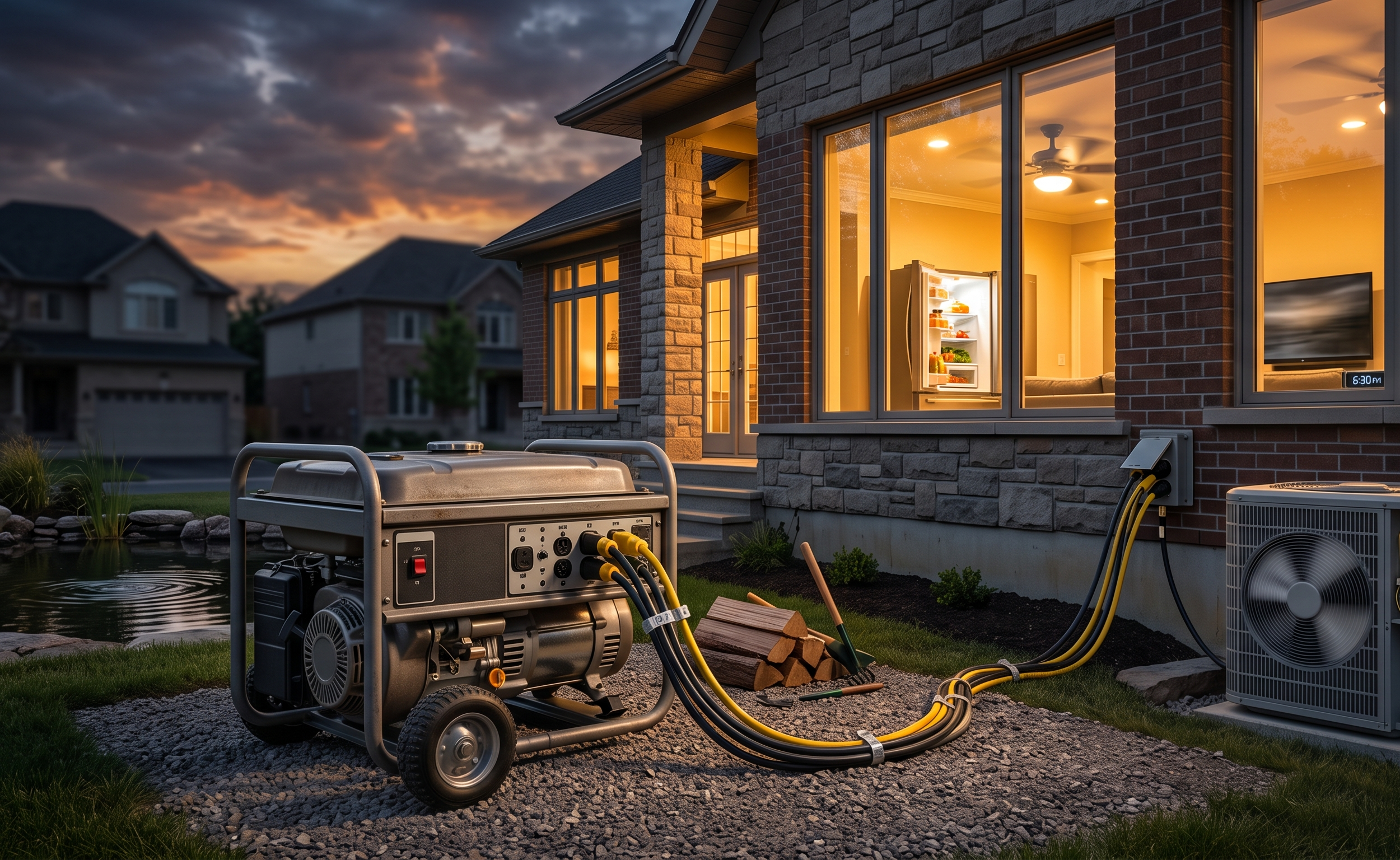
Home standby generators are equipped with important protection features such as low oil pressure, overvoltage and overspeed protection to ensure safe backup power for homes.
Commercial Generators
Retail stores and office buildings have generators that offer enhanced monitoring for business continuity. Several include remote alerts and strict overload management.
Industrial Generators
To safeguard valuable manufacturing lines and industrial operations, heavy-duty industrial generators need advanced programmable relays, warning alarms and SCADA-integrated pemantauan jarak jauh.
Data Center Generators
Data centers require the highest level of protection and redundancy. These generators operate with tight voltage and frequency tolerances and include reverse power protection for parallel generator applications.
Penjana Hospital
Strict testing and performance criteria must be met for a hospital’s emergency generators. NFPA 110 governs emergency and standby power systems with performance requirements measured down to the millisecond.
How Generator Protection Systems Prevent Damage
These are intelligent automatic guards for equipment. Examples include:
- Low oil pressure shutdown keeps pistons from scraping cylinder walls and helps prevent engine seizure.
- A high temperature shutdown switches the engine off before overheating damages the engine block.
- Perlindungan beban berlebihan trips the breaker before the alternator windings overheat or catch fire.
- Voltage protection isolates unsafe power to protect connected equipment from damaging surges.
- Ground fault protection automatically interrupts the circuit, reducing electrical hazards for people around the generator.
Signs Your Generator Protection System Needs Inspection
A protection system can only function as long as all components carry out their intended function. If you see any of these, call a trained professional:
- Frequent unexplained alarms.
- A normal load trips the breaker on the generator.
- The control panel shows an incorrect or corrupted fault code.
- The main breaker keeps tripping even though there is no obvious short circuit.
- Warning lights do not turn off when the panel is reset.
- Remote monitoring alerts are not being sent.
- The generator will not start automatically when the power goes out.
Kesimpulan
Generator Protection Systems protect your backup power investment by monitoring everything from engine oil pressure to alternator voltage. They help prevent catastrophic mechanical failures, protect sensitive equipment and improve personnel safety. Regular inspection, maintenance and testing of protective relays and alarms keep your power system reliable.
Looking for a generator with reliable protection systems? Hubungi pasukan kami today to find the right generator set with advanced safety controls, accurate alarms, automatic shutdown protection and dependable performance for your application.