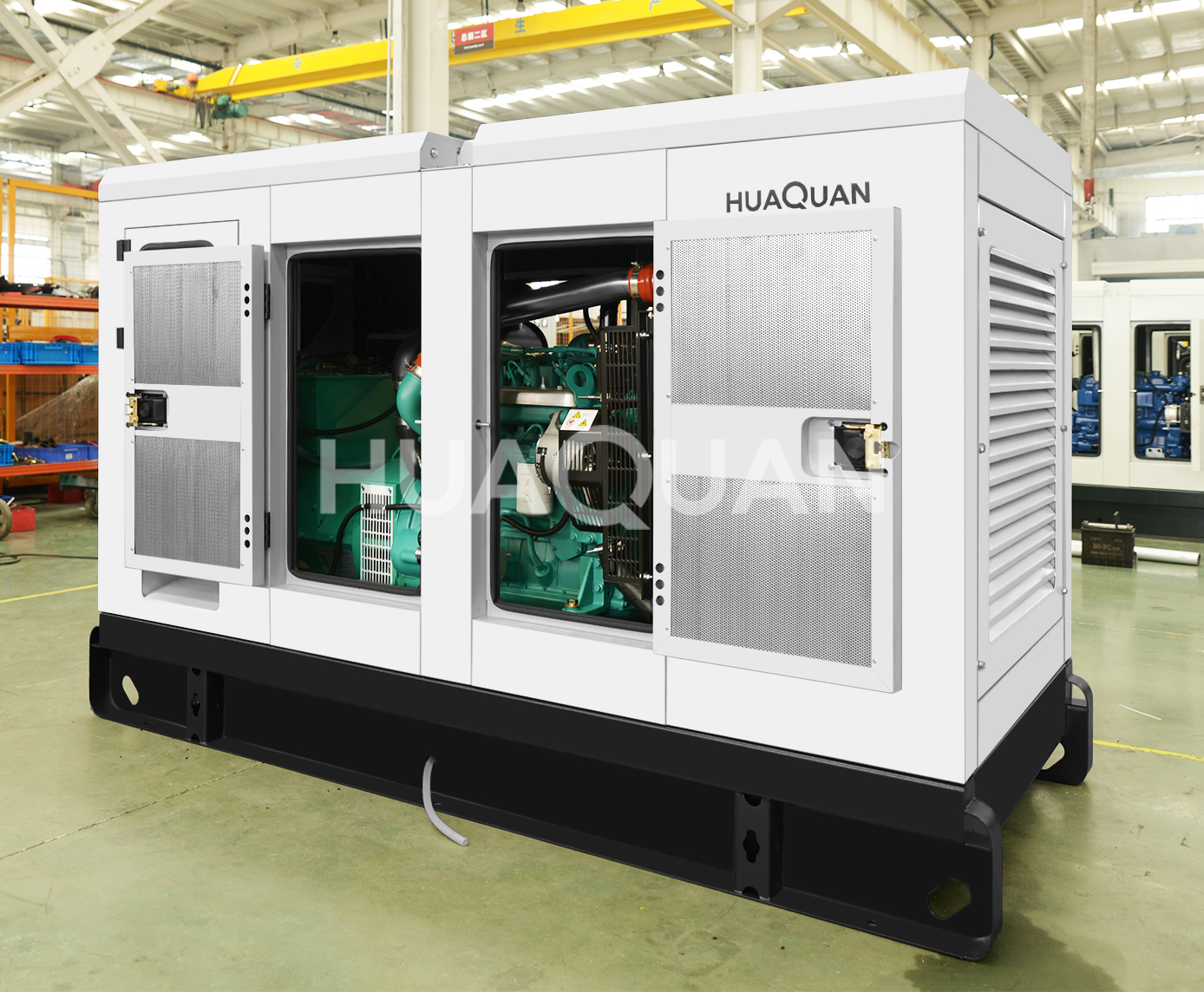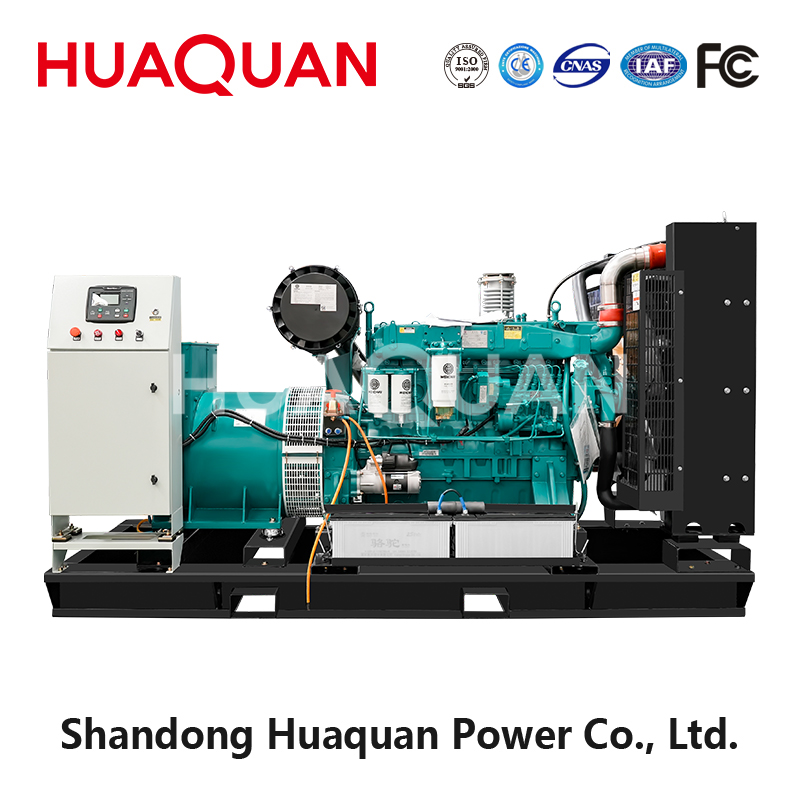
The output specifications of Dizel generator alternators encompass voltage (380–415V for 50Hz / 220–480V for 60Hz), current proportional to kVA rating, frekvencija (50 ili 60 Hz), i učinkovitosti (92–96%), all determined by the alternator winding design and excitation system. Huaquan Power summarizes the following detailed guide on diesel generator alternator output specifications and design factors.
What Determines the Output Rating of a Diesel Generator Alternator?
The alternator output rating depends on the interaction between the magnetic field strength, konfiguracija namota, and rotational speed. Nadalje, these design parameters together define the kVA output, napon, and frequency of the generator. Slijedom toga, understanding these relationships helps operators select and maintain Generatori for their specific applications.
What Are the Key Output Parameters?
| Parametar | Specifikacija | Determining Factor |
|---|---|---|
| Rated voltage (3-faza) | 380V / 400V / 415V (50Hz) or 220V / 440V / 480V (60Hz) | Winding turns and connection |
| Nazivna frekvencija | 50 Hz ili 60 Hz | Engine speed and pole count |
| Nazivna snaga (kVA) | 10–3000+ kVA | Winding ampacity and cooling |
| Faktor snage | 0.8 (standard) ili 1.0 (jedinstvo) | Karakteristike opterećenja |
| Nazivna struja | kVA / (√3 × Voltage) | Conductor cross-section |
| Učinkovitost | 92–96% | Winding resistance and design |
The relationship between speed, motke, and frequency follows the formula: Frekvencija (Hz) = (RPM × Number of Poles) / 120. Nadalje, for a 4-pole alternator at 1500 RPM, the output frequency is 50 Hz. Dodatno, na 1800 RPM, the same 4-pole alternator produces 60 Hz. Stoga, the engine speed directly determines the output frequency for a given pole configuration. Štoviše, Huaquan Power alternators are available in both 50 Hz i 60 Hz configurations to serve global market requirements.
How Does Alternator Winding Design Affect Output?
The stator winding design fundamentally determines the alternator voltage, current capacity, i učinkovitosti. Nadalje, different winding configurations offer distinct advantages for various applications. Dodatno, Huaquan Power selects winding designs optimized for each generator model’s intended operating profile.
What Are the Common Winding Configurations?
| Konfiguracija | Voltage Output | Uobičajena primjena | Prednosti |
|---|---|---|---|
| Wye (Zvjezdica) – 4-wire | 380–415V line / 220–240V phase | Standard 3-phase + neutral | Provides both line and phase voltage |
| Delta – 3-wire | 380–415V line only | Industrial motor loads | No neutral, simpler system |
| Dual voltage (series/parallel) | 220V or 440V reconnectable | Multi-voltage applications | Flexible voltage selection |
| 12-lead reconnectable | Multiple voltage options | Rental and export generators | Maximum voltage flexibility |
How Does Wire Size and Turn Count Affect Output?
The number of turns per coil determines the output voltage, while the wire cross-section determines the current capacity. Posebno, more turns of finer wire produce higher voltage at lower current. Obrnuto, fewer turns of thicker wire produce lower voltage at higher current. Nadalje, the total copper cross-section in the stator slots determines the alternator thermal capacity and continuous rating. Dodatno, Huaquan Power alternators use Class H insulation with 100% copper windings for maximum reliability and service life. Štoviše, the winding fill factor (copper area / slot area) directly impacts efficiency—higher fill factors reduce resistance losses and improve output capability.
| Winding Parameter | Impact on Output | Tipična vrijednost |
|---|---|---|
| Turns per coil | Higher turns = higher voltage | 2–12 turns per coil |
| Wire cross-section | Larger section = higher current | 1.5–25 mm² per conductor |
| Winding fill factor | Higher = lower resistance, bolja učinkovitost | 55–70% |
| Insulation class | Higher class = higher thermal capacity | Klasa H (180°C) standard |
| Parallel circuits | More parallel = higher current, lower voltage | 1–4 parallel paths |
What Is the Efficiency of Diesel Generator Alternators?
Alternator efficiency measures the ratio of electrical output power to mechanical input power from the engine. Nadalje, even high-quality alternators lose 4–8% of input power as heat due to copper losses, gubici željeza, and windage. Slijedom toga, understanding efficiency factors helps optimize generator selection and operation.
What Are the Types of Alternator Losses?
| Loss Type | Uzrok | Tipična veličina | Load Dependence |
|---|---|---|---|
| Gubici bakra (I²R) | Resistance in stator and rotor windings | 1.5–3.0% of rated output | Proportional to load² |
| Iron losses (core) | Hysteresis and eddy currents in laminations | 0.8–1.5% of rated output | Konstanta (speed-dependent) |
| Windage and friction | Air resistance and bearing friction on rotor | 0.2–0.5% of rated output | Konstanta (speed-dependent) |
| Gubici zalutalog opterećenja | Non-uniform flux distribution under load | 0.3–0.8% of rated output | Proportional to load² |
| Excitation losses | Power consumed by excitation system | 0.3–0.7% of rated output | Varies with load and voltage |
| Total losses | Sum of all loss mechanisms | 4–8% of rated output | Minimum at 75–85% load |
Alternator efficiency peaks at 75–85% of rated load, where the balance between fixed losses (željezo, vjetrovitost) and variable losses (copper) reaches optimum. Nadalje, at very low loads, the fixed losses represent a larger percentage of output, reducing overall efficiency. Dodatno, na preopterećenje, copper losses increase rapidly with the square of current. Stoga, matching the generator capacity to the actual load profile maximizes efficiency. Štoviše, Huaquan Power alternators achieve peak efficiencies of 95–96% at optimal load points through advanced winding designs and premium magnetic materials.
What Factors Cause Alternator Output Degradation?
Several environmental and operational factors reduce alternator output below nameplate ratings. Nadalje, recognizing these derating factors ensures proper generator sizing for actual site conditions. Slijedom toga, Huaquan Power applies derating calculations during the generator selection process.
| Faktor | Derating Effect | Correction Method |
|---|---|---|
| Temperatura okoline iznad 40°C | 1–2% per 5°C above 40°C | Select oversized alternator or enhanced cooling |
| Nadmorska visina iznad 1000m | 2–3% per 500m above 1000m | Increase alternator kVA rating accordingly |
| Leading power factor loads | Reduced excitation margin, voltage instability | Size alternator for leading PF if applicable |
| Non-linear loads (VFD, UPS) | Additional heating from harmonic currents | Derate alternator 10–20% for high THD loads |
| Prašnjavo/prljavo okruženje | Reduced cooling airflow, winding contamination | Redovito čišćenje, consider IP23 or higher |
How to Test Alternator Output Performance?
Regular alternator testing verifies output capability and identifies developing faults. Nadalje, comprehensive testing includes both steady-state and transient performance evaluation. Stoga, Huaquan Power recommends the following testing program.
What Tests Verify Alternator Performance?
| Test | metoda | Prihvatljiv rezultat |
|---|---|---|
| Regulacija napona | Measure voltage at 0%, 50%, 100% opterećenje | Within ±1% of rated voltage |
| Stabilnost frekvencije | Measure frequency under load steps | 49.5–50.5 Hz (50Hz system) |
| Test banke opterećenja | Apply resistive load at 25%, 50%, 75%, 100%, 110% | Stable voltage and current at all steps |
| Otpor izolacije | Megger test at 500V DC | ≥1 MΩ (windings to ground) |
| Winding resistance | Measure each phase with micro-ohmmeter | Balanced within ±2% between phases |
| THD measurement | Power analyzer at output terminals | ≤5% THD under linear load |
How to Perform a Step-Load Transient Test?
The transient test evaluates alternator response to sudden load changes. Posebno, apply a 50% load step and record the voltage dip and recovery time. Nadalje, a well-performing alternator should recover to within ±5% of rated voltage within 1–2 seconds. Dodatno, apply a full load step and verify the voltage dip stays within 15–20% and recovers within 3–5 seconds. Štoviše, these transient performance criteria ensure the alternator can support motor starting and other demanding loads. Slijedom toga, if transient response is sluggish, investigate the AVR (Automatski regulator napona), sustav uzbude, and engine upravitelj. važno, Huaquan Power performs comprehensive transient testing during factory acceptance tests and on-site commissioning.
| Test Condition | Load Step | Max Voltage Dip | Max Recovery Time |
|---|---|---|---|
| 50% korak opterećenja | 0 → 50% rated kVA | 10–12% | 1–2 seconds |
| 75% korak opterećenja | 0 → 75% rated kVA | 12–15% | 2–3 seconds |
| 100% korak opterećenja | 0 → 100% rated kVA | 15–20% | 3– 5 sekundi |
| Motor starting (code G) | Locked rotor kVA | Per project specification | 5– 10 sekundi |
Često postavljana pitanja
P1: What is the difference between kVA and kW on a generator nameplate?
kVA (kilovolt-ampera) represents the apparent power including both real and reactive components, while kW (kilovati) represents only the real power available to do useful work. Nadalje, the relationship is kW = kVA × power factor. Dodatno, at the standard power factor of 0.8, a 100 kVA alternator delivers 80 kW of real power. Stoga, always check both ratings when sizing a generator for your load.
Q2: Can a 50Hz generator be converted to 60Hz?
Tehnički, a 50Hz generator can produce 60Hz by increasing the engine speed from 1500 do 1800 RPM (4-pole alternator). Međutim, the alternator voltage increases proportionally (400V × 60/50 = 480V), which may not match the load requirements. Nadalje, the engine power curve changes at the higher speed. Stoga, Huaquan Power recommends purchasing the correct frequency generator for your application rather than converting an existing unit.
Q3: Why does my generator voltage fluctuate under load?
Voltage fluctuation under load typically indicates AVR issues, excitation system faults, or poor engine speed regulation. Nadalje, check the engine governor first—frequency fluctuations cause voltage fluctuations. Dodatno, inspect the AVR connections and verify the excitation current is stable. Stoga, systematic diagnosis of both engine and alternator systems identifies the root cause.
Q4: How long should a diesel generator alternator last?
A well-maintained diesel generator alternator typically lasts 20,000–30,000 operating hours before major overhaul. Nadalje, the primary limiting factor is winding insulation degradation over time from thermal cycling. Dodatno, rewinding an alternator extends service life by another 15,000–20,000 hours at a fraction of replacement cost. Stoga, Huaquan Power alternators with Class H insulation and quality copper windings provide excellent long-term value.
P5: What maintenance does a generator alternator require?
Alternator maintenance includes cleaning winding dust every 2000 sati, measuring insulation resistance every 2000 sati, checking winding resistance balance every 4000 sati, and inspecting bearings every 8000 sati. Nadalje, keep the alternator air filters clean and ensure cooling airflow is unrestricted. Dodatno, Huaquan Power provides detailed alternator maintenance schedules in each generator’s service manual for reliable long-term operation.
Zaključak
Understanding diesel generator alternator output specifications enables proper selection, operacija, i održavanje. Huaquan Power preporučuje tri bitne prakse: (1) Size the alternator with adequate margin for site derating conditions and load characteristics. (2) Perform regular insulation resistance and winding resistance tests to detect developing faults. (3) Never exceed the alternator nameplate kVA rating to protect winding insulation and ensure long service life. For alternator service and genuine replacement parts, kontaktirajte Huaquan Power na +86-159-0536-0210 ili posjetite huaquanpower.net.